Florida Hosts Miami in Gainesville to Open the 2026 College Football Season
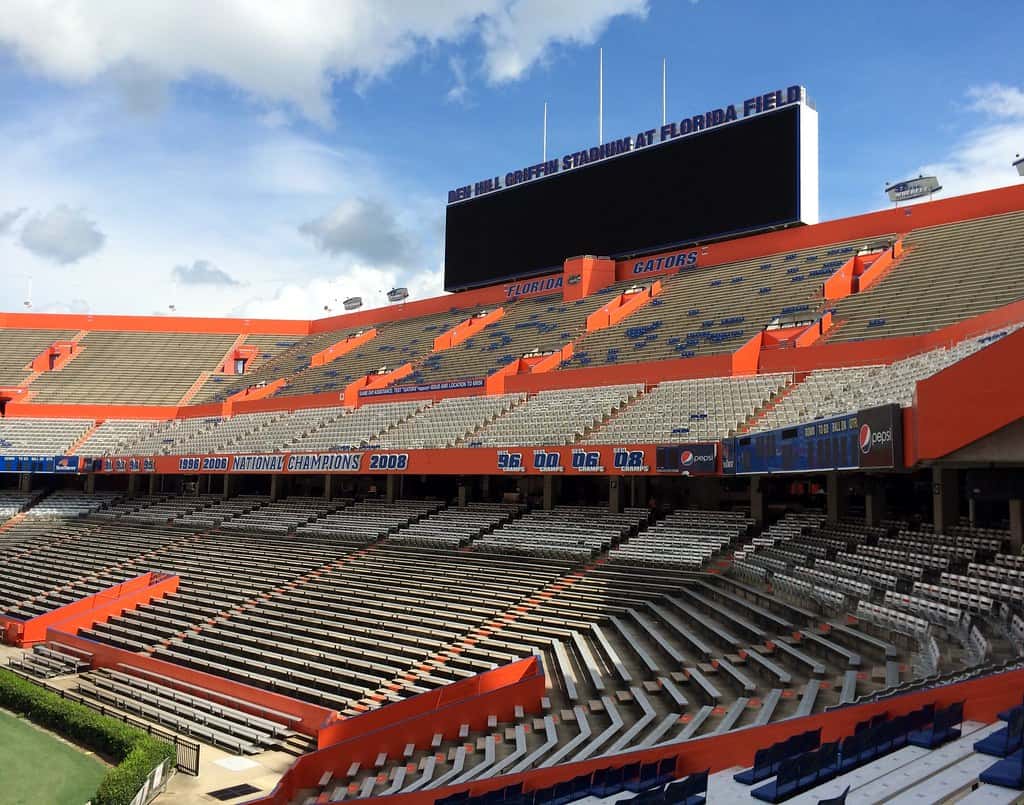
Florida and Miami open the 2026 college football season against each other Saturday at Ben Hill Griffin Stadium in Gainesville, with kickoff set for 3:30 p.m. Eastern on ABC. The matchup places the state's most storied rivalry in the season's first full weekend rather than burying it in a nonconference slot later in the year.
For both programs, an opener against a power conference opponent from the same state carries stakes that a typical Week 1 game does not. Neither team gets a soft landing, and the loser begins the season with a résumé blemish that will follow it through College Football Playoff conversations in December.
For Florida fans across the state, it is the rare game where allegiance is genuinely divided within families, workplaces, and neighborhoods. The Gators and Hurricanes have played irregularly in recent decades, which has made each meeting a larger event than annual rivalries typically become.
The setting
Ben Hill Griffin Stadium, known universally as The Swamp, seats more than 88,000 and is among the more difficult road environments in college football. Its bowl configuration keeps crowd noise contained, and a late August afternoon kickoff in North Central Florida adds heat and humidity to the equation.
A 3:30 p.m. Eastern start in Gainesville at the end of August means players will compete in conditions that regularly produce heat indices well above 90 degrees. Conditioning and depth matter more in those conditions than they do in a November night game, and teams that rotate deeply on both lines gain an advantage in the fourth quarter.
The ABC broadcast window places the game in front of a national audience without competition from other marquee matchups in the same slot, which is why networks value in state rivalries scheduled early.
Home field in this series has historically mattered, and Florida holds it this year.
What the rivalry means
Florida and Miami are separated by roughly 330 miles and by a longer history of recruiting competition than distance suggests. Both programs draw heavily from South Florida high schools, which means players on both sidelines frequently know one another from years before college.
The series was an annual fixture for stretches of the twentieth century before scheduling considerations reduced it to intermittent meetings. That scarcity has increased rather than diminished its significance, and games between the two have repeatedly served as season defining moments for whichever program won.
Recruiting consequences follow results. South Florida remains among the most talent dense regions in American high school football, and a win in a nationally televised meeting is a message to prospects in Miami-Dade, Broward, and Palm Beach counties.
Florida State's absence from the equation this weekend is notable. The Seminoles opened their season separately in Week 0, which means the state's three power conference programs began the year on different weekends.
What to watch
Season openers reward teams that are further along in installing their systems, which usually means teams with returning starters at quarterback and along the offensive line. Continuity at those positions is the single best predictor of early season execution.
Turnover margin tends to decide games between evenly matched opponents in Week 1, when timing is imperfect and both offenses are operating against a defense they have only studied on film from the previous season.
Depth on both lines will be tested by the conditions. Games played in Florida heat in late August often turn in the second half, when the team that rotated more effectively begins to hold up better.
Special teams are frequently the least polished phase in an opener, and a blocked kick or a return touchdown carries outsized weight in a game where both offenses may be inconsistent.
What it means for Florida football
Both programs compete in conferences that use their own criteria for the College Football Playoff, and both benefit from a Week 1 win over a power conference opponent regardless of what happens afterward. Strength of schedule is a component of playoff evaluation, and a quality nonconference win holds value in December that a win over a lesser opponent does not.
For the loser, the path narrows immediately. A Week 1 loss is survivable, and teams have reached the playoff after early losses, but it eliminates margin for error in conference play.
The economic effect on Gainesville is substantial. A sold out home opener against an in state power conference opponent fills hotels across Alachua County and surrounding areas, and Saturday home games are a significant driver of the local economy during the fall.
Statewide, the game functions as the unofficial start of Florida's football calendar, which extends through high school playoffs in the fall, three NFL teams, and bowl season.
The broader Florida schedule
Florida State opened its season in Week 0 against New Mexico State and begins conference play against SMU on Labor Day, September 7. That staggered start means the Seminoles have a game of live evaluation before their conference schedule begins, an advantage in preparation that Week 0 participants generally value.
Miami and Florida State meet later in the season in a game that will carry conference implications for the Hurricanes. The three way dynamic among Florida, Florida State, and Miami shapes recruiting and public attention across the state each year.
Beyond the power conference programs, Central Florida, South Florida, Florida Atlantic, Florida International, and Florida A&M all begin their seasons in the coming weeks, and the state's football calendar becomes crowded quickly.
High school football has also begun across Florida, feeding the pipeline that all these programs recruit from.
How the series has been scheduled
Florida and Miami compete in different conferences, which is the structural reason the series has been intermittent rather than annual. The Gators play in the Southeastern Conference; the Hurricanes play in the Atlantic Coast Conference.
Conference schedules consume the majority of available dates, leaving a limited number of nonconference games each season. Programs use those slots for a mix of purposes: guaranteed home games against smaller opponents, neutral site showcase games, and occasional marquee matchups.
Scheduling a power conference opponent from the same state carries risk that a program does not have to take. A loss damages the résumé, and the recruiting downside of losing to an in state rival is real. That calculation is why such games are negotiated years in advance and why they sometimes lapse for extended periods.
Expanded playoff formats have changed the incentive somewhat. When more teams qualify, strength of schedule carries more weight and a quality nonconference win becomes more valuable relative to the risk of a loss, which has encouraged more scheduling of this kind across the sport.
The state's recruiting stakes
Florida produces more major college football prospects per capita than nearly any state, and the competition to keep them home shapes every program in the state.
South Florida, encompassing Miami-Dade, Broward, and Palm Beach counties, is the densest talent region. Tampa Bay, Orlando, and Jacksonville each produce substantial numbers as well, and the Panhandle contributes to programs across the Southeast.
Out of state programs recruit Florida aggressively, which means the in state schools compete not only with each other but with programs from across the country for the same players. A nationally televised win over an in state rival is a recruiting asset precisely because it circulates among prospects who are being pursued by everyone.
The current environment adds name, image, and likeness compensation and the transfer portal to that competition. Roster construction now involves retaining players annually rather than only signing them once, and program stability has become a recruiting factor in its own right.
High school football across Florida has already begun, and the state's classification playoffs run through the fall to championships that draw college scouts in significant numbers.
Gainesville on a home opener weekend
For anyone attending, a late August game at Ben Hill Griffin Stadium presents logistical realities worth planning around.
Heat is the first. A 3:30 p.m. kickoff means the first half occurs during the hottest part of a Florida afternoon, and the stadium's bowl configuration limits airflow. Hydration well before arrival matters more than hydration during the game, and the venue permits sealed water under its clear bag and entry policies, which are published by the athletic department and change periodically.
Afternoon thunderstorms are the second. Late August in North Central Florida produces near daily convection, and stadiums suspend play and clear the seating bowl when lightning is detected within a defined radius. Delays of an hour or more are routine, and fans should know where designated shelter is before kickoff rather than during a delay.
Traffic and parking are the third. Gainesville's population roughly swells on home game days, and routes into campus congest for hours before and after. Campus parking is largely permitted, with public options at a distance served by shuttles.
For those watching from elsewhere in Florida, the ABC broadcast makes the game widely available, which for a matchup between two in state programs means a substantial share of the state will be watching the same thing at the same time.
What's next
Kickoff is Saturday at 3:30 p.m. Eastern at Ben Hill Griffin Stadium in Gainesville, televised on ABC. Both programs move into their conference schedules over the following weeks.
The result will shape early season rankings, though Week 1 polls carry limited predictive weight and the committee that selects playoff participants does not begin releasing rankings until later in the fall.
Injuries sustained in an opener carry disproportionate consequences because they affect availability across an entire season rather than a single stretch, and both teams will provide status updates in the following week.
For fans, the more durable question is what the game reveals about each roster's depth and quarterback play, which are the factors that determine whether either program is still relevant in December.
Spotted an issue with this article?
Have something to say about this story?
Write us a letterComments
No comments yet. Be the first to weigh in.
Related Coverage

Brady Tkachuk Scores Natural Hat Trick, Matthew Tkachuk Adds 5 Assists as Panthers Rout Blue Jackets 7-3
3h ago
Banchero, Wagner power Magic past Cavaliers 132-116 in Sean Sweeney's first home exhibition
3h ago

Alexis Lafreniere Scores Twice as Rangers End Lightning's 4-Game Win Streak, 4-1, at Madison Square Garden
4h ago

Sam Reinhart Scores Twice, but Sabres Beat Panthers 5-3 in Buffalo as Jacob Markstrom Is Pulled
23h ago