Florida Lawmakers Renew Push to Move NASA Headquarters to Brevard County
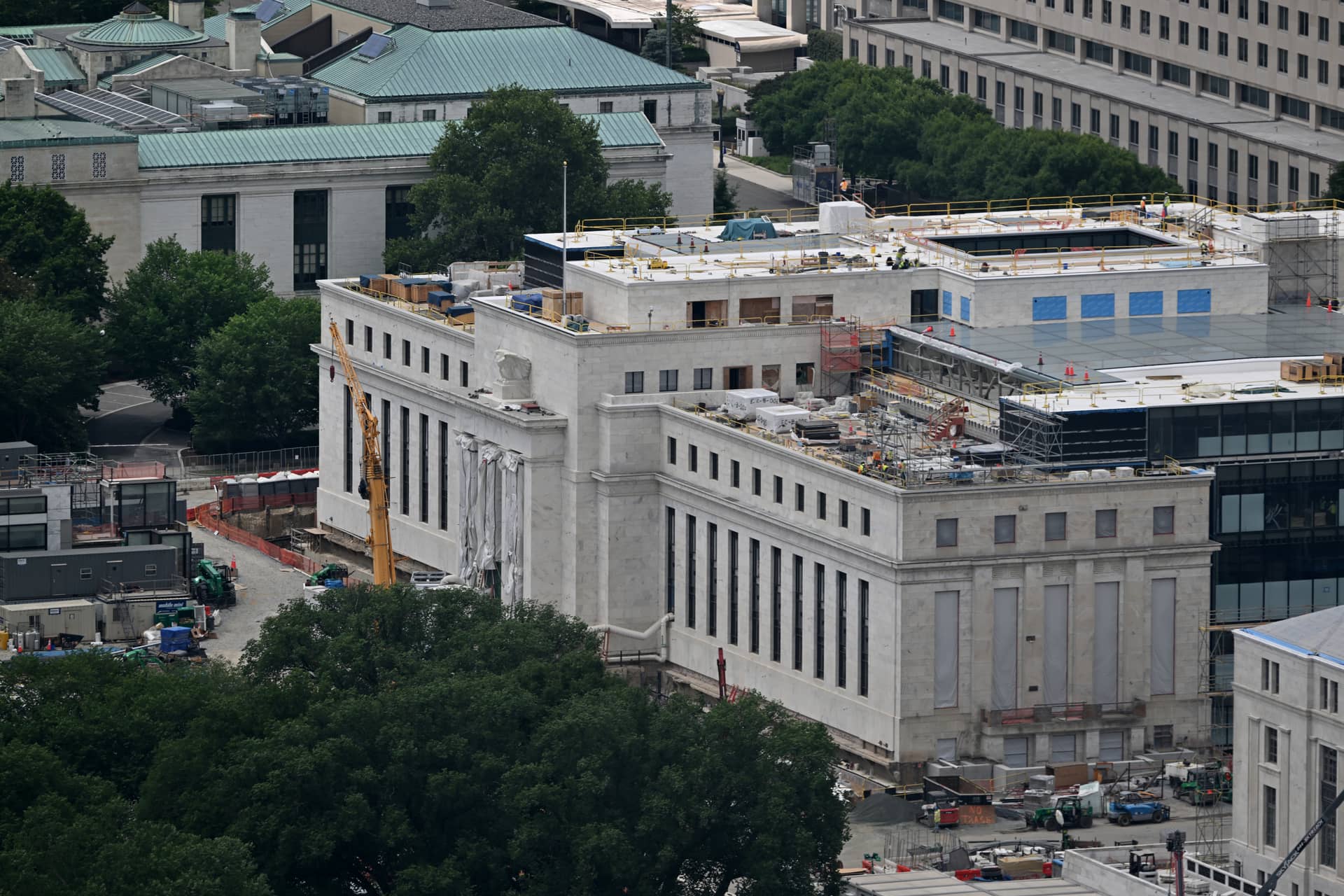
Florida lawmakers have renewed a push to relocate NASA headquarters from Washington to Brevard County, with U.S. Representative Byron Donalds unveiling an initiative branded Florida's Space Race alongside U.S. Senator Ashley Moody. The effort is built on the CAPE Canaveral Act, legislation that would require the transfer of the agency's headquarters to Brevard County within one year of enactment, and it is timed to NASA's Washington lease expiration in August 2028.
What the legislation would do
The CAPE Canaveral Act, an acronym for Consolidating Aerospace Programs Efficiently at Canaveral, directs that NASA headquarters be moved to Brevard County no later than one year after the bill becomes law. The county is home to both Kennedy Space Center and Cape Canaveral Space Force Station, which together constitute the operational heart of American launch activity and host the highest launch cadence of any site in the world.
The Senate version was introduced by Florida Senators Rick Scott and Ashley Moody. A House companion measure carries a bipartisan co-sponsor list drawn heavily from the Florida delegation, including Representatives Mario Diaz-Balart, Jared Moskowitz, Debbie Wasserman Schultz, Scott Franklin, Maria Elvira Salazar, Daniel Webster, Carlos Gimenez, Brian Mast, Darren Soto, John Rutherford, Cory Mills and Vern Buchanan.
That co-sponsor list is notable for crossing party lines in a Congress where bipartisan legislation is rare. Federal facility relocations typically split along partisan or regional lines, and the Florida delegation has largely unified behind this one regardless of party, which reflects the degree to which aerospace employment is a shared statewide interest rather than a partisan preference.
The lease timing
The practical argument rests on a scheduling reality. NASA's lease for its current Washington headquarters facility expires in August 2028, and the agency has been examining relocation options. A lease expiration creates a natural decision point that would not otherwise exist, since federal agencies rarely relocate headquarters absent an external forcing event.
Other states with significant NASA installations have interests in the same question. Texas hosts Johnson Space Center in Houston, Alabama hosts Marshall Space Flight Center in Huntsville, and Ohio, Maryland, Virginia, Mississippi and California all have agency facilities and congressional delegations with reasons to compete for the headquarters. Huntsville in particular has made aggressive bids for federal aerospace functions in recent years.
Because the lease runs to 2028, the timeline is not immediate, but the political groundwork is being laid now. Legislation of this kind typically requires multiple congresses to advance, and building a co-sponsor base early is how sponsors position a bill for later action when a decision point arrives.
The case Florida is making
Donalds has argued that relocating headquarters to Brevard County would expand launch capacity, accelerate permitting and create thousands of high-paying aerospace jobs across Florida. The underlying logic is about proximity: putting agency leadership where the launches happen, rather than several hundred miles away, on the theory that decisions made near the operation are better decisions.
Florida's existing infrastructure is the strongest part of the argument. Kennedy Space Center and Cape Canaveral Space Force Station together support the highest launch cadence in the world, and the surrounding supply chain has expanded substantially as commercial launch volume has grown. The workforce, the range infrastructure and the physical facilities already exist at a scale no other location matches.
The state has been reinforcing that base through direct investment. Relativity Space announced a Space Coast expansion during the Farnborough International Airshow in July, with an additional Terran R production facility and expanded test and launch infrastructure, and the company would be eligible for up to $134 million from Florida's Spaceport Improvement Program. Space Florida also signed a memorandum of understanding with the UK Space Agency during the same trade mission.
The arguments against
Relocating a federal agency headquarters is disruptive and expensive. Headquarters staff are largely policy, budget, procurement, legal, human resources and communications personnel rather than engineers, and those employees generally do not relocate at high rates when an agency moves. Institutional knowledge loss is the standard cost, and it can take years to rebuild.
Proximity to Congress, the White House, the Office of Management and Budget and other federal agencies is also a functional argument for a Washington location. Agency leadership spends substantial time in budget negotiations, interagency coordination and congressional testimony, all of which are easier to conduct from a Washington office than from a location requiring air travel.
Prior federal relocations have offered mixed evidence. Moves of agency components out of Washington in recent years produced significant attrition, in some cases losing well over half of affected staff, and the resulting capability gaps drew criticism from inspectors general and oversight bodies. Any assessment of the NASA proposal has to weigh the operational cost against the regional economic benefit.
What NASA headquarters actually does
It is worth being precise about what would move. NASA headquarters does not conduct spaceflight operations. Launches are managed from Kennedy Space Center, human spaceflight operations from Johnson Space Center, science missions from centers including Goddard and the Jet Propulsion Laboratory, and each center operates with substantial autonomy.
Headquarters sets agency policy, manages the budget, oversees the mission directorates, handles congressional and international relations, and makes program-level decisions about what the agency pursues. The staff count is modest relative to the agency as a whole, numbering in the low thousands rather than the tens of thousands employed across the center system.
That means the direct employment gain from a relocation would be meaningful for Brevard County but smaller than the headline suggests. The larger argument is about influence and about the secondary effects of having agency decision-makers embedded in the Florida aerospace community rather than visiting it.
What it means for Floridians
For Brevard County, the potential gain is substantial and concentrated. Headquarters employment would add a category of higher-wage professional jobs that the local economy currently supports only in limited numbers, along with the housing, retail and service demand that follows. It would also deepen the county's already significant exposure to a single industry.
For the state, the symbolic value may matter as much as the direct employment. Florida has spent years positioning itself as the center of American spaceflight, and hosting the agency's headquarters would formalize a claim the state currently makes on the basis of launch volume alone. That positioning has value in recruiting private aerospace investment.
The politics are also unavoidable. Donalds is the leading Republican candidate for governor with the state's primary on August 18, and announcing a high-profile federal initiative during a campaign carries obvious electoral utility alongside its policy content, particularly in a media market where space is a defining local industry.
How Brevard County has changed
The Space Coast has been through several boom and bust cycles tied to federal spaceflight decisions. The end of the Apollo program and later the retirement of the Space Shuttle each produced substantial job losses in Brevard County, and the region spent years rebuilding around commercial launch activity that did not exist at scale before.
That commercial transition has been largely successful. Launch cadence from the Cape now exceeds anything achieved during the government-only era, and the mix of operators means the region is less exposed to a single program decision than it was when NASA was effectively the only customer.
A headquarters relocation would add a layer of federal employment that the current commercial base does not provide. It would also reintroduce the dependency the region spent years reducing, since headquarters staffing levels are set by federal budget decisions rather than by market demand for launch services.
The competing bids
Florida is not making its case in isolation. Texas has argued that Johnson Space Center already serves as the operational center for human spaceflight and that consolidating leadership there would follow the agency's core mission. Alabama has pointed to Marshall Space Flight Center's role in propulsion development and to Huntsville's established aerospace workforce.
Each state's argument rests on a different theory of what proximity should serve. Florida emphasizes launch operations, Texas emphasizes human spaceflight, and Alabama emphasizes engineering and development. None of those framings is obviously correct, which is part of why the question has remained unresolved.
The delegations involved are also comparably positioned. Texas and Alabama both have senior members on committees with jurisdiction over NASA, which means Florida's advocacy will meet organized opposition rather than an open field.
What's next
The legislation must move through committee in both chambers before any floor action, and competing proposals from other states' delegations are likely as the 2028 lease date approaches. NASA's own site selection process, if the agency conducts a formal one under General Services Administration procedures, would operate on a parallel track and could reach a different conclusion than Congress.
The federal budget environment will shape what is realistic. Relocation carries transition costs including moving expenses, facility construction or leasing, and the productivity loss associated with staff turnover. Appropriators will weigh those against other agency priorities during a period of general pressure on discretionary spending.
The Florida Press will continue tracking the CAPE Canaveral Act, NASA's facility planning, and the broader growth of Florida's aerospace sector, including launch operations at Cape Canaveral and Kennedy Space Center.
The 2026 election cycle will also shape the effort's political footing. Donalds is running for governor and would leave his House seat, Moody faces a special election for the Senate seat she was appointed to, and the composition of Florida's delegation after November will determine who carries the legislation forward in the next Congress.
In the meantime, Florida continues building the physical case. Launch cadence at the Cape, the Relativity Space expansion in Titusville and continued state investment through the Spaceport Improvement Program all strengthen the argument that the infrastructure and workforce already exist, regardless of how the headquarters question is ultimately resolved.
Spotted an issue with this article?
Have something to say about this story?
Write a letter to the editor