Florida Moves to Drop Four Required School Vaccines as the Public Comment Window Closes
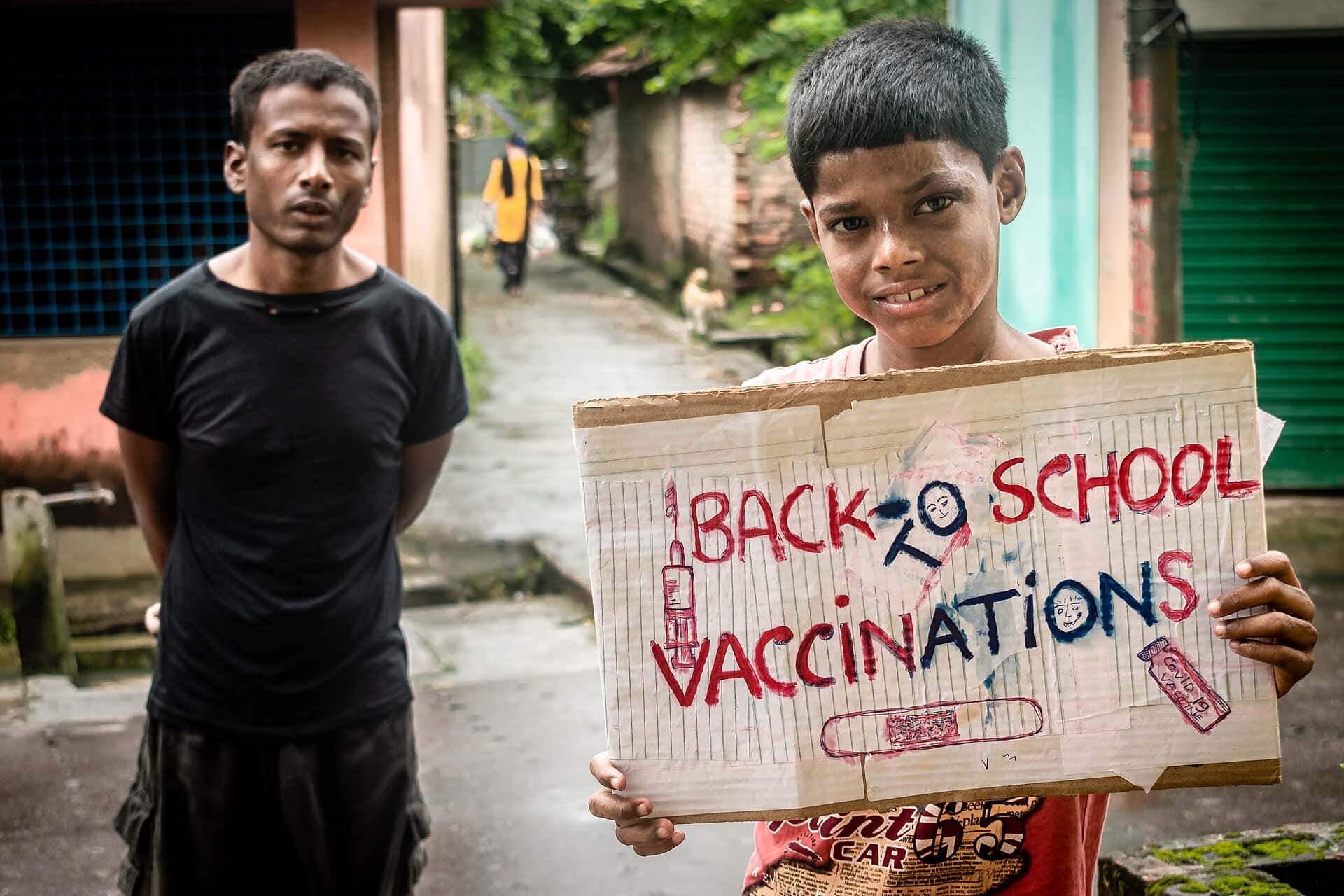
The Florida Department of Health is advancing a rule that would remove four vaccines from the list required for children to enroll in the state's public and private schools. The proposal would end school entry requirements for hepatitis B, varicella, better known as chickenpox, Haemophilus influenzae type b, and pneumococcal conjugate vaccines. State Surgeon General Joseph Ladapo approved the rule on August 20, and it was filed for official consideration on August 24, opening a 21-day period for public input before final adoption.
The change would not eliminate all school vaccination requirements in Florida. Immunizations against measles, mumps and rubella, polio, diphtheria and tetanus remain on the required list, because those requirements are written into state statute rather than agency rule and cannot be removed by the department acting alone. The four vaccines targeted in the proposal fall under the department's own rulemaking authority, which is why they can be repealed without the Legislature.
That distinction is the practical center of the story. Ladapo has said publicly that he intends to see all vaccine mandates ended in Florida, and the department has described this rule as the portion of that agenda it can accomplish on its own. A broader rollback would require the Legislature to amend the underlying statutes, which would put the question in front of lawmakers during a regular session rather than in an administrative rulemaking file.
What the rule would change
Under current Florida requirements, children entering public and private schools must show documentation of a series of immunizations, generally recorded on the state's certification of immunization form. The four vaccines named in the proposed rule are given in early childhood, and their presence on the school entry list has functioned as a checkpoint that catches children who missed doses at the pediatrician's office.
Removing them from the required list does not make the vaccines unavailable or discourage them as a clinical matter. Pediatricians would continue to recommend them on the standard childhood schedule. What changes is enforcement: schools would no longer be able to exclude a child from enrollment for lacking those four vaccines, and families would no longer need an exemption form to decline them.
The proposal carries two additional changes that have drawn attention separately from the vaccine list itself. It would expand Florida's religious exemption to encompass moral and ethical beliefs, a broader standard than the current religious framing. It would also allow parents, and college students acting on their own behalf, to opt out of having their immunization records included in the state's vaccine registry.
The registry provision has practical consequences beyond individual privacy. Statewide immunization databases are the tool health departments use to identify undervaccinated pockets and to move quickly during an outbreak, when the first operational question is which schools and neighborhoods have low coverage. A significant opt-out rate would reduce the resolution of that picture.
The public health argument against
Pediatric and infectious disease physicians have objected to the proposal, and their argument centers on how these particular diseases behave. Haemophilus influenzae type b was, before routine vaccination, a leading cause of bacterial meningitis in young children in the United States. Pneumococcal disease causes meningitis, bloodstream infections and severe pneumonia, and falls hardest on infants and older adults.
Hepatitis B is the case physicians most often raise, because the transmission math is counterintuitive. The vaccine is given at birth in part because perinatal transmission is efficient and because infection acquired in infancy is far more likely to become chronic than infection acquired as an adult. Chronic hepatitis B carries long-term risk of liver disease and liver cancer decades later.
Chickenpox is frequently described as a mild childhood illness, and in most children it is. The complications that make it a vaccine target are the less common ones: bacterial superinfection of skin lesions, pneumonia, and encephalitis, along with the lifelong risk of shingles that follows from carrying the dormant virus.
Physicians who work with Medicaid-heavy patient populations have raised a specific access concern. In parts of Florida, a large share of pediatric patients are covered through Medicaid, and families in those populations often face transportation and scheduling barriers to routine appointments. School requirements have functioned as a scheduling forcing function, and clinicians argue that removing them will lower coverage most in the communities that already have the least slack.
The argument for the change
Supporters of the rule frame it as a question of parental authority rather than a judgment on the vaccines themselves. In that framing, the state's role is to make immunizations available and to inform parents, not to condition access to public education on a medical decision. Under that view, the vaccines remain recommended and covered, and what disappears is the state's leverage.
The Department of Health has also pointed to Florida's existing exemption structure as evidence that the requirement was already permeable. Families able to obtain a religious exemption could decline these vaccines under current rules, and the proposal's supporters argue that formalizing broader choice is more honest than maintaining a requirement that a determined parent could already work around.
The rule fits within a broader posture the Florida surgeon general's office has taken since 2021, which has repeatedly diverged from federal advisory guidance on vaccination. That posture has made Florida an outlier among states, and supporters treat that outlier status as the point rather than a problem.
Florida's disease picture
The rule is moving at a moment when Florida's own communicable disease numbers have drawn scrutiny. The state recorded a substantial measles case count in 2026, a large share of the total the state has reported across more than three decades. Measles is not among the vaccines this rule would affect, since the MMR requirement is statutory, but the outbreak has shaped how the debate is being received.
Public health researchers watch measles closely because it is the most transmissible of the vaccine-preventable childhood diseases and therefore the first to reappear when community coverage slips. It functions as a leading indicator. Coverage declines that have not yet produced visible consequences for hepatitis B or pneumococcal disease show up in measles case counts first.
Florida's school-entry coverage rates have drifted downward over several years, a pattern seen nationally but more pronounced in some Florida counties than others. County-level variation matters more than the statewide average, because outbreaks are local events that depend on the coverage in a specific school rather than in the state as a whole.
How Florida compares to other states
Every state requires some set of immunizations for school entry, and every state allows medical exemptions. Where states diverge is on non-medical exemptions. A handful, including California, New York, West Virginia, Mississippi, Maine and Connecticut, permit only medical exemptions. Most others allow religious exemptions, and a smaller group allows philosophical or personal belief exemptions on top of that.
Florida's proposal moves the state along two axes at once. It shortens the list of required vaccines, and it broadens the grounds on which a family can decline the ones that remain. That combination is what makes the rule notable nationally rather than simply another adjustment to an exemption form.
Public health researchers who track state requirements have noted that the strongest predictor of school-entry coverage is not the length of the required list but the ease of obtaining an exemption. States that tightened exemption processes saw coverage rise, and states that loosened them saw coverage fall, with the effect concentrated in specific communities rather than spread evenly.
Whether Florida's experience follows that pattern will not be knowable for at least a school year. Coverage data for school entry is collected annually, which means the first hard measurement of the rule's effect would arrive well after it takes effect.
How the rule becomes final
Florida's administrative process gives the department substantial latitude here. The rule was approved by the surgeon general on August 20 and filed on August 24, and the public input period runs 21 days from approval. Under state law, the department can adopt the rule with the surgeon general's approval, and it takes effect when filed with the Department of State.
That means the most consequential remaining variable is whether the rule draws a formal challenge. Florida's administrative procedure act allows substantially affected parties to petition for a hearing on a proposed rule, which can delay adoption and force the agency to defend its reasoning before an administrative law judge. Medical associations and parent groups have signaled opposition, but a challenge is a specific legal step rather than a public comment.
Legislative action is the other open path. Because the statutory requirements for measles, mumps, rubella, polio, diphtheria and tetanus sit outside the department's rulemaking authority, any move on those would need lawmakers. Florida's next regular legislative session, and the committee weeks that precede it, will determine whether the department's stated goal of ending all mandates gets a bill.
What it means for families
For parents preparing for the coming school year, the immediate practical effect is limited. Nothing has changed yet, and requirements in effect today remain in effect until the rule is filed with the Department of State. Families who have already completed the standard schedule have nothing to do differently.
If the rule takes effect, families who want their children vaccinated on the standard schedule would still be able to get all four vaccines, through pediatricians, county health departments and pharmacies depending on age. Insurance coverage for recommended childhood vaccines does not depend on whether Florida requires them for school entry.
The change would matter most for households that have not been actively deciding, and instead have relied on the school form to tell them what was needed and when. Pediatricians have said that group is the one most likely to fall behind, and they have urged parents to ask for the recommended schedule at their next appointment rather than waiting for a school notice that may no longer arrive.
What's next
The comment window closes in early September, after which the department can move to adopt. Watch for whether any organization files a formal rule challenge, which would be the only mechanism likely to slow adoption, and for the department's response to comments submitted during the window.
Beyond the rule itself, the question that will define the next year is whether the Legislature takes up the statutory requirements. That fight would be considerably more visible than an administrative filing, and it would put individual lawmakers on the record in a way the rulemaking process does not.
Spotted an issue with this article?
Have something to say about this story?
Write us a letterComments
No comments yet. Be the first to weigh in.
Related Coverage

Florida AG Uthmeier subpoenas Performance Food Group as potassium bromate probe widens
2d ago

Manatee Mosquito Control Pilot Killed After Helicopter Strikes Unlit Radio Tower in Myakka City
3d ago

BayCare Opens $33 Million Proton Therapy Center at St. Joseph's Hospital in Tampa
3d ago

Moffitt trial tests personalized immunotherapy as a replacement for chemotherapy in early HER2-positive breast cancer
3d ago