Python Challenge Hunters Remove 280 Burmese Pythons From South Florida
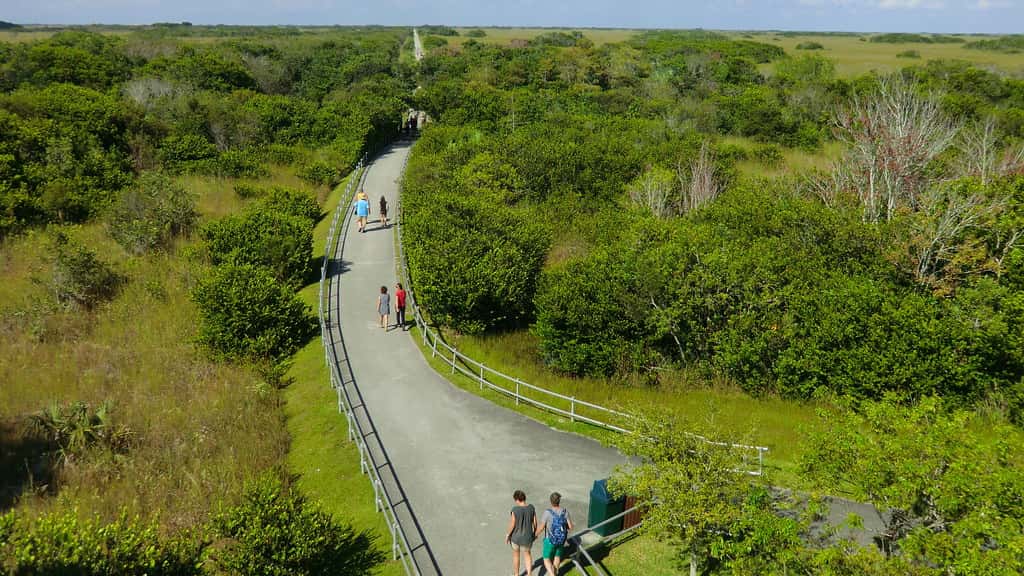
More than 900 participants removed 280 invasive Burmese pythons from South Florida during the 2026 Florida Python Challenge, the Florida Fish and Wildlife Conservation Commission announced, with a single hunter accounting for more than a third of the total. Tom Rahill took the $10,000 ultimate grand prize after removing 96 pythons, all of them from Everglades National Park. The longest snake of the competition, measuring 16 feet 5 inches, was removed by Rahm Levinson.
The 10-day competition ran July 10 through 19 and drew 907 registered participants from 30 states and from as far away as Canada and Vietnam. Results were announced August 5. The event has become the most visible element of Florida's long-running effort to manage an invasive species that has fundamentally altered the ecology of the southern Everglades.
The Challenge is a public engagement program as much as a removal program. State officials have been consistent that competition removals represent a small fraction of the estimated population, and that the event's greater value lies in recruiting and training people who then continue removing snakes year-round through the state's contractor programs.
How the competition works
The Florida Python Challenge is open to the public, requires no prior experience, and mandates completion of an online training course covering identification, humane killing methods and safety. Participants pay a registration fee and compete in professional and novice categories, with additional prizes for military veterans.
Hunting takes place on designated public lands in South Florida, including water management areas and wildlife management areas. Everglades National Park participates under separate arrangements, which is where the winning total was taken. Participants search on foot and by vehicle, primarily at night when pythons are more likely to be on or near roads and levees.
State rules require that pythons be killed humanely, and the FWC specifies acceptable methods. Captured snakes must be turned in at designated check stations, where staff verify species, record length and collect the carcasses for research. That data collection is a substantial secondary benefit of the event.
The scale of the problem
Burmese pythons became established in South Florida in the late 20th century, with genetic research indicating the population traces to released or escaped pets, likely compounded by escapes from a breeding facility damaged during Hurricane Andrew in 1992. They are now established across a broad area of the southern peninsula and have expanded northward.
Population estimates are notoriously imprecise. Published figures have ranged from tens of thousands to hundreds of thousands, and researchers are candid that no reliable census method exists. Pythons are extraordinarily cryptic, blending into sawgrass and mangrove habitat so effectively that detection rates in controlled studies have been low even when researchers knew snakes were present.
That detection problem is the central obstacle. Removal efforts cannot be efficient when finding the animal is the hard part. It is also why the 280 snakes removed in the Challenge, and the roughly 300 figure cited in some accounts, should be understood as a meaningful contribution rather than a population-level intervention.
The ecological damage
The effect on native mammals in Everglades National Park has been severe. Research published over the past 15 years documented dramatic declines in road survey observations of raccoons, opossums, bobcats and marsh rabbits in the areas where pythons became established earliest, with some species effectively absent from long-term survey routes.
Marsh rabbits have been the subject of direct experimental work. Studies tracking radio-collared rabbits released into python-occupied areas found python predation to be the dominant cause of mortality, which established causation rather than mere correlation.
The downstream effects extend through the food web. Bobcats and Florida panthers compete with pythons for the same prey base. Wading birds, a defining feature of the Everglades and the subject of decades of restoration effort, face nest predation. And pythons have been documented consuming alligators, deer and other large prey, which is unusual for an introduced predator and reflects the absence of anything in the system that regulates them.
Year-round removal efforts
The Challenge is the visible piece of a larger program. The FWC and the South Florida Water Management District both operate paid python removal contractor programs, employing dozens of people who are compensated hourly plus per-snake bounties scaled by length. Those contractors account for the large majority of pythons removed in Florida each year, in the thousands annually across the programs.
Research approaches have expanded well beyond manual searching. Scout snake programs, sometimes called the Judas technique, involve radio-tagging male pythons and tracking them to breeding aggregations, which allows removal of multiple large reproductive females at once. Because a single large female can lay 50 to 100 eggs, removing breeding females has disproportionate value.
Detector dogs trained to find pythons have been deployed with some success. Environmental DNA sampling, which detects genetic material shed into water, is being used to map distribution. And researchers continue to investigate potential attractants and trapping methods, though nothing has yet proven scalable.
What Floridians should know
Burmese pythons are not considered a significant danger to people. There has never been a documented fatality from a wild python in Florida, and encounters are rare relative to the amount of time residents spend in python habitat. Pets, particularly small dogs and cats, face genuine risk in areas near canals and wooded edges in South Florida.
Florida law allows Burmese pythons to be humanely killed on private land with landowner permission year-round, and on 32 designated public lands without a permit or hunting license. Correct identification matters, because Florida has native snakes, including the protected eastern indigo snake, that inexperienced observers can confuse with a python.
Sightings can be reported to the FWC's exotic species hotline or through the agency's reporting app. Reports contribute to distribution mapping, which is how the state tracks northward expansion.
Why the range keeps expanding
The northern limit of the python's Florida range is set primarily by cold tolerance. Burmese pythons are tropical animals, and sustained cold snaps kill them. A severe cold event in 2010 produced substantial mortality among the South Florida population, which briefly raised hopes that winter would act as a natural control.
Those hopes have not held. Survivors of cold events may carry traits favoring cold tolerance, and researchers have documented behavioral adaptations including refuge-seeking during cold weather. Selection pressure of that kind operates quickly in a population under stress.
Documented occurrences have moved steadily north and west from the original core in the southern Everglades, with confirmed animals in areas well outside the historical range. Whether that reflects genuine range expansion, new introductions from released pets, or both is not always resolvable from an individual record.
What happens to the snakes
Pythons turned in at check stations are used for research. Necropsies provide data on diet through stomach contents, on reproductive status through examination of follicles and eggs, and on health and body condition. That information feeds population modeling and helps researchers understand what the animals are eating in different parts of the range.
Stomach content analysis has produced some of the most persuasive evidence of ecological damage, documenting consumption of species including deer, alligators, wading birds and a wide range of small mammals. Individual documented cases have included prey items of remarkable size relative to the snake.
A small commercial market exists for python leather and, in limited circumstances, meat, though mercury concentrations in Everglades pythons have raised consumption concerns. The state has at times explored whether commercial use could support removal economics, but the fundamental problem of finding the animals limits any such model.
The broader invasive picture
Burmese pythons receive the most attention, but Florida hosts more established non-native species than any other state, a consequence of its climate, its ports and its historical role as a hub of the exotic pet trade. The state has documented hundreds of established non-native species across taxonomic groups.
Among reptiles alone, the list includes Argentine black and white tegus, Nile monitors, green iguanas and several constrictor species beyond the Burmese python. Tegus are of particular concern because they consume eggs, including those of alligators, crocodiles and ground-nesting birds.
Florida tightened its rules governing possession and sale of high-risk non-native species in recent years, prohibiting commercial breeding and sale of several species and requiring permits and containment standards for others. Those rules address the pathway rather than the existing populations, which is the correct sequencing but offers nothing for species already established.
What restoration is up against
The python problem intersects with the broader Everglades restoration effort, one of the largest ecosystem restoration projects ever undertaken. That work focuses primarily on hydrology, restoring the volume, timing and distribution of water flow that drainage and development disrupted over the past century.
Restoring water flow is necessary but not sufficient. An ecosystem with restored hydrology and a collapsed mammal population does not function as it did, and the wading bird recovery that serves as a benchmark for restoration success depends on a food web that pythons have altered.
This is why invasive species management is treated as a component of restoration rather than a separate program. Federal and state agencies, the South Florida Water Management District, the National Park Service and tribal governments including the Miccosukee and Seminole all participate in coordinating that work.
What's next
The FWC typically announces the following year's competition dates in the spring, with registration and mandatory training opening ahead of the event. The 2027 Challenge is expected to follow a similar summer schedule.
Beyond the competition, the substantive work continues through the contractor programs and the research effort. The realistic goal, as state biologists have consistently framed it, is suppression at the northern and western edges of the range rather than eradication in the core. Eradication is not currently considered achievable with existing tools.
The Challenge's clearest contribution may be attention. An invasive species problem that unfolds slowly in a remote landscape is easy for the public and for appropriators to overlook. A 16-foot snake and a $10,000 prize are not, and the sustained funding the removal programs receive is not unrelated to that visibility.
Spotted an issue with this article?
Have something to say about this story?
Write a letter to the editorComments
No comments yet. Be the first to weigh in.
Related Coverage
Rust Tide Turns Southwest Florida Waters Murky Around Sanibel and Pine Island
2h ago
A Rust-Colored Bloom Is Fouling the Waters Around Sanibel and Pine Island
2d ago
Florida's Coast Stays Clear of Red Tide as FWC Sampling Finds No Bloom Statewide
3d ago
Florida Wildlife Officials Propose Strict New Sloth Rules After Dozens Died at an Orlando Attraction
5d ago