Florida Republicans Lose State House Supermajority but Cling to Slim Edge in Senate
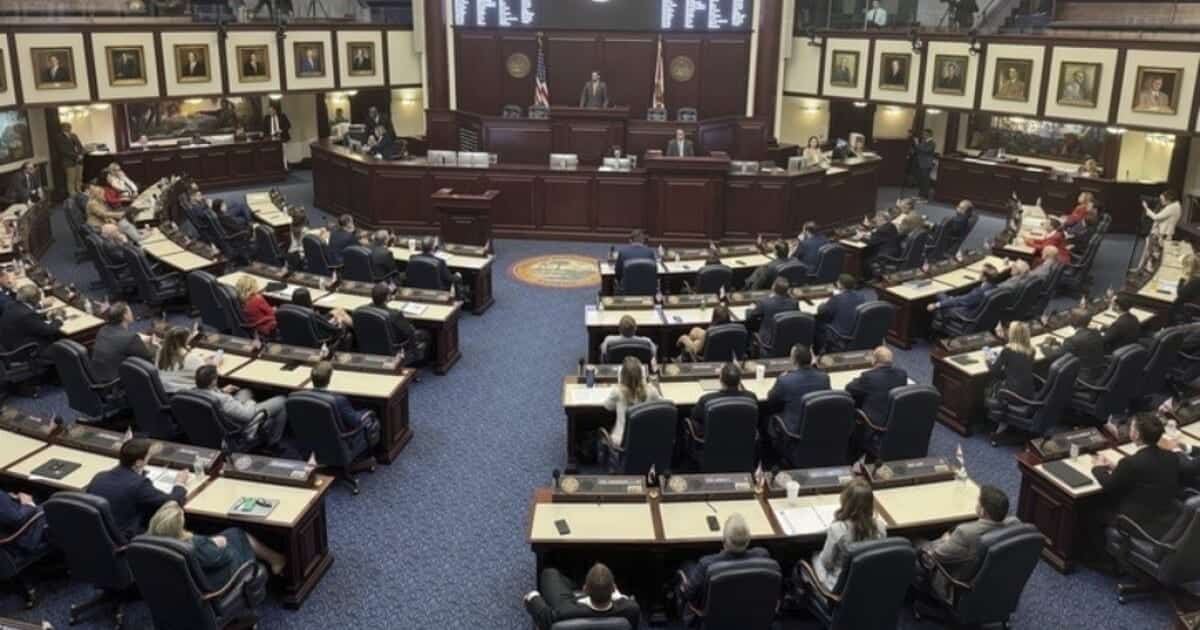
Florida Republicans appear to have lost their two-thirds supermajority in the state House in Tuesday's election, ending years of veto-proof control of the chamber, while hanging on to a slim edge in the state Senate, according to unofficial results reported by the News Service of Florida. Republicans were poised to drop around 15 House seats, a swing that would leave them well short of the 80 seats needed for a supermajority in the 120-member chamber.
Republicans will still control both chambers of the Legislature by comfortable majorities. But the results mean the party can no longer act alone in the House on decisions that require a two-thirds vote, and its hold on the Senate supermajority rests on a handful of close races that were still being counted Wednesday. All of the results are preliminary and unofficial until certified.
How the House slipped away
Before Tuesday, the House had 82 Republicans and 34 Democrats, with four vacant seats that had been held by Republicans. A supermajority requires 80 seats. With Republicans set to lose around 15 seats, according to the News Service of Florida, that threshold appeared to be out of reach.
At least 10 Republican incumbents appeared headed for defeat, according to the unofficial results:
- Chad Johnson of Chiefland
- Monique Miller of Palm Bay
- Erika Booth of St. Cloud
- Rachel Plakon of Lake Mary
- Danny Alvarez of Hillsborough County
- Meg Weinberger of Palm Beach Gardens
- Hillary Cassel of Dania Beach
- Fabian Basabe of Miami Beach
- Doug Bankson of Apopka
- Hilary Holley of Polk City
Several of those races carried their own storylines. Miller's apparent loss to Democrat Daniel McDow was close enough to fall within the recount margin. Cassel had switched from the Democratic Party to the Republican Party after winning reelection in 2024. Basabe lost a civil trial this past summer over alleged sexual harassment of two former male staffers; he denies wrongdoing and is appealing. Weinberger had been discussed as a possible running mate for Governor-elect Byron Donalds.
The night was not all losses for the GOP. Republicans appeared set to win back House District 87 on Palm Beach County's east coast, where Republican Jon Maples was poised to defeat Rep. Emily Gregory, a Jupiter Democrat who beat him in a special election this spring. Republicans were also poised to recapture a district that includes President Donald Trump's Mar-a-Lago estate.
Four of the incumbents on the list, Booth, Plakon, Bankson and Miller, represent districts in the Orlando area and along the Space Coast.
A thinner edge in the Senate
In the 40-member Senate, a supermajority requires 27 seats. Before Tuesday, the chamber had 26 Republicans, 12 Democrats, one independent and one vacancy. The vacant seat belonged to former Sen. Bryan Avila, a Republican who resigned to run for lieutenant governor as Donalds' running mate. No special election has been called to fill it.
The News Service of Florida reported that Republicans still held the Senate supermajority slightly, but described that hold as on thin ice. The most closely watched race was in Senate District 10, where Democrat John Lowndes, the mayor of Maitland, was ahead of Sen. Jason Brodeur, a Sanford Republican, in early unofficial returns. The Democratic Legislative Campaign Committee had targeted the seat as a path to breaking the Senate supermajority.
Elsewhere in the Senate, incoming Senate President Jim Boyd of Bradenton won easily. Democrats were set to keep Senate District 14 in Hillsborough County, which Sen. Brian Nathan won in a March special election. In the seat once held by Lt. Gov. Jay Collins, Republicans ran former Rep. Josie Tomkow, who had been part of House leadership before losing a special election.
Calatayud survives in Miami-Dade
One of the seats that kept the GOP's Senate hopes intact was Senate District 38 in southern Miami-Dade County, where Sen. Alexis Calatayud, R-Miami, appeared set to win a second term over Democrat Richard Lamondin, a Miami entrepreneur who left a congressional race in April to challenge her.
Unofficial results early Tuesday night put Calatayud just outside the 0.5% margin of victory that triggers an automatic recount under Florida law, according to the News Service of Florida. Florida Politics reported that she took 49.5% of the vote to Lamondin's 48.7%, with no-party candidate Jeffrey Solomon at 1.8%. The Key Biscayne Independent reported her lead at 1,654 votes. No recount had been reported as ordered in the race as of Wednesday morning.
The district includes Cutler Bay, Palmetto Bay, Pinecrest, South Miami, parts of Homestead and Coral Gables and unincorporated neighborhoods including Kendall, Westchester and Goulds. Calatayud first won the seat in 2022.
Why a supermajority matters
A two-thirds majority lets the governing party clear the highest procedural bars in the Legislature without help from the other side. Breaking the supermajority means Republicans can no longer act alone on certain major decisions, including overriding a governor's veto or bypassing legislative rules, according to the News Service of Florida.
That shift gives House Democrats leverage they have not had in years. With Republicans below 80 seats, any veto override in the House, or any move that requires two-thirds of members, will need at least some Democratic votes. Republicans will still be able to pass bills, budgets and most other legislation on their own with a simple majority.
The timing matters because Donalds will take office in January. A supermajority in both chambers gave legislative leaders the option of overriding a governor's veto without Democrats; in the House, that option now runs through the minority party.
Reaction
Democrats cast the House results as a turning point. House Democratic Leader-designate Christine Hunschofsky said that after years of Republican supermajority control, "Floridians across the state stepped up to demand a different direction." Heather Williams, president of the Washington-based Democratic Legislative Campaign Committee, called the results a "stunning victory."
Boyd, who will lead the Senate, struck a forward-looking tone after his own win, saying, "It's no longer enough to focus on the future; we also have to focus on the present."
What's next
Several races, including Miller's House seat and the Brodeur-Lowndes Senate race, could still shift as county canvassing boards finish counting provisional and overseas ballots. Any race decided by 0.5 percentage points or less goes to an automatic recount. Final seat counts in both chambers will not be settled until the results are certified later this month.
The newly elected Legislature will meet in Tallahassee for its organization session after the election, when members are sworn in and Boyd is formally elected Senate president. The Senate also has to fill Avila's vacant seat, which could affect the supermajority math once a special election is called.
Spotted an issue with this article?
Have something to say about this story?
Write us a letterComments
No comments yet. Be the first to weigh in.
Related Coverage
Floridians Vote for Governor, Senate and Amendment 3 as Flooding Moves About 25 Polling Places in 7 Counties
1d ago
Amendment 3 Passes: Florida Voters Approve Property Tax Overhaul With 62% of the Vote
1d ago
Byron Donalds Defeats David Jolly to Become Florida's First Black Governor
2d ago

Alexis Calatayud's bipartisan pitch meets Richard Lamondin's call for change in tight Senate District 38 race
2d ago