Florida Revives Plan to Drop Four School Vaccine Requirements as Doctors and Cancer Groups Object

The Florida Department of Health has revived a plan to remove four vaccines from the list of immunizations required for children entering public schools, and the proposal is drawing organized opposition from physician groups and cancer advocacy organizations. The four vaccines at issue protect against chickenpox, hepatitis B, haemophilus influenzae type b, and pneumococcal bacteria. The public comment period on the plan closed in mid-September.
If adopted, the change would leave Florida with a shorter school-entry requirement list than most states. It would not make the vaccines unavailable or discourage clinicians from recommending them. What it would change is whether a family must document those specific immunizations, or obtain an exemption, in order to enroll a child in a Florida public school.
The dispute is a genuine policy disagreement rather than a technical one. Supporters frame the change as returning a medical decision to parents. Opponents argue that school-entry requirements are the specific mechanism that has driven the high coverage rates that keep several of these diseases rare, and that removing the requirement predictably lowers coverage.
What the four vaccines cover
Varicella vaccine protects against chickenpox. Before routine vaccination, chickenpox was close to universal in childhood in the United States, and while most cases were mild, a minority produced bacterial skin infections, pneumonia, or encephalitis. The virus also establishes latency and can reactivate decades later as shingles.
Hepatitis B vaccine protects against a bloodborne virus that can cause chronic liver infection. The reason it is given in infancy rather than adolescence is that infection acquired early in life is far more likely to become chronic than infection acquired as an adult, and chronic hepatitis B carries elevated risk of cirrhosis and liver cancer over a lifetime. That cancer connection is the direct link to the cancer advocacy groups that have joined the opposition.
Haemophilus influenzae type b, universally shortened to Hib, was once the leading cause of bacterial meningitis in young American children. It also caused epiglottitis, a rapid swelling of the airway that could be fatal within hours. Pneumococcal vaccine protects against Streptococcus pneumoniae, a bacterium responsible for pneumonia, bloodstream infections, and meningitis, and one that also drives a large volume of ear infections in young children. Both Hib and pneumococcal disease fell sharply after routine infant vaccination began.
The department's rationale
The department's framing has consistently separated the question of whether a vaccine is available and recommended from the question of whether the state should require it for school attendance. Under that framing, a family retains full access to all four vaccines, clinicians continue to recommend them under standard pediatric schedules, and what changes is the compulsory element.
That argument draws on a distinction in how vaccine-preventable diseases spread. Some diseases, measles being the clearest example, are so transmissible that school outbreaks are close to inevitable once coverage slips. Others, including hepatitis B, are not spread through ordinary classroom contact at all. Advocates of narrowing school requirements argue that the requirement list should be limited to diseases where the school setting is itself the transmission risk.
The proposal also fits a broader policy direction in Florida. State officials have pursued an expansion of what they describe as medical freedom, including proposals to create conscience exemptions to school vaccine requirements and to change how certain medications are dispensed. Legislation along those lines has been filed in Tallahassee in recent sessions, including during a special session earlier in 2026 where the relevant Senate bills did not advance because the House filed no companions.
Why clinicians are pushing back
The objection from physician organizations is empirical rather than philosophical. School-entry requirements are administratively powerful because they attach a consequence to a deadline, and the evidence across states is that jurisdictions with tighter requirements maintain higher coverage than jurisdictions with looser ones. Removing a requirement is not neutral in its effect on uptake.
The clinical concern centers on the youngest and most vulnerable children. Hib and pneumococcal disease hit infants and toddlers hardest, and neither disease was eliminated. Both were suppressed to low levels by high vaccination coverage, and both circulate in populations where coverage falls. The children at greatest risk if coverage declines include those too young to be fully vaccinated and those who cannot be vaccinated for medical reasons.
That last group is where the cancer advocacy organizations entered the debate. Children undergoing treatment for leukemia and other cancers are often immunosuppressed, may not be able to receive live vaccines such as varicella, and may lose immunity they previously had. Their protection depends substantially on the vaccination status of the children around them. Advocates argue that a child returning to school during or after chemotherapy is exactly the person a school requirement protects.
How the rule process works
Florida changes rules of this kind through the state's administrative procedure framework rather than by administrative announcement alone. The department publishes a proposed rule, provides a defined comment period, and may hold hearings. Comments become part of the record, and the department can revise, withdraw, or proceed with the proposal.
Rules adopted this way are also subject to legislative oversight and to legal challenge. Interested parties can contest a proposed rule on grounds including whether it exceeds the agency's statutory authority or whether it conflicts with existing law. Florida's school immunization requirements are grounded in statute as well as rule, which is one reason similar changes have previously been pursued through the Legislature.
The word revived matters to understanding where this stands. An earlier version of this plan did not succeed, and the department has brought it back. That history means the current proposal is not the first attempt, and that both supporters and opponents arrive with positions already developed from the prior round.
What it would mean for Florida families
For most families, the immediate practical change would be paperwork. Parents who follow the standard pediatric immunization schedule would notice nothing, because their children would already have received all four vaccines well before school entry. Pediatricians would continue to recommend them at the usual visits.
The change would matter most in the margins: families who are hesitant, families who have fallen behind because of gaps in care, and families for whom the school deadline was the prompt that got a child caught up. School nurses and district health staff describe the enrollment requirement as a functional reminder system, catching children who are behind for reasons that have more to do with access than conviction.
Florida school districts would also face an operational question. Districts maintain immunization records and manage compliance, and a narrower requirement list simplifies that work while reducing the information districts hold about the immunity profile of their student populations. That information is what public health officials use to assess risk when a case appears in a school.
The broader vaccine picture in Florida
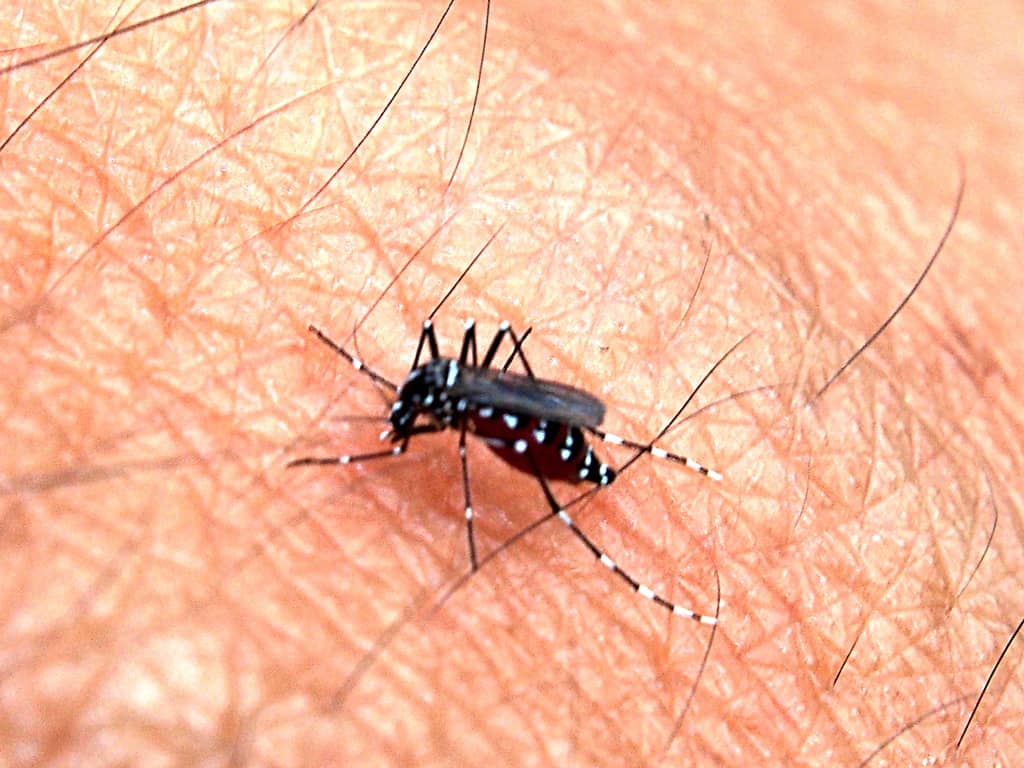
The school requirement fight is one of several vaccine policy developments in Florida this month, and they do not all point the same direction. The Department of Health has simultaneously proposed a rule that would let pharmacists administer the vaccine against chikungunya, a mosquito-borne virus with 189 reported Florida cases this year, 120 of them in Miami-Dade County. That proposal expands access rather than narrowing requirements.
Seasonal vaccination programs are also underway. A University of Florida program is delivering free influenza vaccine in Alachua County schools, and a school-based flu vaccination effort is scheduled to run from late September into November, working with students from elementary through high school. Those programs operate on a voluntary model with parental consent, which is the structure the department has favored.
The national backdrop includes a substantial measles year. As of mid-September, 3,471 confirmed measles cases had been reported in the United States in 2026, with Florida among the jurisdictions reporting cases. Measles is not among the four vaccines in the proposal, but its resurgence is frequently cited in arguments about what happens to a disease that was once declared eliminated when coverage falls.
How Florida compares with other states
Every state sets its own school immunization requirements, and the lists vary more than most parents assume. All states require some core set, typically covering measles, mumps, rubella, polio, diphtheria, tetanus, and pertussis. Beyond that core, states diverge on varicella, hepatitis B, Hib, pneumococcal, hepatitis A, and meningococcal vaccines, and they diverge further on which exemptions they allow.
Removing all four of the vaccines in Florida's proposal would place the state at the permissive end of that national range. It would not make Florida unique in dropping any single one of them, because a handful of states do not require one or another of the four. Dropping all four at once is the part that would stand out, because the four together cover a bacterial meningitis pathogen, a bloodborne virus with a cancer link, a bacterium responsible for pneumonia and bloodstream infection, and a highly transmissible virus.
Exemption policy interacts with requirement policy in ways that complicate comparisons. A state with a long requirement list but easily obtained exemptions can end up with lower effective coverage than a state with a shorter list and strict exemption rules. Florida allows medical exemptions and religious exemptions, and legislation proposed in recent sessions would have added a broader conscience exemption. The combined effect of a shorter list plus broader exemptions is what public health researchers watch, rather than either element alone.
Coverage data will eventually show the practical result if the rule advances. Kindergarten immunization coverage is reported annually by state, and those figures are the measure that would reveal whether removing the requirements changed behavior in Florida, and by how much. That answer would take at least a full school year to emerge.
What's next
With the comment period closed, the next step belongs to the department, which will decide whether to advance the rule as written, revise it, or withdraw it. The department's published rule notices remain the authoritative record of where the proposal stands, and families seeking certainty about requirements for the current school year should check with their district rather than rely on news coverage of a pending rule.
Legislative action is a parallel track to watch. Lawmakers return to Tallahassee for the next regular session, and vaccine requirements and exemptions have appeared on the agenda repeatedly. A statutory change would be more durable than a rule and would be harder to reverse under a future administration, which is an argument both sides have made at different times.
For parents, the most useful step in the interim is the ordinary one. Reviewing a child's immunization record with a pediatrician establishes what the child has received and what, if anything, is outstanding, independent of what the state's requirement list says on any given date.
Spotted an issue with this article?
Have something to say about this story?
Write a letter to the editor