Norvell Enters Year Seven at Florida State With a New Quarterback and No Margin
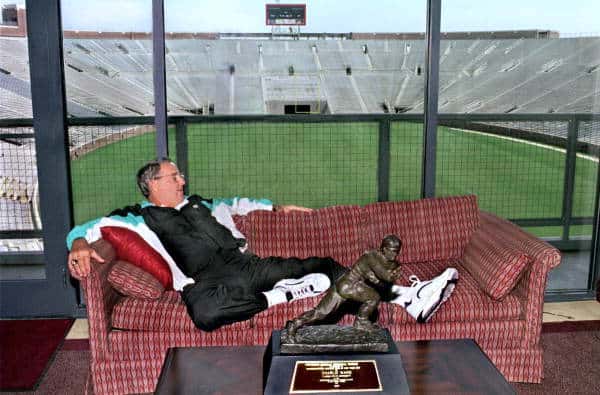
Florida State opens the 2026 season under a head coach whose job security has been a recurring topic since the middle of last year. Mike Norvell begins his seventh season in Tallahassee having gone 7-18 since the 2023 team finished the regular season undefeated and was left out of the four team College Football Playoff, a stretch that has turned one of the sport's landmark programs into an annual referendum.
The Seminoles open by hosting SMU on Labor Day, then travel to Tuscaloosa to face Alabama. It is an unforgiving start for a program that has not won a game outside Doak Campbell Stadium in more than two years.
Norvell has named Ashton Daniels his starting quarterback for 2026, resolving one of the offseason's open questions and giving the offense a defined starting point after a 2025 season in which the position produced inconsistency.
How Florida State got here
The 2023 season remains the pivot point. Florida State finished 13-0 in the regular season, won the ACC championship, and was excluded from the four team playoff after quarterback Jordan Travis suffered a season ending injury. The committee's decision was among the most contested in the format's history.
What followed was a collapse. The 2024 season produced a record almost nobody projected for a program coming off an undefeated regular season, driven by heavy roster turnover after the 2023 team's departures and by transfer portal additions that did not work out.
The 2025 season improved on that but ended 5-7, missing a bowl game. The most telling detail was the record in close games: Florida State went 0-4 in games decided by eight points or fewer. Losing every one game contest is generally a matter of both execution and luck, and it left the season's record substantially worse than the underlying performance suggested.
Across those two seasons, Florida State has gone 7-18. For a program with three national championships and a fan base whose expectations were set during the Bobby Bowden era, that record is not sustainable regardless of the surrounding circumstances.
The rebuilt defense
Florida State reworked its defense over the offseason, bringing in multiple transfers to address a unit that struggled last season, particularly against the run. The additions concentrate in the middle of the defense, where the Seminoles were most vulnerable.
Southern Miss transfer Chris Jones arrives after finishing among the top ten tacklers in the Football Bowl Subdivision in 2025, production that reflects both individual quality and, typically, a defense that faced a heavy volume of plays. North Carolina transfer Mikai Gbayor brings prior experience in defensive coordinator Tony White's system from their time together at Nebraska.
Scheme familiarity matters more than it might appear. A transfer who already knows the coordinator's terminology and structural concepts can contribute immediately, while a transfer learning a new system often needs most of a season. Gbayor falls into the first category.
The portal has become the primary roster building tool for programs in Florida State's position: teams with resources and brand recognition but with immediate needs that high school recruiting cannot fill on a one year timeline. The risk is that portal rosters lack continuity, which is part of what went wrong in 2024.
The schedule problem
Opening with SMU at home and then traveling to Alabama creates a scenario where Florida State could be 1-1 or 0-2 before ACC play begins in earnest. Neither outcome would be surprising, and the difference between them shapes the entire season's narrative.
The road record is the more concerning underlying issue. More than two years without a win away from Doak Campbell Stadium is an extraordinary statistic for a power conference program, and it points to something beyond talent: teams that cannot win on the road typically have problems with composure, situational execution or depth.
Florida State also faces a pair of two game road trips this season, which compounds the difficulty. Consecutive road games test depth and preparation in ways single road games do not, and a team already struggling away from home faces a particular challenge.
Alabama in Tuscaloosa in September is the kind of game a program schedules years in advance expecting to be in a different position. Bryant Denny Stadium is among the sport's most difficult venues, and the game arrives before Florida State will have established anything about its own identity.
What Norvell is working with
Daniels at quarterback gives the offense a defined starter, which by itself removes a source of instability. Quarterback competitions that extend into the season split practice repetitions and prevent an offense from building rhythm with a single decision maker.
The offensive line has been a recurring concern, as it is for most struggling programs, because line play determines whether the rest of the offense can function. Florida State's ability to run the ball and protect the quarterback will determine more about the season than any single skill position player.
Recruiting has continued at a reasonable level despite the on field results, which reflects Florida State's brand strength and its position in a talent rich state. Tallahassee is geographically distant from South Florida's recruiting hotbed, but the program has historically recruited the entire state successfully.
Name, image and likeness resources and revenue sharing have reshaped competitive dynamics across college football, and Florida State's ability to compete financially with the Southeastern Conference and Big Ten programs pursuing the same players is a structural question the ACC as a whole faces.
What it means for Florida football
Florida State's situation mirrors Florida's in one respect and differs in another. Both programs entered 2026 outside the preseason rankings while Miami opened at No. 7, an unusual configuration for a state that has historically supported three nationally relevant programs.
Florida is starting over under Jon Sumrall after firing Billy Napier during the 2025 season, which gives the Gators the clarity of a fresh start and the disadvantages of a first year staff. Florida State is attempting the harder thing: recovery under the coach whose tenure produced the decline.
The state's recruiting dynamics respond to program performance. When Miami is the only ranked program, South Florida talent flows there first, and Florida State's ability to compete for those players depends on demonstrating a path back to contention.
For the ACC, Florida State's trajectory matters at the conference level. The Seminoles have been among the league's flagship programs, and a sustained decline weakens the conference's national profile at a moment when realignment pressures continue.
What the 2023 snub cost
Florida State's current situation cannot be separated from what happened at the end of the 2023 season, and the connection is more concrete than the emotional narrative suggests.
The Seminoles finished 13-0, won the ACC championship game, and were left out of the four team College Football Playoff after quarterback Jordan Travis suffered a season ending leg injury in November. The committee cited the team's changed capability without Travis in explaining the decision.
The immediate consequence was competitive. Players who had been part of an undefeated team entered the transfer portal in unusual numbers, and the roster that took the field in 2024 bore limited resemblance to the one that went undefeated. Several starters opted out of the bowl game, which the Seminoles lost badly.
The longer consequence was institutional. Florida State pursued legal action against the ACC over the conference's grant of rights and exit fee structure, a dispute rooted in the belief that conference affiliation was limiting the program's revenue and national position. That litigation consumed administrative attention and created uncertainty about the program's future.
Recruiting was affected in ways that are difficult to isolate but visible in outcomes. A program in public conflict with its conference, coming off a collapse, faces harder conversations with recruits than one selling stability.
The expanded 12 team playoff, adopted after 2023, means the specific scenario that excluded Florida State cannot recur in the same form. That is cold comfort to a program that has gone 7-18 since, but it does change the calculation for what a strong season now produces.
What a coaching change would cost
Any discussion of a coach's job security in modern college football has to account for the contract, and Florida State's situation is not simple.
Norvell signed a contract extension after the 2022 season, and major college coaching contracts of that type carry buyout provisions that obligate the school to pay a substantial portion of remaining compensation if the coach is terminated without cause. Those figures at the power conference level frequently run into eight figures.
Buyouts also extend to assistant coaches, whose contracts typically include their own termination provisions. A full staff change multiplies the cost well beyond the head coach's figure.
Florida State's athletic department finances have been a subject of public discussion, connected to the revenue disparity the school cited in its dispute with the Atlantic Coast Conference. A large buyout obligation would arrive against that backdrop.
Booster funding has historically covered coaching buyouts at programs with sufficiently motivated donor bases, and Florida State has one. But the new financial environment in college athletics, including revenue sharing with athletes, competes for the same dollars.
None of that determines the outcome. Programs have paid enormous buyouts when the alternative was continued decline, and administrators weigh the cost of a change against the cost of standing still. What it does mean is that the decision is financial as well as competitive, and that a marginal season produces a genuinely difficult judgment rather than an obvious one.
What's next
The SMU game on Labor Day is the season's first data point and, in a program under this much scrutiny, an outsized one. A convincing win buys patience; a home loss to open the season would start the year in crisis.
Alabama follows immediately, and the realistic expectation is a difficult afternoon. How Florida State performs there, rather than whether it wins, is what evaluators will watch: whether the team competes and executes, or whether the game reveals the same problems as the last two seasons.
ACC play determines whether the season becomes a bowl campaign or another losing year. Six wins and bowl eligibility would represent meaningful progress from 5-7; anything less would be difficult for the administration to accept in a seventh season.
Coaching decisions in college football increasingly happen during the season rather than after it, as programs move early to secure candidates. That timeline means Norvell's situation could resolve well before the final game if results do not improve.
Spotted an issue with this article?
Have something to say about this story?
Write a letter to the editorComments
No comments yet. Be the first to weigh in.
Related Coverage
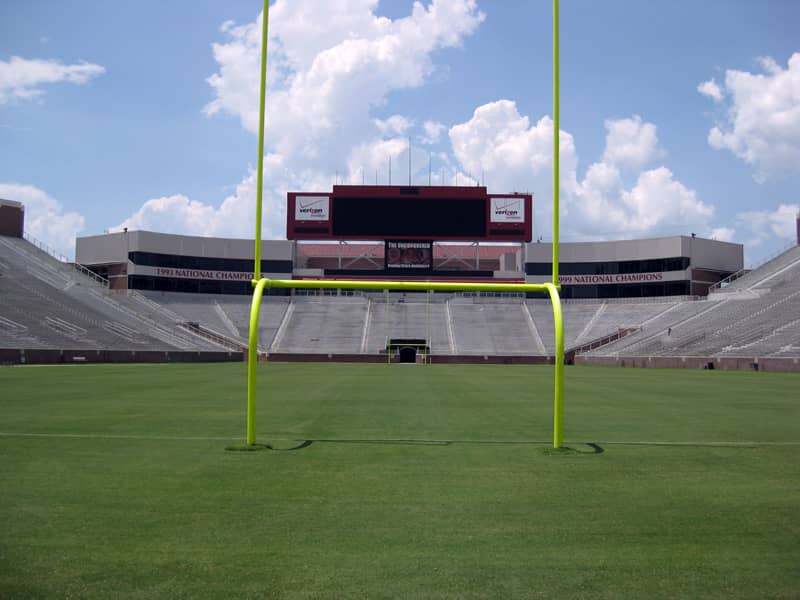
Ashton Daniels Runs for Five Touchdowns as Florida State Routs Virginia 38-7
8h ago
Drew Rasmussen Takes No-Hitter Into Eighth as Rays Blank Yankees 1-0 in ALDS Game 1
1d ago
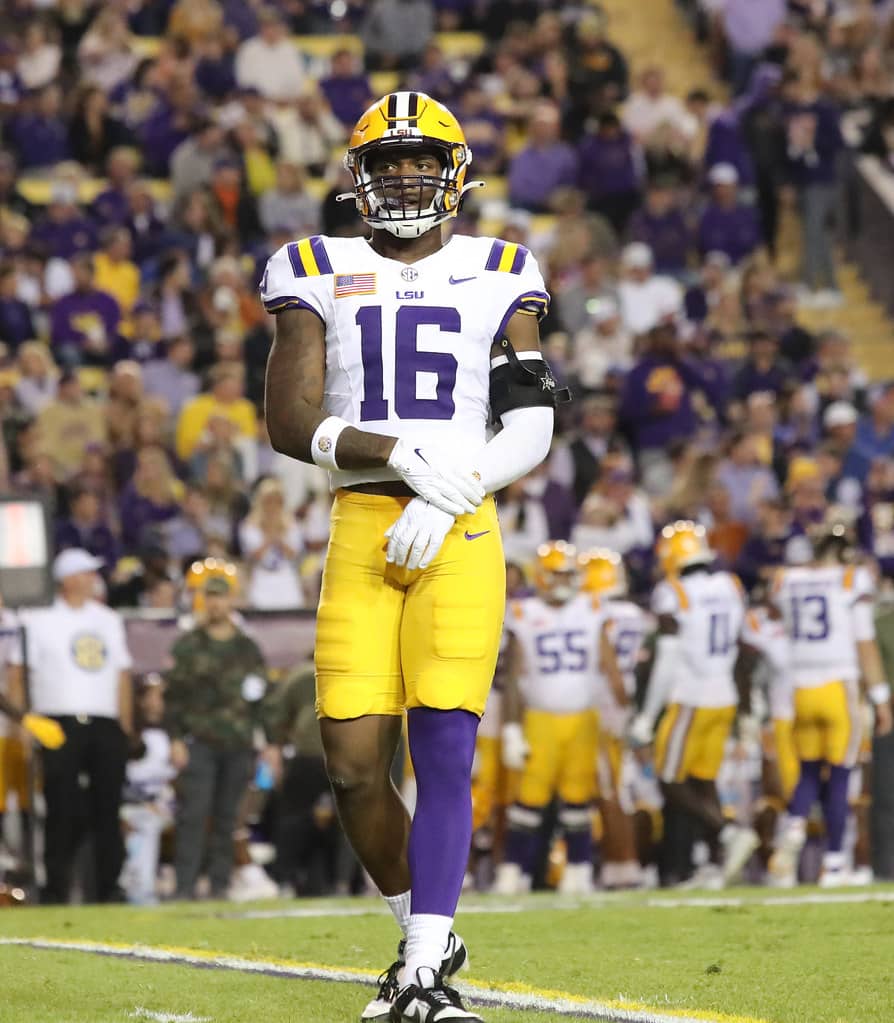
No. 8 Florida Gators Routed 45-17 at No. 25 Missouri, Suffer First Loss Under Jon Sumrall
1d ago

Miami Heat open Giannis Antetokounmpo era with preseason game in Quebec City
1d ago