Florida's Brazilian voters head back to the polls for Oct. 25 presidential runoff as corruption dominates the race
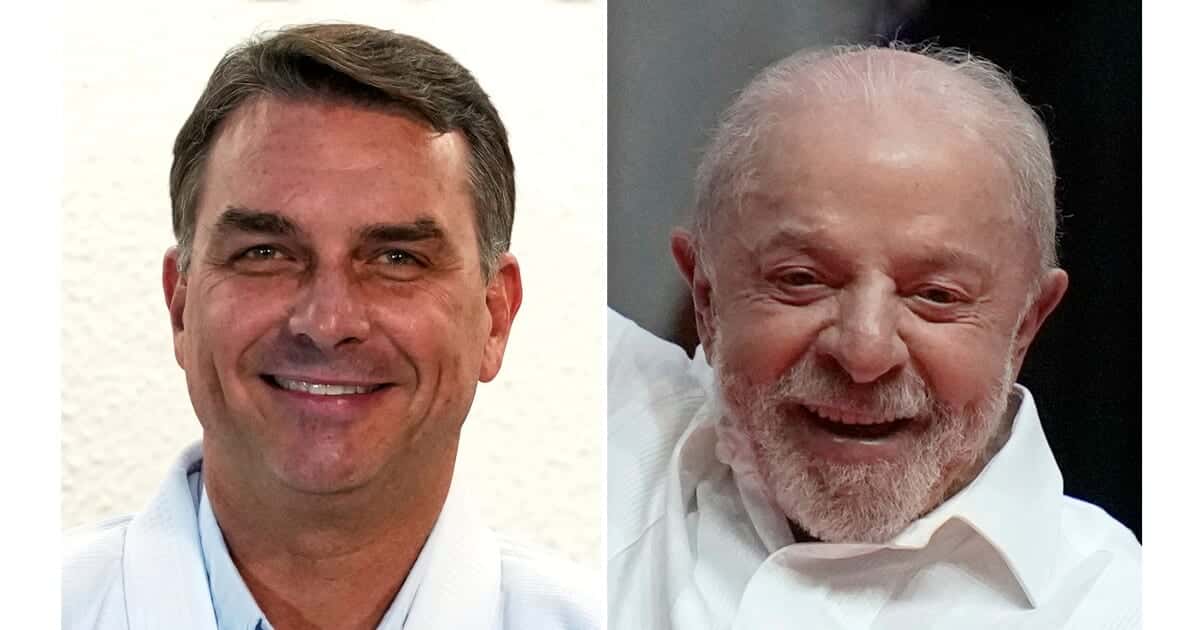
Tens of thousands of Brazilian citizens living in Florida are being called back to the polls on Sunday, Oct. 25, for a presidential runoff between far-right Sen. Flávio Bolsonaro, the eldest son of former President Jair Bolsonaro, and President Luiz Inácio Lula da Silva. More than 40,000 Brazilians are registered to vote at the Miami polling site and about 26,000 live in the Orlando area, making Florida one of the largest centers of Brazilian voting outside Brazil.
The runoff comes after a first round on Oct. 4 in which neither candidate won a majority, and it is unfolding against a backdrop that WLRN described on Tuesday as dominated by corruption concerns, with both finalists carrying their own baggage.
How the first round ended
Flávio Bolsonaro, 45, finished first on Oct. 4 with just over 56 million votes, about 47% of the total, while Lula, 80, received about 53.7 million, or roughly 45%, according to Brazil's electoral court figures reported by the Associated Press through WLRN. Lula, who is seeking a fourth non-consecutive term, called the result unexpected because he had hoped to win outright. The winner takes office on Jan. 5.
Turnout was a problem nationally. More than 33 million people, about 21% of the electorate, did not vote in the first round, the highest first-round abstention rate since 1998, WLRN reported, citing electoral court data. That is notable in a country where voting is mandatory for citizens ages 18 to 70.
Corruption hangs over both candidates
Corruption has emerged as a top concern for Brazilian voters heading into the runoff, according to WLRN. Flávio Bolsonaro is under investigation for corruption, money laundering and tax evasion. Lula spent 19 months in prison on corruption and money laundering charges that were later annulled.
A newer scandal involving the failed Banco Master has also reached into the race. WLRN reported that Supreme Court Justice Alexandre de Moraes, who oversaw the case that led to Jair Bolsonaro's imprisonment for an attempted coup, is suspected of ties to the bank's former head, and that Flávio Bolsonaro faces similar suspicions. Both deny wrongdoing. Many Brazilians link the Banco Master affair to Operation Car Wash, the sprawling corruption probe launched in 2014 that ensnared Lula.
Experts told WLRN that corruption may shape turnout more than candidate choice, fueling abstention and anti-incumbent anger. "People don't want to discover the truth about their candidates, they want to beat the opponent," said Nara Pavão, a political science professor at the Federal University of Pernambuco.
Jair Bolsonaro, who governed from 2019 to 2022, is ineligible to run and was sentenced in September 2025 to 27 years in prison over the coup plot. His son has pledged to crack down on criminal groups, seek better deals with the Trump administration and free his father, the AP reported. Lula has run on his social programs and on standing up to Washington.
Florida's two polling places
Brazilians living abroad cannot vote by mail or online, so consulates set up in-person polling places. In the United States there are 15 of them in 12 states, and two are in Florida, one in the Orlando area and one in Miami, according to an analysis by University of Denver historian Rafael R. Ioris published by WLRN. Overseas voters cast ballots only for president and vice president.
The Miami site, which serves the consular jurisdiction covering South Florida, is Miami Dade College's Kendall Campus at 11011 SW 104th St., with voting in Buildings R and 9 from 8 a.m. to 5 p.m., according to Brazilian community outlets citing the Consulate General in Miami. Brazilian press reports on electoral court data ranked the Kendall campus as the third-largest overseas polling place in the 2026 election, with 40,066 registered voters, behind two sites in Portugal. Voters need an official photo document such as a passport or Brazilian ID, according to the consulate's guidance as reported by those outlets.
Florida's Brazilian voters are part of a record overseas electorate, according to Brazilian press reports. About 1 million Brazilians abroad are eligible to vote, Ioris wrote, and about 265,000 of them live in the United States.
Florida's vote leaned Bolsonaro
Brazilians in the United States favored the Bolsonaro camp in the first round. Flávio Bolsonaro won 45,004 votes in the U.S. to Lula's 23,335, according to the WLRN analysis, even as Lula carried 64 of the 101 countries where overseas voting was offered. About 21,000 Florida residents cast ballots in the first round, the analysis reported.
Turnout among Brazilians in the U.S. fell sharply. Roughly 75,000 voted, about 28% of those eligible, down from more than 37% in 2022. Ioris noted a possible factor: some Brazilians feared U.S. immigration enforcement, and some expatriate organizations advised people with precarious immigration status not to go to the polls. He wrote that it is unclear whether enforcement actually kept anyone from voting.
Lines at the Kendall campus stretched as long as an hour in the first round, FIU's Caplin News reported. Voters who miss the runoff can justify their absence afterward; Brazilian outlets reported a Jan. 8, 2027, deadline for runoff justifications, and the fine for not voting is about $1.
A first-round arrest at the Kendall site
The first round in Miami was also marked by an arrest. As The Florida Press reported, Miami-Dade Sheriff's Office detectives arrested Danilo Alves Silva, 46, of Port St. Lucie, at the Kendall polling site after he allegedly walked between voting buildings dressed in clothing marked as an ICE agent's, including an ICE hat and jacket. He was charged with offenses including felony voter intimidation, and he has pleaded not guilty through a public defender. Silva told police the outfit was a costume he bought on Amazon and that he had not broken any laws, according to reports. He is presumed innocent, and no outcome of his scheduled Oct. 19 hearing had been reported as of Tuesday.
What's next
Polls at the Kendall campus open at 8 a.m. on Sunday, Oct. 25, for voters registered there, and results usually come within hours of polls closing in Brazil. Most published runoff polls have shown Flávio Bolsonaro ahead, several within the margin of error, according to Brazilian poll trackers. For Florida, the outcome matters beyond the diaspora: a Bolsonaro win would likely draw Brazil closer to the Trump administration, while a Lula victory would likely keep Brazil at a distance from Washington and deepen its ties with China, the AP reported.
Spotted an issue with this article?
Have something to say about this story?
Write us a letterComments
No comments yet. Be the first to weigh in.
Related Coverage
Children Say Hillsborough Deputies Injured Their Father in Seffner Traffic Stop Before He Was Handed to ICE
29m ago
Puerto Rico Fights Trump Plan for English-Only Head Start as Central Florida Families Watch
21h ago

Musk Pledges a SpaceX Share to Every U.S. Child, Worth About $650 Million for Florida Kids, With No Details Yet
22h ago

Haiti Gangs Hit UN-Backed Force in Biggest Attack Yet as Four Salvadoran Troops Go Missing, Rattling South Florida
22h ago