Florida's Voter Registration Books Closed Monday: Key Dates, Races and Amendments Before Nov. 3
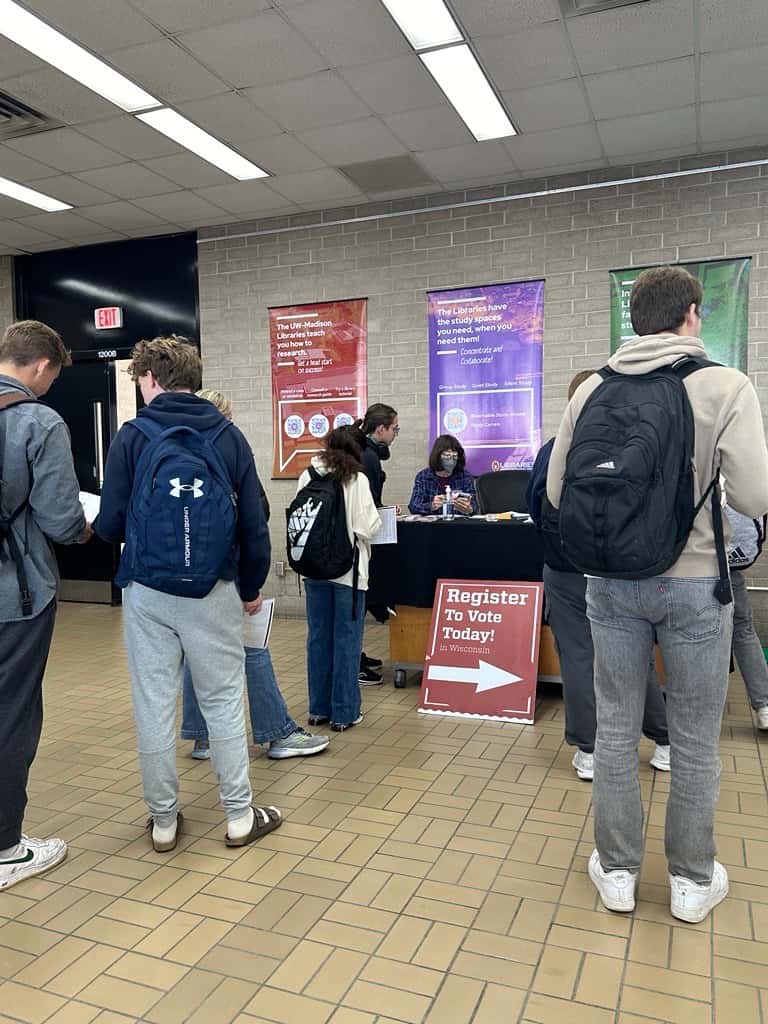
Florida's voter registration books for the Nov. 3 general election closed on Monday, Oct. 5, 29 days before Election Day, locking in an electorate in which Republicans hold an advantage of more than 1.5 million active registered voters over Democrats. With registration over, the calendar now turns to mail ballots, a mandatory early voting period that begins Saturday, Oct. 24, and a ballot topped by an open governor's race, a U.S. Senate special election, every statewide Cabinet seat and three proposed constitutional amendments.
Anyone who was not registered by Monday's deadline cannot vote in this election. Voters who are already registered can still check their status, update a signature or request a mail ballot.
The registration picture
The Florida Division of Elections' most recent statewide report, with data as of Aug. 31, counted 13,580,124 active registered voters. Of those, 5,649,410 were Republicans, 4,098,139 were Democrats, 3,326,661 had no party affiliation and 505,914 belonged to minor parties. That gives Republicans an edge of 1,551,271 active voters, a gap that has widened steadily since the GOP overtook Democrats in statewide registration in 2021.
Democrats narrowly outpaced Republicans in new registrations during September, according to state data cited in earlier reporting, a rare monthly win for the party in recent years. The margin was small, however, and does little to change the statewide balance.
The division publishes official book closing statistics for each election, which count the active voters eligible to cast ballots as of the deadline. As of Tuesday, the general election report had not yet been posted; the most recent book closing report is for the Aug. 18 primary.
Key dates from here to Election Day
Florida law sets most of the remaining deadlines by counting back from Election Day. Here is the calendar, according to the Division of Elections and state statute:
| Date | What happens |
|---|---|
| Sept. 19 | Deadline to send mail ballots to military and overseas voters |
| Sept. 24 to Oct. 1 | Mail ballots sent to domestic voters with requests on file |
| Oct. 5 | Voter registration deadline (passed) |
| Oct. 19 | Earliest date counties may start optional early voting |
| Oct. 22, 5 p.m. | Deadline to request that a mail ballot be mailed |
| Oct. 24 to Oct. 31 | Mandatory statewide early voting period |
| Nov. 1 | Last date counties may offer optional early voting |
| Nov. 3, 7 a.m. to 7 p.m. | Election Day; mail ballots must be received by 7 p.m. |
| Nov. 5, 5 p.m. | Deadline to cure a mail ballot signature problem |
Voting by mail
County supervisors of elections were required to send mail ballots to domestic voters with requests on file between Sept. 24 and Oct. 1, the 40th and 33rd days before the election. Voters who request a ballot after that window will have it mailed within two business days of the request. The deadline to ask for a ballot to be mailed is 5 p.m. on Thursday, Oct. 22, the 12th day before the election.
Under a 2021 state law, a mail ballot request now covers elections only through the end of the calendar year of the next regularly scheduled general election. Voters who last requested a mail ballot before the 2024 general election must request one again for 2026. To make a request, voters must provide a Florida driver license number, a Florida ID card number or the last four digits of their Social Security number.
Completed ballots must reach the supervisor's office by 7 p.m. on Election Day, regardless of postmark. Voters whose ballot signature is missing or does not match the one on file can fix it by submitting a cure affidavit and identification by 5 p.m. on Nov. 5, two days after the election. Voters can track their ballot through their county supervisor's website or the state's lookup tool.
Early voting
Every county must offer early voting from the 10th day before the election through the third day before, which this year is Saturday, Oct. 24, through Saturday, Oct. 31. Supervisors may add days as early as Oct. 19 and as late as Sunday, Nov. 1, so schedules vary by county. Sites must be open at least eight and no more than 12 hours a day, and voters may use any early voting site in their county of registration.
On Election Day, polls are open from 7 a.m. to 7 p.m., and voters must cast their ballots at their assigned precinct. Florida requires voters at the polls to show photo and signature identification.
What's on the ballot
The governor's race is open because Gov. Ron DeSantis is term-limited. Republican U.S. Rep. Byron Donalds, with running mate Bryan Avila, faces Democrat David Jolly, a former Republican congressman from Pinellas County, with running mate Gwen Graham. The Cook Political Report rated the race Lean Republican as of Oct. 1. Several independent candidates and a Libertarian also qualified.
In the U.S. Senate special election for the remainder of Marco Rubio's term, Republican Sen. Ashley Moody, appointed in January 2025, faces Democratic state Rep. Angie Nixon of Jacksonville, who won the August primary with 56.1% of the vote.
All three elected Cabinet seats are also on the ballot:
- Attorney general: Republican James Uthmeier, appointed in 2025, against Democrat José Javier Rodríguez, a former state senator and U.S. Labor Department official.
- Chief financial officer: Republican Blaise Ingoglia, appointed in 2025, against Democrat Annette Taddeo, a former state senator.
- Agriculture commissioner: Republican Wilton Simpson, seeking a second term, against Democrat Joey Mendoza Atkins.
Voters will also choose all 28 members of the U.S. House under a new congressional map, all 120 members of the Florida House and 20 of 40 state senators, along with county and municipal offices and local referendums that vary by community.
Three amendments, all from the Legislature
The Division of Elections lists three proposed constitutional amendments for the November ballot, all placed there by the Legislature rather than by citizen petition. Each needs at least 60% of the vote to pass.
- Amendment 1, Budget Stabilization Fund: Would raise the cap on the state's rainy day fund from 10% to 25% of general revenue collections, require annual transfers of the lesser of $750 million or the amount needed to reach the cap unless certain conditions are met, and allow withdrawals for critical state needs.
- Amendment 2, agricultural property: Would exempt from property taxes tangible personal property that is habitually located on land classified as agricultural and owned by the landowner or leaseholder.
- Amendment 3, homestead exemption and assessment cap: Placed on the ballot during a June special session, it would phase in a larger homestead exemption from non-school property taxes beginning in 2027, cut the annual cap on assessment increases for non-homestead property from 10% to 5%, and direct local governments to spend property tax revenue on listed purposes such as public safety, schools and infrastructure, according to the state's summary.
What's next
Voters who want a mail ballot have until 5 p.m. on Oct. 22 to request one, and should return it early enough to arrive by 7 p.m. on Nov. 3. Early voting opens statewide on Oct. 24, and county supervisors will post their site lists and hours in the coming weeks. The Division of Elections is expected to publish its official book closing count for the general election in the coming days, giving the final party breakdown of who is eligible to vote.
Spotted an issue with this article?
Have something to say about this story?
Write us a letterComments
No comments yet. Be the first to weigh in.
Related Coverage

Bernie Sanders Brings Tour to Florida for Angie Nixon's Senate Bid Against Ashley Moody as Thune Readies Visit
17m ago
Annette Taddeo Ad Accuses CFO Blaise Ingoglia of Corruption as Polls Show Florida's CFO Race Tied
1d ago
Manatee County Freezes Data Center Applications for a Year as Commissioners Float a Permanent Ban
1d ago

Miami Voters to Decide $450 Million Police and Fire Bond as City Carries Heavy Debts and Pension Bills
2d ago