Gators Host Campbell as Florida's Big Three Take Diverging Paths
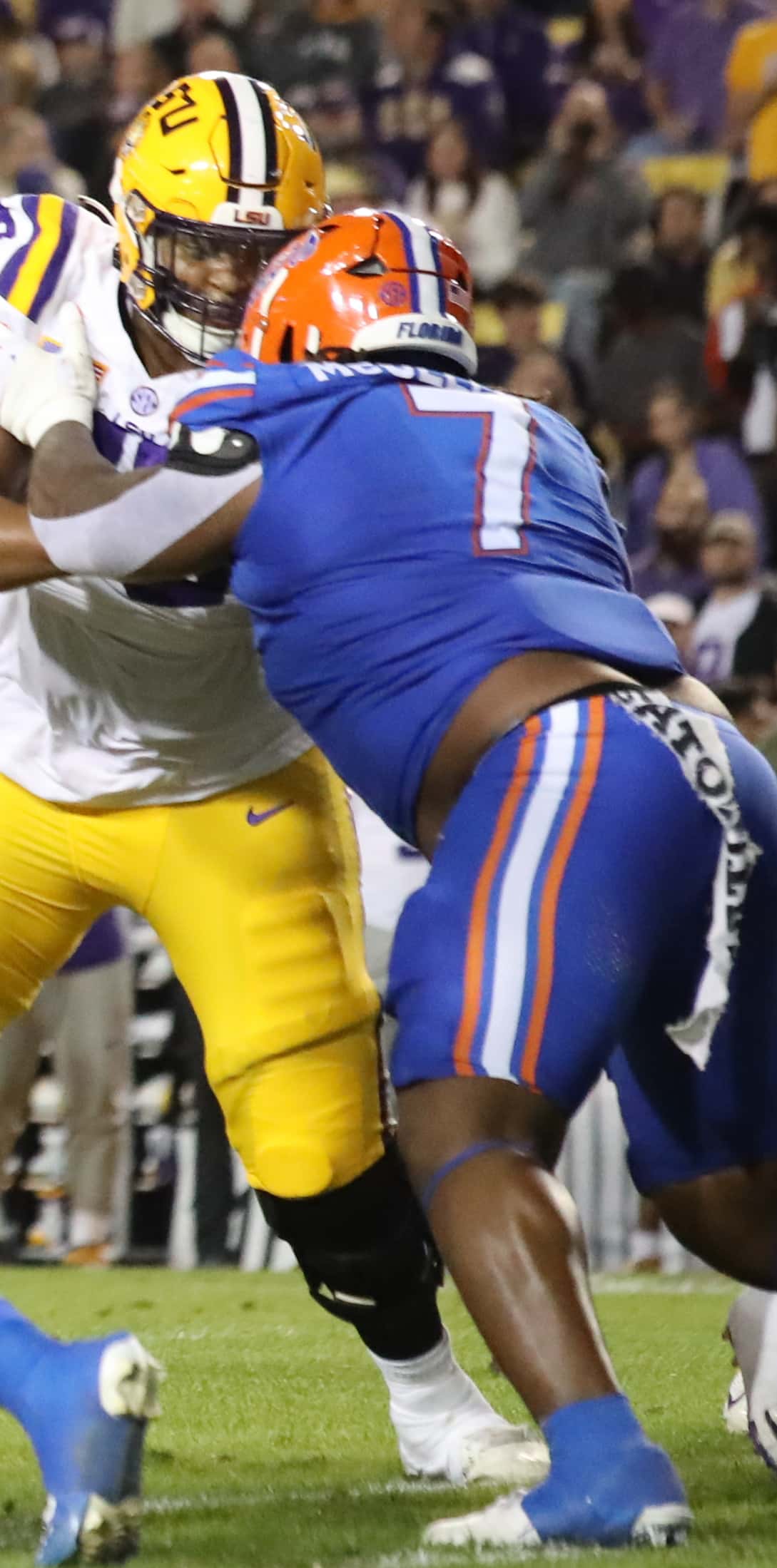
Florida hosts Campbell at Ben Hill Griffin Stadium on Saturday evening, a non-conference game that arrives with the Gators coming off a 66-21 win over Florida Atlantic. The state's three power conference programs have opened the season on noticeably different trajectories. Miami handled Stanford 45-6, and Florida State absorbed a 27-24 loss to a ranked SMU team. Kickoff in Gainesville is set for 5:30 p.m.
Florida's start
The 66-21 result against Florida Atlantic on September 5 was the kind of margin that tells you less than the score suggests. Non-conference games against in-state Group of Five opponents are scheduled precisely because they are winnable, and the useful information comes from how a team plays rather than by how much it wins.
Campbell presents a similar test. The Fighting Camels compete at the FCS level, and games of this type serve a specific purpose in a college schedule. They give a coaching staff a controlled environment to evaluate depth, work through situational football, and give reps to players who will be needed later in the conference schedule.
Ben Hill Griffin Stadium, known universally as the Swamp, seats more than 88,000 and is among the more difficult environments in college football. Early-season evening games in Gainesville carry heat and humidity that visiting teams frequently cite as a factor, though September conditions have moderated from the August peak.
The SEC gauntlet ahead
Florida competes in the Southeastern Conference, which after realignment includes Texas and Oklahoma alongside the traditional membership. The conference schedule is the season for any SEC program, and non-conference results function primarily as preparation.
The expanded College Football Playoff has changed the calculus for teams in Florida's position. A 12-team field means that a program can absorb losses and remain in contention in a way the four-team format did not allow. Conference championships and strength of schedule carry weight in selection, and the SEC's depth means that even a middling conference record comes with quality opponents on the resume.
The flip side is that non-conference losses are harder to absorb. A defeat to an opponent outside the power conferences damages a resume disproportionately, which is why programs in Florida's position treat games like Saturday's as must-wins rather than as exhibitions.
Miami's dominant opening
Miami's 45-6 win over Stanford on September 4 was a comprehensive performance against an ACC opponent. Conference games carry direct standings implications, which makes a result of that magnitude more meaningful than a comparable score in a non-conference matchup.
The Hurricanes play their home games at Hard Rock Stadium in Miami Gardens, sharing the venue with the Dolphins. The arrangement has drawn criticism over the years for the distance from campus in Coral Gables and for the atmosphere in a stadium built for professional football, but it provides facilities and capacity that an on-campus alternative would struggle to match.
Miami's position in the ACC has improved substantially in recent seasons following a period in which the program did not meet the expectations its history set. Sustained investment in facilities and in the roster through the current college athletics landscape has produced results.
Florida State's early setback
Florida State's 27-24 loss to No. 19 SMU is the kind of result that shapes a season early. Three-point losses to ranked opponents are competitive games, but the ACC standings record them the same as any other defeat, and playoff selection committees weigh outcomes more than margins.
The Seminoles play at Doak Campbell Stadium in Tallahassee, one of the largest on-campus venues in the country. Florida State's program has experienced significant swings over the past decade, from national contention to rebuilding and back, which has made each season's early results carry more weight with a fan base attuned to the pattern.
SMU's inclusion in the ACC is itself a product of conference realignment, part of the same reshuffling that moved Texas and Oklahoma to the SEC and redistributed programs across the Pac-12's dissolution. The conference landscape looks fundamentally different than it did five years ago.
The rivalries still to come
Florida State and Miami meet on October 17 in Miami Gardens, the latest chapter in a rivalry that defined college football in the 1980s and 1990s. The series has produced some of the sport's most consequential games, and its intensity survives regardless of where the programs stand in a given year.
Florida and Florida State close the regular season against each other in the traditional rivalry date, a game that has decided conference titles and national championship positioning across its history. Florida and Miami have met less regularly in recent decades, a consequence of conference scheduling rather than of either program's preference.
Those games are what the season builds toward for Florida fans. A schedule of non-conference opponents in September exists in part to arrive at November healthy and prepared.
Beyond the big three
Florida supports football programs well beyond the three power conference schools. UCF competes in the Big 12 following its move from the American Athletic Conference, a jump that placed a Florida program in a conference with no other southeastern members.
South Florida, Florida Atlantic, and Florida International compete in the American Athletic Conference and Conference USA respectively, and Florida A&M competes at the FCS level in the Southwestern Athletic Conference. Bethune-Cookman and Jacksonville University add to the total.
That density means Florida produces and retains more football talent than almost any state. High school football in Florida, particularly in South Florida and the Tampa Bay region, remains among the most productive talent pipelines in the country, and programs nationwide recruit the state heavily.
How the expanded playoff changed the math
The College Football Playoff moved from four teams to twelve, and the expansion altered the incentives that govern scheduling and in-season decision making. Under the four-team format, a single loss could eliminate a program from contention, which pushed athletic directors toward softer non-conference schedules.
Twelve teams changes that. A program can lose multiple games and still qualify, particularly from a conference as deep as the SEC, where losses to quality opponents carry less penalty than losses to weak ones. Strength of schedule now works more clearly in a team's favor.
The format includes automatic qualification for a set number of conference champions plus at-large selections. That structure means conference championship games carry direct playoff implications for teams that would not otherwise qualify, and it keeps more programs alive deeper into the season.
First-round games are hosted by the higher seed on campus, which introduced home playoff games to college football for the first time. That element has changed how programs and fan bases value seeding, since a home playoff game is both a competitive advantage and a substantial revenue event.
The economics reshaping college football
College athletics has been transformed over the past five years by name, image, and likeness compensation, by expanded transfer rules, and by direct revenue sharing with athletes. Florida's three power conference programs operate in that environment alongside everyone else.
Roster construction now resembles professional player acquisition more than traditional recruiting. Programs assemble rosters from high school signees, transfer portal additions, and returning players, and the portal has made year-over-year roster continuity considerably less predictable than it once was.
Collective fundraising has become a core function of major programs. Florida's three power conference schools have substantial donor bases, and their ability to compete depends significantly on how effectively those bases are organized.
Conference realignment layered on top. Florida and the other SEC schools now play in a conference including Texas and Oklahoma. Miami and Florida State compete in an ACC that added Stanford, California, and SMU. UCF moved to the Big 12. Travel demands and traditional rivalries have both been affected.
What's next
Saturday's slate gives Florida fans a full day of in-state college football, with games spread across afternoon and evening windows. Conference play intensifies through late September and October, when the results that determine postseason positioning get decided.
The College Football Playoff selection committee begins releasing rankings in the fall, and those releases drive weekly discussion even though only the final ranking determines the field. Conference championship games in early December are the last data points before selection.
For Florida's three power conference programs, the immediate task is different in each case. The Gators need to handle business and stay healthy, Miami needs to sustain what it showed against Stanford, and Florida State needs to recover from an early loss before the ACC schedule tightens.
Kickoff times for later weeks are typically set six to twelve days in advance, since conferences and networks hold windows open to assign the most attractive matchups to the best broadcast slots. Fans planning travel to Gainesville, Tallahassee, or Miami Gardens should expect that uncertainty.
Attendance across Florida's programs has tracked performance closely, as it does nationally. Ben Hill Griffin Stadium, Doak Campbell Stadium, and Hard Rock Stadium all fill when their teams are winning, and the difference between a contending season and a rebuilding one shows up in the stands by October.
September results in college football are provisional by nature. Rosters built partly through the transfer portal take time to cohere, and the gap between a team's September form and its November form has grown wider as roster turnover has increased. Florida's three programs will each look different in two months than they do today.
Florida sends more players to college and professional football than nearly any state, and much of that talent stays home. What the three programs do with it, across a season that now extends deeper into January than it once did, is the question the next three months answer.
Kickoff in Gainesville is Saturday at 5:30 p.m.
Spotted an issue with this article?
Have something to say about this story?
Write us a letterComments
No comments yet. Be the first to weigh in.
Related Coverage
Lars Eller's First Goal as a Panther Lifts Florida Past Blackhawks 3-2, Snapping Two-Game Skid
4h ago
Gators Rise to No. 17 in AP Poll During Bye Week, Face No. 3 Georgia in Atlanta as Double-Digit Underdogs
5h ago
Franz Wagner Scores 21 in the Fourth as Magic Rally Past Defending Champion Knicks 111-102 for First Win
6h ago
Nikita Kucherov Passes Steven Stamkos as Lightning's All-Time Points Leader in OT Loss to Mammoth
1d ago