Haiti Closes Candidate Enrollment for Its First Elections in a Decade, With 33 Presidential Hopefuls and South Florida's Diaspora Watching
Haiti has closed registration for candidates in its first general election in more than a decade, and 33 people have signed up to run for president, including, for the first time in the country's history, three women. The field includes the widow of slain President Jovenel Moïse, a former president under U.S. and Canadian sanctions and a prosecutor the United Nations has accused of summary killings, according to The Associated Press.
For South Florida, home to one of the largest Haitian communities in the United States across Miami-Dade, Broward and Palm Beach counties, the race is personal. Many families here have relatives in a country ruled in large part by gangs, and tens of thousands of local Haitians lost their protection from deportation this summer.
What happened
Presidential and parliamentary candidates had until Sunday, Nov. 15, to register online, the AP reported in a story published by WLRN. Haiti's Provisional Electoral Council is now reviewing the filings and expects to publish a final list of approved candidates in January. Registration is not approval: the council can still reject candidates.
Haiti hopes to hold the first round of voting on July 18, 2027, and a runoff on Oct. 4, 2027. More than 100 political parties have registered.
Haiti has not had a president since Moïse was assassinated at his private residence in July 2021. Since then, the country has been run by a series of appointed prime ministers and a transitional presidential council that was dissolved in February. The vote has already slipped: WLRN reported that gang violence forced the interim government in recent weeks to postpone elections again, to next summer at the earliest.
The high-profile candidates
The AP profiled several of the best-known names in the field:
- Martine Moïse: The former first lady was wounded in the 2021 attack that killed her husband. She was indicted in Haiti in connection with his death, but the charge was later annulled. In March, she testified in Miami federal court at the trial of four men charged with conspiring in South Florida to kill or kidnap her husband.
- Michel Martelly: The musician known as "Sweet Micky" was president from 2011 to 2016. He has been accused of facilitating drug trafficking and sponsoring gangs, and was sanctioned by Canada in November 2022 and by the United States in August 2024.
- Claude Joseph: A former foreign minister who briefly served as interim prime minister after the assassination. A Haitian judge indicted him and Martine Moïse in the killing, accusations both denied; the indictment was later dismissed.
- Jean Ernest Muscadin: A former government prosecutor in Miragoâne whom the United Nations has accused of killing dozens of people suspected of gang ties or minor crimes. He remains popular with supporters who call him the "people's prosecutor."
- Dominique Dupuy and Savary Marie-Anne Savannah Hadid: Dupuy, a former foreign minister, and Hadid, a businesswoman and philanthropist, were the first women to register as presidential candidates.
- Etzer Emile, Jocelerme Privert, Hans Joseph and Jerry Tardieu: An economist, a former interim president, a former anti-corruption chief and a businessman and former lawmaker, respectively. Jude Célestin, who was in the delayed 2016 runoff against Moïse, is also running again.
Can Haiti actually vote?
The obstacles are steep. Wolf Pamphile, founder of the U.S.-based think tank Haiti Policy House, told the AP that nearly a million voters have been registered in a country of nearly 12 million people, against a government benchmark of 3 million to 6 million voters for an election considered legitimate. Daily registrations have fallen from about 9,000 when the process began to about 3,000, he said, adding that the target is getting harder to reach.
The fighting has not stopped. Gangs continue to battle Haitian police and soldiers, a U.N.-backed Gang Suppression Force, the private security firm Vectus Global founded by Erik Prince, and about 2,500 troops from El Salvador. Clashes and drone strikes targeting gangs increased 46% compared with the 21 days before the Salvadoran deployment, and estimated deaths in those operations have passed 100, including more than two dozen civilians, said María Fernanda Arocha, an analyst with the Armed Conflict Location & Event Data Project. The U.N. says gang violence has displaced a record of nearly 1.5 million Haitians.
Bukele's offensive, cheered in Miami
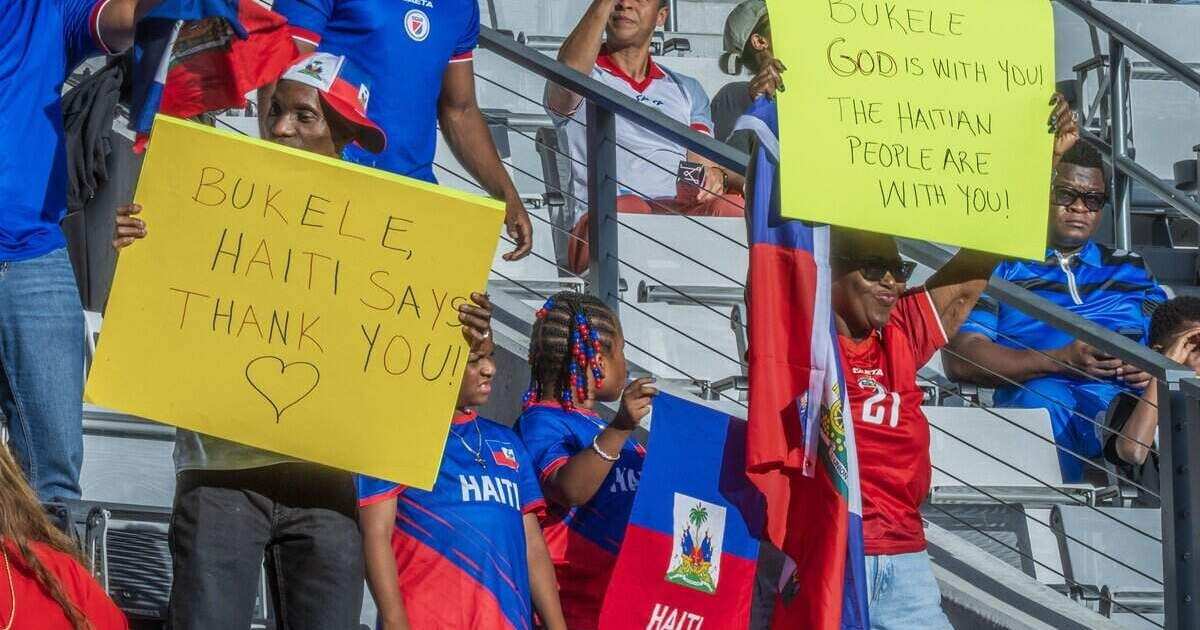
El Salvador sent its troops after four Salvadoran personnel were attacked in late October, the AP reported. As The Florida Press reported on Nov. 11, President Nayib Bukele has turned the campaign into a showcase, and it has made him popular in South Florida's Haitian community. At the CONCACAF Nations League match between Haiti and the United States at Miami's Nu Stadium on Saturday night, Haitian fans displayed banners thanking Bukele and chanted his name, WLRN reported.
Human rights groups have described Bukele's government as authoritarian, and observers fear his tactics could put Haitian civilians in the crossfire. Many Haitians, including in the diaspora, appear willing to set that risk aside after watching a previous U.N.-backed security mission fail, WLRN reported.
What it means for South Florida
The election is unfolding as the Haitian community here faces its own crisis. The Trump administration won a legal fight this summer to end Temporary Protected Status for about 350,000 Haitians nationwide, including 158,000 in Florida, most of them in South Florida, WLRN reported. Federal agents can now detain and deport former TPS holders, and the administration has been sending deportation flights to Haiti.
WLRN has documented families in Little Haiti and North Miami staying home, skipping church and leaving jobs out of fear of arrest. Immigrant advocates rallied outside Sen. Ashley Moody's Miami office in September to press her and Sen. Rick Scott to back S. 4814, a bill to extend Haitian TPS that has stalled in the Senate. The House passed a TPS extension in April.
What's next
The Provisional Electoral Council is reviewing candidate filings and expects to publish the approved list in January. Voter registration continues, with the July 18, 2027, first round still the target. In South Florida, the questions to watch are whether the field narrows to candidates with real support in the diaspora, whether Congress acts on Haitian TPS before the lame-duck session ends in January, and whether deportation flights continue as Haiti heads toward the vote.
Spotted an issue with this article?
Have something to say about this story?
Write us a letterComments
No comments yet. Be the first to weigh in.
Related Coverage

Florida Builders Warn Immigration Enforcement Is Thinning Crews and Could Raise Home Prices
2h ago
Engine Failure Diverts Sen. Ashley Moody's Tampa-to-Washington Flight to Orlando, and She Misses Monday Night Senate Votes
2h ago
Chase Software Bug Snarls Banking and Zelle Payments for Florida Customers, Days After the FAA Ground Stop and a Microsoft Outage
3h ago
Trump heads to Asia to meet Xi and Putin, with the U.S.-China trade truce possibly renewed at next month's Miami G20
20h ago