Heat Add Klay Thompson to a Roster Rebuilt Around Giannis Antetokounmpo
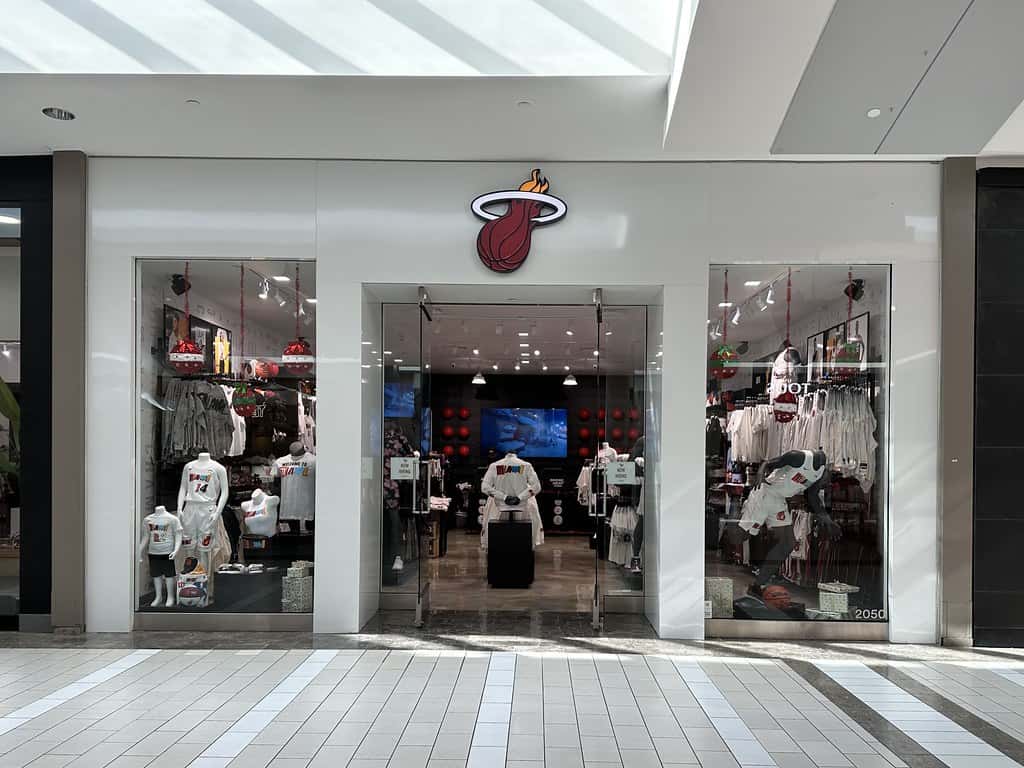
The Miami Heat signed guard Klay Thompson to a two-year contract worth roughly $11.5 million, with the second season at Thompson's option, after he cleared waivers following a buyout from the Dallas Mavericks. The signing was made official over the weekend, completing a summer that has fundamentally changed what the Heat are.
Thompson joins a roster now built around Giannis Antetokounmpo, whom Miami acquired from the Milwaukee Bucks in a trade that ranks among the largest in franchise history, and Bam Adebayo, the All-Star center who has been the organization's defensive anchor for years.
Thompson had been set to earn $17.5 million in the final year of his Dallas contract. He told the Mavericks he wanted to play for a contender, the team bought him out, and he accepted substantially less money to sign in Miami. That pay cut also gives the Heat additional roster flexibility.
The trade that reset the franchise
Miami acquired Antetokounmpo and Bobby Portis from Milwaukee in exchange for Tyler Herro, Kel'el Ware, Jaime Jaquez Jr., Kasparas Jakucionis, three first-round picks including the thirteenth selection in the 2026 draft, a pick swap and a second-round pick.
That is an enormous outgoing package, and it reflects what acquiring a two-time NBA Most Valuable Player and ten-time All-Star costs in the current collective bargaining environment. The Heat emptied their young core and their draft capital to do it.
The trade could not be completed until July 6, when the league's moratorium period ended. Antetokounmpo has one guaranteed year remaining on his contract with a player option for 2027, which was the central question for any team evaluating a trade for him under second-apron restrictions.
What Thompson brings at this stage
Thompson built his career as one of the best shooting guards of his generation, a four-time NBA champion with Golden State and a player whose off-ball movement and catch-and-shoot accuracy defined an era of Warriors offense.
He is no longer that player, and the contract reflects it. What he still provides is spacing. A defense that has to account for a shooter of his reputation on the weak side cannot collapse fully into the paint, which is precisely the problem a team building around Antetokounmpo needs to solve.
Antetokounmpo's game is built on downhill pressure toward the rim. His effectiveness rises substantially when the floor is spaced and falls when defenses can pack the paint. Milwaukee spent years constructing rosters around that principle, with varying success.
The fit question
Pairing Antetokounmpo with Adebayo raises a spacing question of its own. Adebayo is an elite defender and a skilled passer from the elbow, but he has never been a high-volume three-point shooter, and two frontcourt players who operate primarily inside the arc can crowd each other.
That is the specific problem Thompson's signing addresses. Adding a shooter who commands attention on the perimeter creates the driving lanes that both Antetokounmpo and Adebayo need to be effective in the same lineup.
Erik Spoelstra has a long record of solving fit problems that looked worse on paper than they turned out to be. The Heat have repeatedly assembled rosters that outperformed their talent-level projections, and Spoelstra's system flexibility is the usual explanation.
What the Heat gave up
Tyler Herro was Miami's leading scorer and a player the franchise developed from a late lottery pick into an All-Star-level guard. Kel'el Ware and Jaime Jaquez Jr. were young rotation pieces on rookie contracts, the kind of assets that keep a roster sustainable.
Kasparas Jakucionis was a recent draft selection who had not yet established himself. Together with three first-round picks and a swap, the package leaves Miami without meaningful young talent or draft flexibility for several years.
That is the structure of a win-now trade. The Heat have bet that a title window opening immediately is worth more than the optionality they surrendered, and the arithmetic of that bet depends heavily on Antetokounmpo signing an extension rather than departing after his player option year.
The roster math
Miami had been operating with three open standard roster spots for several weeks. NBA rules require teams to carry at least fourteen players on standard contracts, with a maximum of fifteen, plus two-way contracts.
Thompson's discounted deal helps on that front. The Heat's ability to fill remaining spots depends on where they sit relative to the luxury tax aprons, and the collective bargaining agreement's second-apron restrictions sharply limit what a team over that threshold can do in free agency and trades.
Bobby Portis, who came over in the Antetokounmpo trade, adds frontcourt depth and shooting from the power forward position, a useful complement given how the rest of the roster is constructed.
Where this leaves the Eastern Conference
The East has been in flux. Milwaukee's decision to trade Antetokounmpo signals a rebuild in a market that had built everything around him for a decade. That removes one contender and redistributes talent.
The Orlando Magic, Florida's other NBA franchise, went a different direction this summer. Orlando fired head coach Jamahl Mosley, hired Sean Sweeney to replace him, reunited with center Nikola Vucevic and largely retained its core, adding Grayson Allen, Royce O'Neale and Naz Reid while moving on from LaMelo Ball and Miles Bridges.
That sets up a genuinely competitive in-state rivalry for the first time in years. Both Florida franchises enter the season with legitimate playoff expectations, which has not consistently been the case.
What it means for Miami fans
The Heat have not had a player of Antetokounmpo's caliber since the LeBron James era ended in 2014. The franchise reached the Finals in 2020 and 2023 with rosters built on development, culture and coaching rather than on superstar acquisition.
This is a different approach, and it changes expectations. A team that trades its young core and its draft picks for a former MVP is not measuring success by making the playoffs. Ticket demand and secondary market prices reflect that shift.
Kaseya Center will be a substantially harder ticket this season, and national television scheduling typically follows star acquisitions closely.
The extension question
The single largest uncertainty is whether Antetokounmpo commits to Miami beyond his current deal. He has one guaranteed year and a player option for 2027, which means the Heat could theoretically have given up their entire future for a two-year window or less.
Reporting around the trade indicated that extension willingness was the central issue for every team that pursued him. Teams do not surrender that package without some read on the player's intentions, though nothing is binding until signed.
Contract extension mechanics under the current agreement create specific windows and value limits, and the first meaningful opportunity typically arrives during the season or the following offseason.
Health as the variable
Antetokounmpo has missed portions of recent seasons with calf and knee issues, and his style of play, built on force and volume at the rim, carries wear. He remains among the most durable superstars of his era, but he is entering his thirties.
Adebayo has been comparatively reliable. Thompson has a significant injury history, having missed two full seasons earlier in his career with a torn anterior cruciate ligament and a torn Achilles tendon, though he has played consistently since returning.
For a roster with limited depth after the trade, availability matters more than it would for a team with a deeper bench.
What Spoelstra has to solve
Defensively, Miami has the pieces for something formidable. Antetokounmpo has won Defensive Player of the Year, Adebayo has been a finalist multiple times, and the two together give Spoelstra enormous switching flexibility at the back of a defense.
Offensively, the question is who creates when Antetokounmpo sits or when defenses build a wall against him in the half court. Herro's departure removes the team's most reliable shot creator from the perimeter.
Thompson helps with shot-making but is not a primary creator at this stage of his career. Solving that gap is the season's most important coaching problem.
The Florida NBA calendar
Training camps around the league open in late September, with preseason games following in early October and the regular season beginning shortly after. That gives Miami roughly six weeks to integrate a substantially new rotation.
The Heat and Magic will meet several times during the regular season, and both franchises will be measured against Eastern Conference contenders in Cleveland, New York and Boston.
Florida's other winter sports calendar fills in around them, with the Panthers and Lightning opening the NHL season in early October and college basketball starting in November.
The second apron and what it forbids
The collective bargaining agreement that took effect in recent seasons created two luxury tax aprons with escalating restrictions, and teams above the second apron face constraints that go well beyond paying a tax bill. Those teams cannot aggregate salaries in trades, cannot use the taxpayer midlevel exception, cannot take back more salary than they send out, and face restrictions on trading future first-round picks.
The design intent was to make it substantially harder for a team to keep a very expensive roster together indefinitely, replacing a system where wealthy owners could simply absorb tax payments with one that limits basketball operations regardless of willingness to spend. The practical result is that front offices now build rosters with the apron thresholds as hard planning constraints.
Thompson accepting roughly $11.5 million over two years after being bought out of a $17.5 million salary is meaningful in that context. A veteran willing to take less preserves flexibility that a team near an apron cannot otherwise buy, and it is one of the few remaining ways a contender can add a rotation player of that profile.
What Miami's summer says about the modern NBA
Two things happened in the NBA this offseason that would have been difficult to imagine a decade ago. A franchise traded a two-time MVP who had won it a championship, and the acquiring team assembled a package of four young players and three first-round picks to get him. Both are products of the same system.
Star player movement has accelerated as contract structures have shortened and as players have gained leverage over where they play. Milwaukee's decision reflects a calculation that a rebuild with youth and picks was preferable to a decline with an aging roster and no assets, which is a judgment small-market franchises now make earlier than they once did.
Miami's calculation is the mirror image. The Heat have a strong organizational reputation, a market players want to live in and a coaching staff with a record of maximizing rosters. What they lacked was a top-five player, and the price of acquiring one in this era is everything else.
What's next
Miami will finalize its remaining roster spots before camp, most likely with veteran minimum contracts and two-way deals for developmental players. Those decisions are less consequential than the ones already made.
The full NBA schedule release sets the framework for the season, including the national television slate that a roster of this profile will draw heavily.
For the Heat, the measure of the summer is straightforward and will not be answered until spring. The franchise traded a decade of flexibility for a title window it believes is open now, and the only verdict that matters comes in the playoffs.
Spotted an issue with this article?
Have something to say about this story?
Write us a letterComments
No comments yet. Be the first to weigh in.
Related Coverage
Winless Dolphins host Bengals at Hard Rock Stadium seeking first win under Jeff Hafley
19h ago
Hurricane Isaias Scrambles Florida Sports: FSU Cancels Pensacola Games, FAMU Moves to Friday
23h ago

Florida State faces Louisville on the road Friday night as Ashton Daniels and Seminoles try to end road skid
23h ago
Jalon Daniels, Bucky Irving lead Buccaneers past Cowboys 24-16 for first win of season
1d ago