House Democrats' First-Day Agenda: Health Care, Ending the Iran War and Tariff Rollbacks, and What It Means for Florida
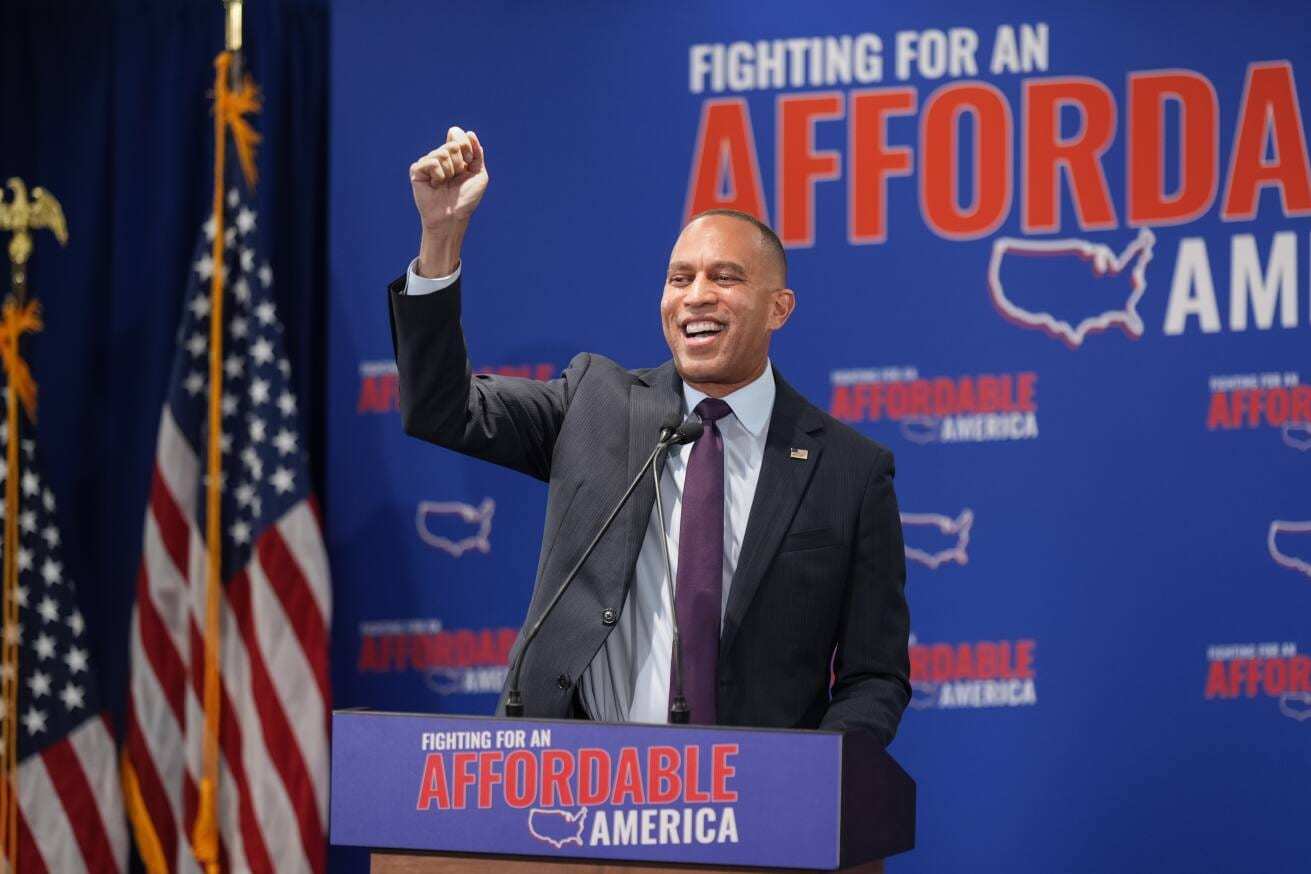
House Democrats, who will hold more than 250 of the chamber's 435 seats when the new Congress is sworn in Jan. 3, plan to open their majority with votes to restore enhanced Affordable Care Act subsidies, reverse Medicaid cuts, stop the war with Iran and roll back some of President Donald Trump's tariffs, according to The Associated Press. Rep. Hakeem Jeffries of New York, who is in line to become speaker, told the AP the party intends to "get out of the gate fast."
Few states have more riding on that list than Florida. The state has the largest ACA marketplace in the country, a large Medicaid program, ports and importers exposed to tariffs, a housing affordability crisis, and the Tampa headquarters directing the Iran war. Whether any of the bills become law is a separate question: they will face a 60-vote threshold in the Senate and a likely presidential veto.
What Democrats say they will do first
According to the AP, early House votes next year are expected to center on health care, followed by legislation on the Iran war and tariffs. After those, Jeffries said five working groups are drafting bills aimed at lowering costs in areas such as housing, energy, groceries and caregiving.
The planned early agenda, as described by Democratic leaders, is below.
| Priority | What Democrats propose | Florida stake |
|---|---|---|
| ACA subsidies | Restore enhanced premium tax credits | Largest marketplace enrollment in the nation |
| Medicaid | Reverse cuts in the 2025 tax and spending law | Millions of low-income Floridians covered |
| Iran war | Legislation to stop the war | CENTCOM and SOCOM based at MacDill in Tampa |
| Tariffs | Reverse some Trump tariffs | Port-dependent trade with Latin America |
| Cost of living | Working groups on housing, energy, groceries, caregiving | High housing and insurance costs |
Rep. Ted Lieu of California told the AP that Democrats also plan public hearings and legislation on artificial intelligence and data centers, describing the goal as reasonable guardrails on the industry.
Health care: subsidies and Medicaid
The enhanced ACA tax credits, created during the pandemic and expanded under the 2021 American Rescue Plan, expired Dec. 31, 2025. The House voted earlier this year to extend them for three years with some Republican support, but the measure stalled in the Senate.
Florida felt the expiration more than most states. About 202,000 fewer Floridians bought marketplace coverage during the 2026 enrollment period, one of the steepest declines in the country, according to federal data reported by WUSF. Even so, Florida still had more marketplace enrollees than any other state, about 4.5 million plan selections, after enrollment had climbed from 2.7 million in 2022 to 4.7 million in 2025 under the expanded credits. About 97% of Florida marketplace customers used the tax credits, according to KFF research cited by WUSF. Restoring the enhanced subsidies would directly lower premiums for much of that group.
The Medicaid fight could be harder. Democrats want to undo changes in Trump's 2025 tax and spending law that are expected to cut more than $900 billion from the program over a decade, including new administrative requirements and work requirements for some enrollees. Many of the biggest changes have not yet taken effect, but national Medicaid enrollment has already fallen by about 5 million, or about 7%, since July 2025, according to KFF figures cited by the AP. Florida, which has not expanded Medicaid under the ACA, relies heavily on the program for low-income children, seniors in nursing homes and people with disabilities, so the scope of any federal rollback or restoration matters to the state budget as well as to patients.
Reversing those cuts would require Republicans to give up spending reductions in their signature tax bill, which the AP described as an unlikely proposition. Senate Democratic leader Chuck Schumer said he believes some Republicans may support restoring the ACA subsidies.
Ending the Iran war
Democrats are also promising swift action on legislation to stop the war with Iran, now more than eight months old since joint U.S.-Israeli strikes began Feb. 28. The current Congress has held 14 war powers votes on Iran in the Senate and six in the House, according to the AP, none of which ended U.S. involvement.
The war is run from MacDill Air Force Base in Tampa, home of U.S. Central Command, which oversees military operations in the Middle East, and U.S. Special Operations Command. In the week of the election alone, U.S. forces struck Iranian targets on Qeshm Island in the Strait of Hormuz and on Saturday disabled a commercial ship trying to leave the region after visiting an Iranian port, as the U.S. enforces a naval blockade. Disruptions to shipping in the strait have pushed up fuel prices nationwide, including for Florida drivers, and CBS News reported that the costs tied to the war contributed to falling support for Trump and Republicans before the midterms.
A war powers measure that passes both chambers could still be vetoed, and overriding a veto requires two-thirds of each chamber.
Tariffs and Florida trade
Democrats also plan votes to reverse some of Trump's tariffs. Florida's economy runs heavily on trade through ports such as PortMiami, Port Everglades, JAXPORT and Port Tampa Bay, much of it with Latin America and the Caribbean.
The tariff landscape has already shifted once this year. In February, the U.S. Supreme Court largely struck down the sweeping tariffs Trump imposed under emergency powers, and in April, South Florida importers began filing for refunds through a federal portal, Local 10 News reported. Trump has continued to impose tariffs under other authorities, including a 10% global tariff, leaving importers who bring in goods like aluminum, windows, doors and food uncertain about costs. Legislation from the House could signal which remaining tariffs Democrats target, though any rollback would need Senate approval and Trump's signature or a veto override.
Housing, energy, groceries and caregiving
The working groups Jeffries described go to the core of Florida's cost-of-living complaints. Housing costs in the state have climbed sharply in recent years, along with property insurance premiums that have weighed on homeowners and condo owners for years. Energy prices, including gasoline that has swung with the Iran war, and grocery prices are recurring concerns for Florida families, as is the cost of caregiving in a state with one of the oldest populations in the nation.
Democratic leaders have not yet released bill text from the working groups, so the specific proposals and their effect on Florida remain to be seen.
Florida's Democrats in the new majority
Florida's Democrats will return to Washington as part of the governing party for the first time since 2022. Several survived a mid-decade redistricting this year that Republican lawmakers designed to win more seats. U.S. Rep. Kathy Castor of Tampa won reelection over Republican Mike Beltran, U.S. Rep. Jared Moskowitz defeated former Boca Raton Mayor Scott Singer, and Democrat Pia Dandiya won Florida's 22nd District, according to CNN and other projections. U.S. Rep. Darren Soto held his redrawn 9th District in Central Florida after final ballots were tallied this week.
In Miami-Dade County, Democrat Eliott Rodriguez trails Republican U.S. Rep. María Elvira Salazar by about 1,100 votes in the 27th District, with a machine recount set to begin this week. Republicans will still hold most of Florida's 28 House seats.
Membership in the majority typically gives Florida Democrats more say over committee work, oversight hearings and which bills reach the floor, including on issues like flood insurance, hurricane recovery money and Everglades restoration that rank high for the state.
The obstacles
Passing bills in a House with such a large Democratic majority should not be difficult, the AP noted. Getting them signed is another matter. Trump posted an image on election night of a red hat bearing the word "VETO." Senate Majority Leader John Thune said before the election that a Democratic majority would mean two years of paralysis. Progressive groups have argued Democrats will need to end the Senate filibuster to pass their priorities, and Schumer declined to tell the AP whether he would try.
Even bills that stall, however, will frame the choices voters face in the 2028 presidential election, in which Florida's 30 electoral votes will again be in play.
What's next
The new Congress convenes Jan. 3, 2027, when House Democrats are expected to elect Jeffries speaker and begin moving the health care bills first. Floridians shopping for 2027 marketplace coverage during the current open enrollment period will be buying plans priced without the enhanced subsidies; any restoration Congress passes next year would come after those enrollment decisions. Watch for the working groups' proposals on housing, energy, groceries and caregiving in the first months of the session, and for early war powers and tariff votes that test how many Republicans are willing to break with the White House.
Spotted an issue with this article?
Have something to say about this story?
Write us a letterComments
No comments yet. Be the first to weigh in.
Related Coverage

Fort Lauderdale Air Rescue Firm Runs 'Deportation Depot' Ambulances, Got License a Day After Site Opened, Then Gave $100,000 to Donalds-Linked PAC
57m ago

U.S. Offers $50 Million for Three Tren de Aragua Leaders, Including FBI Ten Most Wanted Fugitive, as Florida Cases Against the Gang Mount
20h ago

U.S. Adds 165,000 Jobs in October, Nearly Triple Forecasts, Raising Odds of a December Fed Hike as Florida Mortgages Sit Near 7.2%
20h ago

Susie Wiles Leaves the White House as Trump Names Stephen Miller Chief of Staff, Ending a Run That Began in Jacksonville City Hall
21h ago