U.S. Adds 165,000 Jobs in October, Nearly Triple Forecasts, Raising Odds of a December Fed Hike as Florida Mortgages Sit Near 7.2%
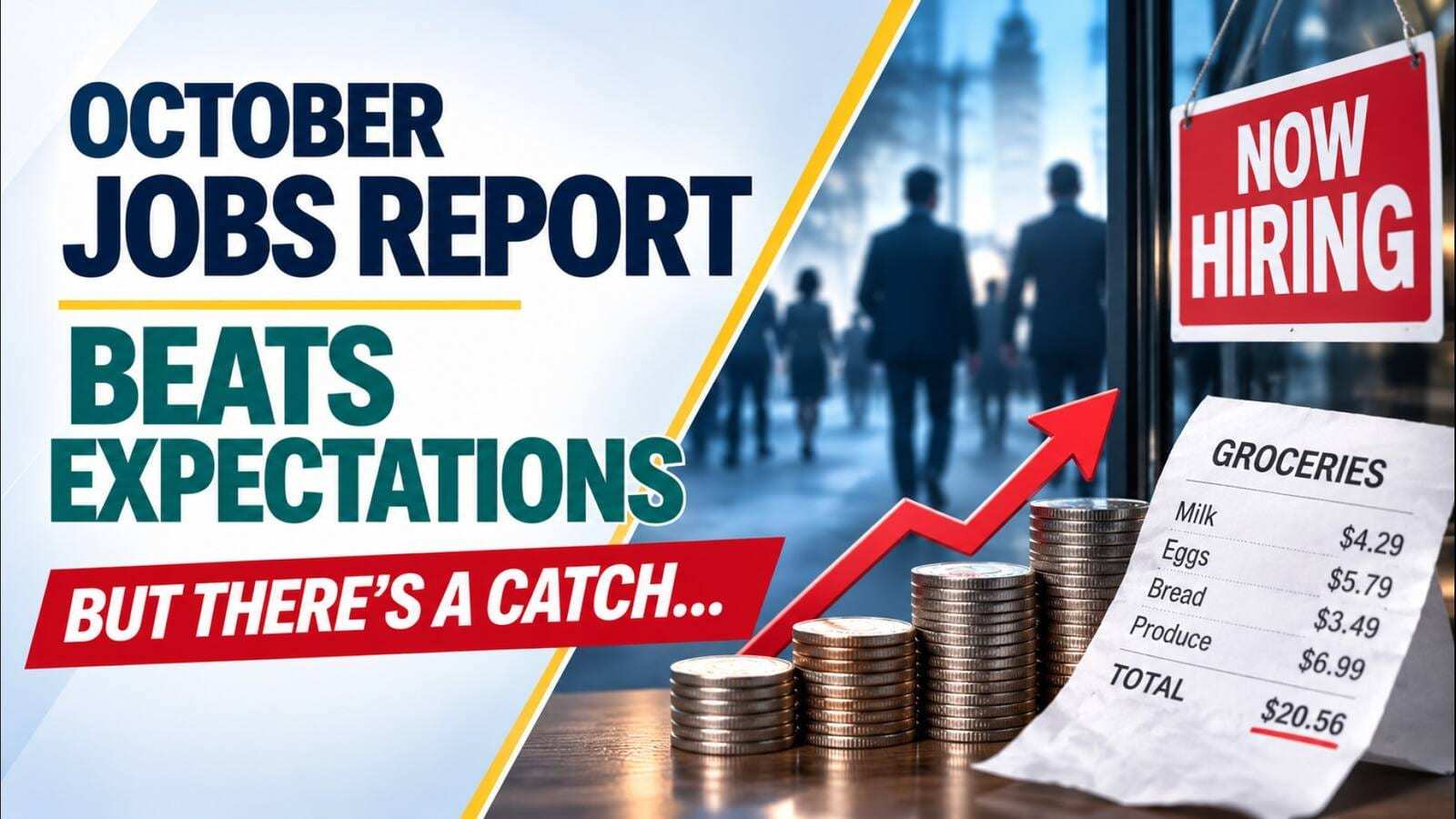
U.S. employers added 165,000 jobs in October, far more than economists expected, and the national unemployment rate dipped to 4.1%, the Bureau of Labor Statistics reported Friday, Nov. 6. For Florida, where unemployment has been running above the national rate, the report points to a labor market that is holding up. It also strengthens the case for another Federal Reserve rate increase in December, which could keep mortgage rates for Florida homebuyers above 7%.
What the October report showed
The 165,000-job gain was well above the average monthly increase of 48,000 over the prior 12 months, according to the BLS. Economists had forecast roughly 60,000 new jobs, WKMG News 6 reported.
The BLS also revised the previous two months upward. August's gain was raised from 133,000 to 186,000, and September's from 29,000 to 60,000, adding a combined 84,000 jobs to earlier estimates.
The unemployment rate, at 4.1%, and the number of unemployed people, at 7.1 million, changed little over the month, the agency said. The rate has stayed between 4.1% and 4.3% since March. About 2 million people have been jobless for 27 weeks or more. The labor force participation rate held at 61.9%, and the average private-sector workweek stayed at 34.4 hours.
The table below compares the main measures with September:
| Measure | October | September |
|---|---|---|
| U.S. jobs added | 165,000 | 60,000 (revised from 29,000) |
| U.S. unemployment rate | 4.1% | 4.2% |
| Florida unemployment rate | Due Nov. 20 | 4.4% |
| Annual CPI inflation | Due Nov. 10 | 3.7% |
| Fed funds target range | 3.75% to 4% (held Oct. 28) | 3.75% to 4% (raised Sept. 16) |
Where the jobs came from
Professional and business services led with 70,000 jobs. The BLS said that sector has added 269,000 jobs since a recent low in October 2025. Health care added 42,000, above its 12-month average of 31,000, including 16,000 at hospitals. Transportation and warehousing added 25,000, and manufacturing added 19,000.
Several of the industries Florida relies on most were flat. The BLS said construction, leisure and hospitality, retail trade, financial activities and government all showed little change in October. For a state whose economy runs on tourism, restaurants, hotels and homebuilding, that means the national gains came mostly from offices, hospitals and warehouses, not from the hospitality and construction work that employs so many Floridians.
Paychecks still trail prices
Average hourly earnings for private-sector workers rose 14 cents in October to $38.00, up 3.1% from a year earlier, the BLS reported. Consumer prices rose 3.7% over the 12 months through September, according to the most recent consumer price index, so wages are still losing ground to inflation.
"Well, the results were better than expected," CBS News business analyst Jill Schlesinger told News 6. She noted that wages "have come in below the pace of inflation for just a little more than a year." Schlesinger also said it is taking job seekers a long time to land new work, about six months on average, and that monthly job growth has averaged about 86,000 this year.
September's inflation jump was driven largely by energy. The gasoline index rose 9.1% that month and accounted for more than half of the overall increase, according to the BLS, a cost Florida drivers felt at the pump.
How Florida compares
State figures for October are not out yet. In September, Florida's unemployment rate was 4.4%, the fourth straight monthly decline, down from 4.5% in August and a peak of 4.8% in May, FloridaCommerce reported Oct. 16. It was still above the national rate of 4.2% that month and higher than Florida's 4.2% a year earlier.
About 489,000 Floridians were out of work in September, out of a labor force of 11.1 million, according to the News Service of Florida's report on the state data. Over the 12 months through September, education and health services added 40,300 jobs, almost all in health care and social assistance. Leisure and hospitality added 16,800, transportation and utilities 8,300, construction 3,300 and manufacturing 2,100. Financial activities lost 15,800 jobs, government lost 8,900, mostly at the state and federal levels, and information lost 3,600.
Unemployment varied widely by region. The Miami-Fort Lauderdale-West Palm Beach area had the lowest rate among metro areas at 3.2%, not seasonally adjusted. Tampa-St. Petersburg was at 4.3%, Jacksonville at 4.5% and Lakeland at 5.2%. The Wildwood area, which includes The Villages, had the highest rate at 7.6%.
Business groups have grown more cautious. Bill Herrle, Florida executive director of the National Federation of Independent Business, said growing economic uncertainty is making it harder to plan for the future and that many employers are taking a more cautious approach.
The Fed and Florida mortgages
The Federal Reserve raised its benchmark rate in September and held it at 3.75% to 4% at its Oct. 28 meeting, with two officials, Governor Lisa Cook and Cleveland Fed President Beth Hammack, dissenting in favor of another quarter-point increase. In its statement, the Fed said inflation "remains elevated."
A stronger-than-expected jobs report gives the Fed more room to keep raising rates. After Friday's release, futures markets put the odds of a quarter-point hike at the Dec. 8-9 meeting at roughly 80%, according to market coverage citing CME FedWatch. Moody's Analytics chief economist Mark Zandi said the report gives the Fed latitude to raise rates, though he cautioned that noise in the data may overstate the labor market's strength, according to reports.
For Florida homebuyers, the timing is unwelcome. The average 30-year fixed mortgage rate fell for a third straight week to 7.18% as of Nov. 5, down from 7.24% the week before, according to Freddie Mac. A year earlier it was 6.22%. The 15-year rate averaged 6.57%. Mortgage rates follow the bond market more closely than the Fed's policy rate, and Treasury yields climbed after the jobs report, according to market reports, which could stall that recent decline.
What's next
The October consumer price index, scheduled for release Nov. 10, will show whether gasoline-driven inflation eased. The BLS is scheduled to release October state unemployment figures, including Florida's, on Nov. 20. The Fed's final meeting of 2026 is Dec. 8-9, when it will also release updated economic projections. The November jobs report will be the last monthly labor reading the Fed sees before that decision.
Spotted an issue with this article?
Have something to say about this story?
Write us a letterComments
No comments yet. Be the first to weigh in.
Related Coverage

Susie Wiles Leaves the White House as Trump Names Stephen Miller Chief of Staff, Ending a Run That Began in Jacksonville City Hall
57m ago

Miami U.S. Attorney Jason Reding Quiñones, Who Indicted Raúl Castro, Resigns as Trump's 'Grand Conspiracy' Probe Stalls
2h ago
DeSantis Calls Washington Post Report of a 2028 Presidential Bid 'Pathetic' and Fabricated as Pentagon Talk Swirls
5h ago
Darren Soto Leads Dan Green by About 1,400 Votes in Florida's Redrawn 9th District, Just Outside Recount Range
6h ago