Southwest Florida Leads State in Immigration Enforcement as Detentions Triple
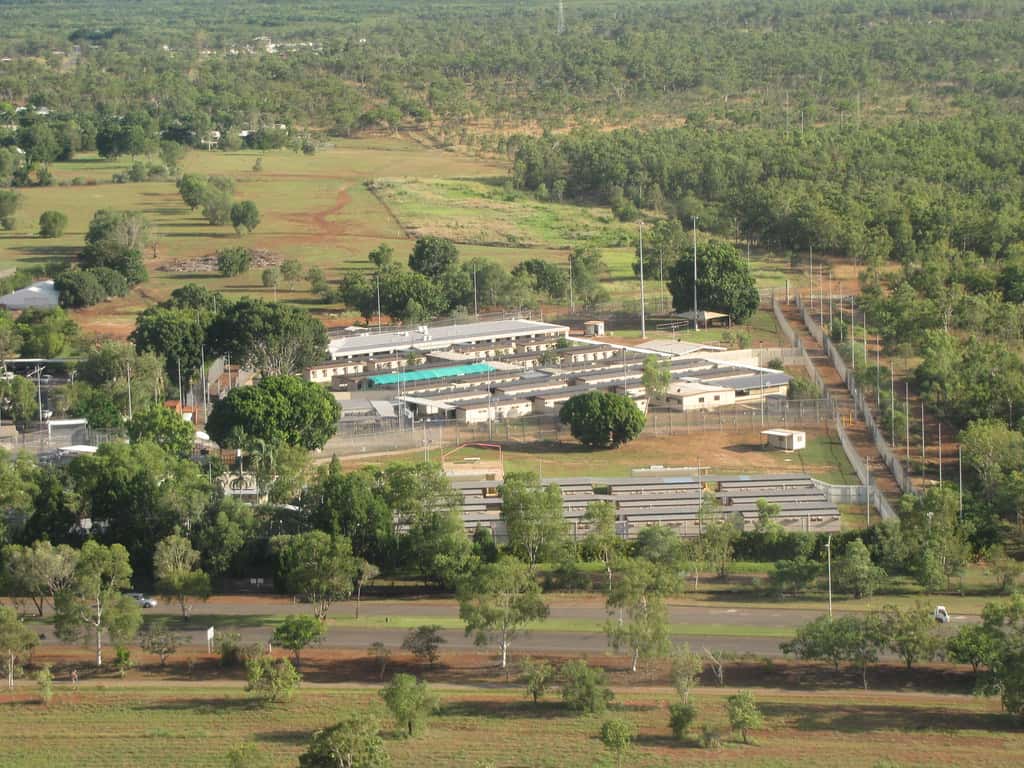
Southwest Florida has become the state's most active region for immigration enforcement, with Collier and Lee counties leading Florida in detentions and encounters and the region reporting roughly a tripling of Immigration and Customs Enforcement detentions year over year. The driver is local participation in federal enforcement rather than a change in the immigrant population itself.
As of late August, the Lee County Sheriff's Office had logged more encounters with people in the country illegally than any other local law enforcement agency in Florida, recording more than 3,500. The Collier County Sheriff's Office had logged just over 1,000 encounters, ranking fifth statewide. Both agencies participate in the federal 287(g) program, which allows designated local officers to perform certain immigration enforcement functions under agreements with ICE.
The distinction matters because enforcement totals are often reported as though they measure the presence of unauthorized immigrants in a region. They do not. They measure the volume of contacts generated by agencies that have chosen to make those contacts and have the capacity to process them, which is a fact about policing rather than a fact about population.
How 287(g) changes local policing
Section 287(g) of the Immigration and Nationality Act permits ICE to delegate specified immigration enforcement authority to state and local officers under a written agreement and federal supervision. The program has existed in various forms since 1996, and its scope has expanded and contracted with successive administrations.
The agreements come in different models. Jail enforcement models allow trained officers to identify and process removable individuals already in local custody. Task force models extend authority into field operations. Warrant service officer agreements are narrower, authorizing local officers to serve administrative immigration warrants on people already detained.
The practical effect of broad participation is that ordinary local law enforcement contact becomes an entry point into the federal immigration system. That is the program's design and its purpose. It is also the source of the numbers now being reported in Lee and Collier counties, where encounter totals reflect enforcement capacity and policy choices rather than the underlying size of any population.
Training and liability are the practical constraints that limit how far the program can expand. Officers designated under a 287(g) agreement must complete federal training, operate under ICE supervision, and follow federal procedures, and the agency bears responsibility for compliance. Departments that lack the staffing to dedicate officers to that training and to the resulting caseload generally do not participate regardless of local political sentiment.
The statewide picture
Florida has been among the most aggressive states in the country on immigration enforcement cooperation. More than 20,000 ICE arrests were recorded in Florida across a recent one-year period, and a joint state and federal enforcement operation running from April 2025 through January 2026 produced more than 10,400 arrests of unauthorized immigrants statewide.
Those figures place Florida in a small group of states where local and federal enforcement operate in close alignment. State policy under Governor Ron DeSantis has actively encouraged sheriff participation, and Florida law has established requirements for local cooperation that go beyond what federal law compels.
The enforcement surge has reached beyond the major metropolitan areas. Reporting has documented an increase in immigration arrests extending into Key West and the Florida Keys, a geography where the economy is heavily dependent on hospitality and service labor.
The numbers also require careful reading because agencies count different things. An encounter is not an arrest, an arrest is not a detention, and a detention is not a removal. A single individual can generate multiple entries across categories, and agencies reporting encounter totals are describing contacts rather than outcomes. Coverage that treats these figures as interchangeable overstates the scale of enforcement in some places and understates it in others.
Why Southwest Florida in particular
The concentration in Lee and Collier counties is not a coincidence of geography. Southwest Florida has a substantial agricultural sector, particularly in Immokalee and the inland portions of Collier County, alongside construction and hospitality industries that have historically relied on immigrant labor.
The region also has aggressive sheriff's offices with the institutional capacity to run large enforcement programs. Encounter numbers reflect agency staffing, training, and prioritization as much as they reflect the population encountered. An agency that dedicates resources to a program generates more numbers than one that does not.
The economic exposure runs in both directions. Southwest Florida's agricultural and construction sectors face labor availability questions when enforcement intensifies, and business associations in agriculture have raised workforce concerns in Florida and nationally. Those concerns sit uneasily alongside the political consensus in the region favoring enforcement.
Immokalee deserves specific mention because it is one of the largest agricultural labor communities in the eastern United States and sits within Collier County. The town's economy is built around winter vegetable production, and its workforce has historically included substantial numbers of seasonal and immigrant workers. Enforcement activity in that geography carries consequences for a labor market with very little slack in it.
What it means for Florida communities
For families in affected communities, the practical consequence is that routine interactions with local law enforcement carry immigration consequences they might not in a non-participating jurisdiction. That includes traffic stops and minor offenses that would otherwise resolve locally.
Public safety officials nationally have debated whether that dynamic suppresses crime reporting among immigrant residents, including by victims and witnesses. The research is contested and the effect size is disputed, but the concern is longstanding among police executives on both sides of the policy question.
Schools, hospitals, and social service providers in Lee and Collier counties operate in the environment these numbers describe. Federal policy has historically limited enforcement at certain sensitive locations, though those protections have been modified by successive administrations and their current scope is a live question.
Detention capacity is the operational constraint on the federal side. People taken into immigration custody are held in facilities that include federal detention centers, contracted private facilities, and county jails operating under intergovernmental agreements. Florida has several such facilities, and capacity questions periodically shape how many people can be detained at a given time regardless of how many are encountered.
The federal and state legal framework
Immigration enforcement is a federal power, and the constitutional architecture places it there. What 287(g) does is create a mechanism for local participation without transferring the underlying authority, which is why the agreements are structured as delegations under federal supervision rather than as independent local enforcement.
Florida has layered state requirements on top of that framework. State law has addressed local cooperation with federal immigration authorities, restricted certain sanctuary policies, and established obligations for law enforcement agencies. Those provisions have been litigated, and the boundary between permissible state regulation and preempted federal territory has been the subject of ongoing legal argument.
Federal courts in Florida, including the Southern and Middle Districts and the Eleventh Circuit on appeal, handle a substantial volume of immigration-related litigation as a consequence. That caseload is one of the ways national immigration policy becomes a Florida-specific legal question.
Immigration court backlogs are the other bottleneck. Removal proceedings run through immigration courts administered by the Justice Department, and case backlogs nationally have grown into the millions, with waits of years between filing and hearing common. That means the gap between an arrest and any final outcome is frequently long enough that enforcement statistics and removal statistics describe entirely different time periods.
The economic stakes
Florida's economy has structural dependencies on immigrant labor in agriculture, construction, hospitality, and health care support occupations. Those dependencies are documented and are not seriously disputed by economists across the political spectrum, though the appropriate policy response is.
Agriculture is the most acute case. Florida's citrus, vegetable, and nursery sectors operate on harvest windows that do not accommodate labor shortages, and the H-2A visa program that provides legal seasonal workers carries administrative costs and timing requirements that many operations find difficult.
Construction is the other pressure point, and it connects to housing affordability. Labor constraints in residential construction raise build costs, and build costs feed into home prices in a state where housing supply has been the central affordability issue for years.
Housing costs connect to this as well. Construction labor constraints raise the cost of building homes, and Florida's affordability problem is fundamentally a supply problem. Policies that reduce the available construction workforce raise build costs at a moment when the state needs more housing units, and that tension sits unresolved in the middle of Florida's two most prominent political priorities.
What's next
Enforcement levels in Southwest Florida will depend on federal priorities, funding, and the continuation of local 287(g) agreements. Those agreements are renewable and can be modified or terminated by either party, which makes them sensitive to changes in county leadership and federal policy alike.
Sheriff elections matter here in a way that is not always visible. Participation in 287(g) is a decision made at the agency level, and Florida sheriffs are elected officials. County-level enforcement posture can change without any change in state or federal law.
The numbers themselves will continue to be reported, and readers should keep the distinction between encounters, arrests, detentions, and removals clearly in mind. Those are sequential and distinct stages, the totals differ substantially at each, and coverage frequently conflates them in ways that make the scale of enforcement harder rather than easier to understand.
For readers trying to follow this over time, the most useful sources are the agencies' own published data rather than aggregate claims. ICE publishes enforcement statistics on a regular cycle, the Transactional Records Access Clearinghouse at Syracuse University compiles federal immigration data from records requests, and Florida agencies publish their own encounter figures. Those sources do not always agree, and the discrepancies are themselves informative.
Spotted an issue with this article?
Have something to say about this story?
Write us a letterComments
No comments yet. Be the first to weigh in.
Related Coverage

Isaias Shuts Pensacola and Okaloosa Airports as Airlines Waive Fees and Tolls Lift on Panhandle Bridges
3h ago

Ex-CIA official pleads guilty in $194 million fraud, will forfeit $102 million in Palm Beach and Hobe Sound real estate
4h ago

11th Circuit voids septic permit ban in Indian River Lagoon manatee case after federal 'harm' rule rollback
4h ago

Trump ties disaster aid to midterm campaign as Hurricane Isaias nears Florida Panhandle
23h ago