Immigration Enforcement Escalates in South Florida, Drawing Protests in Broward
Federal immigration enforcement activity across South Florida has intensified in recent weeks, and a bystander video of an Aug. 10 detention in Hallandale Beach has become a focal point for advocacy organizations that say operations in Broward and Miami-Dade counties have escalated sharply. The video, recorded by a witness, showed agents using a vehicle to pin a man against a fence during the detention.
What was recorded
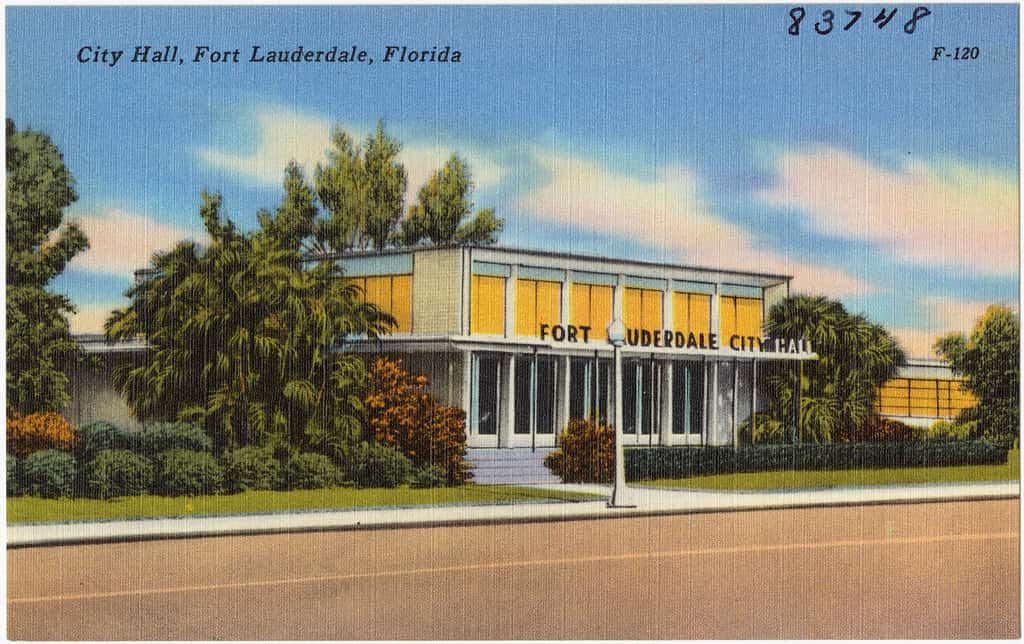
The footage circulated widely and prompted a protest outside Hallandale Beach City Hall the following Monday afternoon, organized by activists from several organizations including the Guatemalan-Maya Center. Advocates who spoke at the gathering described an escalation in enforcement activity across South Broward and North Miami and said operations were reaching neighborhoods rather than being confined to targeted individuals with criminal records.
Immigration and Customs Enforcement has not been shown in available reporting to have released a detailed account addressing the specific tactics visible in the video. The Florida Press has not independently reviewed the agency's operational reporting on the encounter.
Video-recorded enforcement encounters have become a recurring feature of the current period, and they have shaped public perception of operations in ways that agency statements typically have not. The recordings are made by bystanders rather than by officials, and their circulation is generally faster than any official response.
Other recent Florida operations
Enforcement activity this month has extended beyond street encounters. ICE lodged a detainer on Aug. 11 for a man accused of fatally stabbing a roommate with a machete in Broward County, and separately arrested a Cuban national in Florida whose commercial driver's license had expired.
Earlier in the month, on Aug. 6, a soccer player identified as Matias Alejandro Pourrain, 34, was arrested at Fort Lauderdale-Hollywood International Airport while traveling with Miami United FC to a national championship final in Los Angeles. According to the account of the case, he was admitted to the United States legally in November 2019 for a six-month period and remained after that authorization expired on May 11, 2020.
ICE's Miami field office has also reported joint operations with local partners under 287(g) agreements, including a Central Florida operation that the agency described as resulting in the arrest of 400 people it characterized as criminal aliens.
How local cooperation works in Florida
The 287(g) program allows state and local law enforcement agencies to enter formal agreements with ICE under which designated officers perform certain immigration enforcement functions. Florida has among the highest rates of participation in the country, and state law has required certain forms of cooperation.
That framework has produced friction among Florida sheriffs. Gov. Ron DeSantis publicly criticized some Florida sheriffs earlier this year over their handling of immigration arrests, and Palm Beach County's sheriff has maintained a distinct approach within the constraints of state law.
The practical effect for residents is that the line between local policing and federal immigration enforcement is thinner in Florida than in most states. Reporting has documented cases in which cooperation with local detectives on an unrelated matter ultimately led to immigration detention.
The Florida stake
Florida's population includes one of the largest foreign-born shares of any state. Communities with deep roots in Cuba, Haiti, Venezuela, Colombia, Nicaragua, Guatemala, Honduras and Mexico are concentrated in Miami-Dade and Broward counties, with substantial populations in Palm Beach, Hillsborough, Orange and Osceola counties as well.
Those communities are woven into Florida's labor market. Agriculture, construction, hospitality, health care support services and landscaping all depend substantially on immigrant workers, and industry associations in several of those sectors have raised workforce concerns about enforcement intensity.
Agricultural producers in particular have flagged harvest labor availability as a recurring issue, and Florida's specialty crop sector operates on narrow timing windows in which labor shortages translate directly into unharvested product.
The political dimension
Immigration is among the most prominent issues in Florida's November elections. The governor's race between Republican U.S. Rep. Byron Donalds and Democrat David Jolly and the Senate contest between Republican Sen. Ashley Moody and Democratic state Rep. Angie Nixon both involve candidates with clearly differentiated positions on enforcement scope and on local cooperation agreements.
Miami-Dade County's voting patterns have shifted substantially in recent cycles, and both parties have invested in Spanish-language outreach to communities whose views on immigration enforcement are not uniform. Cuban American and Venezuelan American voters in particular have shown voting behavior that resists simple characterization on the issue.
Whichever candidates win will have direct influence over state-level cooperation requirements and over the resources Florida agencies devote to enforcement partnerships.
What it means for Floridians
For residents, the practical questions concern rights during encounters with federal agents, which do not depend on immigration status. Legal aid organizations across South Florida provide guidance on those questions, and several maintain hotlines for reporting and documenting enforcement activity.
For employers, federal work authorization verification requirements apply regardless of enforcement intensity, and Florida law adds state-level requirements for certain employers. Businesses in affected sectors have generally been advised by counsel to review compliance documentation.
For local governments, the questions concern the scope of their agreements with federal authorities and the resources those agreements consume. Those decisions are made by sheriffs, police chiefs and county commissions and vary considerably across Florida's 67 counties.
What the law says about enforcement encounters
Constitutional protections during encounters with law enforcement, including federal immigration agents, do not depend on immigration status. The Fourth Amendment's protections against unreasonable search and seizure and the Fifth Amendment's protection against compelled self-incrimination apply to people physically present in the United States.
In practical terms, that means individuals generally have the right to remain silent, the right to decline consent to a search of a home without a judicial warrant, and the right to speak with an attorney. Administrative warrants issued by immigration authorities differ from judicial warrants signed by a judge, and the distinction affects entry into a residence.
Legal aid organizations across South Florida distribute know-your-rights materials in multiple languages, and several maintain hotlines for reporting enforcement activity. Those materials are not a substitute for individual legal advice, which depends on the specifics of a person's case.
The 287(g) framework in detail
Section 287(g) of the Immigration and Nationality Act authorizes agreements under which state and local officers perform specified immigration enforcement functions under federal supervision. The agreements come in several models, differing in whether officers act in jail settings, in task force settings, or in a warrant service capacity.
Jail model agreements are the most common. Under them, corrections officers screen individuals booked into county jails for immigration status and can hold those subject to detainers for transfer to federal custody. Task force models authorize street-level enforcement and have historically been more controversial.
Florida law has required certain forms of cooperation, which distinguishes the state from jurisdictions where participation is discretionary. That statutory framework limits how much variation is possible among Florida sheriffs even where individual sheriffs hold different views.
The economic sectors most affected
Florida agriculture depends substantially on immigrant labor, and the state's specialty crop sector operates on harvest windows measured in days. Citrus, tomatoes, strawberries, sugarcane and nursery products all require labor availability at specific times that cannot be deferred.
The H-2A temporary agricultural worker program provides a legal pathway for seasonal labor, and Florida growers are among the larger users of it nationally. The program is administratively complex and costly, and growers have consistently sought changes to its requirements.
Construction and hospitality face parallel dynamics without an equivalent visa program for year-round work. Both sectors are central to Florida's economy, and both have raised workforce availability concerns through their industry associations.
Community effects beyond enforcement
Public health and law enforcement officials have periodically raised concerns that enforcement intensity affects behavior beyond its direct targets. Reduced willingness to report crimes, to seek medical care or to cooperate as witnesses affects communities regardless of individual immigration status.
School districts in Miami-Dade, Broward and Palm Beach counties enroll large numbers of students from immigrant families, and district officials have addressed attendance and student wellbeing questions during periods of heightened enforcement.
Those secondary effects are difficult to measure and are contested in public debate, but they are consistently raised by local officials in the affected jurisdictions and form part of the argument over the appropriate scope of local cooperation.
The immigration court backlog
Individuals placed in removal proceedings appear before immigration judges within the Executive Office for Immigration Review, an agency within the Department of Justice rather than part of the federal judiciary. Florida hosts immigration courts including facilities in Miami and Orlando.
Case backlogs nationally have grown into the millions, and waits of several years between an initial hearing and a merits hearing have been common. That backlog affects both people seeking relief and enforcement priorities, because detention capacity and case processing capacity are finite.
Representation matters substantially to outcomes. Immigration proceedings are civil rather than criminal, which means there is no right to appointed counsel. Individuals who cannot afford an attorney appear unrepresented unless a legal aid organization takes the case.
Florida's foreign-born population in context
Roughly one in five Florida residents was born outside the United States, one of the highest shares of any state. That population is heavily concentrated in South Florida but present throughout, including agricultural communities in Central and Southwest Florida.
The composition is unusually varied. Cuban, Haitian, Colombian, Venezuelan, Nicaraguan, Mexican, Jamaican and Brazilian communities are all substantial, each with distinct immigration histories and distinct legal statuses ranging from citizenship through permanent residence, temporary protected status, pending asylum claims and undocumented presence.
Those status differences matter enormously in practice and are frequently flattened in public discussion. Members of the same family and the same household often hold different statuses, which is why enforcement actions can affect citizens and lawful residents alongside their intended targets.
What's next
Advocacy organizations in Broward and Miami-Dade have indicated they intend to continue documenting and protesting enforcement operations. Federal agencies publish enforcement statistics and press releases through their own channels on their own schedules.
The Florida Press will continue to report on immigration enforcement in Florida, on the state's cooperation agreements and on the issue's role in the November elections, and will seek official accounts of specific incidents where they are available.
Spotted an issue with this article?
Have something to say about this story?
Write us a letterComments
No comments yet. Be the first to weigh in.
Related Coverage

Isaias Shuts Pensacola and Okaloosa Airports as Airlines Waive Fees and Tolls Lift on Panhandle Bridges
58m ago

Ex-CIA official pleads guilty in $194 million fraud, will forfeit $102 million in Palm Beach and Hobe Sound real estate
1h ago

11th Circuit voids septic permit ban in Indian River Lagoon manatee case after federal 'harm' rule rollback
1h ago
Trump ties disaster aid to midterm campaign as Hurricane Isaias nears Florida Panhandle
20h ago