Jacksonville Council Pushes Incentives Toward Veterans and Cecil Airport
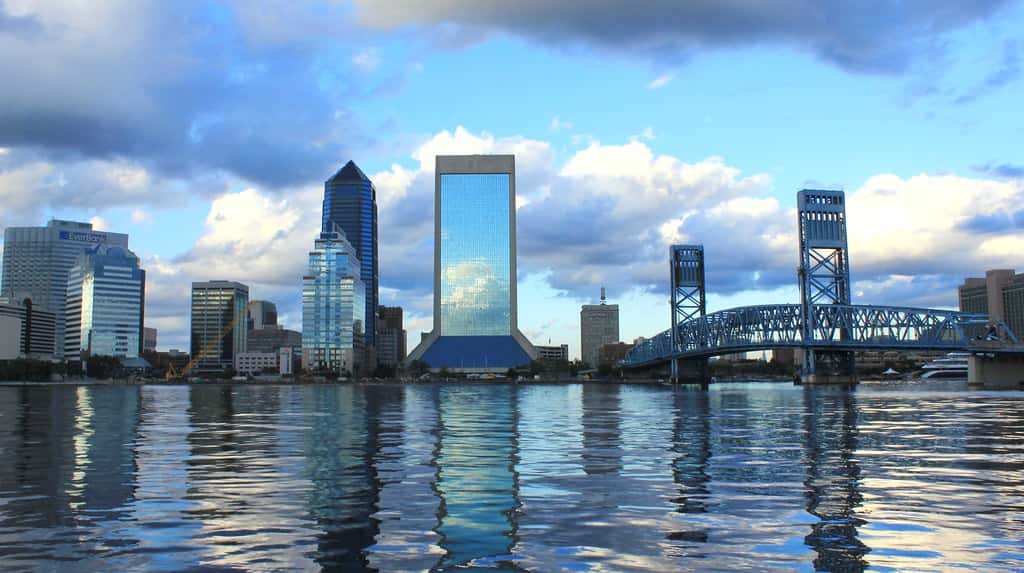
A majority of the Jacksonville City Council has signed on to a resolution that would reshape how the city awards economic development incentives, tying recipient obligations to veteran and military spouse hiring and directing additional weight toward projects at Cecil Airport. The measure, Resolution 2026-0574, reflects a growing view among council members that Jacksonville's incentive dollars should be steered toward the constituencies and the geography the city has identified as strategic priorities.
What the resolution does
Under the resolution, companies receiving a Recapture Enhanced Value Grant would be required to make a good-faith effort to hire qualified active-duty military spouses, veterans, or both, for a minimum of 10 percent of the new jobs created under the agreement. The resolution also directs the city's Office of Economic Development to give projects located within Cecil Airport additional positive consideration when weighing potential incentives.
The Recapture Enhanced Value Grant, generally referred to by its acronym REV grant, is Jacksonville's principal property-tax-based incentive tool. It works by rebating to the company a portion of the incremental property taxes generated by a project's increase in assessed value. Because the rebate comes from new tax revenue that would not exist absent the project, REV grants are often described as self-funding, though critics note that the incremental revenue would otherwise flow to general city services.
The phrase good-faith effort is doing significant work in the resolution. A good-faith effort standard is materially weaker than a hard quota, and it typically means the recipient must document outreach and recruitment activity rather than guarantee a hiring outcome. That structure avoids legal exposure that a rigid preference might create, but it also limits enforceability.
Why veterans and military spouses
Jacksonville has one of the largest concentrations of military-connected population of any American metropolitan area. Naval Station Mayport and Naval Air Station Jacksonville anchor a Navy presence that includes surface combatants, patrol aircraft squadrons and extensive shore support. Naval Submarine Base Kings Bay sits just across the Georgia line and draws a substantial share of its workforce from the Jacksonville area.
The population that results includes a large number of transitioning service members and a persistent pool of military spouses, a group that experiences unemployment and underemployment at rates well above the national average. Frequent relocation, licensure portability problems and employer reluctance to hire candidates with anticipated short tenure all contribute.
Local hiring initiatives targeting that group have existed in Jacksonville for years through workforce boards and chamber programs. What the resolution proposes is different in kind: attaching the objective to the city's incentive contracts, where it becomes a condition of receiving public support rather than a voluntary commitment.
The Cecil Airport piece
Cecil Airport occupies the site of the former Naval Air Station Cecil Field on Jacksonville's west side, closed under the base realignment process in the 1990s and conveyed to the city. The Jacksonville Aviation Authority operates it as a general aviation and industrial airport, and it holds a spaceport operator license from the Federal Aviation Administration for horizontal launch operations.
The site's assets are substantial: long runways built for military aircraft, extensive acreage, and existing hangar and maintenance infrastructure. Aviation maintenance, repair and overhaul operations have clustered there. Redevelopment of the surrounding acreage into an industrial and commercial corridor has been a city objective for two decades.
Directing incentive consideration toward Cecil reflects a judgment that the city's west side has not shared in the growth concentrated downtown, along the Southside, and in the northern corridor near the port and the intermodal facilities. Whether an incentive tilt is sufficient to change location decisions is a different question, since site selection is usually driven by logistics, labor availability and utility capacity before incentives enter the calculation.
The broader Jacksonville development picture
The resolution arrives during an unusually active period for Jacksonville development. The city is partway through the $1.4 billion Stadium of the Future renovation of EverBank Stadium, a project financed jointly by the city and the Jacksonville Jaguars. The team will play its 2027 home schedule at Camping World Stadium in Orlando during the final year of construction, under a relocation approved unanimously by NFL owners in March, before returning to Jacksonville in 2028.
Downtown redevelopment through the Downtown Investment Authority has proceeded on multiple fronts, including riverfront parcels and adaptive reuse of older commercial buildings. Council recently granted zoning approval to a development including roughly 119 rooms, 300 parking spaces and retail space.
Those projects have kept incentive policy in front of the council. Each significant approval renews the underlying debate about what the city should require in exchange for public support, and the veterans hiring provision is one answer to that question.
What it means for Northeast Florida
For military families in the Jacksonville area, the practical effect depends entirely on enforcement. A documented outreach requirement creates a channel that did not previously exist and gives workforce organizations a point of contact at incentive recipients. It does not guarantee placements.
For businesses considering Jacksonville, the additional condition is modest relative to the value of a REV grant, and comparable community-benefit provisions are common in incentive agreements in other large cities. The reporting burden is the main practical cost.
For west-side residents, the Cecil provision is the more consequential element over a long horizon. Industrial employment at Cecil pays above the regional service-sector median, and proximity reduces commute times in a part of the city with limited transit.
For city finances, the resolution does not change the amount of incentive money available. It changes the conditions attached to it and the weighting used in evaluation.
What a REV grant actually costs the city
The Recapture Enhanced Value grant is frequently described as self-funding, and the accuracy of that description depends on an assumption worth examining.
The mechanism works by rebating to a company a share of the incremental property taxes generated by the increase in a project's assessed value. If a parcel assessed at $2 million is developed into a facility assessed at $30 million, the incremental tax on the $28 million difference is the pool from which the rebate is paid.
The self-funding claim holds if and only if the project would not have occurred without the incentive. If the company would have built in Jacksonville regardless, the rebate is a straightforward transfer from the general fund to the company, and the city loses revenue it would otherwise have collected for schools, police, fire and infrastructure.
Economic development literature on this question is not favorable to incentive programs generally. Research on state and local business incentives has repeatedly found that a large share of incentivized projects would have proceeded without the subsidy, and that incentives rank below workforce availability, logistics and utility capacity in corporate site selection surveys.
That research does not make incentives useless. It does mean that the marginal value depends heavily on how tightly the awarding body screens for projects genuinely at risk of locating elsewhere, and on how enforceable the performance conditions are.
Cecil Airport and the spaceport license
Cecil Airport holds an asset most general aviation airports do not: a launch site operator license issued by the Federal Aviation Administration for horizontal launch operations.
Horizontal launch refers to systems that take off from a runway like an aircraft rather than vertically from a pad. The concept has attracted repeated commercial interest and has yet to produce a sustained operational business. Virgin Orbit, which pursued air-launch from a modified 747, ceased operations in 2023. Other operators have proposed horizontal launch systems without reaching regular flight.
The license nonetheless positions Cecil differently from a conventional industrial site. It signals regulatory readiness and it supports the broader aerospace identity the Jacksonville Aviation Authority has cultivated at the field.
What has actually taken root at Cecil is aviation maintenance, repair and overhaul work. The long runways built for naval aircraft accommodate large commercial airframes, and the hangar infrastructure supports heavy maintenance. That business is less glamorous than launch operations and considerably more reliable.
The surrounding acreage, formerly part of Naval Air Station Cecil Field, represents one of the largest contiguous developable industrial land assemblies in Northeast Florida, which is the underlying reason city officials keep returning to it.
The west side and Jacksonville's growth pattern
Jacksonville is the largest city in the continental United States by land area, a result of the 1968 consolidation that merged the city with Duval County. That geography means the city's development pattern is unusually dispersed, and growth has not been evenly distributed.
The Southside and the beaches communities have absorbed the largest share of residential and commercial growth. Downtown redevelopment has proceeded in fits through the Downtown Investment Authority, with riverfront parcels and adaptive reuse projects advancing alongside the stadium work. The north side has grown around the port and the intermodal logistics facilities.
The west side, including the Cecil corridor, has lagged. Household incomes are lower, commercial investment has been thinner, and transit connectivity to the employment centers on the east side of the city is limited.
Directing incentive consideration westward is a policy response to that imbalance. Whether it changes outcomes depends on factors an incentive tilt does not control, including utility capacity, road access and the labor shed available within a reasonable commute.
The council's resolution does not appropriate new money. It changes the conditions and the weighting applied to money already available, which is a modest instrument aimed at a substantial structural problem.
What's next
The resolution must complete the council's committee process and receive a floor vote. Council resolutions in Jacksonville proceed through committee review, and amendments during that process are routine. Because a majority of members have already signed on, passage in some form is likely, though the specific language on the good-faith standard and on the Cecil weighting could change.
Implementation would then fall to the Office of Economic Development, which negotiates the individual REV grant agreements. The operative question will be how the office writes the good-faith requirement into contract language and what documentation it requires from recipients.
The Florida Press will follow the resolution through council and report on how the provisions appear in subsequent incentive agreements.
Spotted an issue with this article?
Have something to say about this story?
Write a letter to the editor