Jaguars Rout Browns 34-10 Behind Four Touchdown Passes
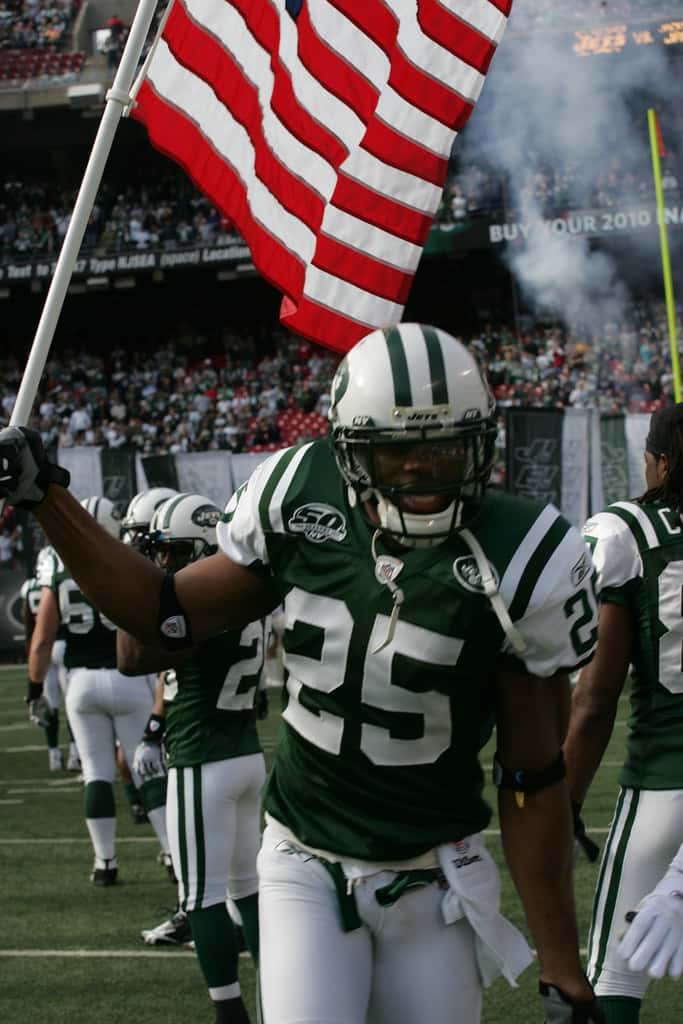
The Jacksonville Jaguars delivered the most complete performance of any Florida NFL team in Week 1, routing the Cleveland Browns 34-10 on Sunday behind an offense that scored on six of its first seven possessions. Quarterback Trevor Lawrence threw four touchdown passes to four different receivers, spreading the ball across a group that included Parker Washington, rookie Josh Cameron, Brenton Strange and Jakobi Meyers.
The result gave Jacksonville the only Week 1 victory among Florida's three NFL franchises, with Miami falling 27-13 to Las Vegas and Tampa Bay losing 33-27 at Cincinnati.
More than the margin, the efficiency stood out. Scoring on six of seven possessions represents near-maximum offensive execution, a rate no team sustains across a season but one that demonstrates what an offense is capable of when timing and protection align.
How Jacksonville built the lead
The Jaguars established control early and never relinquished it. Scoring on six of the first seven drives meant Cleveland spent virtually the entire game in a deficit, forced into a game plan built around catching up rather than around what it preferred to run.
That dynamic compounds. An offense playing from behind becomes predictable, which helps the opposing pass rush. A defense playing with a lead can commit to defending the pass and rushing the passer without concern for run responsibility.
Lawrence's distribution across four different touchdown targets is the detail worth noting. Offenses that concentrate scoring in one receiver become easier to defend as the season progresses, because defensive coordinators can build game plans around taking that player away. An offense that threatens from multiple positions presents a harder problem.
The receiving group
Parker Washington, Brenton Strange and Jakobi Meyers each represent established pieces of the Jacksonville offense, and their involvement in the scoring reflects the roles the team has built for them.
Rookie Josh Cameron's touchdown carries additional interest. Rookie contributions in Week 1 are unpredictable, and a rookie who earns targets in scoring situations in his first professional game has generally demonstrated something in practice that the coaching staff trusts.
Strange's involvement at tight end matters for the offense's structure. A tight end who threatens defenses in the passing game creates matchup problems that ripple through the rest of the formation, forcing defenses into personnel decisions that open opportunities elsewhere.
What the defense did
Holding Cleveland to 10 points represents the other half of the afternoon, and Jacksonville's defense set the tone for the 2026 season in a way the unit had not consistently managed in recent years.
Some of that reflects game script. A defense playing with a large lead operates in advantageous circumstances. But Cleveland's 10 points came against a defense that was not merely sitting back, and the unit prevented the opponent from ever establishing the rhythm that might have made the second half competitive.
Defensive performance in Week 1 requires the same caution as offensive performance. Opponent quality varies enormously across the league, and a strong opening result establishes a baseline rather than a conclusion.
What this means for Jacksonville
The Jaguars have spent several seasons in a pattern of promise followed by inconsistency, reaching the postseason in some years and falling short in others without establishing the sustained contention the organization has sought.
An opening performance of this quality provides evidence for the more optimistic reading of the roster. Whether it holds depends entirely on repetition, and the AFC South has historically been a division where the standings shift substantially between September and December.
For Lawrence, a four-touchdown opener establishes a tone for a season in which his performance will again determine much of what the franchise can accomplish. Quarterback play drives outcomes in the modern NFL more than any other single factor, and Jacksonville's ceiling tracks his.
What it means for Northeast Florida
EverBank Stadium and the Jaguars occupy a particular place in Jacksonville. The franchise is the region's only team in the four major North American professional leagues, which concentrates civic sports attention in a way that differs from Miami, Tampa Bay or Orlando.
That concentration means the Jaguars' performance carries outsized local economic and cultural weight. Winning seasons fill downtown restaurants and bars on game days and shape the mood of a city in ways that are difficult to quantify but easy to observe.
The stadium itself has been the subject of extensive renovation planning, and the franchise's on-field trajectory intersects with the broader civic conversation about that investment. A competitive team makes the case for the project more easily than a struggling one.
Tempering the reaction
Dominant opening performances invite overreaction in both directions, and Jacksonville's coaching staff will spend the week managing that internally.
The caution applies to the offense's efficiency in particular. Scoring on six of seven possessions is a rate no team approaches across a full season, and regression from that mark is certain rather than merely likely. The relevant question is what the sustainable level looks like.
Opponent quality is the other variable. Cleveland's performance across the coming weeks will establish how much Jacksonville's result reveals. A team that dominates an opponent which goes on to struggle has demonstrated less than one that dominates an opponent which proves competitive.
What the performance does establish is capability. The Jaguars showed they can execute at a high level, which is information the team did not have with certainty entering the season.
Lawrence and the offense's structure
Distributing four touchdown passes across four receivers reflects an offensive design that spreads targets rather than concentrating them, and that structure carries specific advantages and risks.
The advantage is unpredictability. Defenses cannot devote coverage resources to neutralizing a single player when four are capable of finishing drives, and that forces more honest coverage across the formation.
The risk is that spread distribution can indicate the absence of a dominant option rather than the presence of many good ones. Offenses without a receiver defenses genuinely fear sometimes struggle in the situations where one is most valuable, including third down and the red zone.
Sunday's result argued for the optimistic reading, since Jacksonville converted in exactly those situations. Whether it holds is the season's central offensive question.
The AFC South landscape
Jacksonville's division has been among the league's less predictable in recent years, with the standings reshuffling substantially between seasons and no franchise establishing sustained dominance.
That volatility works in Jacksonville's favor. A division without an entrenched power is one a well-executing team can win, and winning the division guarantees a home playoff game regardless of conference seeding.
Divisional games will be spread through the schedule, and the Jaguars' performance in those six contests will most directly determine whether the opener becomes the start of a successful season or an isolated high point.
EverBank Stadium and the franchise's footing
Jacksonville's venue has been the subject of a major renovation program, a project that has occupied the franchise and the city for years and that carries substantial public investment.
Stadium projects of that scale are always partly about football and partly about civic economics. The argument for public participation rests on downtown development, event hosting capacity and the retention of a franchise that is the city's only major league team.
Winning makes that argument easier. A competitive team fills the building, generates regional interest and supports the case that the investment produces returns. A struggling one invites the opposite conversation.
The franchise's international series history adds another dimension, with Jacksonville having played regular season games in London across multiple seasons, an arrangement that expanded the team's commercial reach while removing home dates.
Building on an opener
The most common pattern after a dominant Week 1 is a more difficult Week 2, as opponents adjust and the team encounters better competition.
Coaching staffs address this by focusing evaluation on process rather than outcome. A team that executed well will find the same execution produces narrower margins against better opponents, and treating the wide margin as the standard sets up disappointment.
Jacksonville's specific advantage from Sunday is confidence in the passing game's structure. Four receivers finishing drives establishes a baseline the offense can build from rather than a result it must replicate.
Defensively, holding an opponent to 10 points provides a reference point for what the unit is capable of when it plays with a lead, though it says less about performance in close games where the unit must defend without that cushion.
Northeast Florida's football calendar
Jacksonville's football landscape extends beyond the Jaguars. The Georgia and Florida rivalry game has been played in the city for decades, drawing enormous crowds and filling hotels across the region.
Local college programs and a strong high school football culture across Duval, Clay, St. Johns and Nassau counties add depth to the region's football calendar through the fall.
That density means the Jaguars compete for attention within their own market during the fall, though as the only professional franchise they retain the largest share of it.
For now, Jacksonville holds the state's only Week 1 win and the most encouraging single performance any Florida NFL team produced this weekend.
What's next
Jacksonville carries a 1-0 record into the remainder of its schedule, and the coaching staff's task is converting a strong opener into a pattern. The most common trap after a dominant Week 1 is treating it as proof rather than as a starting point.
The AFC South will take shape over the coming weeks, and divisional games carry the additional weight of head-to-head tiebreakers. Jacksonville's path to the postseason most plausibly runs through winning the division.
Statewide, Week 1 left Florida's NFL teams at a combined 1-2. Jacksonville's performance was the clear outlier, and the Jaguars enter Week 2 as the state's best-positioned professional football team.
Spotted an issue with this article?
Have something to say about this story?
Write us a letterComments
No comments yet. Be the first to weigh in.
Related Coverage
Cooper Flagg Outduels Giannis Antetokounmpo as Mavericks Beat Heat 113-109, Miami Falls to 0-4
4h ago
Lars Eller's First Goal as a Panther Lifts Florida Past Blackhawks 3-2, Snapping Two-Game Skid
1d ago
Gators Rise to No. 17 in AP Poll During Bye Week, Face No. 3 Georgia in Atlanta as Double-Digit Underdogs
1d ago
Franz Wagner Scores 21 in the Fourth as Magic Rally Past Defending Champion Knicks 111-102 for First Win
1d ago