Jaguars Trim to 54 After Shutting Out Tampa Bay in the Preseason Finale
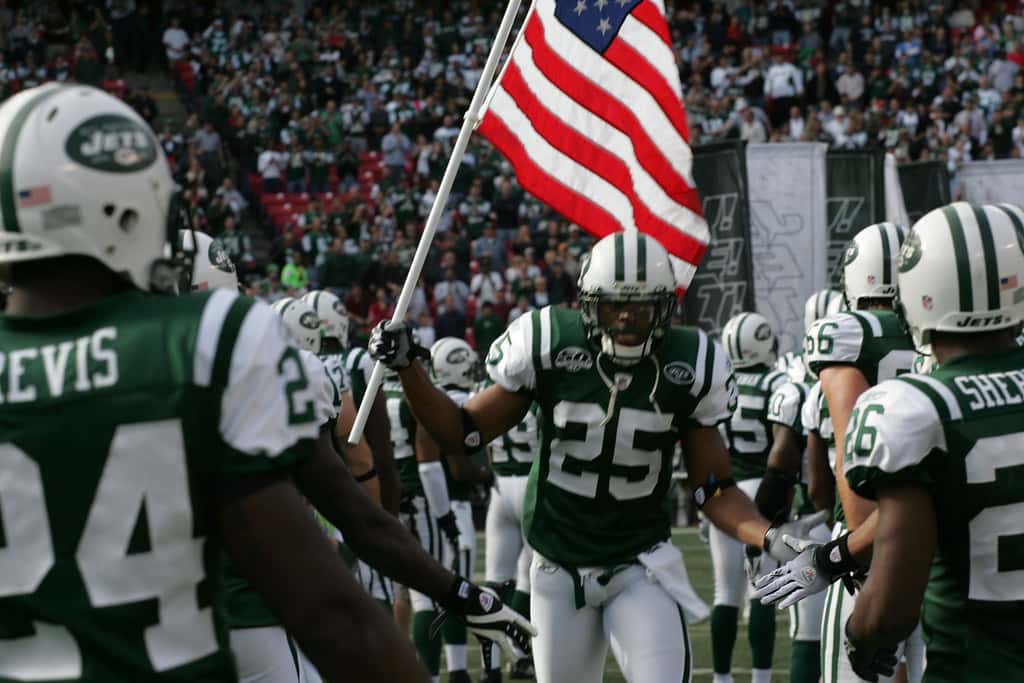
The Jacksonville Jaguars announced their first major wave of roster reductions after closing the preseason with a 19-0 shutout of the Tampa Bay Buccaneers at EverBank Stadium, trimming from 90 players to 54 ahead of the NFL's league-wide deadline to reach 53 by 6 p.m. Eastern on Sunday.
The players waived in that wave included long snapper Tucker Addington, wide receivers Kevin Austin Jr., Jacob Harris, Oliver Martin and Kendric Pryor, safety Latavious Brini, kicker James McCourt, quarterback Nathan Rourke, and multiple offensive linemen and defensive backs. Players who clear waivers become eligible to sign with any team's practice squad, including Jacksonville's.
A shutout in a preseason finale carries limited predictive value, since both teams played almost entirely backups and roster hopefuls. What it does provide is a final evaluation sample for the players whose spots were genuinely in question, which is exactly the population the game exists to assess.
The wave and what it signals
Cutting from 90 to 54 in one announcement, leaving a single additional cut before the deadline, is a comparatively decisive approach. Some organizations spread reductions across several days to preserve flexibility; others move in bulk once the evaluation is settled.
The receiver group absorbed the largest share of the announced cuts, with four wide receivers released in the wave. That concentration typically indicates a team confident in its top of the depth chart at the position and comfortable that the developmental players it wants can be recovered through the practice squad.
Releasing both a long snapper and a kicker in the same wave indicates that Jacksonville had settled its specialist competitions. Specialist battles are among the most closely watched in camp because the margin between candidates is often measured in fractions of a second on snap timing or in a handful of field goal attempts.
Quarterback Nathan Rourke's release is notable given the position's importance and the fact that teams frequently carry three quarterbacks through the preseason before deciding. Rourke, like the other released players with fewer than four accrued seasons, would be subject to waivers before becoming eligible for a practice squad.
How waivers work from here
Players with fewer than four accrued NFL seasons pass through waivers when released. Any team can submit a claim, and claims are awarded in reverse order of the prior season's standings, meaning the league's worst team gets first choice. A claimed player's existing contract transfers to the claiming team.
Players with four or more accrued seasons are not subject to waivers and become free agents immediately upon release, able to negotiate with any club without a waiver process. Veterans therefore have more control over their next destination than younger players do.
Players who clear waivers, meaning no team claims them, become free agents and can sign to any practice squad. Teams routinely re-sign several of their own released players to the practice squad within a day or two of the deadline, which is why cutdown day is not the end of the road for most of the players involved.
The 16-player practice squad, with a possible 17th slot for a qualifying international player, is where developmental prospects continue their work. Practice squad players can be elevated to the active roster for individual games or signed permanently, either by their own team or by another club.
What the preseason showed
Shutting out an opponent in a preseason game requires the defense to hold across four quarters against multiple waves of opposing offense, which is a genuine indicator of depth even accounting for the exhibition context. Defensive players fighting for roster spots produced that result.
Preseason offensive production is harder to read. Play-calling is intentionally vanilla, opponents are not game-planned for, and continuity between the units on the field changes series by series. Scoring 19 points in that environment says less than holding an opponent scoreless does.
What coaching staffs take from these games is individual rather than collective. Did a specific corner maintain leverage in coverage? Did a specific defensive lineman hold his gap? Those observations, combined with practice evaluation across all of training camp, drive the roster decisions rather than the scoreboard.
Special teams performance in the finale carries outsized weight because the players competing for the final roster spots are almost all special teams contributors. Coverage tackles, gunner performance and blocking assignments on returns get graded closely in these games.
The season ahead in Jacksonville
Jacksonville plays its home games at EverBank Stadium in downtown Jacksonville, a venue undergoing a major renovation project that has reshaped both the stadium and the surrounding sports and entertainment district. The project is among the largest public-private investments in the city's history.
The franchise's competitive arc has been uneven over the past decade, with a division title and playoff run followed by seasons that fell short of expectations. That volatility shapes how each preseason gets read locally, with fans and media alike calibrating between hope and caution.
Roster construction reflects an organization's assessment of its own window. A team keeping more young players and fewer veterans signals a longer development horizon; a team keeping proven contributors at the back end signals urgency about the current season.
Northeast Florida's football attention divides between the Jaguars and college programs, with Florida, Florida State and Georgia all drawing significant followings in the market. The Jaguars' performance shapes how much of that attention the professional team commands through the fall.
What it means for Northeast Florida
The Jaguars are the region's only major professional sports franchise, and game days drive substantial economic activity in downtown Jacksonville, from parking and concessions to restaurants and hotels across the urban core.
The stadium renovation project connects the team's on-field performance to a broader civic conversation about downtown development. Public investment in sports facilities is generally justified on economic development grounds, and the returns on those investments are a subject of ongoing debate among economists and city officials alike.
Season ticket demand and secondary market pricing respond to performance expectations, and both have historically fluctuated considerably in Jacksonville relative to markets with longer traditions of sustained success.
For fans, the practical near-term item is the regular season opener in September and the roster that takes the field for it. The group finalized this weekend is the starting point rather than the finished product.
The economics behind a 53-man roster
NFL rosters are constrained by the salary cap, which sets a hard ceiling on what each team can spend. Every player on the 53-man roster carries a cap charge, and the difference between a minimum-salary rookie and a veteran with several accrued seasons can be several hundred thousand dollars for the same role. That gap is why the veteran minimum salary benefit exists, allowing teams to sign qualifying veterans at a reduced cap charge.
Dead money complicates the picture. When a team releases a player with guaranteed salary or unamortized signing bonus remaining, that money accelerates onto the current or following year's cap even though the player is gone. Teams accumulate dead money every cutdown day, and the total constrains what they can do in free agency during the season.
Practice squad salaries are lower than active roster salaries and are not subject to the same cap treatment, which is part of why teams prefer to develop young players there rather than on the active roster. The tradeoff is that practice squad players can be signed away by other teams at any time.
These constraints explain decisions that appear puzzling from outside. A team that keeps a slightly less accomplished player over a better one is frequently choosing flexibility, either because the cheaper player preserves room for an in-season addition or because the more expensive player's guarantees made the release less advantageous than it appeared.
What's next
Jacksonville must reach 53 players by Sunday evening, meaning one additional move from the current 54. That final decision may come through a release, a trade or an injured reserve designation.
Waiver claims process Monday, and Jacksonville will have the opportunity to add players released by other teams. Every year, players cut by one organization become meaningful contributors for another within weeks, and the waiver wire is where those moves originate.
Practice squad signings follow, and the players Jacksonville brings back after they clear waivers will indicate which of the released players the organization still values developmentally.
Official transactions are published by the team and by the league. Those announcements, rather than reports preceding them, are the authoritative record of who is on the roster.
For the players released this week, the immediate path runs through the waiver period and, for most, through the practice squad. NFL careers routinely include multiple releases, and a substantial number of long-tenured players in the league were cut at least once early on before establishing themselves elsewhere.
Players who go unsigned have other options, including the United Football League and leagues abroad, which have become recognized development paths back into the NFL. Agents typically begin working those channels within days of a release rather than waiting out the waiver period.
The NFL Players Association provides transition benefits including continued health coverage for a defined period and access to career transition programming. Those benefits are structured around accrued seasons, which means players cut before earning a full accrued season receive substantially less support than veterans do.
Jacksonville's season opener and the full schedule are published by the team and the league, with kickoff times for later games assigned on a rolling basis as television networks make selections. Fans planning travel to road games should account for that uncertainty, since a game scheduled for a Sunday afternoon can move to Sunday night or to a Thursday with only a few weeks of notice.
Spotted an issue with this article?
Have something to say about this story?
Write us a letterComments
No comments yet. Be the first to weigh in.
Related Coverage
Brady Tkachuk Scores Natural Hat Trick, Matthew Tkachuk Adds 5 Assists as Panthers Rout Blue Jackets 7-3
3h ago
Banchero, Wagner power Magic past Cavaliers 132-116 in Sean Sweeney's first home exhibition
3h ago
Alexis Lafreniere Scores Twice as Rangers End Lightning's 4-Game Win Streak, 4-1, at Madison Square Garden
3h ago
Sam Reinhart Scores Twice, but Sabres Beat Panthers 5-3 in Buffalo as Jacob Markstrom Is Pulled
23h ago