Judge Rejects Sarasota County's Rural Live Local Act Defense, Clearing Celery Fields Apartments to Move Forward
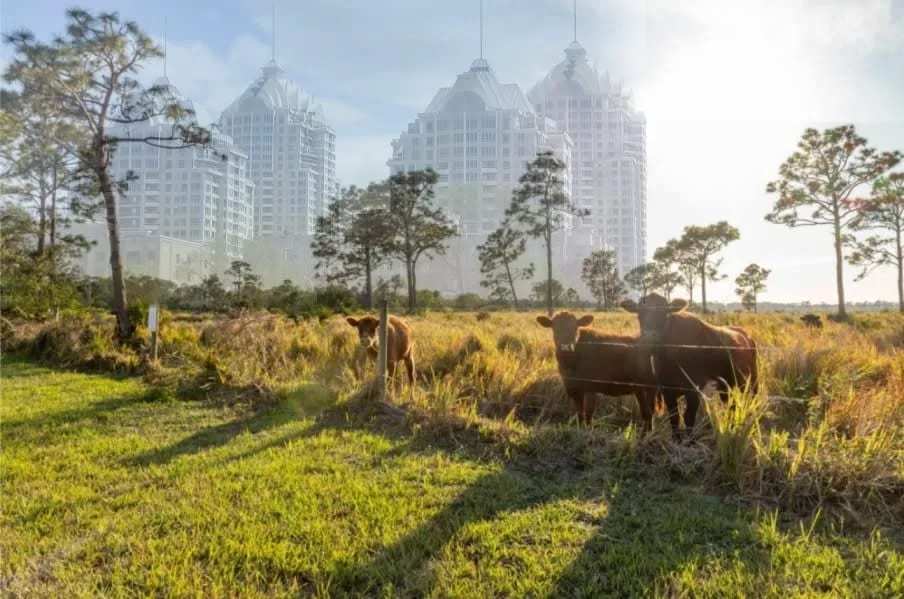
A Sarasota circuit judge has rejected Sarasota County's central argument for keeping large Live Local Act apartment projects out of its rural lands, ruling that the county must let a proposed development of more than 600 apartments beside the Celery Fields bird sanctuary move forward in the review process. The Nov. 4 order from 12th Judicial Circuit Judge Hunter W. Carroll is the first ruling on the merits in a string of developer lawsuits, and it could shape the fate of thousands of apartments proposed across the county's rural east.
The ruling directly covers only the Celery Fields project, but County Attorney Joshua Moye has told commissioners his office is reviewing what it means for the other pending cases. Suncoast Searchlight, whose reporting was republished by WUSF, described the decision as a death blow to the county's fight against the state law.
What the judge decided
Sarasota County had argued that the Live Local Act does not apply in certain rural zoning districts that allow only limited commercial uses, such as veterinary clinics and plant nurseries, because those uses are secondary to the areas' rural character. Carroll rejected that reading.
"This case is not whether building apartments next to the Celery Fields is wise," Carroll wrote. "Instead, this case is whether the Florida Legislature has prevented Sarasota County from determining whether this is wise."
The order does not approve the apartments outright. According to reporting by the Business Observer, Carroll directed the county to process the application under the Live Local Act and noted the project may still have to meet other legal criteria and requirements outside the scope of his ruling. Moye told commissioners the order finds that the law preempts the county from denying the multifamily project, the Business Observer reported.
The Celery Fields project
The case involves the Smith family farmland next to the Celery Fields, a former celery farm east of Interstate 75 that the county has used as its primary drainage wetland for flood control since the early 1990s. The roughly 400 acres of restored wetlands also serve as a bird sanctuary that draws tens of thousands of visitors a year and supports more than 250 bird species. The surrounding rural zoning generally allows one home per five acres.
Homebuilder D.R. Horton has proposed 864 apartments on the site, according to WUSF and the Business Observer. Because 408 of those units would be smaller than 750 square feet and count as half a unit for density purposes, the plan is counted as about 660 units, the Business Observer reported, which is why some coverage describes it as more than 600 apartments.
The apartment plan followed years of fights over single-family homes on the same land. D.R. Horton first proposed 170 homes in late 2023, then scaled back to 126 and later 85, and the County Commission rejected each version amid public outcry, with commissioners citing flooding concerns after Hurricane Debby in 2024. The company sued over those denials in April. The Business Observer reported that commissioners rejected a settlement offer from D.R. Horton to build 126 single-family homes about a month before Carroll's ruling.
How the county's rural policy began
In April, county commissioners voted unanimously to halt Live Local projects in low-density rural zones, including open-use districts. Moye warned in a memo at the time that defending that position "would be an uphill battle given the strict language of the Live Local Act."
Developers sued soon after. The first suits, filed in the spring, involved a 352-unit project on Fruitville Road proposed by a church and Curco Land Holdings, and a 500-unit complex near Lorraine Road proposed by SITC Inc., a company controlled by Halfacre Construction president Jack Cox. D.R. Horton's Live Local suit followed in June. Five developers have now sued over the county's interpretation, and four of those cases remain before Carroll.
Developers have proposed at least 18 large apartment projects in Sarasota County's rural areas under the law, and WUSF reported the ruling could clear the way for more than 7,600 apartments. In a separate Sept. 17 decision, Carroll ruled that commissioners are shielded from being sued personally for actions taken in their official capacities, without addressing the merits.
What the Live Local Act does
The Live Local Act, first passed by the Legislature in 2023, was meant to spur workforce and affordable housing. It lets developers skip traditional public hearings and some local zoning rules if a share of the units rent at levels affordable to households earning up to 120% of the area median income. On the Fruitville Road project, for example, 141 of 352 units would be set aside for those tenants.
After local governments blocked projects, lawmakers loosened the law in 2025 so that Live Local developments must be allowed in any zoning district that permits some commercial or industrial use. That change is the core of the Sarasota dispute: the county's rural districts allow a handful of commercial uses, and developers argue that is enough to trigger the law.
Lawmakers revisited the law again in 2026 with amendments aimed at protecting rural areas, but WUSF reported that projects submitted by July 1 can be reviewed under the 2025 version. Most of the Sarasota projects were filed under the earlier rules. The law also lets the prevailing side in these suits recover court costs of up to $250,000, raising the financial stakes for the county.
Reaction from the county and the developers
Moye told commissioners his office fought hard. "I can assure you that our office did its best and threw everything we had at defending the board's policy decision," he said. "We all knew it was an uphill battle going against the plain language of the Live Local Act."
Commissioner Teresa Mast said the result was a setback. "This is not what we had hoped for," she said, adding that she wanted to understand the ramifications of the decisions. The board unanimously agreed to hold a fuller discussion at its Nov. 17 meeting.
Developers have signaled they will not retreat. Christopher Oprison, an attorney representing one of the Live Local projects, previously told Suncoast Searchlight: "My client will not back down. He will not be pushed around by this county commission." Residents opposed to the projects have organized rallies and hired their own lawyers, and the Sarasota News Leader has reported that the Sarasota Audubon Society was allowed to intervene in D.R. Horton's earlier suit over the Smith farm.
What it means for the Suncoast
The ruling raises the likelihood of dense apartment complexes in parts of eastern Sarasota County that have long been limited to large-lot homes and farms. The law's backers in the Legislature designed it to add rental housing for working households, with a share of units held at income-restricted rents. Opponents, including environmental groups, say the Celery Fields project threatens a regional stormwater system and one of the state's best-known birding sites, which eBird ranks as the third most popular birding hotspot in Florida.
What's next
Sarasota County could appeal Carroll's ruling to the Second District Court of Appeal, but it has not announced whether it will. Commissioners are scheduled to discuss the decision and its effect on the four other pending Live Local suits at their Nov. 17 meeting. In the meantime, the Celery Fields application returns to county staff for review under the Live Local Act.
Spotted an issue with this article?
Have something to say about this story?
Write us a letterComments
No comments yet. Be the first to weigh in.
Related Coverage

OUC DemandLevel Pricing Hits November Bills: How the New $5, $10 and $15 Demand Tiers Work
21h ago
After Amendment 3, Florida Cities and Counties Start Budget Triage, From Jacksonville Nonprofits to the Charlotte County Sheriff
1d ago
Kraft Heinz Sells Its Coffee Business, Including Jacksonville's Maxwell House Plant, to One Rock Capital in $650 Million Deal
1d ago
Jacksonville's $49.65 Million Downtown Publix Incentive Stalls on a 3-3 Committee Tie as Amendment 3 Cuts Into City Revenue
1d ago