Miami-Dade Commission Sets Oct. 6 Hearing on Plan to Eliminate 12 Metrobus Routes
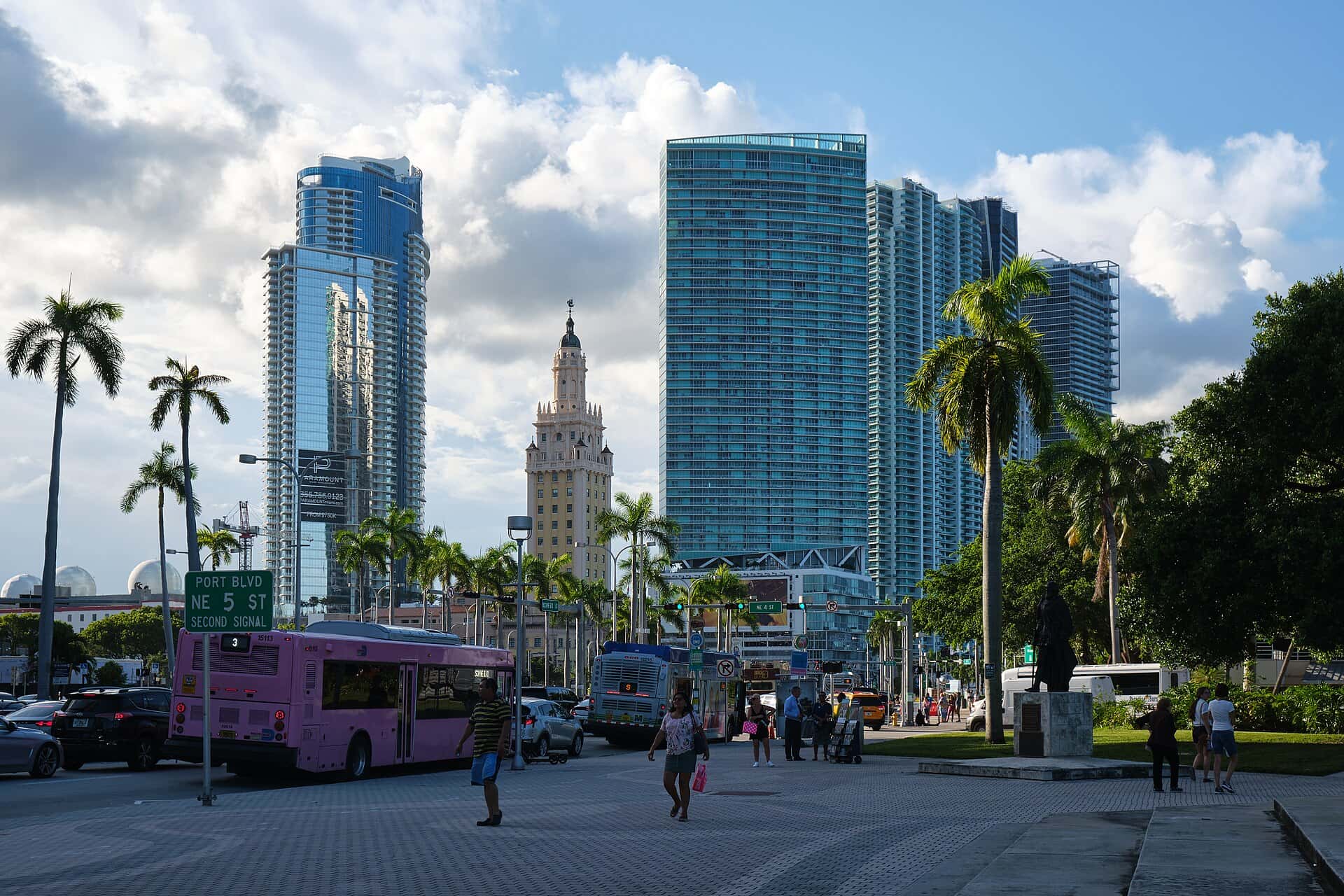
Miami-Dade County commissioners will hold a public meeting on Tuesday, Oct. 6, to take testimony and act on resolutions tied to the transit service changes built into the county's newly adopted 2026-27 budget, including the elimination of 12 Metrobus routes and the end of late-night service on a dozen more. The meeting begins at 9:30 a.m. in the County Commission Chambers on the second floor of the Stephen P. Clark Government Center, 111 N.W. First Street, in downtown Miami, according to a public notice issued by the county.
The hearing arrives just days after the county's new fiscal year began on Oct. 1. Commissioners approved a roughly $14.3 billion balanced budget for the year in a session that stretched into the early morning hours of Sept. 18, and the spending plan carried with it a package of bus cuts that transit advocates have fought since Mayor Daniella Levine Cava first released her proposal in July.
Under the county's notice, the public may comment on the budget-driven transit service changes, on potential fare increases for the Miami-Dade Transit system, and on any alternative solutions. Federal and county rules generally require a public hearing before major transit service reductions or fare changes take effect, which is why the board must revisit the bus cuts even after adopting the overall budget.
Which routes are on the chopping block
The adopted budget proposes eliminating Metrobus routes 16, 25, 42, 57, 70, 132, 203, 204, 272, 279, 288 and 338, according to the county's public notice. Earlier budget documents and reporting identified routes 132, 203, 204, 279, 288 and 338 as county-operated lines and routes 16, 25, 42, 57, 70 and 272 as lines run by a contract operator.
The notice also proposes ending bus service after 10 p.m. on routes 101, 103, 104, 107, 125, 135, 137, 150, 183, 199, 400 and 510. Separately, the mayor's budget proposal called for trimming early-morning trips, ending service before roughly 6 a.m. on dozens of county-operated routes and cutting late-night trips on dozens of others. Counts of the affected routes have varied slightly between the county's figures and advocates' tallies, but both describe cuts reaching well beyond the 12 routes slated for full elimination.
For riders, the practical effect is that some neighborhoods could lose a direct bus connection entirely, while workers on early or overnight shifts could find that the first or last bus of the day no longer fits their schedules. The routes that are being cut altogether tend to be lower-ridership lines, while the hour-of-service reductions touch some of the system's busier corridors.
| Proposed change | Routes affected (per county notice) |
|---|---|
| Full route elimination | 16, 25, 42, 57, 70, 132, 203, 204, 272, 279, 288, 338 |
| No service after 10 p.m. | 101, 103, 104, 107, 125, 135, 137, 150, 183, 199, 400, 510 |
| Early-morning and late-night trims | Dozens of additional county-operated routes, per the mayor's budget proposal |
Why the county is cutting bus service
Levine Cava's administration spent the summer warning that the county faced a difficult budget year, and the transit cuts were one of the larger savings items in her proposal. The route eliminations and service reductions were projected to reduce general fund spending by roughly $31 million, according to the county's budget figures, and Transit Alliance Miami, a rider advocacy group, put the value of the reduced service at about $31.5 million.
The mayor kept the countywide property tax rate flat in her plan rather than raising rates to close the gap. During the budget debate, Levine Cava also warned about the potential fiscal impact of the statewide property tax measure on the November ballot, which, if approved, could further constrain local government revenue in future years. That backdrop shaped a budget process in which department heads were asked to absorb reductions and the commission searched for limited dollars to restore.
When commissioners did find extra money late in the process, they directed it elsewhere. Commissioners identified an additional $5 million for the county's tourism bureau during the final budget hearing, while the bus route eliminations remained in the adopted plan, according to reports from the Sept. 17 to 18 session.
Riders and advocates push back
Transit advocates have argued throughout the budget season that cutting service is counterproductive in a county still trying to rebuild ridership after the COVID-19 pandemic. Transit Alliance Miami has tracked the proposed cuts route by route and has urged commissioners to look for alternatives, including using other transportation funds to preserve service.
Business and labor voices have also raised concerns. Critics quoted in local coverage over the summer described the early-morning reductions as an economic negative for the county, because hospital, hotel, airport, construction and retail workers often start shifts before dawn and depend on buses to reach them. Losing the first trips of the day can force workers into expensive ride-hailing trips or longer walks in the dark.
Critics have also pointed out that the people most affected by bus cuts are often lower-income residents, older adults and people with disabilities who do not have access to a car. In Miami-Dade, where housing costs have pushed many workers farther from job centers, the bus network is the only realistic commute option for a significant share of residents.
Fares could also come up
The county's notice specifically lists potential transit fare increases among the topics that may be discussed on Oct. 6. Any fare change would require action by the commission, and riders would typically receive advance notice before new fares took effect.
Background: Fare levels have been a recurring flashpoint in Miami-Dade budget debates. In the 2025 budget cycle, the mayor's office floated a 50-cent increase in the base Metrobus and Metrorail fare, from $2.25 to $2.75, which drew strong opposition from rider groups who noted it would add hundreds of dollars a year to the cost of daily commuting. Advocates have consistently argued that higher fares and reduced service together tend to push riders away from the system.
Commissioners will have to weigh whether any fare change would offset enough revenue to restore some of the cut routes, or whether it would simply compound the burden on riders already losing service.
Background: Miami-Dade's transit system
Miami-Dade Transit, operated by the county's Department of Transportation and Public Works, runs Metrobus, the elevated Metrorail line that opened in 1984, and the free downtown Metromover people mover. Metrobus is by far the largest piece of the network by geographic reach, serving neighborhoods from Aventura and Miami Gardens to Homestead and Florida City.
The county overhauled its bus system in late 2023 with the Better Bus Network, a redesign that reorganized routes around more frequent service on major corridors. The county also relies on a half-cent transportation sales surtax approved by voters in 2002 under the People's Transportation Plan, money that has been the subject of years of debate over how much should go to operations versus long-term rail expansion.
The county has struggled to return to pre-pandemic ridership levels, even as ridership has climbed from its 2021 low. Transit leaders have long argued that service reliability and frequency are key to winning riders back, which is why cuts to hours and routes draw such sharp criticism from advocates.
What the cuts mean for South Florida commuters
For South Florida, the stakes extend beyond Miami-Dade's borders. Many workers commute between Miami-Dade and Broward counties, and county bus routes feed into regional connections including Tri-Rail and Brightline stations. Reductions at the edges of the service day can ripple into regional trips that rely on making a timed connection.
The cuts also come as Miami-Dade continues to pursue major transit expansion projects, including commuter rail planning on the Northeast Corridor and bus rapid transit on the South Dade TransitWay. Critics have questioned how the county can promise new premium transit while shrinking its basic bus network, while county officials have said the reductions are necessary to keep the budget balanced in a difficult year.
The debate mirrors pressures facing transit agencies in other Florida metros, where local governments have been squeezed by rising operating costs and uncertainty about future property tax revenue. In Miami-Dade, the outcome of the Oct. 6 hearing will determine how quickly riders feel those pressures.
How to participate
Members of the public who want to speak can attend the meeting at the Stephen P. Clark Government Center at 9:30 a.m. on Oct. 6. The county's notice states that the public will have an opportunity to be heard on the service changes, potential fare increases and any alternatives presented to the board.
Residents who cannot attend in person can typically watch County Commission meetings live on Miami-Dade TV and the county's website. People who need accommodations to participate are generally asked to contact the county's ADA coordination office in advance of the meeting.
Riders who use any of the affected routes may also want to check the county's transit website and the Miami-Dade transit app for updated schedules once the commission acts, since the timing of any service changes will depend on the board's decisions.
What's next
At the Oct. 6 meeting, commissioners will hear public comment and consider resolutions on the proposed transportation service changes. The board could approve the cuts as written, modify them, or direct staff to pursue alternatives such as restoring specific routes with other funds.
If the cuts are approved, the county will set implementation dates and publish revised schedules, typically as part of a periodic service change. Transit advocates are expected to turn out to urge commissioners to preserve at least some of the routes and service hours.
The vote will be one of the first major actions of the new fiscal year and an early test of how Miami-Dade intends to balance a flat tax rate, a tight budget and the needs of the residents who rely on its buses every day.
Spotted an issue with this article?
Have something to say about this story?
Write a letter to the editorComments
No comments yet. Be the first to weigh in.
Related Coverage

Jacksonville's $2 Billion Budget Takes Effect With Record Public Safety Spending and Restored Housing Fund
2h ago
Florida's Voter Registration Deadline Is Monday as Democrats Edge GOP in September Sign-Ups
4h ago

DeSantis Touts $20 Billion Plan to Widen All 320 Miles of Florida's Turnpike, Adds Truck Parking and Plaza Upgrades
6h ago

Uthmeier Asks Highlands County Judge to Bar OpenAI From Offering ChatGPT to Florida Minors
22h ago