Heat Fill Out the Roster With Two-Way Deals After a Giannis Antetokounmpo Summer
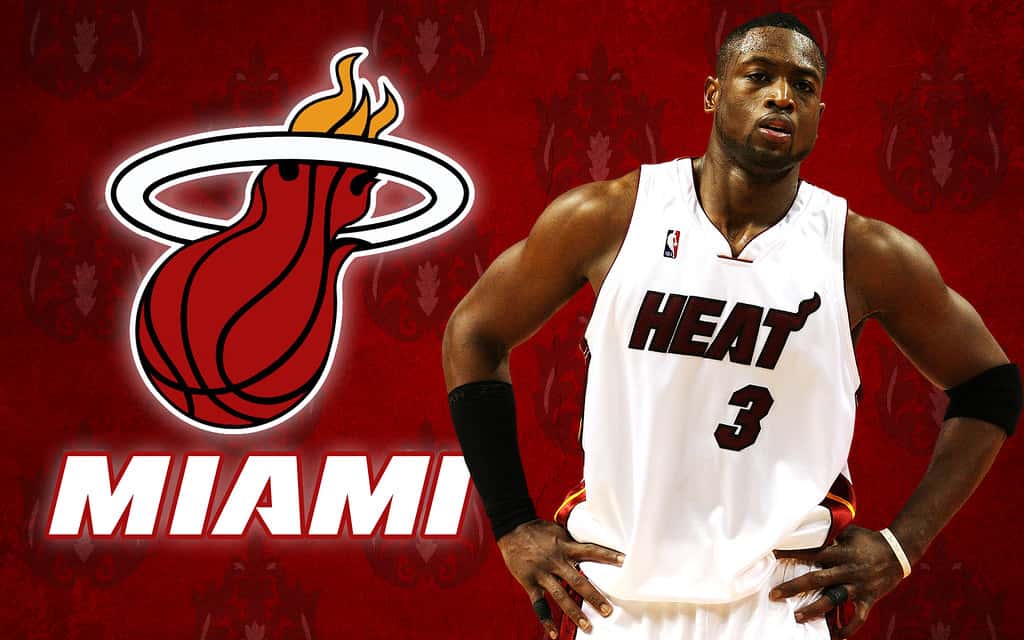
The Miami Heat continued filling out the back of their roster this week, signing J'Vonne Hadley and Keshad Johnson to two way contracts on August 28 and adding center Nick Richards on a one year deal worth roughly $3.06 million the day before. The moves close out an offseason defined by the franchise's acquisition of Giannis Antetokounmpo from the Milwaukee Bucks.
The Antetokounmpo trade, one of the largest in franchise history, sent Tyler Herro, Kel'el Ware, Jaime Jaquez Jr., Kasparas Jakucionis, and Nate Ament to Milwaukee along with a package of future first round picks. Miami received Antetokounmpo and Bobby Portis. The deal could not be finalized until after the NBA's moratorium period ended in early July.
For South Florida basketball fans, the offseason represents the most aggressive roster reconstruction the Heat have undertaken in years, and the recent signings show how the front office is addressing the depth cost of a star acquisition.
What the Heat gave up and got back
Trading for a player of Antetokounmpo's caliber requires surrendering both established production and future flexibility. Miami sent out a young core that included Herro, an All Star caliber guard, along with recent draft picks in Ware, Jaquez, and Jakucionis, and added multiple future first round selections to the package.
What the Heat received is a player who has won a championship, been named league Most Valuable Player, and anchored a top defense. Pairing him with Bam Adebayo gives Miami a frontcourt combination that reshapes how opponents must defend the paint and how the Heat defend it themselves.
Bobby Portis, included in the deal, is an established rotation big who provides frontcourt scoring and rebounding off the bench, a useful complement given how much of Miami's remaining depth is unproven.
The tradeoff is straightforward and familiar in the NBA. Miami is substantially better at the top of its roster and thinner beneath it, with fewer young players on rookie contracts to fill minutes cheaply.
Filling the gaps
The additions since the trade have followed a clear logic: veterans on short, inexpensive contracts plus two way players for developmental depth.
Klay Thompson signed a two year deal worth approximately $11.48 million on August 23, addressing perimeter shooting, which was among the more obvious needs created by Herro's departure. Tim Hardaway Jr. was added on a one year contract worth roughly $6.07 million, another shooting and ball handling addition on a veteran deal.
Nick Richards at roughly $3.06 million for one year gives Miami a center behind Adebayo and Portis, insurance at a position where injuries are common and where the Heat traded away Ware.
The two way signings of Hadley and Johnson complete the roster's developmental tier. Two way players can spend a limited number of days with the NBA club and otherwise play in the G League, which allows teams to develop prospects without consuming standard roster spots.
What it means for the Heat
Miami's competitive window has changed shape. A roster built around Antetokounmpo and Adebayo, with Thompson and Hardaway providing shooting, is constructed to compete immediately rather than to develop toward contention over several seasons.
The risks are the ones that accompany any star acquisition. Availability matters more when the roster is top heavy, because there is less capacity to absorb a long absence. Age matters more when the supporting cast consists of veterans on short contracts rather than players entering their primes.
The absence of future first round picks limits the front office's ability to make in season trades, which is the mechanism teams typically use to address problems that appear after the season begins.
Pat Riley has not stepped aside as president, and the construction of this roster reflects an organization pursuing a title now rather than managing toward flexibility.
The Eastern Conference picture
Adding Antetokounmpo to Miami reshapes the conference. Milwaukee's rebuild around the players it received changes the competitive order in the Central Division, while Miami's addition raises the ceiling in the Southeast.
The Orlando Magic, Florida's other NBA franchise, had a comparatively quiet offseason, re signing Jevon Carter, Jonathan Isaac, and Nikola Vucevic to one year minimum contracts. Orlando's approach has been continuity with an existing young core rather than external addition.
That divergence sets up a contrast within the state. Miami is built around a superstar acquisition; Orlando is built around internal development. Both teams play in the Southeast Division and meet several times each season.
Preseason evaluations of Miami's offseason have generally been favorable, though the assessments that matter come from results rather than from grades issued in August.
What two-way contracts do
Two way contracts are worth explaining because they have become central to how NBA teams manage depth. A team may carry up to three two way players in addition to its 15 standard roster spots.
Two way players earn substantially less than minimum salary players on standard contracts and can be active for a limited number of NBA games. They spend the remainder of the season with the affiliated G League team, where they play regular minutes and develop.
The system allows organizations to keep prospects in their own developmental environment rather than losing them to other leagues, and it provides emergency depth when injuries strike.
For Hadley and Johnson, the practical path is to produce in the G League and earn conversion to a standard contract, which teams can do during the season when a roster spot opens.
The salary cap machinery behind the trade
A trade of this size is constrained by rules that determine what is possible, and those rules explain the shape of the deal as much as basketball considerations do.
Teams over the salary cap must match salaries within defined tolerances when trading, which is why a package for a maximum salary player requires multiple contracts going the other way rather than a single one. That requirement drove the inclusion of several rotation players in the outgoing package.
The current collective bargaining agreement imposes escalating restrictions on teams whose payrolls exceed defined thresholds, limiting access to exceptions, aggregation of salaries in trades, and use of the midlevel exception. Those restrictions are why Miami's subsequent additions came at or near minimum and small exception levels rather than through larger commitments.
Draft pick trading is limited by the rule preventing a team from being without first round picks in consecutive future years, which caps how many selections can be included in any package. Teams that have traded heavily lose the flexibility to make further deals, which is the position Miami now occupies.
The moratorium period at the start of the league year, during which agreements can be reached but not formalized, is why the trade could not be completed until July 6 despite being reported earlier.
What it means on the floor
The basketball question is how Antetokounmpo and Bam Adebayo function together, and the answer will define Miami's season.
Both players operate most effectively with space around the rim, which places a premium on the shooting the Heat added in Klay Thompson and Tim Hardaway Jr. Defenses that can collapse without consequence make a two big alignment substantially less effective.
Defensively, the pairing is the more straightforward fit. Both players defend multiple positions, and Adebayo's ability to switch onto perimeter players while Antetokounmpo covers ground as a help defender gives Miami schematic flexibility that few teams can match.
Playmaking is the question the roster raises most sharply. Trading Tyler Herro removed a primary ball handler and shot creator, and the additions have been shooters more than creators. How much initiating Antetokounmpo does, and who runs the offense when he rests, will be decided in camp.
The Heat's organizational culture, built on conditioning standards and player development, has historically extracted production from role players other teams overlooked. That capacity matters more when the roster's bottom half consists of minimum contracts and two way players.
What the trade means for the Bucks and the league
Deals of this magnitude reshape more than the acquiring team, and the return Milwaukee received defines the other half of the transaction.
The Bucks acquired Tyler Herro, an established guard entering his prime; Kel'el Ware and Jaime Jaquez Jr., young players on rookie scale contracts with demonstrated NBA production; Kasparas Jakucionis and Nate Ament, recent selections; and a package of future first round picks.
That combination is the standard shape of a rebuild return: current production, young players with development runway, and draft capital that converts into future flexibility. Whether it works depends on outcomes that will not be known for several years.
League wide, the deal continues a pattern in which star players change teams through trade rather than free agency. The current collective bargaining agreement's restrictions on high payroll teams make it harder to assemble multiple stars through signing, which pushes movement into the trade market where salary matching governs.
For fans, the practical consequence is that rosters turn over faster and that a team's competitive window can open or close in a single summer. Miami's window opened this July; Milwaukee's closed the same day.
What's next
Training camp opens in late September, with the preseason following in early October and the regular season beginning later that month. Miami will use camp to establish how Antetokounmpo and Adebayo function together and how the shooting additions fit around them.
Contract extension questions surrounding Antetokounmpo will be a recurring storyline, since the terms available to a player after a trade differ from those available to a player re signing with his original team.
Roster spots may still shift before the season. Teams routinely make late additions from the pool of veterans who remain unsigned into September and October.
The first real evaluation comes when the games begin. Until then, the Heat have assembled a roster that puts them squarely in the conference conversation and leaves little room for the season to go sideways without consequence.
Spotted an issue with this article?
Have something to say about this story?
Write us a letterComments
No comments yet. Be the first to weigh in.
Related Coverage
Rays await Guardians or White Sox in ALCS after sweeping Yankees; Game 1 Monday at Tropicana Field
1h ago

John Carlson scores twice, Dennis Hildeby makes 34 saves as Lightning hold off Wild 3-2
2h ago
Winless Dolphins host Bengals at Hard Rock Stadium seeking first win under Jeff Hafley
22h ago
Hurricane Isaias Scrambles Florida Sports: FSU Cancels Pensacola Games, FAMU Moves to Friday
1d ago