Miami Opens at No. 7 as Florida's Only Ranked College Football Team
The Miami Hurricanes will open the 2026 college football season ranked No. 7 in the Associated Press Top 25, their highest preseason ranking since 2004, and the only Florida program to appear in the USA Today Coaches Poll.
Florida State and Florida both begin the season outside the top 25 in the coaches poll. The Seminoles checked in at No. 38 in the CBS Sports 138 composite, while the Gators appeared at No. 25 in the On3 preseason rankings but outside the coaches poll top 25.
The rankings set the stage for a season in which Florida's three Power conference programs enter with substantially different expectations for the first time in several years, with Miami carrying national championship conversation and the other two working to reestablish position.
Miami's position
A No. 7 preseason ranking places Miami in the group of teams positioned to compete for a College Football Playoff berth. The expanded playoff format has widened the field of teams with a realistic path, but a top-10 preseason ranking still confers a schedule and margin advantage.
The Hurricanes' last preseason ranking this high came in 2004, a period when the program was completing the run of national relevance it built through the 1980s and 1990s. The intervening two decades have included multiple coaching changes and several seasons that began with expectation and ended without it.
The Atlantic Coast Conference has been in flux, with membership changes and a shifting competitive hierarchy. Miami's conference schedule determines much of the playoff math, since conference results carry weight in selection committee evaluation.
Florida State's reset
Florida State opens the season against New Mexico State on August 29 at Doak Campbell Stadium in Tallahassee, the earliest of the three Florida programs to begin play.
The Seminoles are working to change a national perception shaped by recent results. A program that reached an undefeated regular season in 2023 and was left out of the four-team playoff subsequently experienced a sharp decline, and rebuilding from that has been the central task.
Beginning outside the top 25 removes preseason expectation but also removes any cushion. Teams starting unranked generally need a signature win to enter the polls, and Florida State's schedule determines where those opportunities fall.
Florida's season opener
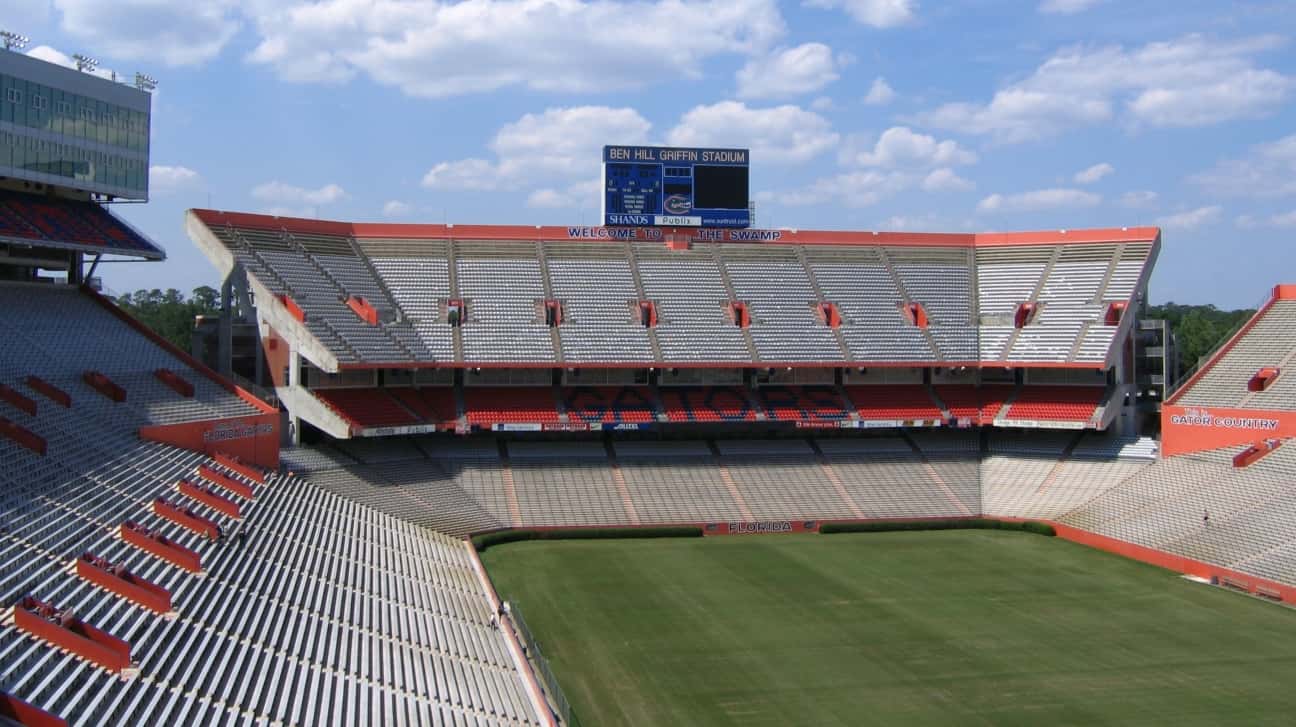
The Gators open on September 5 against Florida Atlantic at Ben Hill Griffin Stadium in Gainesville. The matchup is an in-state game against a Group of Five opponent, a common season-opening structure for Southeastern Conference programs.
Florida's placement at No. 25 in one preseason ranking and outside the top 25 in another reflects genuine uncertainty about the program. The SEC schedule provides both the difficulty and the opportunity, since conference wins carry the most weight in playoff evaluation.
Ben Hill Griffin Stadium, known as The Swamp, remains one of the more difficult home environments in college football, and home schedule composition matters for a team looking to build a resume.
What it means for Florida fans
Florida is among the most productive states in the country for college football talent, and its high school programs feed rosters across the sport. The state's three Power conference programs compete directly for many of the same recruits.
The transfer portal and name, image and likeness arrangements have restructured how rosters are built, compressing the timeline over which a program can improve or decline. A team can change substantially between seasons in ways that were not possible under previous rules.
For fans, the practical result is that preseason rankings carry less predictive weight than they once did. Rosters turn over more heavily, and preseason evaluation of a substantially new roster is harder than it was when continuity was the norm.
Local impact across the state
Game days generate significant economic activity in Gainesville, Tallahassee and Miami Gardens, with hotel occupancy, restaurant traffic and retail sales all rising on home weekends. For Gainesville and Tallahassee in particular, football weekends are among the largest single-day economic events of the year.
Beyond the three Power conference programs, Florida hosts a substantial number of additional Division I football programs including UCF, USF, Florida Atlantic, Florida International, Florida A&M, Bethune-Cookman and Stetson, spread across the state.
Florida high school football, which begins its own season in August, remains a central part of community life in much of the state and produces the recruiting pipeline that supplies programs nationally.
What a preseason ranking is worth
Preseason polls are projections rather than measurements. Voters assess returning production, recruiting classes, transfer additions and coaching stability, and they anchor heavily on where teams finished the previous season.
Historically, preseason rankings have shown moderate predictive accuracy at the very top and considerably less accuracy through the middle of the poll. Teams ranked outside the top 10 in August frequently finish far from where they started, in both directions.
The rankings still matter operationally, because they shape the narrative that follows a team through September. An unranked team that beats a ranked opponent gains more in poll movement than a ranked team gains for the same result, which creates asymmetric incentives early in the season.
What ultimately determines playoff participation is the College Football Playoff selection committee's rankings, which begin appearing later in the season and are produced through a different process than the media and coaches polls.
How roster construction changed the sport
The transfer portal and name, image and likeness compensation have restructured college football roster building more thoroughly than any change in decades. Players can move between programs with far fewer restrictions than previously existed, and they can be compensated for their name, image and likeness.
The practical effect is that rosters turn over much more heavily between seasons. A program can add starters at multiple positions in a single offseason, or lose them, in ways that were not possible when transfers required sitting out a year.
That compression cuts both directions. A struggling program can improve quickly by acquiring experienced players, and a successful program can be depleted if it cannot retain its own. Continuity has become a competitive advantage rather than a default condition.
Evaluation has become correspondingly harder. Preseason assessment of a roster with substantial turnover involves projecting how players will perform in a new system with new teammates, which is a different exercise from projecting continuity.
Florida as a talent producer
Florida is consistently among the top three states in producing Division I football recruits, alongside Texas and California, and it produces more per capita than either. That pipeline supplies programs nationally, not only the ones inside the state.
The state's three Power conference programs compete directly for many of the same recruits, which makes in-state recruiting a zero-sum contest among them. Out-of-state programs recruit Florida heavily as well, particularly those in the Southeastern Conference and Big Ten.
High school football in South Florida in particular has produced a disproportionate share of professional players, and the programs in Miami-Dade and Broward counties have national reputations. Year-round warm weather permits training and competition schedules that colder states cannot match.
Beyond the three Power conference schools, Florida hosts UCF, USF, Florida Atlantic, Florida International, Florida A&M, Bethune-Cookman and Stetson, giving the state one of the densest concentrations of college football programs in the country.
The expanded playoff and what it changed
College football's postseason moved from a four-team playoff to a larger field, which substantially widened the group of teams with a realistic path to a national championship. Under the previous format, a single loss frequently eliminated a team from contention by October.
The expanded field changed in-season calculus. Teams can absorb a loss and remain in contention, which reduces the premium on scheduling weak non-conference opponents and increases the value of quality wins even in defeat-adjacent seasons.
Conference championship results carry weight in selection, and the reconfigured conference landscape following realignment has changed what those championships represent. Both the Atlantic Coast Conference and the Southeastern Conference have adjusted membership and scheduling formats.
The selection committee weighs strength of schedule, head-to-head results, common opponents and conference championships. Its rankings, published weekly during the latter part of the season, are what determine the field rather than the media or coaches polls.
Conference realignment and Florida programs
Miami and Florida State compete in the Atlantic Coast Conference, which has undergone membership changes as programs moved between conferences during a period of broad realignment across college athletics.
Florida competes in the Southeastern Conference, which expanded and has adjusted its scheduling format accordingly. The conference has been the sport's most consistently successful over the past two decades by championship count.
UCF moved to the Big 12, giving Central Florida a Power conference program and changing the competitive landscape for in-state recruiting. USF, Florida Atlantic and Florida International compete in Group of Five conferences.
Realignment has been driven primarily by television revenue, with conferences negotiating media rights agreements whose value depends on the markets and programs they contain. Florida's population and media markets make its programs attractive in those negotiations.
What each program needs this season
Miami's task is converting a preseason ranking into results, which means avoiding the September and October losses that have derailed promising seasons in the recent past. A top-10 team that wins the games it is favored in generally reaches the playoff conversation by November.
Florida State needs a signature result to change the national conversation. Beginning unranked, the Seminoles must generate a win over a ranked opponent to enter the polls, and their schedule determines where those opportunities fall.
Florida sits in the most difficult conference environment of the three, which cuts both ways. Southeastern Conference schedules produce more losses but also more opportunities for the quality wins that selection committees weigh heavily.
All three programs are also competing in recruiting simultaneously, and on-field results in the fall directly affect the classes they sign. That feedback loop is why single seasons carry consequences extending years beyond them.
What's next
Florida State opens August 29, Florida opens September 5, and Miami's opener follows the schedule published by the program. Weekly AP and coaches polls resume once games begin and results replace projection.
The College Football Playoff selection committee begins publishing rankings later in the season, and those rankings rather than the media polls determine the playoff field.
Schedules, ticket information and broadcast details for each program are available through the athletic department sites at floridagators.com, seminoles.com and hurricanesports.com.
Spotted an issue with this article?
Have something to say about this story?
Write a letter to the editorComments
No comments yet. Be the first to weigh in.
Related Coverage

Rays open ALDS against Yankees before sellout crowd at Tropicana Field
4h ago
No. 8 Florida Gators visit No. 25 Missouri in ranked road test under Jon Sumrall
4h ago

Miami Heat open Giannis Antetokounmpo era with preseason game in Quebec City
5h ago

Lightning open season with 5-1 loss to Rangers as Shesterkin scores rare goalie goal
7h ago