Moody and Nixon Face Off for the Final Two Years of a Florida Senate Term
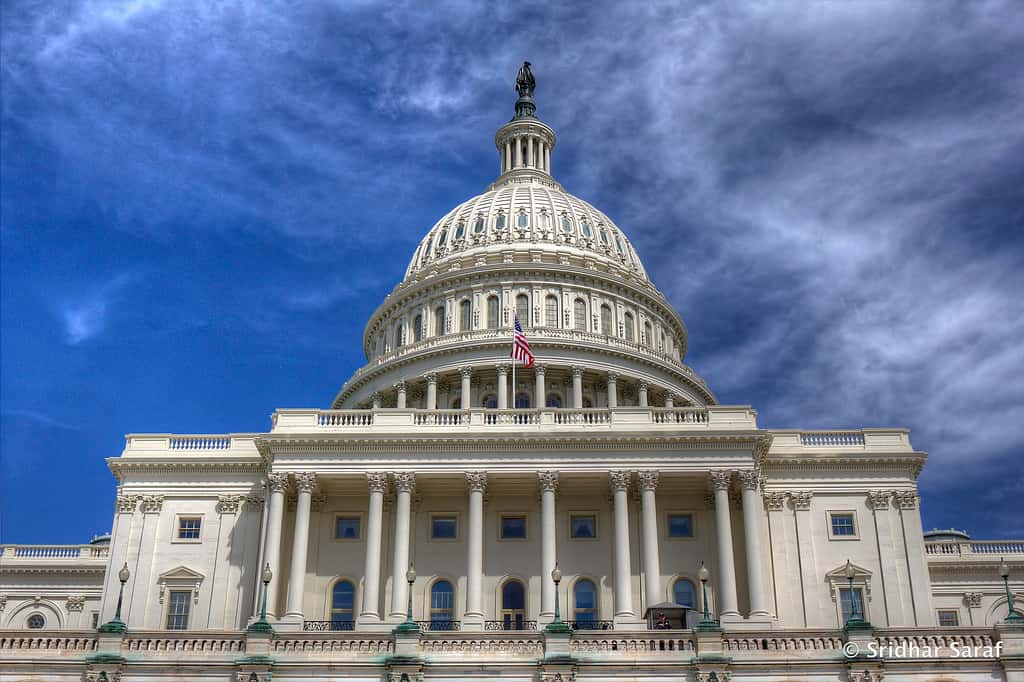
Florida voters will decide on November 3 who holds one of the state's two United States Senate seats for the final two years of a term that began in 2023. Republican Ashley Moody, appointed to the seat in 2025, faces Democratic state Representative Angie Nixon. The special election exists because Marco Rubio left the Senate to become Secretary of State, and it sits on the same ballot as an open governor's race.
How the seat came open
Marco Rubio was confirmed as Secretary of State on January 20, 2025, vacating the Senate seat he won in 2022. Under Florida law and the Seventeenth Amendment's provision for state-authorized temporary appointments, Governor Ron DeSantis appointed a replacement to serve until a special election could be held.
DeSantis selected Ashley Moody, then serving as Florida Attorney General. Moody had been elected statewide twice and was among the more familiar figures in Florida Republican politics. Her appointment created a vacancy at Attorney General, which DeSantis filled with James Uthmeier, who is now running for a full term in that office.
The special election covers only the remainder of Rubio's term, which runs through January 2029. The winner will face voters again in 2028 for a full six-year term, which means the seat appears on the ballot twice within three cycles.
The candidates
Moody faced Republican primary challengers including Neelam Taneja Perry, Chris Gleason, and Ernie Rivera in the August 18 primary and emerged as the nominee. Her record includes service as a state and federal prosecutor and as a circuit judge in Hillsborough County before her election as Attorney General in 2018.
Angie Nixon won the Democratic nomination, defeating Alex Vindman in a primary that drew national attention and substantial fundraising. Nixon represents a Jacksonville-area district in the Florida House and has built a profile as a progressive voice in a legislature with large Republican majorities.
The primary result was itself notable. Vindman, who gained national prominence through his brother's role in the first impeachment of President Trump, raised significant sums and carried name recognition beyond Florida. Nixon's win reflected a Democratic primary electorate that prioritized different credentials.
Why this race matters beyond Florida
Senate control is determined by a small number of seats, and every contest carries implications for the chamber's composition. A special election adds a seat to the map that would not otherwise have been contested in this cycle.
The seat also matters for Florida specifically. Senators handle casework for constituents, secure federal funding for state projects, and vote on nominations including federal judges for Florida's three district courts and the Eleventh Circuit. Home state senators have historically exercised significant influence over those judicial selections.
Federal policy areas with outsized Florida impact run through the Senate as well. Disaster relief supplemental appropriations, National Flood Insurance Program reauthorization, Everglades restoration funding, NASA and Space Force budgets that support the Space Coast, and Cuba and Venezuela policy all reach the chamber.
The Florida map
Nixon faces the same structural challenge confronting Democrats in the governor's race. Republicans hold a voter registration advantage in Florida measured in the hundreds of thousands, a reversal of the Democratic edge that persisted for decades and that flipped during the past six years.
Democratic strength remains concentrated in Broward and in urban cores including Orlando, parts of Tampa, and Jacksonville's urban districts, which is Nixon's home base. Miami-Dade, historically a Democratic anchor in statewide races, shifted substantially toward Republicans in 2020 and 2022.
Turnout composition in a November election with a governor's race at the top of the ticket differs from a midterm or a standalone special. The gubernatorial contest drives turnout, and the Senate race will be affected by whatever that dynamic produces.
The issues in play
Cost of living dominates Florida political discussion, and both campaigns are engaging it. Property insurance, housing costs, and utility rates are the specific pressures Florida households cite most consistently, and while those are largely state matters, federal policy touches each of them.
The National Flood Insurance Program is the clearest federal lever. Florida holds more NFIP policies than any other state by a wide margin, and the program's reauthorization and rate structure directly affect Florida homeowners. Reforms that move NFIP rates toward actuarial levels raise costs in Florida more than anywhere else.
Immigration policy is contested territory with distinct Florida dimensions, including the state's large populations from Cuba, Venezuela, Haiti, Nicaragua, and Colombia. Federal decisions on temporary protected status and parole programs have affected tens of thousands of Florida residents directly.
Health care and Medicare matter in a state with Florida's age structure. Florida has among the largest Medicare populations in the country and high Medicare Advantage enrollment, which makes federal decisions on program payment and structure locally consequential.
The rest of the ballot
The Senate special election shares the ballot with the governor's race between Republican Byron Donalds and Democrat David Jolly, the Attorney General contest with Uthmeier seeking a full term, all 28 Florida congressional seats, the entire Florida House, and half the Florida Senate.
Uthmeier's campaign released its first television advertisement of the cycle, a 30 second spot featuring sheriffs endorsing his record on child predator prosecutions and crimes targeting seniors. Down-ballot advertising volume tends to increase sharply after Labor Day.
Ballot length matters for administration. Florida counties with long ballots have historically seen longer lines, and supervisors of elections plan equipment and staffing accordingly.
What it means for voters
The practical mechanics are the same as any Florida general election. Voters can confirm registration status and polling locations through their county supervisor of elections. The registration deadline falls 29 days before election day.
Vote-by-mail requests in Florida no longer carry over between election cycles following a change in state law. Voters who used mail ballots in prior elections must submit a new request, and the deadline for requesting a mail ballot falls in advance of election day.
Early voting windows are set by county supervisors within the range state law allows, and most populous counties run the maximum period available. Early voting locations and hours are published by each county.
How Senate vacancies are filled
The Seventeenth Amendment established direct election of senators and provided that vacancies are filled by election, while allowing state legislatures to empower governors to make temporary appointments until an election occurs. Most states have done so, Florida among them.
The details vary considerably by state. Some require the appointee to be of the same party as the departed senator. Some require a special election within a defined period. Some hold the seat until the next regularly scheduled general election, which is Florida's approach.
Florida's structure meant Moody served roughly 21 months by appointment before facing voters. That is a substantial period of incumbency, and appointed senators generally benefit from it through fundraising access, committee assignments, and the visibility the office provides.
Appointed senators have a mixed record when they eventually face voters. Incumbency helps, but an appointment can also become a liability if voters perceive the seat as having been handed out rather than earned. Both dynamics have appeared in Florida commentary on this race.
What a senator does for Florida
Constituent casework is the least visible and most frequently used function. Senate offices help residents navigate federal agencies on Social Security, Medicare, veterans benefits, passports, and immigration matters. Florida's large retiree and veteran populations generate substantial volume.
Appropriations work directs federal spending toward state priorities. Florida receives federal funding for Everglades restoration through the Army Corps, for transportation projects, for port infrastructure, for research at its universities, and for military installations including MacDill Air Force Base in Tampa, Eglin and Tyndall in the Panhandle, Naval Air Station Jacksonville and Mayport, and Patrick Space Force Base on the Space Coast.
Nominations are the function with the longest tail. Senators exercise substantial influence over federal judicial appointments in their home states through longstanding Senate custom, which means Florida's senators shape the composition of the Northern, Middle, and Southern District courts and Florida seats on the Eleventh Circuit.
Committee assignments determine where a senator can be effective. Appropriations, Armed Services, Commerce, and Homeland Security all touch Florida interests directly, and seniority governs access to those assignments.
What's next
Campaign finance reports filed with the Federal Election Commission provide the clearest running measure of resources in the Senate race. Outside spending from national party committees and independent groups typically arrives in the final six weeks and can substantially change the advertising landscape.
Debates, if the campaigns agree to them, would ordinarily be scheduled in October. Special elections sometimes produce fewer debate opportunities than regular cycles because the compressed nature of the contest leaves less time to negotiate formats.
Whoever wins takes office for a term that runs through January 2029 and then faces a full six-year term contest in 2028. That short horizon shapes the race, since the winner begins running for reelection almost immediately.
Florida's other Senate seat is held by Rick Scott, whose term runs on a separate cycle. The state's two senators together carry Florida's voice in a chamber where seniority and committee position determine influence, and a seat that turns over frequently accumulates neither.
Voters can review both campaigns' filings and positions through the Federal Election Commission and the Florida Division of Elections. Sample ballots listing every contest become available through county supervisors of elections as election day approaches.
Turnout will decide this race as much as persuasion will. Special elections held alongside a general election draw the general electorate, which is larger and different in composition from the primary electorate that selected both nominees in August, and considerably larger.
Spotted an issue with this article?
Have something to say about this story?
Write us a letterComments
No comments yet. Be the first to weigh in.
Related Coverage
Free national park entry on Theodore Roosevelt's birthday: what it means at the Everglades, Dry Tortugas and Florida's other park sites
37m ago
Deportations fall short of Trump's 1 million goal, report finds, as Florida leads the push on local immigration arrests
2h ago

Cubans facing deportation are being sent to Mexico and other third countries as Supreme Court prepares to weigh the practice
2h ago
Trump and Melania Trump vote early in West Palm Beach as GOP sets Oct. 30 Daytona Beach rally
22h ago