Navy Moving Mayport Destroyer USS John Basilone to Spain, Shrinking Jacksonville's Fleet
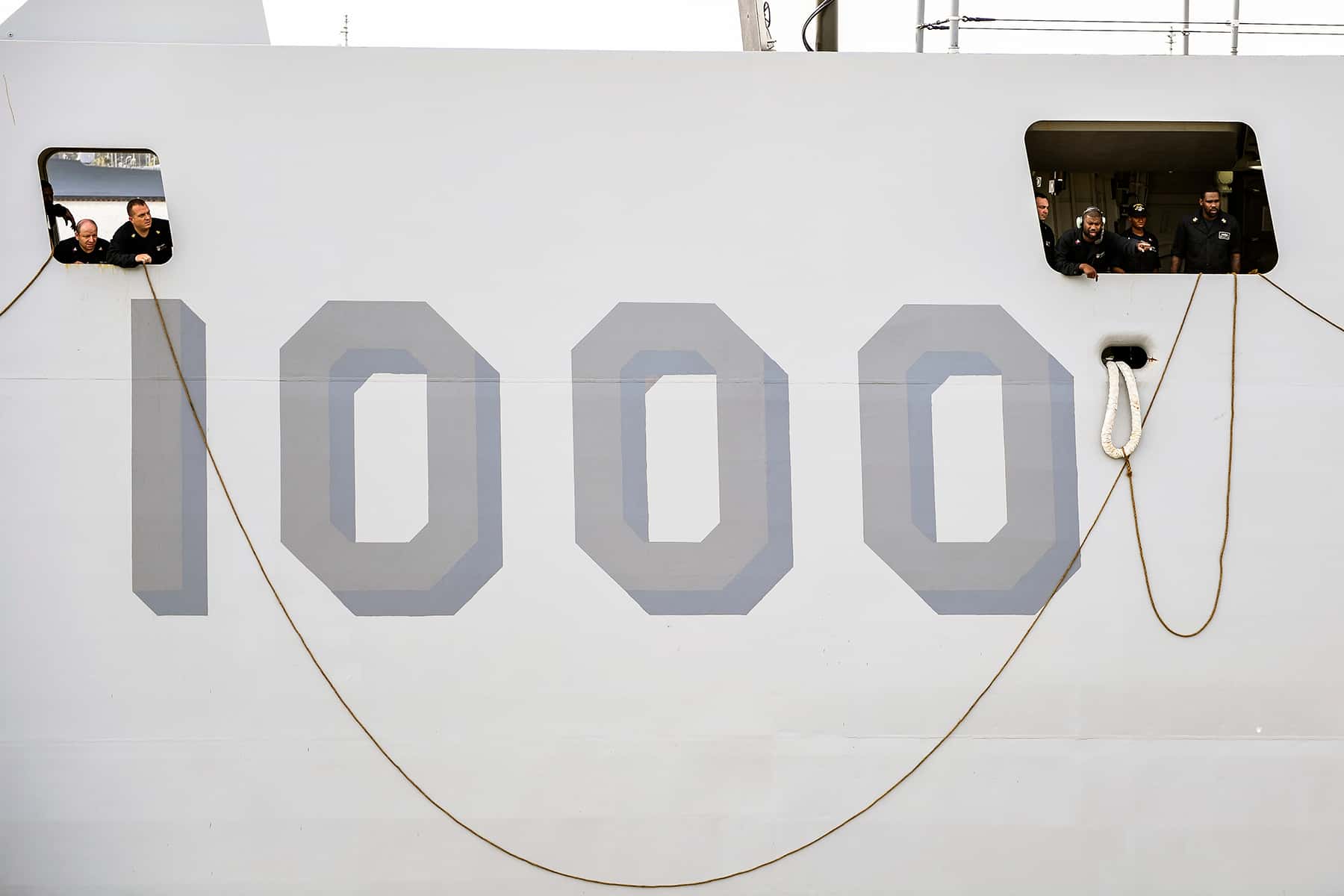
The U.S. Navy will move the guided-missile destroyer USS John Basilone from Naval Station Mayport in Jacksonville to Naval Station Rota, Spain, this fall, taking one of the newest warships based in Northeast Florida and its crew overseas. The Navy announced the homeport change on Wednesday, September 30, saying the Arleigh Burke-class destroyer, hull number DDG-122, will become the sixth U.S. destroyer stationed in Spain.
The move fulfills an agreement the United States and Spain reached in May 2023 to increase the number of American destroyers based at Rota from four to six. The Navy did not say exactly when the John Basilone will arrive in Spain, only that the shift will happen this fall.
For Jacksonville, the decision means the departure of a modern warship, its sailors and many of their families from the First Coast, a region whose economy and neighborhoods are closely tied to the Navy's presence at Mayport, Naval Air Station Jacksonville and nearby Kings Bay, Georgia.
What the Navy announced
U.S. Fleet Forces Command and the Navy's press office released the announcement on September 30. According to the release, the John Basilone will shift its homeport from Mayport to Naval Station Rota this fall, bringing a ship capable of ballistic missile defense and integrated air and missile defense to the base on Spain's southwestern Atlantic coast.
The destroyer will join the group of U.S. destroyers that are permanently based in Rota as part of the Navy's forward-deployed naval forces in Europe. Ships stationed there operate under U.S. Sixth Fleet and spend much of their time patrolling the Mediterranean, the eastern Atlantic and waters around Europe rather than making the long transit from the United States for each deployment.
Military trade coverage of the announcement framed the move as completing a long-sought expansion of NATO naval firepower in Europe, with Stars and Stripes linking it to the security environment created by Russia. The Navy's release focused on the ship's air and missile defense capabilities and the fulfillment of the agreement with Spain.
The ship and its namesake
The John Basilone is one of the Navy's newest destroyers. It was commissioned in 2024 and is a Flight IIA Arleigh Burke-class guided-missile destroyer, a class that forms the backbone of the Navy's surface combatant fleet. Destroyers of this type carry the Aegis combat system and vertical launch cells that can fire a range of missiles, which is what allows them to defend against aircraft, cruise missiles and ballistic missiles.
The ship is named for Gunnery Sergeant John Basilone, a Marine who received the Medal of Honor for his actions at Guadalcanal in 1942 during World War II. Basilone later volunteered to return to combat and was killed on the first day of the battle of Iwo Jima in 1945. He is one of the most celebrated enlisted Marines in the Corps' history.
Because the John Basilone entered service only recently, the move sends a ship with years of service life ahead of it to Europe. Newer destroyers generally need less heavy maintenance in their early years, which can make them practical candidates for overseas basing, where access to large drydocks and specialized repair yards is more limited than at home ports in the United States.
As background, Arleigh Burke-class destroyers typically carry crews of roughly 300 sailors. A homeport change of this kind generally involves moving the crew and eligible family members overseas, a process the Navy coordinates through permanent change of station orders, housing assignments at the new base and school placements for children.
What it means for Mayport and Jacksonville
Naval Station Mayport, at the mouth of the St. Johns River in Jacksonville, is one of the Navy's principal surface ship bases on the East Coast. It is home to destroyers, littoral combat ships and helicopter squadrons, and it supports a large population of active duty sailors, civilian workers, contractors and military families across Duval, St. Johns, Clay and Nassau counties.
Losing a single destroyer will not change Mayport's role, but each ship carries economic weight. Crews and families rent and buy homes, shop in Atlantic Beach, Mayport and the Beaches communities, and enroll children in local schools. Ship maintenance, much of it performed by private shipyards and contractors along the St. Johns River, also follows the hulls. When a ship departs, that maintenance work typically moves with it to overseas or other domestic facilities.
Mayport has seen this kind of change before. The Navy has rotated destroyers between Mayport and Rota in recent years as it maintained the forward-based force in Spain, and it has decommissioned several littoral combat ships at Mayport as part of a broader fleet reshuffle. Northeast Florida officials and the region's congressional delegation have long pressed the Navy to keep Mayport's ship count steady and to base new ships there.
Why Rota matters to the Navy
Naval Station Rota sits near the Strait of Gibraltar, giving ships based there quick access to both the Atlantic and the Mediterranean. Stationing destroyers in Spain lets the Navy keep more ships on station in European waters with fewer transits, because crews and their families live near where the ships operate.
The destroyers in Rota also play a central role in NATO's ballistic missile defense architecture in Europe. Their Aegis radars and interceptors are intended to help defend allies against missile threats, while the ships also take part in exercises, port visits and patrols with partner navies.
The 2023 agreement with Spain to grow the Rota destroyer force from four to six ships was announced as part of a broader U.S. effort to strengthen its posture in Europe. With the John Basilone, the Navy reaches the sixth ship called for in that plan.
Forward basing also has tradeoffs that the Navy weighs. Ships stationed overseas tend to operate at a higher tempo, and the Navy rotates its forward-deployed destroyers home periodically for major maintenance and modernization. That rotation is one reason Rota-based destroyers have historically come from, and later returned to, East Coast home ports such as Mayport and Norfolk, Virginia.
How homeport decisions are made
As background, the Navy assigns ships to home ports through a planning process that weighs operational needs, the capacity of local shipyards to handle maintenance, pier space, and the infrastructure needed to support crews and their families. Decisions are usually announced months ahead, as with the John Basilone, to give sailors time to prepare.
Overseas homeport changes also require coordination with the host nation. In Spain's case, the 2023 agreement between Washington and Madrid set the ceiling for the number of U.S. destroyers in Rota, and the arrival of additional ships required preparation of housing, schools and support facilities at the Spanish base, which the United States operates alongside the Spanish Navy.
For Mayport, the key long term variables are which new ships the Navy chooses to base there as older ones retire or move, and whether planned investments in the base's piers and maintenance facilities move ahead. Those decisions, rather than any single ship's departure, will shape the size of the Navy's presence in Jacksonville over the next decade.
Background: Florida's military footprint
Florida hosts one of the largest concentrations of military installations in the country, from Naval Air Station Pensacola and Eglin Air Force Base in the Panhandle to MacDill Air Force Base in Tampa and Naval Air Station Key West. In Northeast Florida, Mayport and Naval Air Station Jacksonville anchor a Navy presence that also includes Blount Island Command, which supports Marine Corps prepositioning ships.
State leaders treat the bases as economic engines. Florida's Defense Support Task Force works to protect and grow installations in the state, and local chambers of commerce track ship and squadron moves closely because of their effect on jobs and housing. A destroyer leaving Mayport is the kind of decision those groups watch for signs of longer term trends.
The Navy has not announced whether another ship will be assigned to Mayport to replace the John Basilone. Homeport decisions are driven by fleet needs, maintenance capacity and strategic priorities, and the service does not always pair a departure with a new arrival.
What families can expect
For sailors assigned to the John Basilone, a homeport shift overseas brings a long list of logistics. Families typically must secure passports and, in some cases, medical and educational screenings before being cleared to move abroad. Household goods shipments, vehicle moves and pet transport all have to be arranged on a timeline set by the ship's departure.
Children of Navy families in Rota usually attend Department of Defense schools on base, and families can live on the installation or in surrounding Spanish towns. Sailors who are not eligible or choose not to make the move may be reassigned to other commands before the ship leaves Jacksonville.
The Navy did not release figures on how many sailors and family members will relocate. Fleet and family support centers at Mayport typically provide relocation help for overseas moves.
What's next
The Navy has said the John Basilone will shift to Rota this fall but has not set a public date for its departure from Jacksonville or its arrival in Spain. The ship's transit across the Atlantic and its arrival ceremony at Rota will mark the completion of the move.
In Northeast Florida, the next questions are whether the Navy will assign another ship or unit to Mayport and how the departure fits into the service's long term plans for the base. Local officials and members of Congress representing Jacksonville are likely to press the Navy on Mayport's future ship count as the fleet's homeport plans for 2027 take shape.
Residents of the Beaches communities can expect to see the destroyer leave the St. Johns River in the coming weeks, a familiar sight in Mayport, but one that this time will not end with a homecoming at the Jacksonville pier.
Spotted an issue with this article?
Have something to say about this story?
Write a letter to the editorComments
No comments yet. Be the first to weigh in.
Related Coverage

Mortgage Rates Jump to 7.28%, Highest in Nearly Three Years, Adding Hundreds a Month for Florida Homebuyers
1h ago

Haiti's Presidential Field Takes Shape as Prosecutor Muscadin Files, With Florida's Diaspora Watching
3h ago

Florida's Senators Split as Senate Passes Protect College Sports Act Over Concerns for FSU and Miami's Conference Future
6h ago

UN Security Council Extends Haiti Gang Suppression Force Through March 2027 as Florida Diaspora Watches
23h ago