New York Man Charged With DUI Manslaughter in Fatal I-75 Crash in Charlotte County
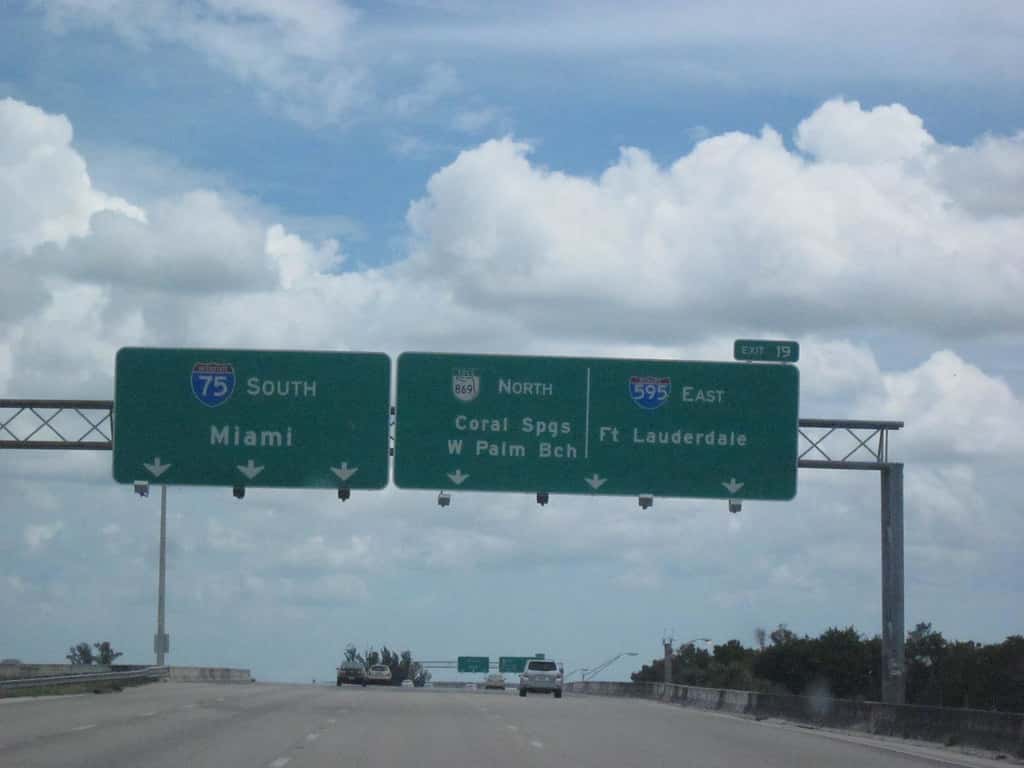
The Florida Highway Patrol on July 21, 2026, announced the arrest of a New York man accused of causing a March crash on Interstate 75 in Charlotte County that killed an adult and two children. Troopers identified the man as Ryan Richard Mowdy, 28, of Laurel, New York, and said he faces three counts of DUI manslaughter and three counts of vehicular homicide in connection with the case.
The arrest closes an initial chapter in an investigation that stretched across nearly four months, and it places one of Southwest Florida's busiest highways at the center of a fatal-crash case that will now move through the state's court system. The Florida Highway Patrol described the arrest as the product of an extensive criminal investigation into the March 27, 2026, wreck, which occurred on northbound Interstate 75 near Mile Marker 153.
For Florida, a state whose interstate corridors carry heavy volumes of both local commuters and long-distance travelers, the case underscores the persistent dangers of impaired driving and the painstaking pace at which serious crash investigations often unfold. The charges announced against Mowdy are allegations, and he is presumed innocent unless and until proven guilty in court.
The March Crash on Northbound I-75
The crash at the heart of the case occurred on March 27, 2026, on northbound Interstate 75 near Mile Marker 153 in Charlotte County, according to the Florida Highway Patrol. That stretch of highway runs through the heart of Southwest Florida, and Mile Marker 153 places the collision within a corridor traveled daily by tens of thousands of motorists moving between the region's coastal communities.
The Florida Highway Patrol said the crash killed one adult and two children. Out of respect for the victims and their families, and consistent with the sensitivity surrounding cases involving minors, the identities of those who died are not being detailed here. The loss of three lives, including two children, marks the crash as one of the more devastating traffic incidents to strike the region this year.
Fatal crashes on limited-access highways like Interstate 75 present particular challenges for investigators. Vehicles travel at high speeds, debris can scatter across multiple lanes, and reconstructing the sequence of events often requires closing or restricting travel lanes for extended periods. The initial response to a wreck of this severity typically involves troopers, emergency medical crews, and specialized traffic homicide investigators.
In the immediate aftermath of a deadly crash, the Florida Highway Patrol's traffic homicide unit begins the methodical work of documenting the scene, measuring the roadway, and collecting physical evidence. That early evidence-gathering forms the foundation for the longer investigation that, in this case, would continue for months before an arrest was announced.
The Charges Ryan Mowdy Faces
The Florida Highway Patrol said Mowdy faces three counts of DUI manslaughter and three counts of vehicular homicide, one count in each category for each of the three people who died. Under Florida law, DUI manslaughter applies when a person is accused of operating a vehicle while impaired and, as a result, causing the death of another. Vehicular homicide involves the alleged killing of another person through the operation of a motor vehicle in a reckless manner.
Both categories of charges are among the most serious that can arise from a traffic case in Florida, and each count corresponds to an individual life lost. The stacking of counts reflects the number of victims rather than a judgment about the strength of the state's case, which will be tested through the ordinary criminal process. The charges are accusations that the state must prove.
At this stage, the allegations rest on the findings of the Florida Highway Patrol's investigation. Troopers have not publicly detailed the specific evidence underlying the charges, and an arrest report or charging document typically lays out the factual basis that investigators believe supports the accusations. Those documents become part of the court record as a case proceeds.
It is important to emphasize that an arrest and the filing of charges do not establish guilt. Mowdy is entitled to the presumption of innocence, and the responsibility falls on prosecutors to prove each element of every charge beyond a reasonable doubt. Any account of what allegedly occurred on the highway that day remains, for now, an allegation to be resolved in court.
Why Fatal-Crash Investigations Take Time
Nearly four months separated the March 27 crash from the July 21 announcement of an arrest, a gap that reflects the intensive nature of serious traffic-homicide investigations rather than any unusual delay. The Florida Highway Patrol characterized the effort as an extensive criminal investigation, language that signals the breadth of work involved in building a case of this magnitude.
Investigations into fatal crashes frequently draw on multiple streams of evidence that take weeks or months to assemble. Investigators may await the results of toxicology testing, analyze data pulled from vehicle systems, review any available video or witness accounts, and complete detailed crash reconstructions. Each of those components can require specialized analysis, and laboratory results in particular can take considerable time to return.
In cases where impairment is alleged, the timeline can lengthen further. Blood testing, forensic review, and the coordination between troopers, medical examiners, and prosecutors all contribute to the deliberate pace at which such cases move toward charges. Authorities generally proceed carefully, aware that the evidence gathered will be scrutinized in court.
The interval between a crash and an arrest can be difficult for the families of victims, who often wait months for answers even as the investigation continues out of public view. The Florida Highway Patrol's announcement of an arrest represents a milestone in that process, though it marks the beginning rather than the end of the legal proceedings that follow.
DUI Enforcement on Florida's Interstates
The case arrives against a backdrop of sustained attention to impaired driving on Florida's highways, where the Florida Highway Patrol and allied agencies devote significant resources to enforcement. Interstate corridors, with their high speeds and dense traffic, are focal points for efforts aimed at removing impaired drivers before crashes occur.
Florida's interstates carry an enormous volume of traffic year-round, swelled by seasonal visitors, freight movement, and the everyday commuting that ties the state's metropolitan areas together. That volume, combined with high travel speeds, means that a single impaired driver can pose a danger to large numbers of people sharing the roadway. Enforcement campaigns often emphasize the outsized consequences that impaired driving can carry.
The Florida Highway Patrol has long framed DUI enforcement as a core part of its mission, pairing routine patrols with public messaging about the risks of driving under the influence. Charges like those announced in the Charlotte County case reflect the most serious outcomes that enforcement efforts are designed to prevent, and they illustrate why troopers treat impaired driving as a priority.
Cases that end in fatalities also feed into a broader public conversation about roadway safety in Florida. State and local officials, safety advocates, and law-enforcement agencies frequently point to deadly crashes as reminders of the stakes involved, urging motorists to plan for sober transportation and to report suspected impaired drivers to authorities.
The I-75 Corridor Through Southwest Florida
Charlotte County sits along the Interstate 75 corridor between Sarasota and Fort Myers, occupying a central position in Southwest Florida's chain of coastal communities. The highway serves as the region's primary north-south artery, linking population centers, connecting residents to jobs and services, and carrying travelers passing through on longer journeys along Florida's Gulf Coast.
The county's location makes Interstate 75 an essential piece of daily life for its residents and a heavily used route for visitors. The corridor threads through a part of the state that has experienced significant growth, and the volume of traffic it carries has kept roadway safety a recurring concern for local officials and residents alike.
Mile Marker 153, the location cited by the Florida Highway Patrol, falls within this busy stretch of highway. Crashes along the corridor can ripple outward, disrupting travel for the many motorists who depend on the interstate and drawing attention to the safety of a route so central to the region's transportation network.
For Southwest Florida, a fatal crash of this severity resonates beyond the immediate tragedy. It touches a community that relies on Interstate 75 every day and reinforces the attention that residents, officials, and law enforcement continue to pay to conditions on one of the region's most important roadways.
The Dangers of Impaired Driving
Cases involving allegations of impaired driving highlight a hazard that safety officials have warned about for decades. Impairment can slow reaction times, cloud judgment, and diminish a driver's ability to control a vehicle, and on high-speed interstates the margin for error is especially thin. The consequences, when they occur, can be irreversible.
The Charlotte County case, in which three people including two children died, stands as a stark example of the potential toll. While the specific circumstances remain to be established in court, the charges announced by the Florida Highway Patrol reflect the category of harm that impaired-driving enforcement is intended to prevent, and they underscore why the issue draws such sustained attention.
Safety advocates consistently emphasize that impaired-driving crashes are preventable. Encouraging motorists to arrange alternative transportation when they have consumed alcohol or other impairing substances is a central theme of public-awareness efforts, as is the message that a single decision behind the wheel can carry lasting consequences for multiple families.
The human cost of such crashes extends far beyond the roadway. Families and communities are left to absorb the loss of loved ones, and cases that reach the courts often unfold over many months as the legal process runs its course. Those broader impacts help explain why impaired driving remains a persistent focus of Florida's traffic-safety efforts.
What's Next
With the arrest announced, the case now enters the judicial phase, where it will proceed through Florida's court system. In cases of this kind, a defendant is generally brought before a judge for a first appearance shortly after arrest, a proceeding at which matters such as the reading of charges and the setting of bond are typically addressed. Specific dates and scheduling are set by the court.
Following the early stages, a defendant is usually formally charged and enters the arraignment phase, at which a plea is entered and the case moves toward the pretrial process. From there, the matter may progress through motions, evidentiary disputes, and other proceedings that shape how a case advances, potentially toward trial or another resolution. The pace of those steps depends on the court and the parties.
Throughout that process, the presumption of innocence remains in place. The state carries the burden of proving each of the six counts, and Mowdy is entitled to a defense and to have the accusations tested under the rules of the criminal justice system. Nothing announced by the Florida Highway Patrol amounts to a finding of guilt.
For now, the case represents both an ending and a beginning: the conclusion of an extensive investigation into a devastating crash on Interstate 75, and the start of court proceedings that will determine how the allegations are ultimately resolved. Charlotte County, and the broader Southwest Florida community that depends on the I-75 corridor, will be watching as the matter moves forward.
Spotted an issue with this article?
Have something to say about this story?
Write us a letterComments
No comments yet. Be the first to weigh in.
Related Coverage

Woman, 21, Charged in Fatal Dania Beach Hit-and-Run on Sheridan Street, BSO Says
19h ago

Punta Gorda Publix Box-Cutter Attack Suspect Was Released From Mental Health Court Probation in July
21h ago
St. Johns County deputies say plate readers led them to armed bank robbery suspect within minutes
1d ago

Haines City police officer out of a job after DUI arrest in Orlando while driving patrol vehicle
1d ago