Newborn Hepatitis B Vaccinations Drop to 65.6% Nationally as Florida Leads the Nation in New Infections
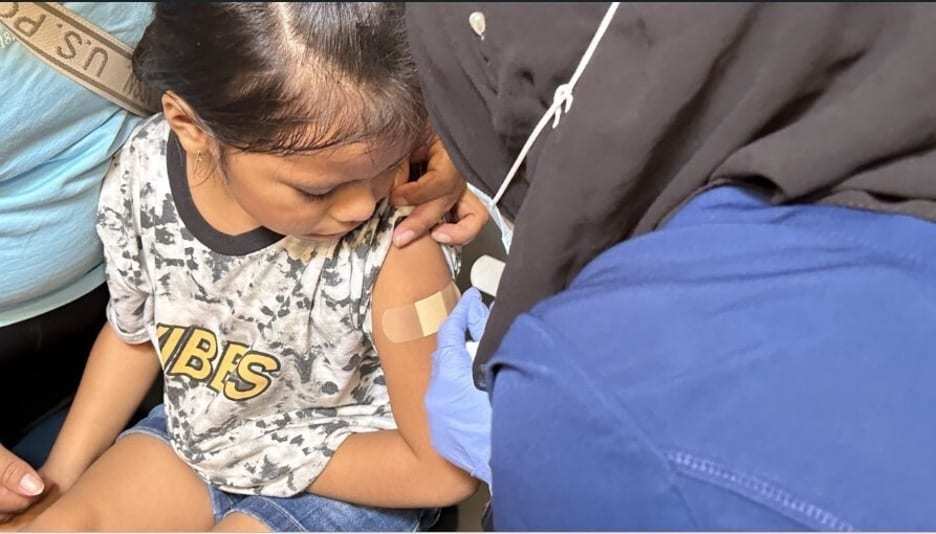
The share of American newborns getting a hepatitis B vaccine within a day of birth has fallen to 65.6%, down from 79.8% in 2022, according to a study of more than 1.3 million infants published Nov. 24 in NEJM Evidence, a New England Journal of Medicine journal. The decline matters in Florida, which recorded the highest rate of new hepatitis B infections of any state in 2023 and where state health officials are moving to drop the hepatitis B shot from school and day care entry requirements.
The study found the drop began in 2023, well before a federal vaccine advisory panel voted in December 2025 to end the decades-old recommendation that every newborn get the shot at birth. That vote is now on hold under a federal court order, but the falloff in coverage has continued.
What the study found
Researchers analyzed electronic health records from about 1.3 million infants born to 1.1 million women, drawn from Truveta, a health data company owned and governed by 30 U.S. health systems, according to Stateline and NewsNation coverage of the study.
The share of babies vaccinated within one day of birth held steady for several years before sliding, according to the study as summarized by medical trade outlets:
| Period | Newborns vaccinated within a day of birth |
|---|---|
| 2018 | 76.4% |
| 2020 to 2022 (median) | 80.0% |
| 2022 | 79.8% |
| June 2026 | 65.6% |
The most worrying finding involved the highest-risk babies. From 2020 through 2025, between 97% and 98% of infants born to mothers who tested positive for hepatitis B got the vaccine at birth. In the first six months of 2026, that figure fell to 93.9%, even though federal guidance for those babies never changed.
There was some good news in the data. The share of mothers with no record of hepatitis B screening during pregnancy fell from more than 15% to under 8% in 2026, NewsNation reported. Still, the study found about 91% of pregnancies included a screening test. The authors noted that applying that rate to roughly 3.6 million U.S. births a year leaves about 360,000 infants annually born to mothers without documented screening, the babies for whom a universal birth dose was designed as a safety net.
Why the birth dose exists
The hepatitis B vaccine has been recommended for all U.S. newborns since 1991. Babies infected at birth or in their first year have about a 90% chance of developing chronic hepatitis B, and about a quarter of people with chronic infection die prematurely from cirrhosis, liver failure or liver cancer, CBS News reported, citing federal health data. Infections among infants and children have dropped about 99% since the shot was universally recommended.
Because prenatal screening misses some mothers, public health officials have long treated the birth dose as a backstop. The CDC has estimated that about 16% of expecting mothers are missed by prenatal screening, according to CBS News.
The federal policy fight
On Dec. 5, 2025, the CDC's Advisory Committee on Immunization Practices, whose members had been replaced by Health and Human Services Secretary Robert F. Kennedy Jr., voted 8-3 to replace the universal recommendation with individual decision-making for babies whose mothers test negative. For infants who skip the birth dose, the panel suggested the first shot come no earlier than 2 months of age. The CDC formally adopted the change on Dec. 16, Scientific American reported.
Critics included Sen. Bill Cassidy, the Louisiana Republican and physician who chairs the Senate health committee, who called the change "a mistake." Dr. Sean O'Leary, who chairs the American Academy of Pediatrics' infectious disease committee, said: "This is a situation where one missed case is too many."
The American Academy of Pediatrics and other medical groups sued. On March 16, 2026, U.S. District Judge Brian Murphy in Massachusetts issued a preliminary injunction that suspended the appointments of 13 ACIP members and stayed the votes they had taken, including the hepatitis B change, returning the childhood schedule to its earlier form while the case proceeds. The government has appealed to the 1st U.S. Circuit Court of Appeals. The AAP continues to recommend that all babies get the shot at birth.
The study's authors reported that the decline began in 2023, before the federal change, and coverage of the study noted that the drop continued after the vote.
Florida's hepatitis B problem
Florida enters this debate with more hepatitis B than any other state. In 2023, Florida's rate of acute, or newly acquired, hepatitis B was 3.1 cases per 100,000 people, the highest in the nation and more than four times the national rate of 0.7, according to CDC surveillance data. State figures put Florida's acute rate at 3.7 per 100,000 in 2024.
A 2025 review in the Journal of Viral Hepatitis, "The State of Hepatitis B in Florida in 2025," concluded that rising acute infections in Florida, at a time when national trends were declining, mean the state is not on track to meet the goal of a 90% reduction in new infections.
Children have not been spared. Florida recorded 11 acute hepatitis B cases in children in 2023, the most in a single year since 2001, and chronic hepatitis B cases rose from 597 in 2005 to 5,694 in 2023, WUSF reported, citing state Department of Health data.
Ladapo's push to drop the school requirement
In September 2025, Florida Surgeon General Joseph Ladapo announced his intent to end all vaccine mandates in the state, and he and Gov. Ron DeSantis asked the Legislature to roll them back. Lawmakers did not file a bill during the 2026 sessions to remove the vaccine requirements written into state law, WUSF reported.
Four vaccines, including hepatitis B, are required for school and day care entry by Department of Health rule rather than statute, which means the department can remove them on its own. Ladapo approved a proposed rule in August 2026 to drop hepatitis B, chickenpox, Hib and pneumococcal conjugate vaccines from the requirements for public and private schools from pre-K through 12th grade. The rule would also broaden religious exemptions to cover moral and ethical beliefs.
That plan has stalled for now. The Florida Academy of Family Physicians, its president Dr. Danielle Carter and three individuals filed a legal petition in October challenging the rule, arguing the department is exceeding its authority, has offered no new evidence questioning vaccine safety and missed the deadline for finalizing a rule, Central Florida Public Media reported. A department spokesperson said "the timeline will be contingent on legal outcomes."
Ladapo has framed the change as a matter of parental choice rather than vaccine effectiveness. "That cannot supersede the right of a parent to make a decision about what's best for their child," he said, according to Central Florida Public Media. The Department of Health has said the change "does not limit access to vaccines and instead removes the state mandate."
Florida's school requirement and the hospital birth dose are separate policies: the state rule governs school and day care entry, not what happens in the delivery room. But doctors have warned that mixed messages from state and federal officials are shaping parents' decisions. "The conflicting messages here, they're so dangerous. They're so confusing," Dr. Rana Alissa, president of the Florida chapter of the American Academy of Pediatrics, told WUSF in 2025.
A pattern of falling coverage
The hepatitis B findings come in a year of renewed concern about vaccine-preventable disease in Florida. The state's measles count reached 149 cases by May, most of them in Collier County, where an outbreak began at Ave Maria University, WUSF reported. Statewide, kindergarten coverage for the full recommended vaccine schedule had already dropped to 89% in 2025, below the 95% level public health officials consider necessary to stop outbreaks.
What's next
The 1st Circuit appeal will determine whether the federal hepatitis B change can take effect. In Florida, a judge must decide whether the family physicians' petition against the school rule can proceed. Meanwhile, the study's numbers show fewer newborns leaving the hospital protected, including some born to mothers known to carry the virus.
Spotted an issue with this article?
Have something to say about this story?
Write us a letterComments
No comments yet. Be the first to weigh in.
Related Coverage
Macy's 100th Thanksgiving parade marches Saturday after first-ever postponement as Florida performers scramble
36m ago
Epic Universe Acrobats Released From ICE Custody on Bond, Reunited in Arizona After Phoenix Airport Arrest
2h ago
Florida ACA Open Enrollment 2027: Dec. 15 Deadline Arrives With 10.4% Average Rate Hike, Insurer Exits and No Enhanced Subsidies
1d ago

Artemis III Rocket Takes Shape at Kennedy Space Center as NASA Readies a 2027 Earth-Orbit Lander Test
1d ago