Orlando Jury Convicts Jaylen Edgar in 2024 Halloween Downtown Shooting
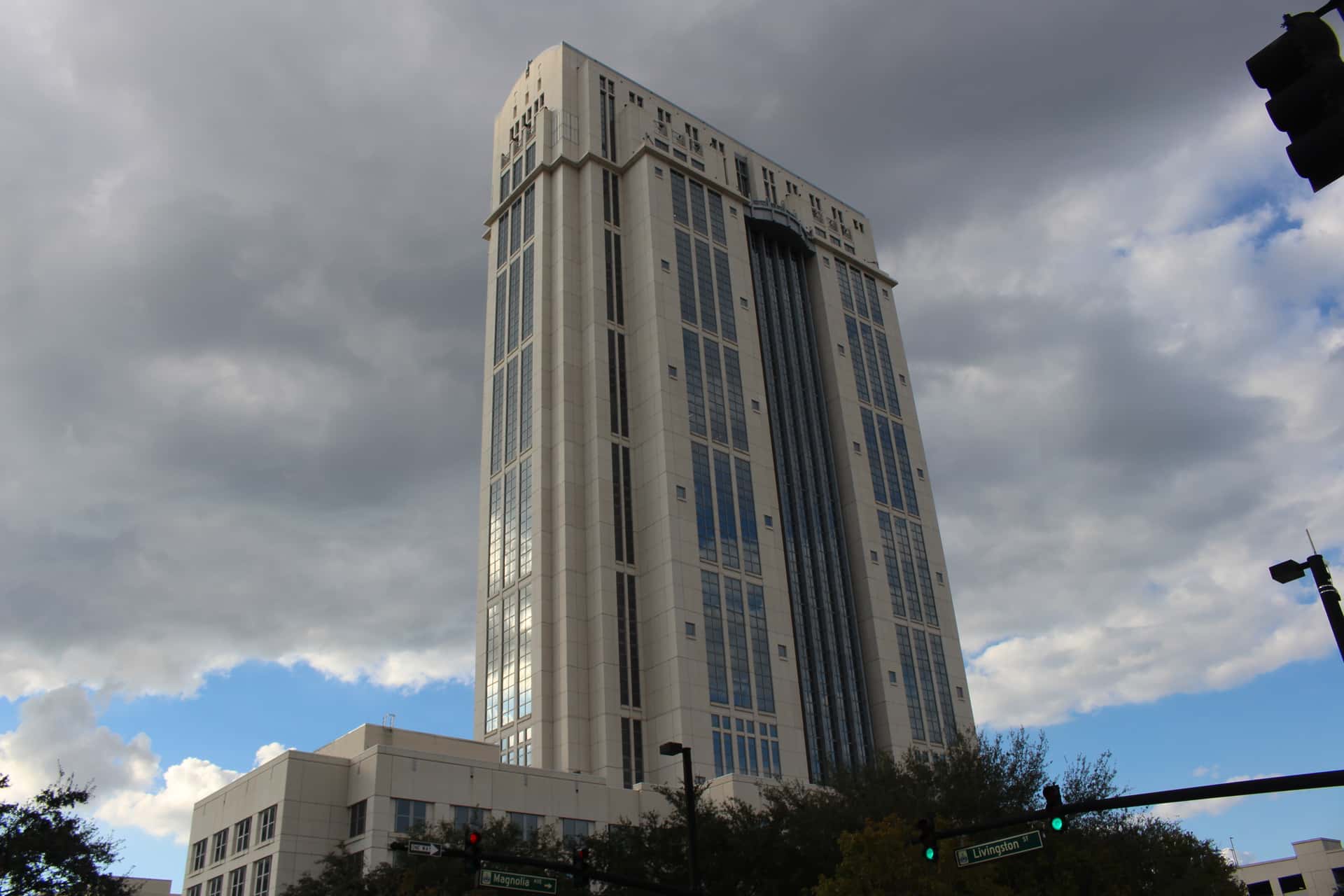
An Orange County jury has convicted Jaylen Edgar on all counts in the downtown Orlando Halloween shooting that killed two people and wounded seven others in 2024, closing the trial phase of one of Central Florida's most closely followed criminal cases. Sentencing is scheduled for October 20.
Edgar was 17 years old at the time of the shooting, a fact that carries direct legal consequence: because he was a juvenile when the offense occurred, he is not eligible for the death penalty under United States Supreme Court precedent barring capital punishment for offenders under 18.
The defense rested without calling witnesses, and Edgar did not testify. Prosecutors built their case on eyewitness testimony and video evidence that they argued showed Edgar firing into a crowd on Orange Avenue during Halloween celebrations in downtown Orlando.
The case
The shooting occurred during the Halloween night crowd that fills downtown Orlando's entertainment district each year, when Orange Avenue and the surrounding blocks draw thousands of people to bars, clubs and street celebrations. The density of that crowd is central to how the case was charged and how the consequences unfolded.
Two people were killed and seven were injured. In a crowd shooting, the count of victims drives the count of charges, which is why cases of this type produce multiple counts of attempted murder alongside the homicide counts.
The state presented eyewitness accounts from people present on the street along with video recordings, a category of evidence that has become central in downtown shooting prosecutions given the density of municipal cameras, business security systems and bystander phone footage in entertainment districts.
Edgar's age at the time meant the case proceeded under Florida's direct file and transfer provisions, which allow prosecutors to try juveniles as adults for certain serious felonies. Florida gives state attorneys broad discretion in that decision, more than most states, and homicide cases are routinely transferred.
What comes at sentencing
The sentencing hearing on October 20 will determine the actual consequence of the conviction. Because Edgar was a juvenile at the time of the offense, the sentencing framework differs from what would apply to an adult defendant convicted of the same conduct.
The Supreme Court's decisions in Roper v. Simmons, Graham v. Florida and Miller v. Alabama established that juveniles cannot receive the death penalty, cannot receive life without parole for non homicide offenses, and cannot receive mandatory life without parole for homicide. Florida responded to those rulings with a statutory scheme requiring individualized sentencing hearings for juvenile offenders facing lengthy terms.
Under Florida law, a juvenile convicted of first degree murder faces a sentencing hearing at which the court considers factors including the defendant's age and maturity at the time of the offense, family and home environment, the nature of the offense and the extent of participation, the effect of peer pressure, and the possibility of rehabilitation.
Florida also provides for judicial review of long juvenile sentences after a specified period, generally 25 years for homicide offenses, at which point the sentence can be reconsidered. That review mechanism is what allows Florida's scheme to satisfy the constitutional requirement that juveniles have a meaningful opportunity for release based on demonstrated maturity.
Victims and their families will have the opportunity to give impact statements at the sentencing hearing, and the defense will present mitigation evidence. Both are standard elements of a hearing of this type.
Downtown Orlando's safety debate
The 2024 shooting intensified an ongoing discussion in Orlando about safety in the downtown entertainment district, an area that generates substantial economic activity and substantial public safety demand in the same blocks.
The Orlando Police Department has for years deployed additional resources downtown on weekend nights and during large events, including increased patrol presence, street closures and camera coverage. City officials have periodically debated bar closing hours, entry screening at large events and the balance between an open street environment and controlled access.
Similar debates have run in other Florida entertainment districts. Miami Beach's Ocean Drive corridor, Tampa's Ybor City and Fort Lauderdale's Las Olas have all seen policy responses to violence in crowded nightlife areas, ranging from earlier last calls to enhanced police deployment during peak periods.
The policy difficulty is that entertainment districts concentrate exactly the conditions that make violence both more likely and more consequential: large crowds, alcohol, late hours and limited ability to screen entry to public streets. Measures that reduce risk also reduce the openness that draws people in the first place.
Juvenile prosecution in Florida
Florida transfers more juveniles to adult court than most states, using a combination of direct file authority vested in state attorneys, statutory mandatory transfer provisions and judicial waiver. That structure has been the subject of sustained policy debate.
Supporters of broad transfer authority argue that serious violent offenses warrant adult consequences regardless of the offender's age, that victims deserve accountability proportionate to the harm, and that prosecutorial discretion allows case by case judgment.
Critics point to research on adolescent brain development showing that impulse control and risk assessment continue maturing into the twenties, and to studies finding that juveniles processed through adult systems have higher recidivism rates than comparable youth handled in juvenile systems. They also note that transfer decisions vary substantially between judicial circuits within Florida.
The Supreme Court's juvenile sentencing decisions have narrowed the outer limits without eliminating adult prosecution. A juvenile can still be tried as an adult and sentenced to a very long term; what has changed is that mandatory life without parole is off the table for homicide and that individualized consideration is constitutionally required.
What it means for Central Florida
For the families of the two people killed and the seven wounded, the verdict brings the trial phase to a close but not the case. Sentencing in October, potential appeals afterward and the statutory review mechanism years down the line mean this case will return to court repeatedly.
For Orange County's court system, the case represented a substantial commitment of resources. Multi victim shooting prosecutions require extensive evidence handling, large numbers of witnesses and lengthy jury selection, and they occupy courtroom capacity that affects the broader docket.
For downtown Orlando, the practical question is what changes, if anything, in the approach to Halloween and other large gathering nights. The city has had two years to adjust practices since the shooting, and the conviction is unlikely to drive new policy on its own.
For Florida's broader criminal justice conversation, the case sits at the intersection of two persistent debates: how to prevent violence in crowded public spaces, and how to sentence young offenders who commit the most serious crimes.
How Florida charges multi-victim shootings
A shooting into a crowd generates a charging structure that differs from a single victim homicide, and understanding it explains the scope of the verdict.
Florida charges first degree murder where the killing was premeditated or occurred during the commission of certain felonies. In a crowd shooting, the state may pursue premeditation or rely on a theory that the act of firing into a group demonstrates the required intent as to each person struck.
Each person wounded generally supports a separate count of attempted murder or aggravated battery, depending on the evidence of intent as to that individual. Firearm enhancements under Florida's statutory scheme add mandatory minimum terms when a firearm is discharged and when the discharge causes death or great bodily harm.
Those enhancements, sometimes described as the 10-20-Life framework, produce mandatory sentences that stack across counts. For an adult defendant, the arithmetic frequently produces terms exceeding a natural life span even without a life sentence on the murder counts.
Juvenile status changes that calculation. Florida's post Miller sentencing statutes require individualized consideration and provide for judicial review of long sentences after a specified period, which functions as a check on the stacking that would otherwise apply automatically.
Jury instructions in these cases are correspondingly complex, requiring the panel to consider each count separately as to each alleged victim. A verdict of guilty on all counts means the jury found the state met its burden on every one of those individual determinations.
The October sentencing hearing will apply that framework, and the court's written sentencing order will set out the factors considered, which becomes the record for any appeal.
Downtown Orlando since the shooting
The blocks where the shooting occurred remain the center of Orlando's nightlife economy, and the two years since have brought incremental changes rather than a wholesale rethinking.
Orlando's downtown entertainment district concentrates dozens of bars and clubs within a few blocks along and around Orange Avenue. The area draws large crowds on weekend nights and for holidays, with Halloween among the busiest nights of the year.
The city has used a combination of tools over time, including increased police presence on high volume nights, street closures to create pedestrian only areas, and coordination with venue operators on security practices. Those measures were in place in various forms before 2024 and have been adjusted since.
Broader policy questions recur without resolution. Proposals to move last call earlier have been debated in Orlando as they have in other Florida cities, and they face consistent opposition from venue operators who point to the economic contribution of late night business.
Camera coverage has expanded across the district, which was central to the evidence in this case. Municipal cameras, business systems and bystander recordings together produced the video the state presented at trial, and that density of recording has changed how these prosecutions are built.
For residents and visitors, the practical situation is unchanged in its essentials: a busy urban entertainment district with the risks that come with crowds, alcohol and late hours, managed through policing and venue practices rather than through structural change.
What's next
Sentencing is set for October 20 at 9 a.m. before the Orange County circuit court. The hearing will include victim impact statements and defense mitigation, and the court will apply Florida's juvenile sentencing framework in determining the term.
Following sentencing, the defense may file post trial motions and pursue a direct appeal to Florida's Sixth District Court of Appeal, which covers Orange County. Appeals in cases of this complexity typically take a year or more to resolve.
Civil litigation is a separate possibility. Victims of shootings in commercial entertainment districts sometimes pursue premises liability claims against venue operators or property owners, though those claims face significant hurdles under Florida law regarding foreseeability and the intervening criminal acts of third parties.
The state attorney's office for the Ninth Judicial Circuit, covering Orange and Osceola counties, prosecuted the case. Any additional charges arising from the same incident, or cases involving other individuals present, would proceed through that office.
Spotted an issue with this article?
Have something to say about this story?
Write us a letterComments
No comments yet. Be the first to weigh in.
Related Coverage

Judge Weighs Whether Jurors Can Hear About Jeff Knight's 2019 Boat Crash in Clearwater Ferry Case
8h ago
DNA From ICE Arrest Leads to Charges in 2012 LaBelle Rape and Kidnapping of 14-Year-Old Girl
11h ago

Two Spring Hill men indicted in 2018 home invasion killing of young father in Hernando County
1d ago
Operation Cooked: Undercover Osceola Sting Nets At Least 20 Arrests of Men Accused of Seeking Sex With Children
1d ago