Orlando Theme Park Attendance Softens Even as Epic Universe Holds Up
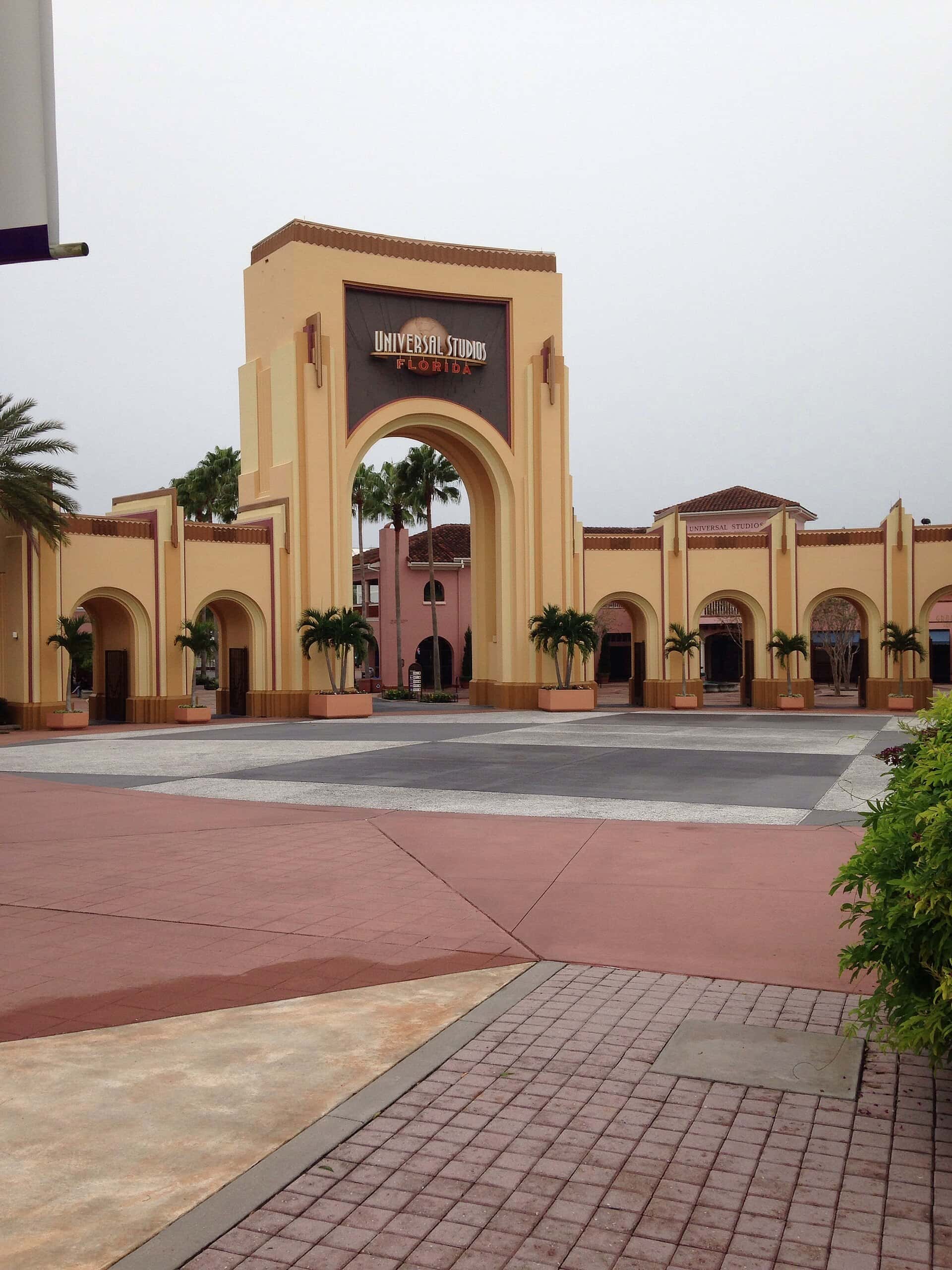
Central Florida's theme park economy is sending mixed signals. Comcast executives told investors during the company's second-quarter earnings call that attendance across the Orlando market began softening in June and has remained under pressure into the third quarter, while Disney's chief financial officer described Walt Disney World attendance for the same period as very strong.
Both statements can be accurate. A market can contract in aggregate while individual operators gain share, and the divergence in what the two companies reported points toward exactly that: total visitation to Orlando declining while the distribution among parks shifts.
For Central Florida, where tourism supports a substantial share of employment and where local government budgets depend heavily on tourist development tax collections, the direction of the aggregate number matters more than which operator is winning.
What the companies said
Comcast Co-CEO Mike Cavanagh characterized the softening as market-wide rather than specific to Universal's properties, and attributed it primarily to attendance rather than to per-visitor spending. Executives pointed to weaker consumer sentiment and higher travel costs as contributing factors.
Epic Universe, Universal's new Orlando park, has continued to meet the company's expectations and has helped lift per-capita spending across the destination, according to the company. That is a meaningful distinction: a new park can perform well on its own terms while the market it sits in contracts.
Disney CFO Hugh Johnston reported very strong attendance at Walt Disney World for the quarter and drew a direct contrast with what the company's competitor in Orlando had described. That framing was pointed, and it reflects a competitive dynamic that has intensified since Epic Universe opened.
Independent crowd tracking has shown softening summer crowds at Epic Universe relative to its opening period, which Universal has acknowledged. Opening-year attendance patterns at any new park typically decline from the initial surge, so a comparison against opening months is not the same as a comparison against a stable baseline.
Why Orlando visitation would soften
Cost is the most straightforward explanation. A multi-day Orlando trip for a family of four now routinely runs into thousands of dollars once tickets, lodging, food and airfare are counted, and ticket prices across the market have risen faster than general inflation for most of the past decade.
The addition of a fourth major gate in the market changed the calculation further. Families that once planned four-day trips now face a market where covering the available parks requires a week or more, which either extends the trip or forces choices.
Consumer sentiment has weakened. Discretionary travel is among the first categories households cut when they become uncertain about income, and Florida's own labor market data shows softening, with unemployment moving above 4% and job losses concentrated in higher-wage sectors.
International visitation is a separate variable. Orlando draws substantially from the United Kingdom, Brazil and Canada, and exchange rates, airfare and travel sentiment in those markets move independently of domestic conditions.
What it means for Central Florida workers
Leisure and hospitality employment in Florida has declined over the past year, with a loss of roughly 13,700 restaurant and hotel positions statewide. Orlando is the largest single concentration of that employment in the state.
Theme park operators employ tens of thousands directly, but the indirect employment is larger: hotels, restaurants, transportation, retail and the supply chains serving all of them. Softening attendance transmits through that chain with a lag.
Hours are usually the first thing to move. Operators reduce scheduled hours before reducing headcount, which means workers can experience a downturn in income well before it appears in employment statistics.
Metropolitan Orlando has nonetheless led Florida in job creation this year, adding roughly 20,600 positions according to regional analyses. That growth has come substantially from sectors other than hospitality, which suggests the region's economy is broadening even as its signature industry softens.
What it means for local government
Tourist development taxes, levied on short-term lodging, fund convention facilities, sports venues, destination marketing and in some counties beach and infrastructure projects. Orange County collects one of the largest tourist development tax revenues of any county in the country.
Those collections track lodging revenue, which depends on both occupancy and rate. A market where attendance falls but visitors who do come spend more can hold revenue steady, which appears to be part of what is happening.
Sales tax collections are the broader exposure, and they flow to the state as well as being shared with local governments. Tourism-generated sales tax is one of the mechanisms by which Florida funds state services without a personal income tax.
Amendment 3, the property tax measure on November's ballot, would reduce another major local revenue source. County budget officers evaluating the combined effect of softer tourism collections and reduced property tax revenue face a difficult planning environment.
The competitive picture
Epic Universe represented the largest single addition of theme park capacity in Orlando in decades. Adding capacity to a market whose total demand is not growing produces exactly the pattern now visible: share redistribution rather than aggregate growth.
Disney has responded with its own capital program, including announced expansions across its Orlando parks. That competition is generally good for visitors in terms of product quality, though it has not historically produced price competition.
SeaWorld Orlando and Busch Gardens Tampa occupy a different position in the market, competing more on price and on annual pass value than on new large-scale attractions, and they are more exposed to shifts in Florida resident visitation than to destination travel.
The Orlando market's long-run history is one of expansion absorbing new capacity within a few years. Whether that pattern repeats depends primarily on whether household travel budgets recover.
What softening looks like on the ground
Aggregate attendance figures are corporate disclosures. What visitors experience is wait times, and independent tracking of queue times across Orlando parks has shown patterns consistent with what the companies described.
Shorter waits are good for the visitors who come and bad for the operators' economics. A park generates revenue per visitor through tickets, food, merchandise and hotel stays, and lower attendance reduces all four even if per-visitor spending rises.
Universal has acknowledged softening summer crowds at Epic Universe relative to the park's opening period, which is a normal pattern for any new attraction. The relevant comparison is against a stable baseline, which a park in its first full year does not yet have.
Operators respond to softness by adjusting operating hours, reducing the number of attractions running simultaneously, and modifying entertainment schedules. Those adjustments are visible to frequent visitors well before they appear in reported figures.
The annual pass and resident market
Florida residents represent a distinct market segment that operators cultivate specifically. Resident annual passes are priced well below the equivalent for out-of-state visitors, and resident promotions historically appear when destination travel softens.
That segment behaves differently from destination visitors. Residents visit more frequently for shorter periods, spend less per visit on food and almost nothing on lodging, and are more sensitive to crowding than to price.
Heavy reliance on pass holders creates its own problem. A park full of pass holders generates lower revenue per guest than one full of destination visitors paying single-day admission and staying in an on-property hotel, which is why operators manage pass availability rather than selling them without limit.
Watching the terms and pricing of resident pass offers over the coming months is one of the more reliable indicators of how operators actually view demand, since those decisions cost money in a way that public statements do not.
The wider Central Florida economy
Orlando's economy has diversified considerably beyond tourism over the past two decades. Simulation and training, aerospace, health care and higher education have all grown, and the University of Central Florida is among the largest universities in the country by enrollment.
That diversification is why metropolitan Orlando has led Florida in job creation this year even as hospitality employment statewide declined. The region added roughly 20,600 positions according to regional analyses, and those gains came substantially outside the tourism sector.
Tourism nonetheless remains the largest single employer base and the foundation of the region's tax structure. Orange County's tourist development tax collections fund convention facilities and destination marketing, and those collections track lodging revenue directly.
Housing costs in Central Florida have risen substantially, which complicates the labor supply for hospitality employers whose wage structure was built when the region was cheaper. That mismatch has pushed some workers to longer commutes from outlying counties.
What international visitation adds
Orlando's visitor mix includes a substantial international component, and those markets move independently of domestic conditions.
The United Kingdom has historically been Orlando's largest international source market, followed by Brazil and Canada. Each responds to exchange rates, airfare availability and travel sentiment in ways that domestic marketing cannot influence.
International visitors typically stay longer and spend more per trip than domestic ones, which means a decline in international arrivals affects revenue more than an equivalent decline in domestic visits.
Airlift is the enabling factor. Direct service between Orlando and international origin markets determines how easily those visitors can come, and route decisions by airlines are made on their own commercial timelines rather than in response to theme park demand.
What's next
Third-quarter earnings from both Comcast and Disney will provide the next data point, and those reports will cover the summer season in full rather than partially.
Watch the fall booking window. Orlando operators make winter staffing and capacity decisions in September and October based on forward bookings, and those decisions signal what the companies actually expect rather than what they say publicly.
Watch pricing. If attendance softness persists, the market's response would ordinarily include promotional pricing, resident discounts and annual pass offers. Orlando operators have historically been reluctant to discount headline ticket prices and have instead used package structures.
Watch Florida resident visitation specifically. When destination travel weakens, in-state visitation becomes a larger share of attendance, and the promotions aimed at Florida residents are the clearest indicator of how operators view the coming months.
Spotted an issue with this article?
Have something to say about this story?
Write us a letterComments
No comments yet. Be the first to weigh in.
Related Coverage

Mother Sues Universal and Mack Rides, Saying Son Lost Consciousness on Epic Universe's Stardust Racers
4d ago
Walt Disney World turns 55 with Lakeshore Lodge reservations opening Oct. 8
Oct 1

Disney Believe will homeport at Port Everglades, giving Fort Lauderdale a second Disney cruise ship in December 2027
Sep 29

Orlando's Theme Park Market Cools Even as Epic Universe Fills Its First Full Year
Sep 26