Palm Beach Agencies Seek Federal Money for Presidential Security Costs
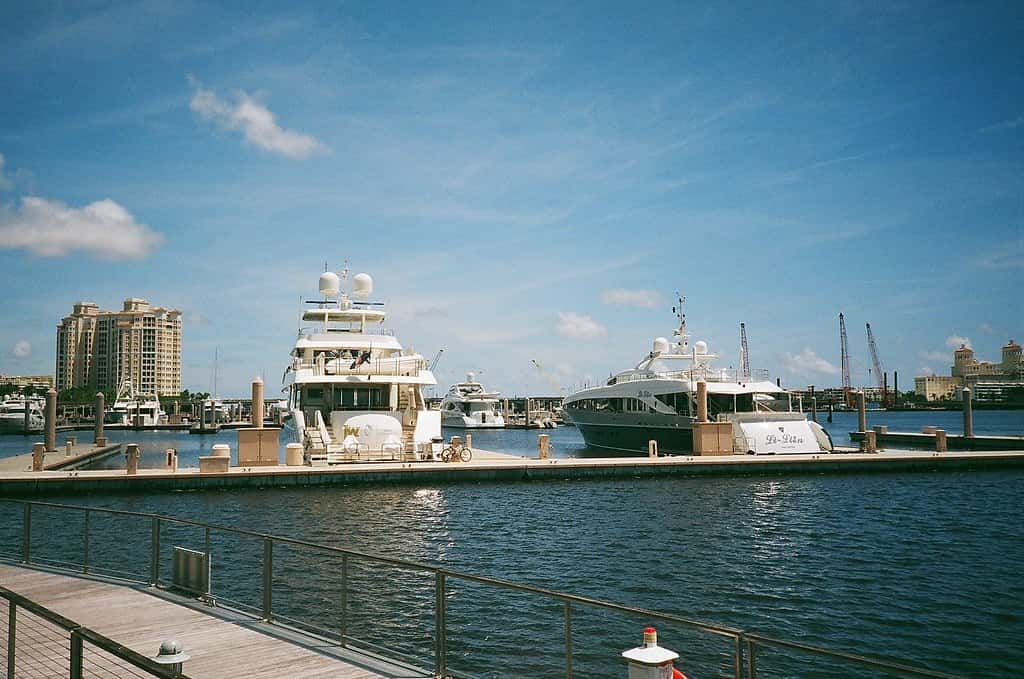
Local law enforcement agencies in Palm Beach County are pursuing federal reimbursement for the cost of supporting presidential security operations, drawing on a grant program created to offset the burden that falls on local governments when a president maintains a residence in their jurisdiction. The Town of Palm Beach approved a resolution to apply for just over $166,000 through the Presidential Residence Protection Assistance Grant Program, covering overtime for officers assigned to protection duties.
The West Palm Beach Police Department has also sought reimbursement for its costs over the past year, and the Palm Beach County Sheriff's Office has previously received federal reimbursement for its share of the expense.
Why local agencies bear the cost at all
The United States Secret Service holds the statutory responsibility for protecting the president. What the Secret Service does not have is the personnel to establish and maintain the outer perimeter of a security operation in a residential community.
That work falls to local police and sheriff's deputies: traffic control on approach routes, road closures, marine patrol on adjacent waterways, crowd management when demonstrations occur, and the general uniformed presence a protective operation requires around its edges.
The staffing demand is not marginal. Protecting the president during visits to Mar-a-Lago has been estimated to cost roughly $240,000 per day across the agencies involved, most of it in overtime. A single extended visit generates a bill that is material to a municipal police budget.
Three jurisdictions carry most of that load: the Town of Palm Beach, whose police department covers the island; the City of West Palm Beach, across the Intracoastal Waterway; and the Palm Beach County Sheriff's Office, which provides countywide resources.
How the reimbursement program works
The Presidential Residence Protection Assistance Grant Program was created to address exactly this problem, which arises whenever a president maintains a residence away from the White House. Congress has appropriated funding for it in various forms, and legislation enacted in the current administration included $300 million to reimburse eligible law enforcement agencies for presidential protection costs through 2029.
Reimbursement is not automatic. Agencies must document eligible expenses, apply within program parameters, and receive approval. The Town of Palm Beach application covers a defined period, from July 1, 2024 through September 30 of the following year.
The lag between incurring costs and receiving reimbursement is itself a burden. Local agencies front the overtime, absorb it in their operating budgets, and wait for federal money that may arrive well into a subsequent fiscal year.
Palm Beach County has previously received substantial reimbursement, including a $5.6 million payment to the sheriff's office documented by members of the Florida congressional delegation.
What it means for Palm Beach County taxpayers
The core question for local residents is whether presidential security costs are being borne by county and municipal property taxpayers or by federal appropriations. Full reimbursement means the former is spared. Partial reimbursement or reimbursement delays mean local budgets carry the gap.
The secondary effect is operational. Officers assigned to protective details are not available for ordinary patrol, investigations and community policing during those assignments. Agencies backfill through overtime, which is expensive, or accept reduced coverage elsewhere, which has its own costs.
Traffic and access disruption is the effect residents notice most directly. Road closures on and around the island of Palm Beach, bridge restrictions, and airspace limitations during visits affect daily movement for people who live and work in the area.
The broader Florida picture
Florida's relationship with presidential security is unusual because the state hosts a presidential residence used frequently. That produces a recurring, predictable cost rather than the episodic expense most jurisdictions face during occasional visits.
The Florida congressional delegation has engaged on the reimbursement question across administrations and across party lines, since the issue is fundamentally about federal responsibility for a federal function rather than about the officeholder.
The delegation is the third largest in the U.S. House, which gives Florida meaningful leverage on appropriations matters when its members work a file together.
Local impact across the region
Palm Beach County's law enforcement agencies operate in one of Florida's wealthiest jurisdictions, with a property tax base that supports substantial public safety budgets. That capacity is why the county has been able to absorb the costs while awaiting reimbursement.
Smaller municipalities within the county have less capacity, and jurisdictions that provide mutual aid during large operations face the same reimbursement questions on a smaller scale.
The economic effects run in both directions. Presidential visits generate media presence, visitor traffic and associated spending, while also producing the disruption and security costs described here. Local business impacts vary considerably depending on proximity to closure zones.
The election year overlay
The reimbursement question sits inside a Florida election calendar that includes a U.S. Senate special election on November 3 between Republican Sen. Ashley Moody and Democratic state Rep. Angie Nixon, along with a governor's race between Republican Byron Donalds and Democrat David Jolly.
Federal funding questions affecting Florida communities are routine campaign material, and the presidential protection grant program is one of several federal-local funding files with direct Florida stakes, alongside disaster assistance, flood insurance reauthorization and public health grants.
Palm Beach County's political profile makes it a closely watched jurisdiction in statewide races, with a registration composition distinct from the rest of South Florida.
How protective operations are structured
A presidential protective operation is organized in concentric layers, and understanding the structure clarifies why local agencies are involved at all.
The innermost layer is exclusively Secret Service, covering the protectee directly. That work is federal, staffed by federal agents, and not something local agencies participate in.
The middle layer covers the physical perimeter of the protected site, including access control, screening and the immediate surroundings. This is largely federal but draws on local support for specific functions.
The outer layer is where local agencies do most of their work: traffic control on approach and departure routes, road and bridge closures, intersection posts, marine patrol on adjacent waterways, and management of demonstrations or crowds that assemble nearby.
Motorcade movements require particularly intensive local support, since every intersection along a route needs to be controlled simultaneously. That is a personnel-heavy operation measured in officer-hours.
The Federal Aviation Administration also establishes temporary flight restrictions around presidential locations, which affects general aviation and, in South Florida, the flight schools and charter operators working in the region.
The fiscal question for local budgets
Municipal police budgets are built around projected staffing needs, and presidential protection duty is an addition to that baseline rather than a reallocation within it.
Overtime is the mechanism agencies use, since officers assigned to protective details are working beyond their scheduled shifts or are being backfilled by colleagues working beyond theirs. Overtime is paid at premium rates, which is why the daily cost estimates run as high as they do.
Equipment and vehicle costs add to the total, along with the administrative burden of documenting expenses to federal reimbursement standards.
For the Town of Palm Beach, a small municipality by population, the per-capita burden is substantial relative to its budget. For Palm Beach County, with a larger tax base and a sheriff's office of considerable size, the absolute figure is larger but the proportional burden is smaller.
The reimbursement program addresses the fiscal question but not the operational one. Money reimbursed after the fact does not restore the patrol coverage that was diverted, and agencies manage that through scheduling rather than through funding.
Precedent from other jurisdictions
The situation Palm Beach County faces is not unique, and the federal reimbursement framework exists because multiple jurisdictions have faced it.
Presidents have maintained residences and spent substantial time away from Washington throughout modern history, and the local jurisdictions hosting those locations have consistently raised the cost question. The Presidential Residence Protection Assistance Grant Program was created specifically to address it.
Vice presidential and other protectee locations generate similar though smaller obligations. Presidential campaign travel produces episodic costs in jurisdictions across the country, and those follow a different reimbursement path.
The consistent pattern is that federal reimbursement lags local expenditure, and that documentation requirements determine how much of a claimed expense is ultimately paid.
Florida's experience is distinctive mainly in the frequency and duration of the obligation, which converts an episodic cost into a structural line item for the agencies involved.
What residents experience
The practical effects of protective operations fall on people who live and work near the protected site, and they are consistent enough to be planned around.
Road closures affect specific corridors on the island of Palm Beach and the bridges connecting it to the mainland. Closures are typically announced in advance for scheduled movements, though unscheduled movements occur.
Marine restrictions apply to the Intracoastal Waterway and adjacent waters during protective periods, affecting recreational boating and commercial marine operations in the area.
Temporary flight restrictions established by the Federal Aviation Administration affect general aviation, flight training and charter operations within a defined radius, which in South Florida's dense airspace touches multiple airports.
Businesses inside closure zones report varying effects. Some see reduced access and lower traffic during closures. Others benefit from the media and support personnel presence that accompanies extended visits.
What's next
The Town of Palm Beach application proceeds through the federal grant review process. Approval timelines for the program have varied, and agencies typically learn the outcome months after submission.
Additional applications from Palm Beach County agencies covering subsequent periods would follow the same process, and the $300 million appropriated through 2029 establishes the funding availability for the coming years.
Local budget documents from the Town of Palm Beach, the City of West Palm Beach and the Palm Beach County Sheriff's Office will show how the costs and reimbursements are accounted for in the current fiscal year.
Spotted an issue with this article?
Have something to say about this story?
Write us a letterComments
No comments yet. Be the first to weigh in.
Related Coverage

Ex-CIA official pleads guilty in $194 million fraud, will forfeit $102 million in Palm Beach and Hobe Sound real estate
19m ago
11th Circuit voids septic permit ban in Indian River Lagoon manatee case after federal 'harm' rule rollback
20m ago
Trump ties disaster aid to midterm campaign as Hurricane Isaias nears Florida Panhandle
19h ago
Trump Backs Camp David-Style Presidential Retreat at His West Palm Beach Golf Club on County Land
19h ago