Locally Acquired Dengue Cases Prompt Mosquito Advisories in Palm Beach and Hillsborough Counties
Health officials in two of Florida's largest counties have issued mosquito-borne illness advisories after confirming cases of dengue fever contracted locally rather than during travel abroad, a distinction that signals the virus is circulating in resident mosquito populations.
The Florida Department of Health in Palm Beach County issued a mosquito-borne illness advisory on August 3, 2026, after confirming a locally acquired dengue case. According to the department, the patient was infected by a mosquito in Palm Beach County and had not traveled to a region where dengue is endemic.
The Florida Department of Health in Hillsborough County issued a similar advisory in late July 2026 following a confirmed human case of locally acquired dengue in that county.
The advisories arrive during the wettest and hottest stretch of the Florida calendar, when mosquito populations peak and the state's standing water is most abundant.
What a local case signals
Florida records dengue cases every year, and the overwhelming majority are travel-associated, meaning a resident or visitor was infected elsewhere and diagnosed after arriving in the state. Those cases are monitored but do not by themselves indicate local transmission.
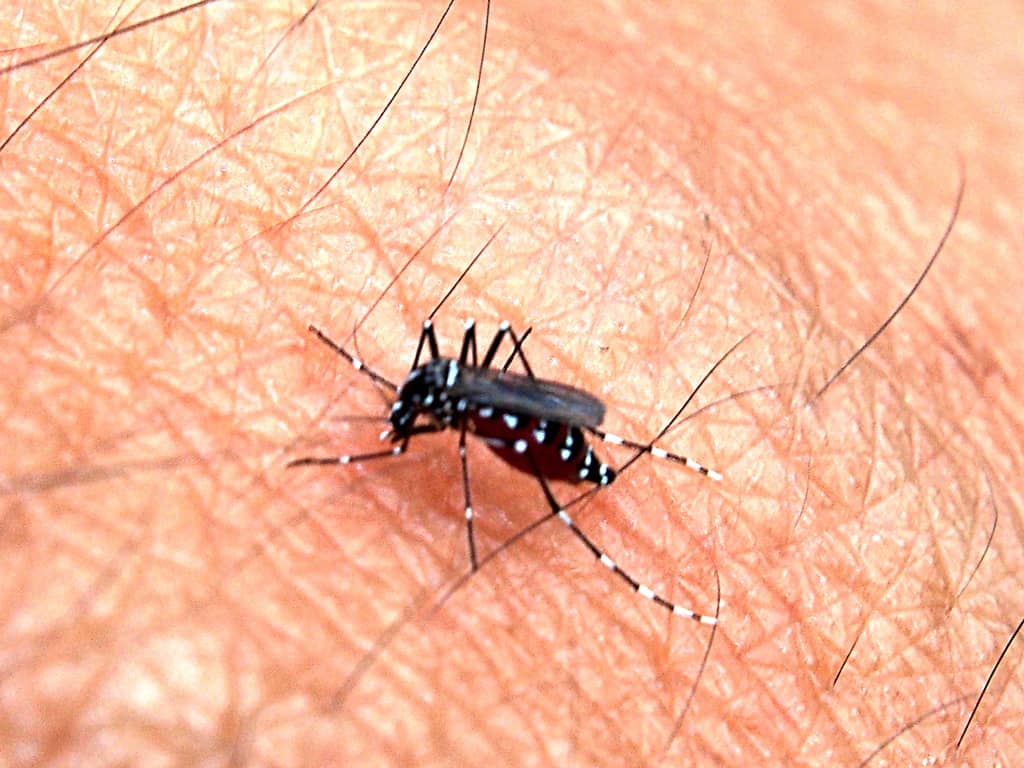
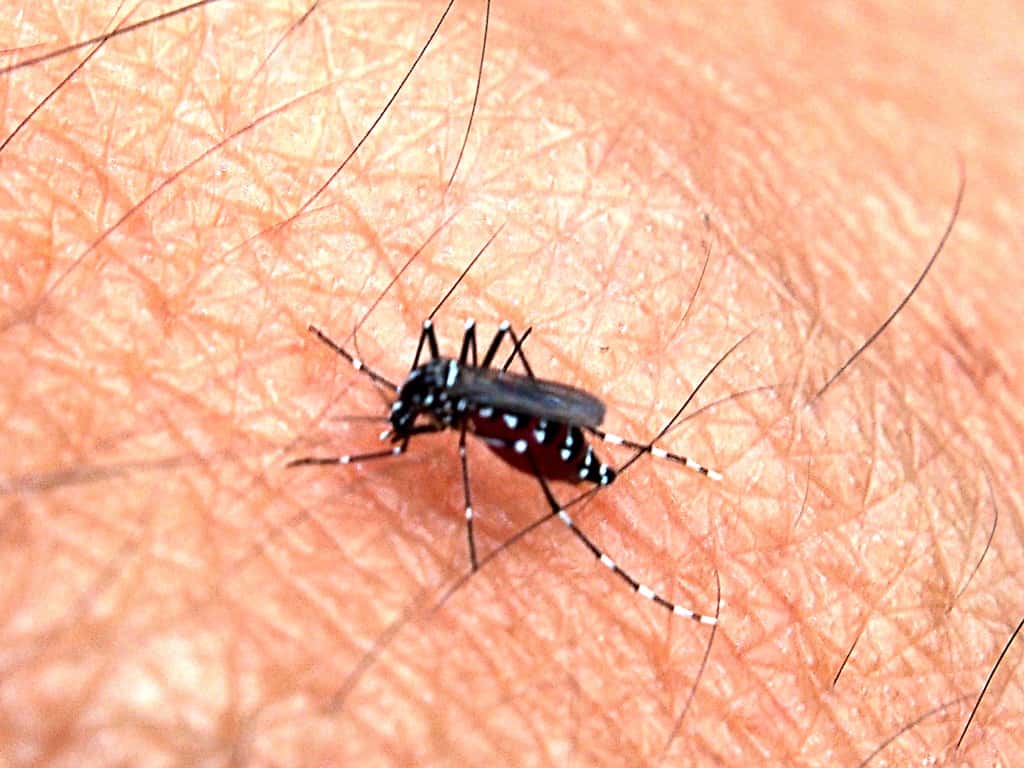
A locally acquired case is a different signal. It means an infected person was bitten by a local mosquito, that mosquito became a carrier and then transmitted the virus to someone who had not traveled. The chain requires a competent mosquito vector, which in Florida means primarily Aedes aegypti, and warm conditions that shorten the virus incubation period inside the insect.
County health departments respond to local cases with enhanced surveillance and by coordinating with mosquito control districts on targeted treatment in the area surrounding the case. The advisories themselves are public notification instruments, intended to increase awareness and prompt residents to reduce breeding habitat around their homes.
An advisory is not a warning that widespread transmission is underway. It indicates that officials have confirmed local transmission and are asking residents to take precautions while surveillance continues.
How dengue presents
Dengue is a viral illness transmitted by mosquito bite. Many infections produce no symptoms at all. When symptoms do appear, they typically begin within four to 10 days of the bite and commonly include high fever, severe headache, pain behind the eyes, muscle and joint pain, nausea, vomiting and rash.
The joint and muscle pain gives the illness its historical nickname, breakbone fever. Most cases resolve within a week to 10 days with rest, fluids and fever management.
A minority of cases progress to severe dengue, which is a medical emergency. Warning signs generally emerge as the fever subsides and include severe abdominal pain, persistent vomiting, bleeding from the gums or nose, blood in vomit or stool, rapid breathing, and extreme fatigue or restlessness. Severe dengue requires immediate medical attention.
Health authorities advise against taking aspirin or nonsteroidal anti-inflammatory drugs such as ibuprofen when dengue is suspected, because of bleeding risk. Acetaminophen is generally the recommended option for fever and pain, and anyone with symptoms should consult a clinician rather than self-managing.
There are four dengue virus serotypes. Infection with one confers lasting immunity to that serotype but not to the others, and a subsequent infection with a different serotype carries elevated risk of severe disease. That is one reason public health agencies treat local transmission seriously even when individual case counts are small.
What mosquito control does
Florida operates an extensive network of mosquito control districts, many of which predate modern public health infrastructure and were created to make large portions of the state habitable. Their work combines larval surveillance, source reduction, larvicide application in standing water and adulticide treatment where warranted.
Aedes aegypti presents a specific challenge because it is a container breeder that lives in close association with people. It does not require marshland or retention ponds. It breeds in bottle caps, plant saucers, tarps, boat covers, clogged gutters, bromeliad leaf axils, discarded tires and pet bowls, and it rarely travels far from where it emerged.
That biology means neighborhood-scale source reduction is unusually effective against this species and unusually dependent on individual property owners. A single untreated container in a backyard can sustain a local population regardless of district-level spraying.
What residents can do
Public health guidance for reducing exposure follows two tracks: eliminate breeding sites and prevent bites.
- Empty and scrub containers that hold water at least weekly, including plant saucers, birdbaths, buckets, toys and pet dishes.
- Cover or store items that collect rainwater, such as tires, tarps, boats and trash cans.
- Clear roof gutters and check for water pooling on flat surfaces and pool covers.
- Repair torn window and door screens.
- Maintain swimming pools and treat ornamental ponds, or stock them with mosquito-eating fish.
- Flush bromeliads and other water-holding plants regularly.
For bite prevention, health agencies recommend Environmental Protection Agency registered repellents, including those containing DEET, picaridin, IR3535 or oil of lemon eucalyptus, applied according to label directions. Long sleeves and long pants provide additional protection, particularly during peak Aedes aegypti activity in the early morning and late afternoon.
The broader Florida context
Florida's climate, its volume of international travel and its dense concentration of container-breeding mosquitoes make it the most likely state in the continental United States to record local transmission of dengue and related arboviruses.
Palm Beach and Hillsborough counties both sit in that risk profile, with major international airports, large populations and long warm seasons. Both counties have seen mosquito-borne illness advisories in prior years.
The current advisories overlap with an extended stretch of extreme heat across the peninsula. Heat accelerates mosquito development and shortens the interval between blood meals, which increases transmission potential during heat waves.
Florida's mosquito control system
Florida's response to mosquito-borne disease runs through an institutional structure that is unusual among states and that predates most modern public health infrastructure.
The state has dozens of mosquito control districts, many organized as independent special taxing districts with elected or appointed boards, their own millage authority and their own operations. Others operate as county departments. The arrangement reflects the historical reality that large portions of Florida were effectively uninhabitable before organized mosquito control.
District operations combine several methods. Surveillance uses traps to monitor species composition and population density, and sentinel chicken flocks are maintained in many counties to detect the circulation of arboviruses including West Nile virus and eastern equine encephalitis before human cases appear.
Larval control targets standing water with biological or chemical larvicides, which is more efficient than treating adults because larvae are concentrated in identifiable locations. Adulticiding by truck-mounted or aerial application addresses populations that have already emerged and is generally reserved for elevated risk conditions.
The Florida Department of Agriculture and Consumer Services provides oversight and coordination for the districts, and the Florida Department of Health handles the disease surveillance side.
The other mosquito-borne threats
Dengue is one of several arboviruses that circulate or have the potential to circulate in Florida, and the county advisories generally cover the broader category rather than a single disease.
West Nile virus is established in Florida and produces cases most years. It is transmitted primarily by Culex species, which breed in different habitats than Aedes aegypti, favoring stagnant water with organic content such as storm drains, ditches and retention areas. Most infections produce no symptoms, but a small percentage develop neuroinvasive disease.
Eastern equine encephalitis is rare but carries a high fatality rate among those who develop severe illness. It circulates in freshwater swamp habitats, and Florida monitors it through the sentinel chicken program.
Chikungunya and Zika have both produced local transmission in Florida in prior years, both carried by the same Aedes aegypti vector responsible for dengue. Zika drew particular attention because of its association with birth defects following infection during pregnancy.
Malaria, transmitted by Anopheles mosquitoes, produced locally acquired cases in Florida in recent years after decades without local transmission, a reminder that the state's vector ecology supports diseases that are otherwise absent from the continental United States.
Why the heat matters
The advisories arrive during an extended stretch of extreme heat across the Florida peninsula, and the relationship between temperature and transmission risk is direct.
Higher temperatures shorten the extrinsic incubation period, the interval between when a mosquito ingests the virus in a blood meal and when it becomes capable of transmitting. A shorter incubation period means a larger fraction of mosquitoes survive long enough to become infectious.
Heat also accelerates the mosquito life cycle from egg to adult and increases feeding frequency, since higher metabolic rates require more frequent blood meals. Both effects increase the number of transmission opportunities within a given population.
Rainfall patterns interact with this. Aedes aegypti is a container breeder, so it depends less on regional rainfall than on water accumulating in artificial containers, which means afternoon thunderstorms followed by hot conditions produce close to ideal circumstances.
The practical implication is that the risk window in Florida extends across the warm months and peaks during exactly the conditions the state is currently experiencing.
What's next
County health departments will continue surveillance and will lift advisories when the risk period passes without additional local cases. Residents can check the status of advisories through their county health department, and statewide arbovirus surveillance summaries are published by the Florida Department of Health.
Anyone who develops fever with headache, joint pain or rash within two weeks of mosquito exposure, particularly in the affected areas, should contact a health care provider and mention possible dengue exposure so appropriate testing can be ordered.
Residents can also report standing water complaints and request property inspections through their local mosquito control district, which in most Florida counties operates as an independent taxing district with its own service request system.
Spotted an issue with this article?
Have something to say about this story?
Write a letter to the editor