Panthers Open Camp Thursday With Two Tkachuks, a New Goalie and a Missed Playoff Year to Answer For
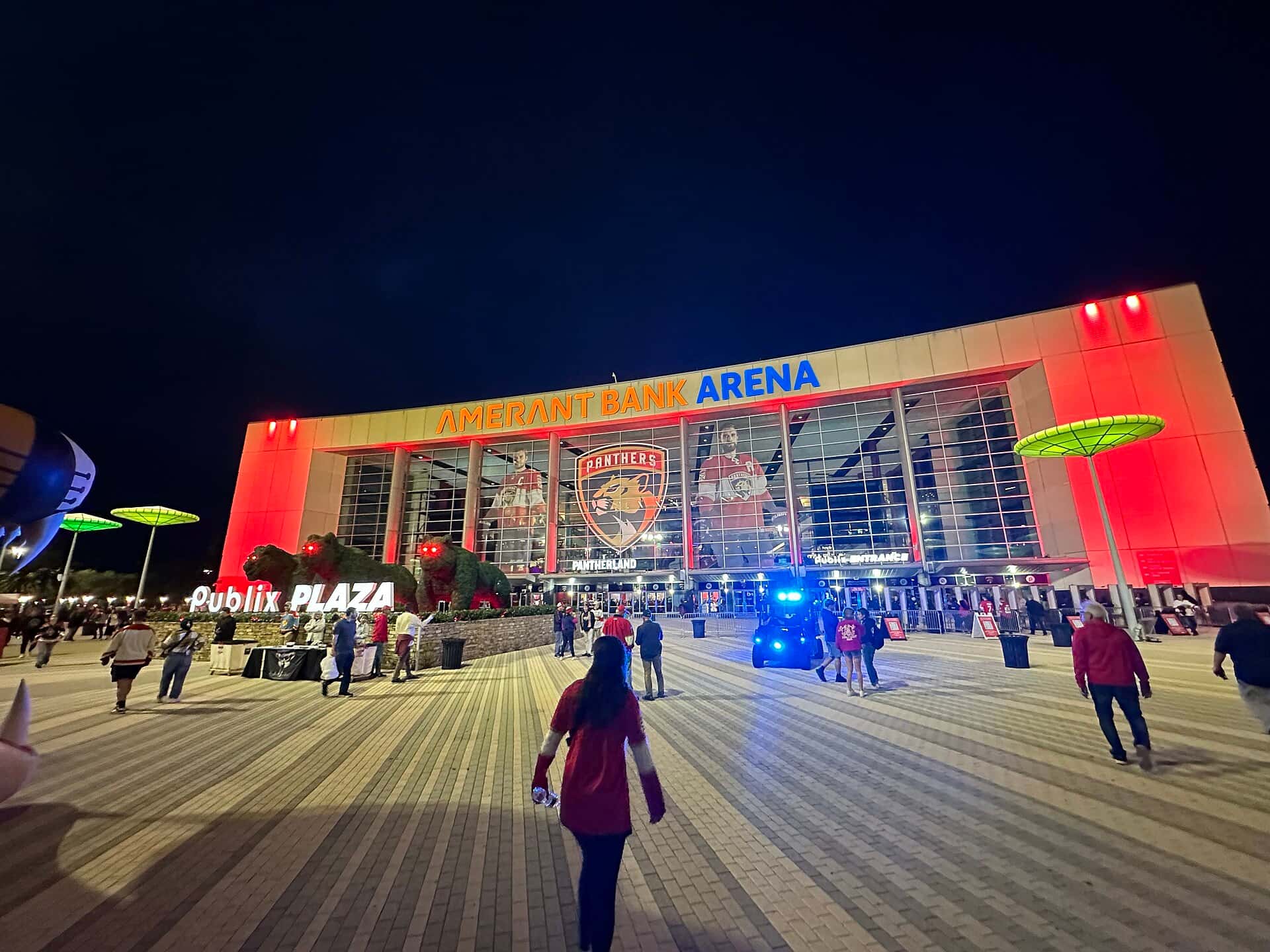
The Florida Panthers open training camp Thursday at the Fort Lauderdale IcePlex, beginning a season that carries more expectation than any in franchise history outside of the years they actually won. The team that lifted the Stanley Cup in consecutive seasons missed the playoffs entirely last year, and the roster that reports this week has been reshaped substantially in response.
The headline addition is Brady Tkachuk, acquired from the Ottawa Senators in June and now playing alongside his older brother Matthew. The goaltending has turned over completely, with Jacob Markstrom arriving from New Jersey and Akira Schmid from Vegas following Sergei Bobrovsky's departure. Captain Aleksander Barkov, who missed the entire 2025-26 season with a knee injury suffered in the preseason, returns.
Florida will hold an open practice and Training Camp Fan Fest on Saturday, September 19, at 10 a.m. The preseason schedule opens Sunday, September 20, at home against the Carolina Hurricanes, and includes two games against the Tampa Bay Lightning on September 24 and September 26.
What happened last season
The Panthers finished 40-38-4 and placed seventh in the Atlantic Division, missing the playoffs one year after a second consecutive Stanley Cup. That collapse was not a case of a roster aging out or a system failing. It was injuries, at a volume that would have sunk nearly any team.
Barkov, the captain and the player around whom the entire defensive structure is organized, missed the whole season after a knee injury in the preseason. Matthew Tkachuk missed 51 games. Seth Jones missed 30. Brad Marchand missed 30. Sam Reinhart missed 18. Anton Lundell missed 18.
That is the core of a championship roster absent for large portions of the schedule. A team can survive losing one of those players. Losing all of them across the same season means the lineup on most nights bore little resemblance to the one that won the Cup.
The injury concentration is not entirely bad luck either. Back-to-back Cup runs mean two seasons extended by roughly two additional months of the most physically demanding hockey played anywhere. The accumulated wear from those runs is a recognized phenomenon, and the Panthers' 2025-26 season is close to a textbook case.
The Brady Tkachuk trade
Acquiring Brady Tkachuk from Ottawa on June 21 was the kind of move that redefines an offseason. He is 26, produced 59 points in 60 games last season with 22 goals and 37 assists, and plays the heavy, abrasive style that has defined Florida's identity through its championship years.
He is also Matthew Tkachuk's brother, which makes this the rare hockey transaction that carries a story beyond the depth chart. Placing both brothers on the same top line is a possibility the coaching staff will evaluate in camp, and it would create one of the most physically punishing forward combinations in the league.
The hockey logic is straightforward even setting the family angle aside. Florida wins by forechecking relentlessly, winning battles along the boards and wearing opponents down over a series. Brady Tkachuk is precisely that kind of player, and adding him deepens a strength rather than patching a weakness.
Acquiring a player of that caliber required giving up assets, and the Panthers' salary cap position will bear watching. Teams that stack elite forwards tend to face difficult decisions on defense and in depth roles.
The goaltending change
Sergei Bobrovsky was the goaltender for both Stanley Cup runs, and replacing him is the most consequential change on this roster. Florida traded for Jacob Markstrom from New Jersey and Akira Schmid from Vegas, creating a new tandem.
Markstrom has been a legitimate starting goaltender in the NHL for years and gives Florida a proven option. Schmid provides a capable partner and insurance, which matters in a league where the schedule increasingly demands two goaltenders capable of winning games.
The uncertainty is not about talent so much as about fit. Goaltending performance is notoriously dependent on the defensive structure in front of it, and a goaltender who thrives in one system does not always replicate that elsewhere. Florida's defensive scheme is demanding and specific, and Markstrom will need time to adjust to how the Panthers defend.
The depth pieces also turned over, with Lars Eller and Garnet Hathaway arriving in place of A.J. Greer and Mackie Samoskevich. Those are the roster spots that decide playoff series more often than fans expect.
What Barkov's return changes
The single most important variable in Florida's season is a player who has not appeared in a game since the 2025 preseason.
Aleksander Barkov is the captain and the defensive anchor of everything the Panthers do. He plays the toughest matchup assignment every night, takes the critical defensive zone faceoffs, kills penalties and drives possession against opposing top lines. Those contributions do not show up in scoring summaries the way a goal does, and they are extraordinarily difficult to replace.
His absence explains much of last season's collapse beyond the raw games-lost total. Without Barkov, every other center moved up a slot into an assignment harder than the one they were suited for, and the effect cascaded through the lineup. A team can absorb losing a scorer more easily than losing the player who makes the defensive structure function.
The caution is that a knee injury serious enough to cost a full season does not always resolve cleanly. Skating imposes specific loads on the knee, and players returning from major knee surgery frequently need time before their first step and lateral movement return to form. Camp will give the first indication.
If Barkov is the player he was, Florida's projection as an Atlantic Division favorite is well founded. If he is not, the rest of the roster changes matter considerably less.
The salary cap picture
Acquiring Brady Tkachuk and replacing the goaltending in the same offseason required significant financial maneuvering, and the consequences will shape the roster for years.
Florida has committed substantial cap space to its forward group, which is the correct allocation for a team built on forechecking pressure and depth scoring. The tradeoff appears elsewhere, typically on the third defense pair and in the bottom six forwards, where teams with top-heavy cap structures rely on entry-level contracts and inexpensive veterans.
The depth moves this offseason reflect that reality. Lars Eller and Garnet Hathaway are established NHL players signed to fill specific roles at manageable cost, replacing A.J. Greer and Mackie Samoskevich. Those are the transactions teams make when the top of the roster consumes most of the available space.
Long-term flexibility is the concern. A roster with several large contracts running simultaneously has limited ability to add at the trade deadline, which is when contending teams typically want to reinforce. General managers in this position often have to move future draft capital or prospects to create room.
Florida has been willing to make those trades, which is how the organization built its championship teams. The question is how long the approach remains sustainable.
The expectations problem
Florida enters the season widely regarded as the favorite in the Atlantic Division and among the top contenders in the Eastern Conference. That is a reasonable projection given a healthy Barkov, a healthy Matthew Tkachuk, the addition of his brother and a competent goaltending tandem.
It also creates the specific pressure that comes with being the team everyone plans for. Carolina will be in that same conversation, and the Eastern Conference has enough quality depth that the path through the playoffs is not simple regardless of regular season position.
The health question is the one that overshadows everything. This roster is very good when it is on the ice. The last two seasons demonstrated both what it can do at full strength and what happens when it is not. Managing workload through an 82-game regular season, particularly for players returning from significant injury, is arguably the coaching staff's most important job.
What it means for South Florida
The Panthers transformed the hockey market in South Florida over the past several years. Amerant Bank Arena in Sunrise went from one of the quieter buildings in the league to one of the loudest, and the championship runs built a fan base in a region that had never prioritized hockey.
Missing the playoffs tested that. A market built on recent success rather than generational loyalty is more sensitive to a down year than an Original Six market would be. How the building sounds in October will say something about whether the fan base Florida built is durable.
The Fan Fest on Saturday is part of managing that relationship. Open practices and community events are how teams maintain connection during the gap between seasons, and after a year without playoff hockey, that connection matters more than usual.
The preseason meetings with Tampa Bay on September 24 and September 26 will also draw interest. The in-state rivalry has grown genuinely competitive as both franchises have become perennial contenders, and Florida hockey fans now have two teams worth watching.
What's next
Camp opens Thursday with a special broadcast at noon before the on-ice work begins. The Fan Fest follows Saturday, and preseason play starts Sunday against Carolina.
The immediate questions the coaching staff will work through in camp: whether the Tkachuk brothers play together, how Markstrom integrates with the defensive structure, how Barkov looks after a full season away, and how the reconstructed bottom six sorts itself out.
The Lightning open their own camp the following week, with medicals and media day on September 21 and on-ice practices beginning September 22 at the TGH Ice Plex. Florida's two NHL franchises will be back on the ice within days of each other, and both will be expected to contend.
Spotted an issue with this article?
Have something to say about this story?
Write us a letterComments
No comments yet. Be the first to weigh in.
Related Coverage
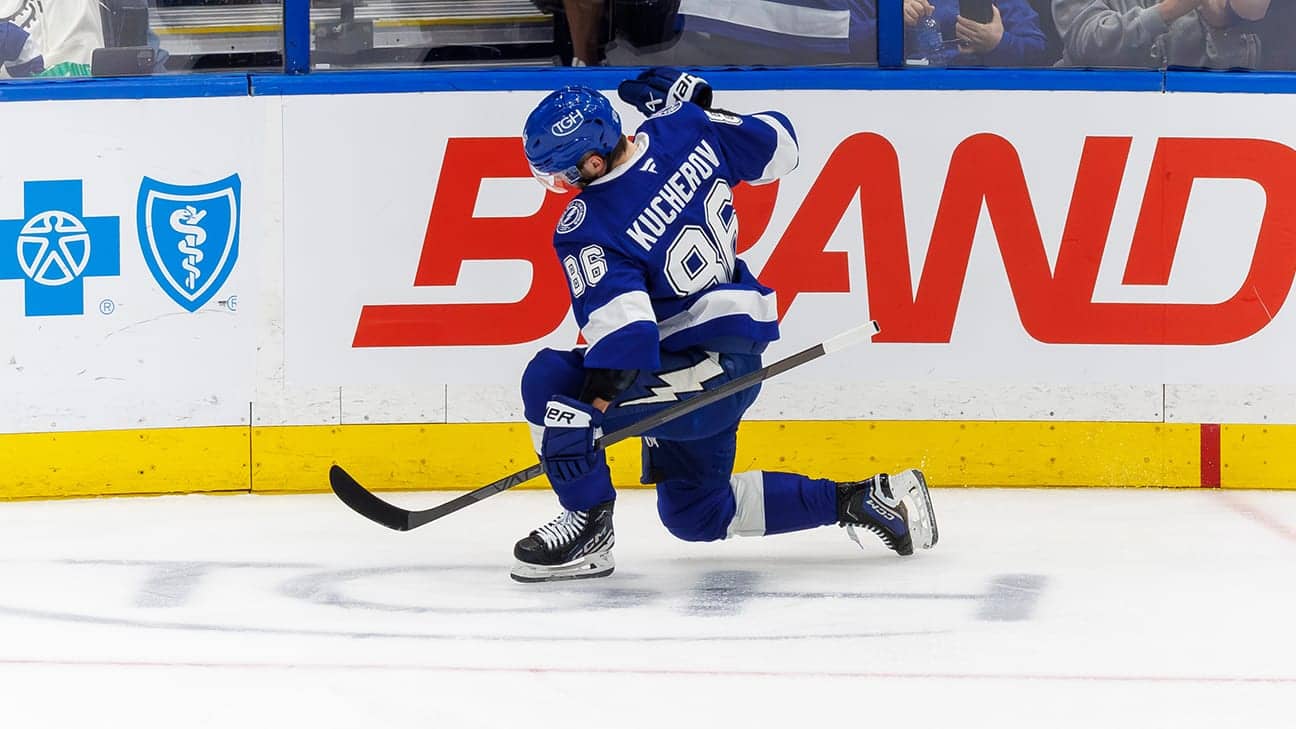
Nikita Kucherov Scores Twice as Lightning Rally From Two Goals Down to Beat Canucks 4-2
19h ago
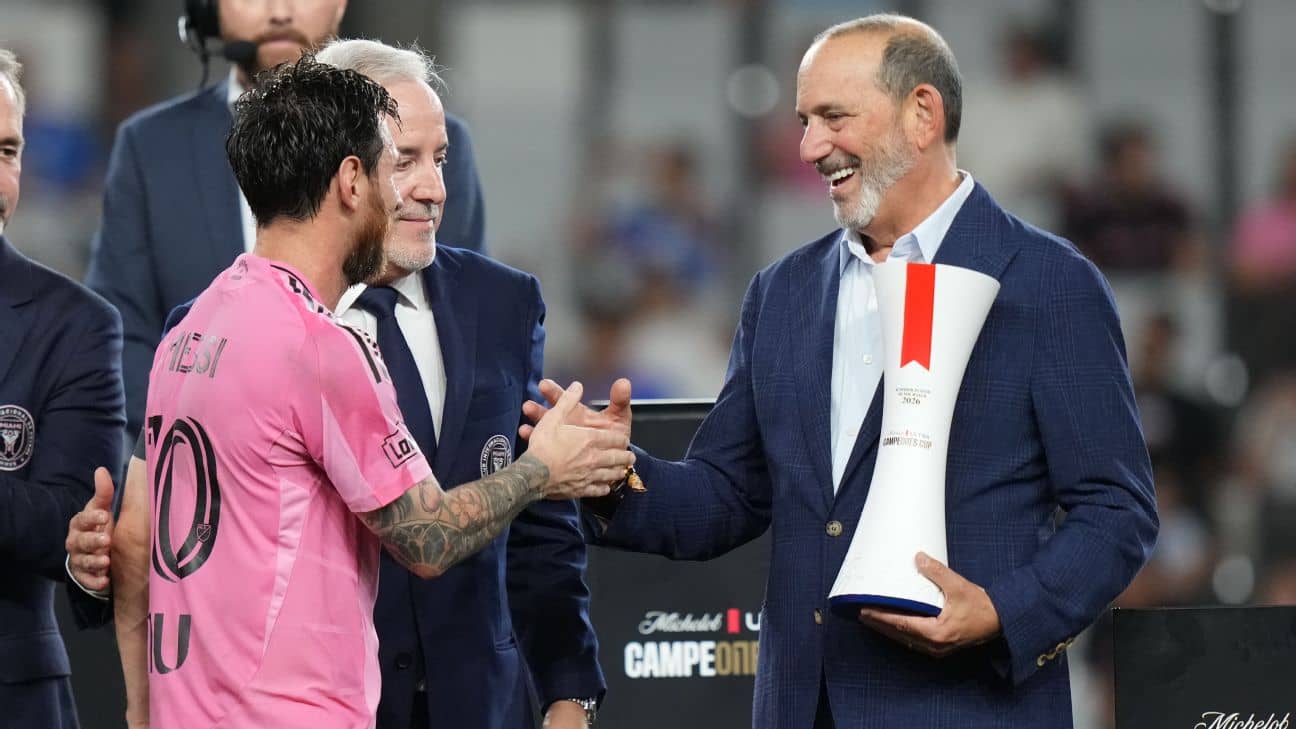
Lionel Messi Scores Twice, Inter Miami Beats Atlanta United 3-1 to Hold Second in the East
21h ago
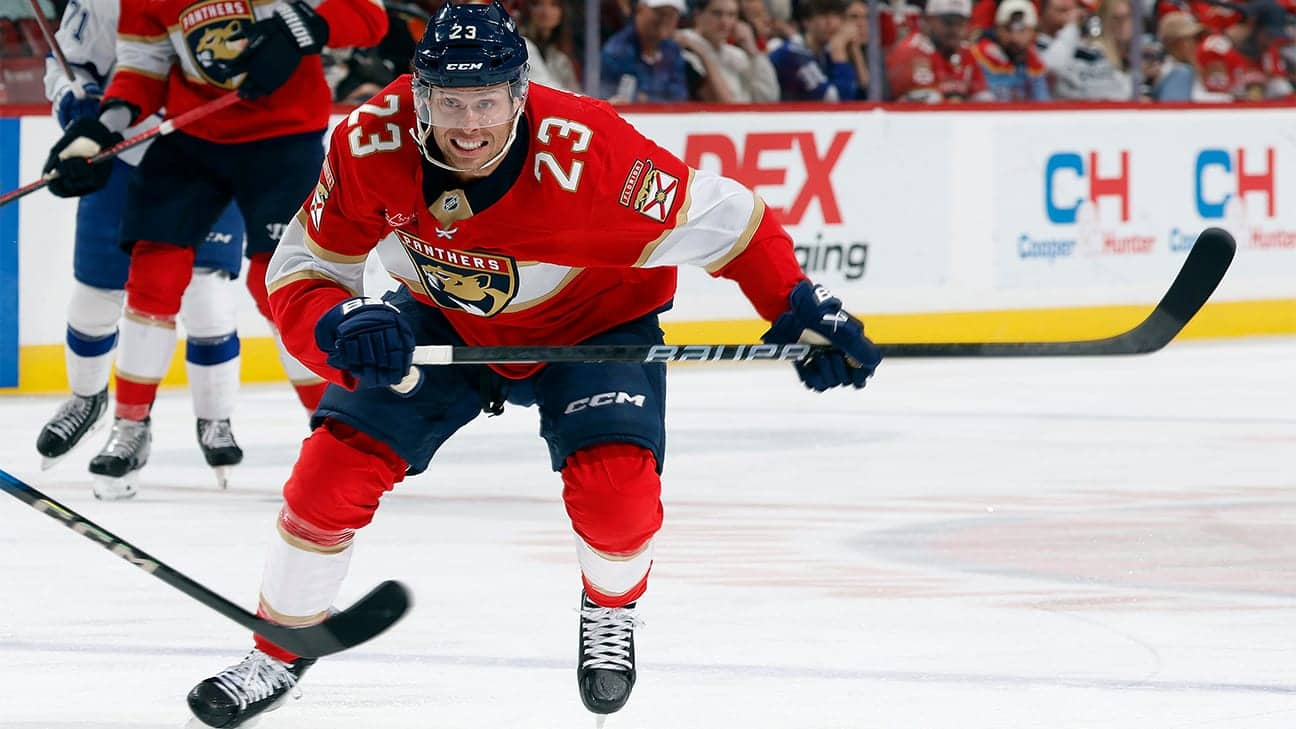
Carter Verhaeghe, Sam Bennett Hat Tricks Power Panthers Past Kraken 8-3 in Record Night
1d ago

Paolo Banchero Scores 24 as Magic Beat Heat 136-115 in Preseason Finale at Kia Center
1d ago