Rays Drop Third Straight as Orioles Break Through for a 10-2 Win in St. Petersburg
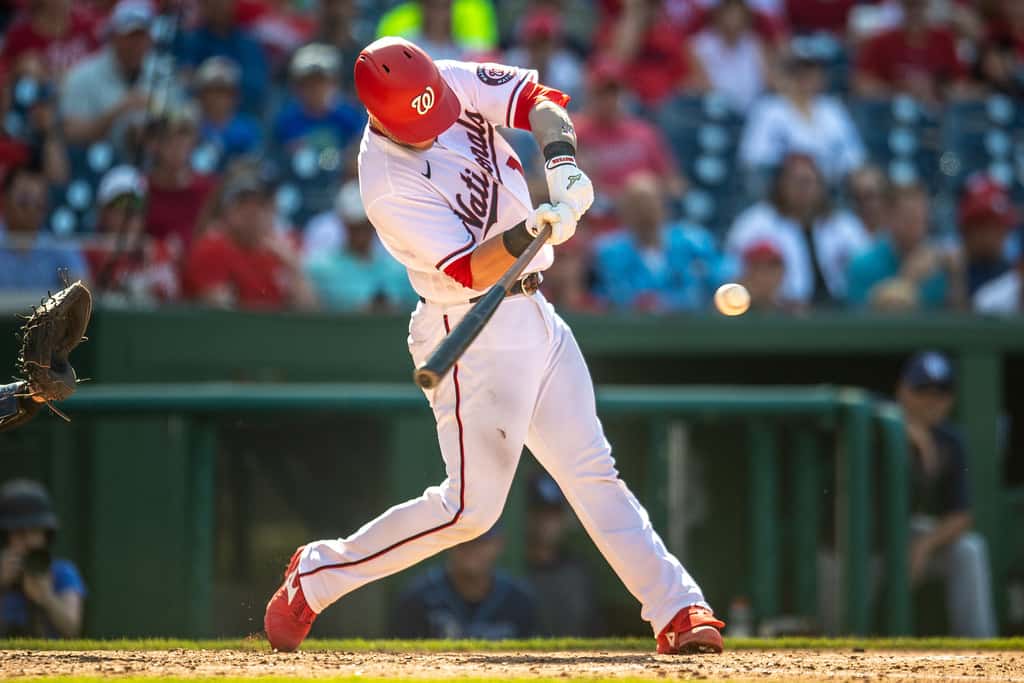
The Tampa Bay Rays lost their third consecutive game Sunday, falling 10-2 to the Baltimore Orioles after a seven-run sixth inning turned a close contest into a rout and extended a slide that has immediately followed the team's best stretch of the season.
Colton Cowser hit a two-run home run and Christian Encarnacion-Strand delivered a three-run double in the decisive inning. Jackson Holliday drove in three runs for Baltimore, which has now won three straight as it chases the final wild card spot in the American League.
The Rays had won nine consecutive games before the current three-game skid, a swing that has compressed a month's worth of momentum into a little over a week.
How the game got away
The score was manageable through five innings. Freddy Peralta allowed just one hit through four and two-thirds innings before surrendering two runs, and he took the loss in his first start at home for Tampa Bay since being acquired from the New York Mets on August 3.
Peralta fell to 5-10 on the season. The line reflects a familiar disconnect for a pitcher who has thrown well in stretches without the run support or bullpen backing to convert that into wins.
The sixth inning was the break point. Cowser's two-run homer and Encarnacion-Strand's three-run double accounted for five of the seven runs, and once Baltimore's order turned over with runners on base, the inning stopped being salvageable.
On the other side, Trevor Rogers gave Baltimore exactly what a team in a wild card chase needs from a starter. He scattered seven hits over six innings, allowed two runs and struck out six, improving to 8-8. Six innings of two-run baseball kept a rested bullpen available and let the offense play from ahead once it broke through.
The streak and the slide
A nine-game winning streak followed immediately by a three-game losing streak is the kind of sequence that makes a season difficult to read.
Nine straight wins is a genuine achievement in a sport where the best teams lose four games out of ten. It typically reflects starting pitching working deep into games, a bullpen avoiding the multi-run inning and an offense converting scoring opportunities at a rate above its baseline.
The regression that follows is usually not a collapse so much as a return to normal distribution. What matters is where the team sits after both stretches are absorbed into the record, not the direction of the most recent three games.
The seven-run inning does point at a specific issue. Big innings against a pitching staff generally indicate either a starter left in past his effective limit or a bullpen unable to stop a rally once it starts, and both are correctable in ways that a general offensive slump is not.
The Peralta acquisition
Tampa Bay acquired Peralta from the New York Mets on August 3, and Sunday marked his first home start for the club.
Midseason pitching acquisitions carry a particular kind of pressure. A pitcher arriving in August joins a new coaching staff, a new catcher, a new defensive alignment and a new set of scouting reports, and the adjustment period runs against a calendar that offers no time for it.
Sunday's line, one hit through four and two-thirds innings before allowing two runs, was more encouraging than the loss suggests. A starter who limits baserunners into the fifth is giving his team a chance regardless of how the game ends.
The Rays have historically built pitching staffs through acquisition and development rather than free agent spending, identifying arms whose underlying metrics outpace their results and adjusting usage and repertoire to unlock them. Peralta fits that organizational pattern.
The wild card picture
Baltimore's push for the final American League wild card spot is what gives the series its stakes on the visiting side. Three consecutive wins in mid-August, against a divisional opponent, is exactly the kind of run a fringe contender needs.
For the Rays, the standings math in the American League East is complicated by the division's persistent depth. Tampa Bay has spent most of the past decade competing against payrolls several times its own, a structural disadvantage the organization has offset through player development, defensive versatility and roster construction.
The final six weeks of a regular season compress everything. Series against direct competitors carry double weight, September roster expansion changes bullpen management, and the schedule's remaining strength becomes as important as the current record.
Tampa Bay's ballpark question
The Rays' home situation remains an active storyline for the Tampa Bay region. The franchise's long-running search for a permanent stadium solution has run through multiple sites, multiple proposals and multiple rounds of public financing debate across Pinellas and Hillsborough counties.
Attendance has been a persistent talking point, one that tends to obscure the underlying market dynamics. The Tampa Bay region is a large media market with a substantial baseball audience, but the ballpark's location relative to the region's population centers and the practical difficulty of a weeknight commute across the bay have shaped the gate for years.
Whatever the eventual resolution, the on-field product has remained competitive through it, which is the more remarkable part of the franchise's recent history.
The Rays model and its limits
Tampa Bay has operated for two decades as the sport's most studied example of competing with substantially less money than its rivals, and the approach has identifiable components.
Player acquisition targets undervalued attributes rather than established production. The organization has repeatedly acquired pitchers whose underlying metrics outpaced their earned run averages and position players whose defensive value was underweighted by the market.
Usage patterns follow from that. The club pioneered the opener strategy, uses platoon advantages aggressively, and manages pitcher workloads to maximize effectiveness per appearance rather than counting on traditional starter durability.
Defensive versatility is a roster requirement rather than a bonus. Players who can competently cover multiple positions allow the club to carry more pitchers and to construct favorable matchups without exhausting bench options.
The limit of the model is retention. Players who develop into stars reach arbitration and then free agency, and the club generally cannot match market offers. The result is a continuous cycle of development, contention and turnover that requires the pipeline to keep producing.
What a seven-run inning indicates
Large innings are diagnostic in ways that a simple loss is not, and coaching staffs review them differently than they review a close defeat.
The sequence matters. An inning that begins with a walk and a soft single is a different problem than one that begins with two hard-hit balls. The first suggests command issues and a defensive alignment that was not tested; the second suggests the pitcher's stuff was not playing.
Leverage decisions get reviewed as well. Whether a starter was left in past the point where his effectiveness declined, and whether the bullpen had a rested arm available at the moment the inning turned, are questions with concrete answers in the usage log.
Baltimore's damage came from Cowser's two-run home run and Encarnacion-Strand's three-run double, which means five of the seven runs arrived on two swings with runners already aboard. Preventing that pattern is a matter of limiting the baserunners who precede the damage rather than of preventing the extra-base hits themselves.
For a club that had just won nine straight, one inning of this kind is a data point rather than a trend. Two or three in a week would be a different matter.
The stretch run
Six weeks of regular season baseball impose their own dynamics that differ from the season's earlier months.
Roster expansion in September adds a limited number of spots, which changes bullpen management by giving managers more arms to deploy in matchup situations. Clubs in contention use those spots differently than clubs evaluating prospects.
Schedule strength becomes decisive. Two clubs with identical records can face very different remaining paths, and the number of games against contenders versus clubs already eliminated frequently determines which one advances.
Rest and health management tighten. Clubs in contention balance the need to win present games against the need to have healthy players available in October, a calculation that shapes lineup decisions in ways that are not always obvious from outside.
Head-to-head results against direct competitors carry the heaviest weight, both for the standings math and for the tiebreaker procedures that resolve identical records.
Following the club
For Tampa Bay area residents, the remaining home schedule offers a stretch of meaningful late-season baseball.
Ticket availability has generally been strong for weeknight games, and secondary market pricing frequently clears below face value in the hours before first pitch, which makes attending a same-day decision rather than a planned expense.
The ballpark's climate control removes the weather variable that affects most outdoor sporting events in Florida during the summer, when afternoon thunderstorms and heat indices above 105 make open-air attendance genuinely uncomfortable.
The club publishes its schedule, probable starters and promotional dates, and Major League Baseball's standings and playoff odds pages provide the clearest running picture of where the wild card race stands as the season closes.
The AL East as a proving ground
Tampa Bay's division has for years been the most difficult in baseball to navigate, and the reason is structural rather than cyclical.
The American League East contains two of the sport's largest payrolls alongside organizations that have invested heavily in analytics and player development infrastructure. A club competing there faces well-resourced opponents in a large share of its games, which compounds any payroll disadvantage across a season.
The competitive balance schedule reduced intradivision games somewhat from the previous format, spreading the schedule more evenly across the league. That change modestly helped clubs in strong divisions, though divisional opponents still account for the largest single block of games.
Baltimore's presence in the wild card chase illustrates the division's depth. A club that spent years rebuilding has emerged with a young core, and the Orioles' three-game winning streak against a divisional opponent is exactly the sort of run that separates contenders in August.
For the Rays, competing in that environment while operating near the bottom of payroll rankings is the achievement the organization is measured by, and the fact that a nine-game winning streak occurred at all in mid-August reflects it.
What's next
The Rays continue their schedule with the American League wild card race still within reach and roughly six weeks of regular season baseball remaining.
The immediate task is stopping the slide before it becomes a defining stretch. A three-game skid in mid-August is unremarkable; a ten-game skid is season-altering, and the difference between them is usually decided in the next series.
Schedules, probable starters and broadcast information are published by the club and by Major League Baseball.
Spotted an issue with this article?
Have something to say about this story?
Write a letter to the editorComments
No comments yet. Be the first to weigh in.
Related Coverage

Sean Sweeney Opens His First Magic Training Camp With a Defense-First Message for Banchero and Wagner
3h ago
Giannis Antetokounmpo Opens His First Heat Training Camp in Boca Raton as Miami Rebuilds Around a Two-Time MVP
8h ago

Trevor Lawrence Throws Three Touchdowns as Jaguars Rout Patriots 35-6 in Jacksonville
2d ago

Rays Draw the Yankees in the ALDS as Drew Rasmussen Gets the Game 1 Ball at Home
2d ago