Rubio Calls Cuba a Failed State, Warns Havana Cannot Wait Out Trump as South Florida Watches
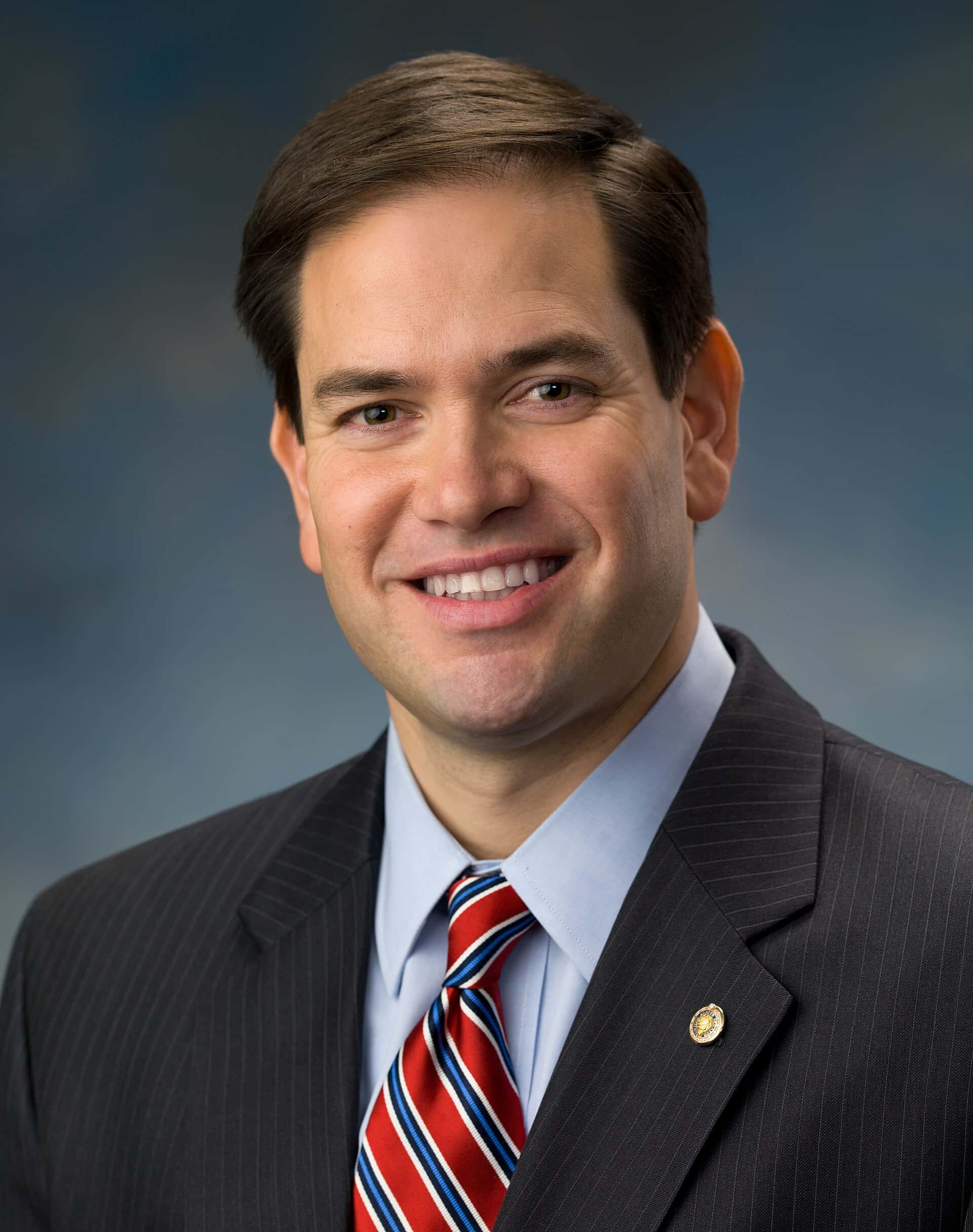
Secretary of State Marco Rubio said Monday, Sept. 28, that Cuba is a failed state and warned that anyone in Havana hoping to wait out President Donald Trump's administration will learn a hard lesson, sharpening the U.S. pressure campaign against the island at a moment when its power grid keeps collapsing. Rubio, the Miami-born son of Cuban immigrants and a former U.S. senator from Florida, made the remarks in an interview on Fox News' Hannity program, according to Reuters. For South Florida, home to the largest Cuban American community in the country, the comments are another signal that Washington has no plans to ease up on Havana.
What Rubio said
In the interview, Rubio said the United States is hopeful that Cuba will choose "a different path," according to Reuters. He warned that those who believe they can wait out the Trump administration will "learn the lesson the hard way" if they do not change course.
Rubio described Cuba's core problem in blunt terms, calling it "a failed state in every sense of the word," according to published accounts of the interview. He argued that the island's political and economic systems have failed to deliver meaningful benefits to ordinary Cubans and said the country needs a period of transition toward greater political and economic freedom.
He also said Washington was hopeful that "some people" who control the Cuban government would "open their eyes to the reality of what they are facing," according to Reuters. Rubio did not publicly name which officials he meant, and the published accounts did not describe any new sanction or policy step announced during the interview.
International outlets summarized the remarks on Tuesday with the phrase that Cuba has already fallen, reflecting Rubio's argument that the government in Havana has lost the ability to function, whatever its formal status.
Venezuela in the same breath
Rubio also addressed Venezuela in the interview. According to Reuters, he said Venezuela needs to have free and fair elections and that Washington was working toward putting in place the conditions necessary for such elections as soon as possible.
That comment comes in a year that has reshaped U.S. policy in the region. Earlier in 2026, the U.S. military captured Venezuelan leader Nicolas Maduro, an operation that Rubio at the time said should concern the government in Havana, according to contemporaneous reports from Fox News and The Hill. Cuba had relied heavily on Venezuelan oil for years, and the loss of that support has compounded the island's energy crisis.
Rubio spoke about Cuba, Russia and Venezuela during United Nations meetings in New York the previous week, according to reporting from Townhall on Sept. 23, making Monday's interview part of a sustained public push rather than a one-off comment.
For Florida, the Cuba and Venezuela stories are closely linked. Doral, Weston and other parts of South Florida are home to large Venezuelan communities, and many families there have ties to both countries' political fights. The prospect of elections in Venezuela is followed as closely in those neighborhoods as the Cuba debate is in Hialeah and Little Havana.
A grid in collapse
Rubio's remarks come as Cuba struggles through repeated nationwide blackouts. The island's electrical grid collapsed again on Friday, Sept. 18, leaving millions of people without power, according to Reuters and CBS News. CBS reported that it was at least the sixth time the grid had failed since the Trump administration cut off fuel to the island in January.
That collapse was triggered by a failure in high-voltage transmission lines in central Cuba at around 2 p.m. local time, authorities told reporters. Previous nationwide blackouts struck in March, July and early August, according to wire service accounts, along with several regional outages.
The U.S. restrictions prevent Cuba from importing much of the fuel needed to run its aging thermoelectric power plants, as well as replacement parts for infrastructure that in many cases dates back decades. Venezuela and Mexico also halted fuel shipments, according to reports this year, leaving the island with few options.
Havana has blamed Washington's policies for the crisis. The Trump administration, and Rubio in particular, has argued that the Cuban government's own mismanagement is responsible and that the island's leadership has the power to change course.
Why this lands differently in Florida
Rubio is not just the nation's top diplomat on Cuba. He grew up in Miami, represented Florida in the U.S. Senate from 2011 until he joined the Trump administration in 2025, and built much of his political identity around opposition to the Cuban government. That history makes his statements about Havana resonate in South Florida in a way few other federal officials' comments do.
Miami-Dade County has the largest Cuban American population in the United States, and many families still have parents, siblings and cousins on the island. Blackouts in Cuba mean spoiled food, broken water pumps and lost contact for relatives in Florida, many of whom send cash, medicine and supplies to family members.
Those family connections also make U.S. policy choices personal. Restrictions on travel, remittances and shipments to the island affect Florida households directly, and debates over whether pressure or engagement is the better path have divided the community for decades, often along generational lines.
Florida's congressional delegation, led on this issue by Miami-area Republicans, has broadly backed a hard line on Havana. Sen. Rick Scott questioned Rubio about next steps for Venezuela and Cuba during a Senate Foreign Relations Committee hearing in June, according to Scott's office, a sign of how closely Florida lawmakers track the administration's approach.
Migration and the Florida Straits
Any deterioration in Cuba raises questions in Florida about migration. Economic collapse on the island has historically preceded surges of Cubans attempting to reach the United States, either by sea across the Florida Straits or by land through Mexico, and the Florida Keys have repeatedly been on the front line of maritime arrivals.
The U.S. Coast Guard patrols the Florida Straits and interdicts migrants at sea in the region, and federal policy generally returns Cubans intercepted at sea to the island. Since the end of the so-called wet foot, dry foot policy in 2017, Cubans who reach U.S. soil without authorization no longer receive the automatic path to residency that earlier generations did.
Officials in Monroe County and other coastal communities typically watch conditions in Cuba closely during periods of crisis. No new maritime surge was reported in the published accounts of Rubio's interview, but the combination of blackouts, fuel shortages and economic strain is the kind of backdrop that has worried Florida officials in the past.
What it means for Florida businesses and families
Florida's economic ties to Cuba are limited by the long-standing U.S. embargo, but they are not zero. Charter and commercial flights between Florida airports and the island, shipments of permitted goods, and money sent by relatives all move through the state. Any tightening or loosening of U.S. rules tends to show up first in Miami.
Remittances are an especially sensitive issue. Many Cuban American families rely on sending money to support relatives facing food and medicine shortages, and changes in how or whether funds can reach the island have direct consequences for households in Hialeah, Westchester and Kendall.
South Florida's Venezuelan community faces its own set of uncertainties. The prospect of elections, the political future after Maduro's removal, and U.S. immigration policy toward Venezuelans all intersect in Doral and surrounding cities, where local businesses and civic groups follow every statement from Washington.
The political backdrop
Rubio's comments arrive just over a month before the Nov. 3 midterm elections, when all 28 of Florida's U.S. House seats are on the ballot. Cuba and Venezuela policy remains a potent issue in several Miami-area districts, where Cuban American and Venezuelan American voters make up a significant share of the electorate.
Republicans have made significant gains among Hispanic voters in South Florida over the past several election cycles, and a firm line on Havana and Caracas has been central to their message. Democrats in the region have generally also criticized the Cuban government while arguing for different approaches on migration, family travel and humanitarian aid.
Rubio's remarks also keep Cuba in front of national audiences at a time when much of Washington's attention is focused elsewhere, including the federal budget and the Supreme Court's new term. Appearing on a prime-time cable program rather than issuing a formal State Department statement, he framed the message for American viewers as much as for officials in Havana. In South Florida, where Cuban American families often follow U.S. policy toward the island through Spanish-language radio and television, remarks from a Miami native serving as secretary of state carry particular weight.
Rubio's position as secretary of state gives Florida an unusually direct voice in U.S. foreign policy toward the Caribbean and Latin America. His statements are parsed not only in Havana and Caracas but also in Miami, where political leaders, exile groups and business owners read them for hints of what comes next.
What's next
Rubio did not outline a specific timeline or new measure in Monday's interview, so the next concrete signals are likely to come from the State Department, the Treasury Department and the White House in the form of any new sanctions, licenses or diplomatic steps toward Cuba or Venezuela.
On the island, the key question is whether Cuba can stabilize its power grid as the Atlantic hurricane season continues through Nov. 30. Another major storm or another nationwide blackout would deepen the humanitarian strain and would be felt immediately among relatives in South Florida.
In Venezuela, the pace of any move toward elections will be watched closely by Florida's large Venezuelan diaspora. And in Florida's own politics, the administration's Cuba and Venezuela policies are likely to remain a campaign theme through Election Day on Nov. 3.
Spotted an issue with this article?
Have something to say about this story?
Write a letter to the editorComments
No comments yet. Be the first to weigh in.
Related Coverage
No Shutdown at Fiscal Year's End: What the Dec. 11 Funding and Flood Insurance Deadline Means for Florida
2h ago
The Fed's First Rate Hike Since 2023 Pushes Mortgages Past 7% and Freezes Florida's Housing Market
1d ago
Florida Sits at the Center of Record Federal Immigration Enforcement With 287(g) Deals in All 67 Counties
1d ago
FEMA Aid for Helene and Milton Recovery Tops $11 Billion as Florida Projects Keep Closing Out
1d ago