Rust Tide Turns Southwest Florida Waters Murky Around Sanibel and Pine Island
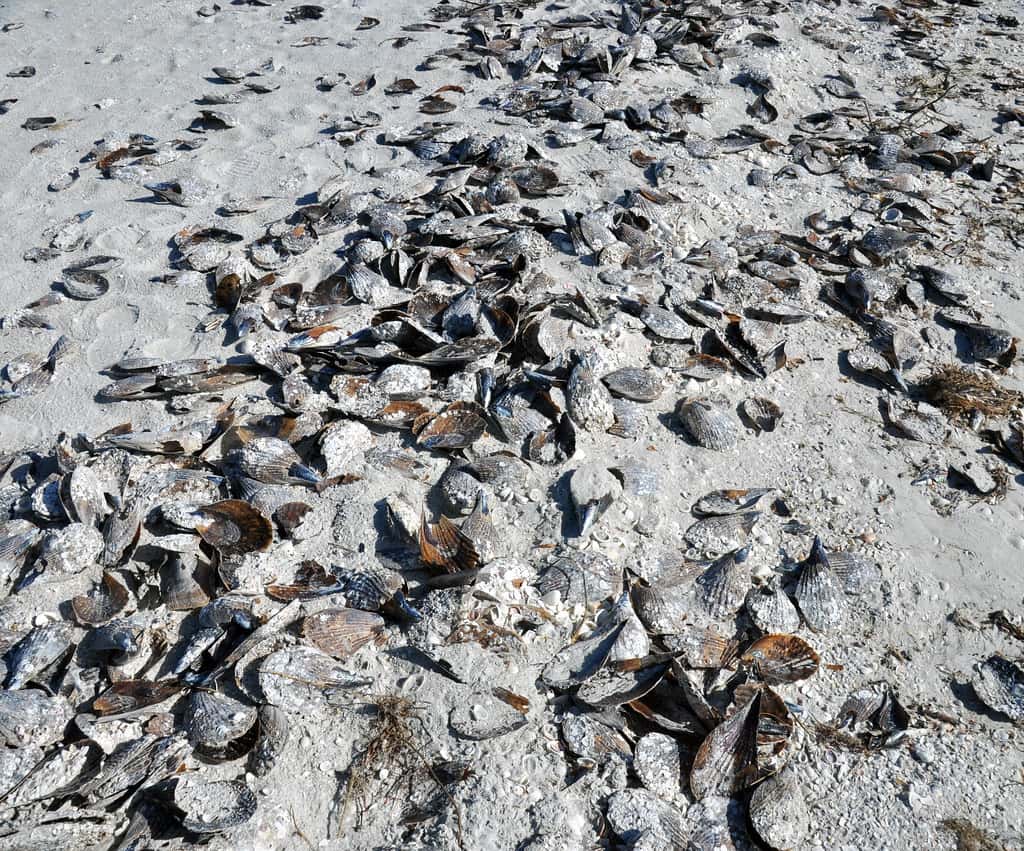
A murky, rust-colored algae bloom is fouling the back bays and passes around Sanibel, Captiva and Pine Island, discoloring water across a stretch of Southwest Florida coastline that depends on clear water for its tourism economy and its fisheries. The bloom, which local scientists and residents have described as rust tide, is distinct from the red tide that has repeatedly disrupted the region, and the differences matter for both public health and marine life.
Unlike red tide, the current bloom is not known to cause the respiratory irritation that drives beachgoers indoors and fills urgent care clinics during a Karenia brevis event. That absence of an airborne irritant is the good news. The less reassuring part is that blooms of this type can produce toxins and have been associated with fish kills elsewhere, and their potential risk to marine life in Southwest Florida's estuaries bears watching.
The timing arrives as the region's red tide picture has been comparatively quiet. In recent sampling, Karenia brevis was not observed in Southwest Florida waters, while in Northwest Florida the organism was detected at background concentrations in a single sample from Franklin County.
What rust tide is and is not
Rust tide is a common name rather than a precise scientific classification, applied to blooms that impart a brownish or rust-colored cast to the water. The visual signature is a muddy discoloration in enclosed or slow-flushing waters, which is why the current bloom has concentrated in back bays and passes rather than along the open Gulf beachfront.
The critical distinction from red tide concerns brevetoxins. Karenia brevis, the organism responsible for Florida red tide, produces brevetoxins that become aerosolized in surf and wind, causing coughing, throat irritation and eye discomfort in people on or near the beach. Blooms described as rust tide do not appear to produce that airborne effect.
That does not mean they are harmless. Organisms in this category have been documented producing toxins harmful to fish and shellfish, and fish kills associated with such blooms have occurred in other regions. In an estuary, the more common mechanism of harm is oxygen depletion, as a dense bloom consumes dissolved oxygen when it decays and suffocates fish and bottom-dwelling organisms.
Water clarity is the third mechanism. A dense bloom blocks sunlight from reaching seagrass beds, which are the nursery habitat for much of Southwest Florida's recreational and commercial fishery and the primary food source for manatees. Extended shading can cause seagrass die-off that outlasts the bloom itself by years.
Where the bloom is concentrated
Sanibel, Captiva and Pine Island sit at the mouth of the Caloosahatchee River system in Lee County, an area where freshwater discharge, tidal exchange and estuarine circulation interact in complicated ways. The back bays behind the barrier islands flush slowly, which allows nutrients and algal cells to accumulate rather than disperse into the Gulf.
Pine Island Sound and the waters around Matlacha and St. James City are among the region's most productive fishing grounds, supporting a guide industry built on redfish, snook and tarpon. Discolored water affects those fisheries both biologically and commercially, as anglers cancel trips when the water looks wrong regardless of whether fish are still present.
The passes between the islands are the exchange points between the estuary and the Gulf, and conditions there indicate whether a bloom is being flushed out or drawn further in. Bloom material visible in the passes suggests the affected water mass is substantial rather than confined to a few dead-end canals.
Lee County's coastline has been through a difficult sequence in recent years, absorbing severe storm damage, persistent red tide events and blue-green algae discharges from the Caloosahatchee. Each event compounds the reputational problem for a regional economy that sells clean water to visitors.
The nutrient question
Algae blooms require nutrients, and in Southwest Florida the nutrient sources are well documented and politically contested. Agricultural runoff, urban stormwater, septic system leachate and discharges from Lake Okeechobee through the Caloosahatchee all contribute nitrogen and phosphorus to the estuary.
Heavy rainfall amplifies the delivery. Florida's wet 2026 season has moved substantial volumes of water across developed and agricultural landscapes and into coastal waters, carrying the nutrient load with it. A rainy September in the watershed generally translates into elevated nutrient concentrations in the estuary weeks later.
Lake Okeechobee releases are the most visible and most litigated piece. The Army Corps of Engineers manages lake levels for flood control and dike safety, and when the lake rises, water is released east through the St. Lucie and west through the Caloosahatchee. Coastal communities on both sides have objected for decades.
Everglades restoration projects, including reservoir and stormwater treatment area construction south of the lake, are intended to reduce the need for those coastal discharges by moving and cleaning water southward. The projects are enormous, slow and expensive, and their benefits arrive on a timeline measured in decades.
Impacts on wildlife
Manatees are the species Floridians most associate with harmful algae, and the mechanism is specific. Brevetoxins from red tide can be ingested with seagrass or inhaled at the surface, causing seizures that lead to drowning, and red tide events have produced significant manatee mortality in Southwest Florida.
The Florida Fish and Wildlife Conservation Commission asks the public to report distressed manatees immediately through its wildlife alert hotline at 1 to 888 to 404 to 3922, and prompt reporting materially improves the odds for animals that can be rescued and rehabilitated.
For a bloom not producing brevetoxins, the more likely wildlife impact runs through the food web rather than through direct poisoning. Fish kills from oxygen depletion remove forage, and seagrass shading reduces the food base that supports manatees, sea turtles and juvenile fish.
Shellfish are the other concern. Filter-feeding organisms concentrate algal toxins in their tissue, which is why state authorities close shellfish harvesting areas during blooms. Those closures are precautionary and are based on monitoring data rather than on visible water color.
What the monitoring shows
The Florida Fish and Wildlife Conservation Commission maintains a statewide red tide status report updated regularly from water samples collected across the coast, and the state's water quality dashboard aggregates bloom information for public use. Those tools are the authoritative source for current conditions.
Recent sampling found Karenia brevis absent from Southwest Florida waters over the preceding week, with a single Franklin County sample in Northwest Florida showing background concentrations. Background means present at levels that occur naturally without bloom conditions, and it is not a cause for concern by itself.
Monitoring for blooms outside the red tide framework is less systematic. Because rust tide does not trigger the respiratory health response that drives red tide monitoring and reporting, observations often come from local scientists, guides and residents who notice the water change before a formal sampling program registers it.
Lee County and regional research institutions conduct their own water quality sampling, and the data from those programs feeds into the picture alongside state monitoring. For residents, the practical guidance is to consult both state dashboards and local condition reports before planning time on the water.
What it means for the regional economy
Southwest Florida's economy runs on water clarity. Sanibel and Captiva built international reputations on shelling beaches and calm Gulf water, and Pine Island's fishing guide industry sells access to healthy estuary. A bloom that discolors the water damages the product regardless of whether it poses any human health risk.
The timing matters for the season ahead. Southwest Florida's visitor economy builds through the fall toward a winter peak, and conditions in late September and October shape booking decisions for the months that generate the bulk of annual revenue.
Real estate is the longer tail. Waterfront property values in the region carry a premium tied to water quality and access, and repeated bloom events feed into buyer perception in ways that are difficult to quantify but not difficult to observe in listing activity on affected canals.
Local governments have responded to the pattern with investment in stormwater treatment, septic to sewer conversions and water quality monitoring. Those projects address the nutrient loading that originates locally, which is a meaningful share of the problem though not the whole of it.
How this differs from blue-green algae
Southwest Florida contends with at least three distinct water quality problems that residents frequently conflate. Red tide is a marine bloom of Karenia brevis originating offshore in the Gulf and driven landward by winds and currents. Blue-green algae, properly cyanobacteria, is a freshwater phenomenon that blooms in Lake Okeechobee and travels down the Caloosahatchee into the estuary. The current rust-colored bloom is a third category, estuarine and locally generated.
Each carries a different risk profile. Cyanobacteria blooms can produce microcystin, a liver toxin that poses genuine hazards to people and pets through contact and ingestion, and those blooms are visually distinctive as bright green surface scum. Red tide's signature hazard is airborne. The estuarine bloom now discoloring Pine Island Sound presents primarily as an ecological concern rather than a direct human health one.
The management responses differ accordingly. Cyanobacteria control focuses on lake nutrient loading and discharge timing, red tide response centers on monitoring, beach cleanup and public notification, and estuarine bloom management runs through local nutrient reduction in stormwater and wastewater systems.
Public communication struggles with these distinctions. When residents see discolored water, the questions that follow concern whether it is safe to swim, fish and bring a dog to the shoreline, and the answers differ depending on which organism is responsible. Agencies have invested in dashboards and advisory systems precisely because the general term algae covers hazards that behave nothing alike.
The research infrastructure watching the water
Southwest Florida hosts a concentration of marine research capacity that gives the region better bloom data than most coastlines. Institutions along the Gulf coast conduct routine water sampling, operate monitoring buoys and maintain long-term datasets that allow scientists to distinguish an unusual event from ordinary seasonal variation.
Citizen science supplements the professional network substantially. Volunteer water sampling programs, fishing guides reporting conditions and residents photographing discoloration in their canals generate observations at a spatial density no funded program could match. Several regional programs formalize those reports into usable data.
Satellite remote sensing adds the broad view. Ocean color imagery can detect chlorophyll concentrations across large areas, identifying bloom extent and movement in ways ship-based sampling cannot. The limitation is that satellites measure pigment rather than species, so imagery indicates that something is blooming without identifying what.
The combination of these tools is what allows a bloom in the back bays behind Sanibel and Captiva to be characterized within days rather than weeks. For a regional economy where a single bad season carries real cost, faster characterization means faster and better-targeted public information.
What's next
Blooms of this type typically persist until conditions change, with wind, tidal flushing, temperature shifts and nutrient availability determining duration. A strong wind event or a significant tidal exchange can disperse a bloom in the passes quickly, while calm weather allows it to linger in enclosed bays.
Scientists will be watching for fish kills as the clearest indicator that the bloom is causing ecological harm rather than simply discoloring water. Dead fish accumulating in the back bays would signal oxygen depletion or toxicity and would prompt a more urgent response.
Residents and visitors can check the state's red tide status report and water quality dashboard before heading out, report fish kills to the Florida Fish and Wildlife Conservation Commission, and report distressed manatees to the wildlife alert hotline. For a region that has spent years managing water quality crises, the current bloom is a familiar problem in an unfamiliar color.
Spotted an issue with this article?
Have something to say about this story?
Write a letter to the editorComments
No comments yet. Be the first to weigh in.
Related Coverage
A Rust-Colored Bloom Is Fouling the Waters Around Sanibel and Pine Island
2d ago
Florida's Coast Stays Clear of Red Tide as FWC Sampling Finds No Bloom Statewide
3d ago
Florida Wildlife Officials Propose Strict New Sloth Rules After Dozens Died at an Orlando Attraction
5d ago
Everglades Canal Diversion Opens to Relieve the St. Lucie Estuary
Sep 12