Sarasota County Kills $18.1 Million Boatyard Purchase at Siesta Key Bridge Over Federal Canal Easement
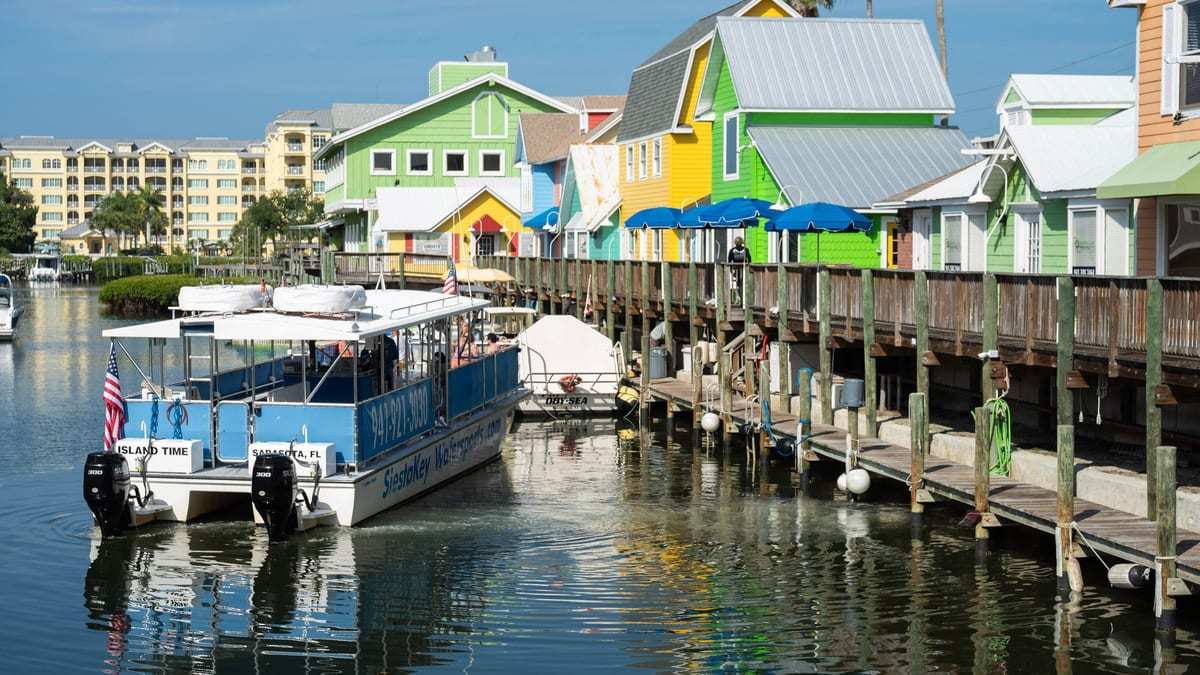
Sarasota County has walked away from its $18.1 million deal to buy the Boatyard property at the foot of the south Siesta Key bridge, ending a plan to turn the roughly 2-acre waterfront site on Stickney Point Road into a public park. County commissioners voted 3-2 on Wednesday, Nov. 4, to terminate the purchase agreement after a decades-old federal canal easement surfaced as a defect in the property's title, according to reporting by Suncoast Searchlight published by WUSF and by the Business Observer.
Commissioners Teresa Mast, Ron Cutsinger and Tom Knight voted to end the deal. Commissioners Joe Neunder and Mark Smith voted against termination, with Smith arguing the county still had a rare and workable chance to expand public access to the water.
What the commission decided
The board chose to terminate rather than accept a proposal from the property's owner, Chris Brown of Big Main Street LLC, that would have left the county responsible for potentially significant costs to clear up the title problems, Suncoast Searchlight reported.
Mast framed the decision in simple terms before the vote, saying that if the county could not get a clear title, she was not an interested party. Smith said he remained in favor of the county buying the property and argued that a fix taking as long as five years was worth it given the decades of public use that would follow.
The outcome reverses the board's direction from earlier in the year. Commissioners first approved the purchase on Feb. 10 on a 4-1 vote, with Knight opposed, according to the Business Observer. In early May the board again voted 4-1, with Knight dissenting, to move ahead and authorize roughly $20.77 million in financing to cover the land and related costs.
The 1960 easement at the center of the dispute
The obstacle is a canal easement dating to 1960 and held by the U.S. Army Corps of Engineers. It runs across the site, and an existing restaurant structure encroaches on it without permission, according to a Corps letter cited by Suncoast Searchlight. Parks, Recreation and Natural Resources Director Shawn Yeager said the easement, which allows parts of the water to be used for dredge material, limits waterfront access.
Getting the easement released could take up to five years, with no guarantee the federal government would agree and no set price if it did. In an Oct. 1 letter, the Corps said that if the easement were released mainly for the owner's benefit, the county would have to pay no less than appraised fair market value, a figure that would not include surveys, environmental review or appraisals.
The Business Observer reported in late September that the Corps had described itself as not willing or able to simply release the easement. It laid out two paths: an application to dispose of or exchange the easement, which could take up to five years, require payment equal to the parcel's fair market value or be denied outright, or a request for approval of temporary structures such as docks and picnic shelters. WWSB also reported that county staff flagged unresolved access and utility rights involving a neighboring condominium association among the title issues.
How the county and the seller disagreed
On Sept. 14, the county attorney's office rejected the seller's position that the easement was not a title defect. In a notice of default sent to Brown, Assistant County Attorney Vladimir DuBovis called it a title defect rather than a future permitting matter, Suncoast Searchlight reported.
Brown offered to set aside $700,000 from the sale proceeds to deal with the title issues. Under his proposal, the county would have accepted the property as is, with the easement still in place, and covered any costs beyond that amount, including possible demolition. When Smith asked whether the money would be enough, Yeager said the total cost was unknown at that point. The county attorney's office had warned commissioners against taking on those obligations.
A purchase that drew criticism from the start
The Boatyard site has about 700 feet of bay frontage. Its brightly colored, New England-style buildings are more than 40 years old and have deteriorated from storm damage and wear. The Boatyard Waterfront Bar and Grill is one of the businesses that gave the property its common name.
The price was a lightning rod. Two appraisals valued the site at $14 million and $18.1 million, and the county agreed to pay the higher figure. Brown had bought the property for $8.9 million two years earlier, according to Suncoast Searchlight. Critics questioned both the price and the decision to pay with money set aside for environmentally sensitive lands and neighborhood parks.
The county's plan was to demolish the existing structures and build a park with water access. Ideas floated by staff included a fishing and kayak launch, shore fishing, a boardwalk, shade structures and picnic areas.
The deal had real consequences for tenants even though it never closed. Businesses relocated while the purchase was pending, including Siesta Key Watersports, a tenant of roughly two decades that had been told to leave in May.
The funding question after Election Day
The vote came one day after Sarasota County voters weighed in on the very programs that would have paid for the purchase. The Environmentally Sensitive Lands Protection Program, begun in 1999, and the Neighborhood Parkland Program, begun in 2005, were on the Nov. 3 ballot, with voters asked whether to keep the existing 0.25-mill property tax through 2049 and whether to allow up to $250 million in borrowing, WUSF reported. WWSB reported on Nov. 4 that the county says both programs will continue through 2049.
The loan for the Boatyard purchase was to be repaid from that same voter-approved tax. Supporters of the land program have pointed to more than 42,000 acres protected since its creation. Earlier this year, Suncoast Searchlight reported that the Boatyard purchase was cited as an example of the kind of waterfront acquisition the money could support if the county ran short of conservation land to buy. With the deal dead, the roughly $18.1 million is no longer committed to the site.
What it means for Siesta Key access
Public water access along the Stickney Point corridor has long been limited, which is why supporters saw the parcel as a once-in-a-generation opportunity. Yeager acknowledged the scarcity, saying the county would keep looking for other ways to improve public water access but that opportunities like this do not come along very often.
For the property owner, the termination returns a prominent, largely emptied commercial site at the gateway to Siesta Key to the private market, with the same federal easement still crossing it.
What's next
The county has not announced a replacement site. Staff will continue searching for other public water access opportunities, according to Yeager. The Corps easement remains in place, and any future buyer, public or private, would face the same choice between a lengthy federal release process and building around the restriction. Whether the seller disputes the county's notice of default or the termination itself has not been reported.
Spotted an issue with this article?
Have something to say about this story?
Write us a letterComments
No comments yet. Be the first to weigh in.
Related Coverage
Incoming House Speaker Sam Garrison Revives Public Integrity Committee and Adds Panels on Long-Range Strategy and Digital Security
2h ago

What Governor-Elect Byron Donalds Wants to Do, and Why DeSantis Is Telling Republicans to 'Buckle Up'
1d ago

Senate President-Designate Jim Boyd Names Leadership Team, With Ana Maria Rodriguez as Pro Tempore and Nick DiCeglie as Majority Leader
2d ago
CAIR Shuts Down Florida Operations as State Terrorist Designation Takes Effect and Judge Declines to Block It
2d ago