Second federal judge blocks Trump's new birthright citizenship order, a ruling watched closely in immigrant-heavy Florida
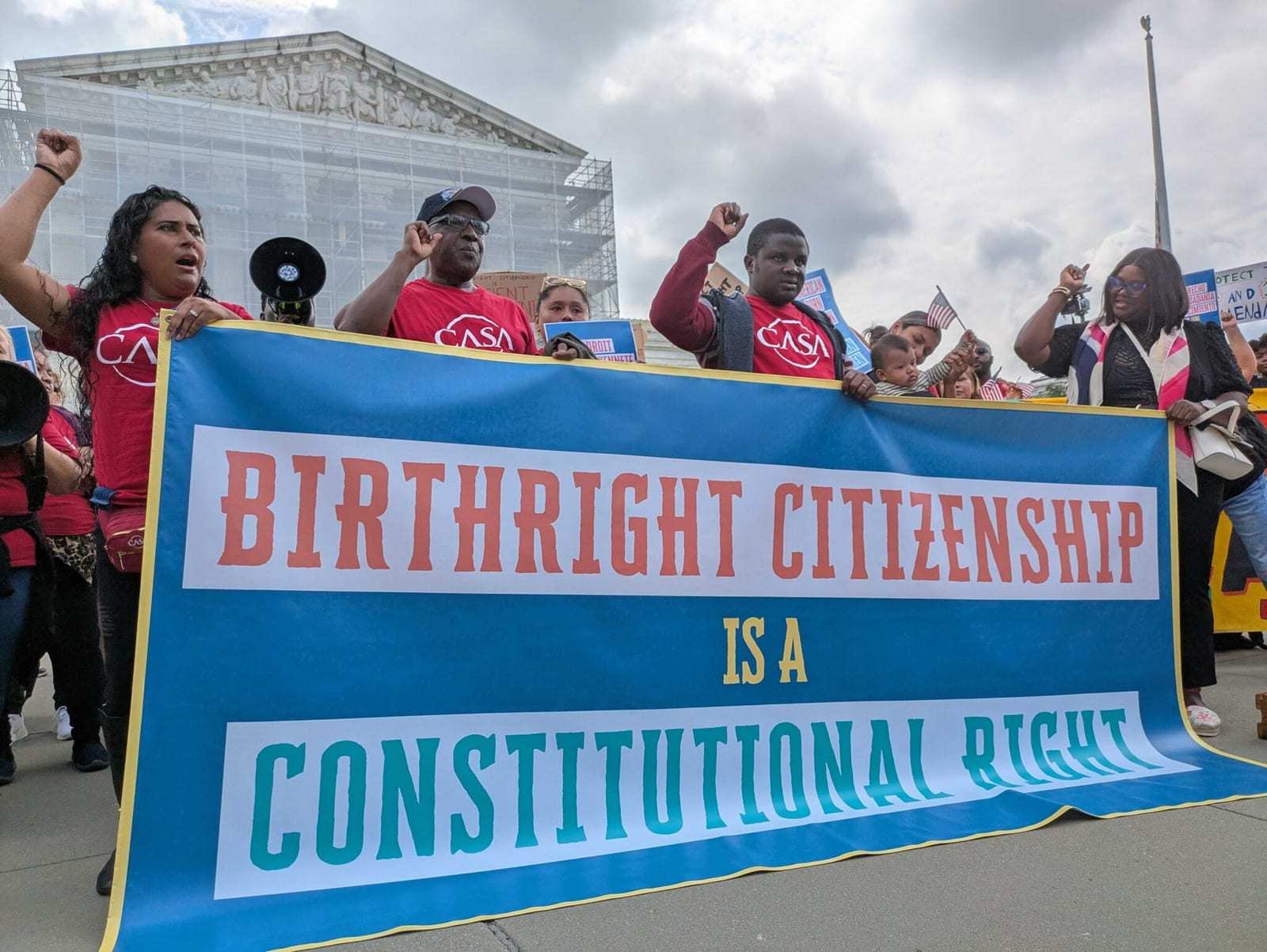
A federal judge in Washington, D.C., on Wednesday, Nov. 25, blocked President Donald Trump's second executive order limiting birthright citizenship, the second court to halt the August order since the Supreme Court struck down his first attempt in June. The ruling matters in Florida, where about one in four residents was born abroad, where the state's attorney general backed the administration's position at the Supreme Court, and where South Florida's large consular community and birth tourism trade sit squarely in the new order's sights.
U.S. District Judge Christopher R. Cooper granted a preliminary injunction and certified a class of children who are or will be denied citizenship under the order, according to multiple news reports. The injunction bars the State Department, the Department of Homeland Security and the Social Security Administration from enforcing the order against members of that class while the case continues.
What the second order does
Trump signed Executive Order 14418, titled "Continuing to Protect the Meaning and Value of American Citizenship," on Aug. 6, 2026. The order says it applies the Supreme Court's June 30 ruling in Trump v. Barbara by identifying, "non-exhaustively," categories of children who it argues fall outside the Constitution's Citizenship Clause.
Under the order, when neither parent is a U.S. citizen, federal agencies may not issue or accept documents recognizing a child's citizenship if:
- either parent is an "alien enemy," which the order defines to include members of groups designated as foreign terrorist organizations or as specially designated global terrorists;
- either parent is an ambassador, an employee of a foreign embassy or consulate, a person working for a foreign government in an official capacity, or an employee of an immune international organization;
- either parent paid for or fraudulently obtained birthright citizenship, including through a transaction to ensure the mother was in the country to give birth or through a surrogate who gave birth here; or
- the child was born in a U.S. territory where federal law does not confer citizenship.
The order directed agencies to issue public guidance within 30 days. Trump signed a companion order the same day, Executive Order 14419, titled "Ending Birth Tourism," which targets foreign nationals who enter on nonimmigrant visas to give birth.
How the courts have responded
The first order, signed on Trump's first day back in office in January 2025, sought to deny citizenship to children born to parents in the country illegally or temporarily. Courts blocked it nationwide, and on June 30, 2026, the Supreme Court affirmed a lower-court ruling against it. Chief Justice John Roberts wrote the majority opinion, joined by Justices Sonia Sotomayor, Elena Kagan, Amy Coney Barrett and Ketanji Brown Jackson, according to the Supreme Court docket. Justices Clarence Thomas, Samuel Alito and Neil Gorsuch dissented, according to news reports, and Justice Brett Kavanaugh wrote separately.
The narrower second order was challenged within weeks. On Sept. 2, U.S. District Judge Deborah Boardman in Maryland issued a preliminary injunction at the request of immigrant families and groups including We Are CASA and the Asylum Seeker Advocacy Project. "The Supreme Court has spoken: Children in the certified class are 'citizens at birth,'" Boardman wrote, according to the Associated Press.
Cooper's case, Nathan v. Trump, was filed Sept. 28 by the ACLU, the NAACP Legal Defense Fund, the Asian Law Caucus, the ACLU of D.C. and Democracy Defenders Fund. It is named for a child born in Washington to a French citizen and her husband, according to reports on the filing.
In a 67-page opinion, Cooper relied on the Barbara ruling and the Supreme Court's 1898 decision in United States v. Wong Kim Ark. News reports quoted him as writing that the president "cannot carve out new exceptions to birthright citizenship." He also barred the government from taking other actions to deny or infringe on the citizenship of class members, and declined to put his order on hold pending appeal, according to those reports. Children of accredited diplomats are excluded from the class.
The administration has defended the order as consistent with the Supreme Court's reasoning. After the Maryland ruling, White House spokeswoman Lauren Bis called Boardman an activist judge appointed by President Joe Biden and said the order is consistent with the Supreme Court's holdings and analysis, CBS News reported.
Florida's position
Florida sided with the administration when the first order reached the Supreme Court. Attorney General James Uthmeier signed a January 2026 friend-of-the-court brief led by Tennessee and Iowa and joined by Florida and other Republican-led states and Guam. The brief argued that the challengers' reading of the Citizenship Clause, which grants citizenship to nearly everyone born on U.S. soil, was wrong, and that conferring citizenship requires a more meaningful connection than mere presence at birth, which it described as parental domicile. The states said they face economic, health and public safety costs from policies that encourage illegal migration. The Supreme Court rejected the administration's position.
What it means for South Florida families
The first order would have reached a large share of Florida families. Miami-Dade County's population is 54.5% foreign-born, according to Census Bureau estimates from 2020 to 2024, and about 23% of Floridians statewide were born in another country, according to the Migration Policy Institute. As far back as 2015, the Pew Research Center found that at least 30% of births in Florida were to immigrant women.
The second order is narrower, but several of its categories touch South Florida directly. Miami hosts one of the country's largest consular corps, with roughly 80 consulates, according to the Consular Corps of Miami, and the order would deny citizenship documents to children born to consulate employees who are not U.S. citizens. The Florida Department of State's directory lists consular offices from 87 countries.
The commercial transaction provision targets birth tourism, an industry with a long South Florida presence. Sunny Isles Beach has been reported for years as a hub for Russian and Eastern European mothers who travel to give birth in the United States. After the August orders, WPLG Local 10 reported that a Miami-Dade birth tourism business faced a federal crackdown. The provision also covers surrogacy arrangements in which neither intended parent is a citizen.
The "alien enemy" category reaches parents alleged to belong to designated terrorist organizations, a designation the administration has applied to drug cartels, CBS News reported. Plaintiffs in the Maryland case argued that the label is applied too broadly.
For now, Floridians in the covered categories are protected by the two injunctions, though the injunctions protect certified class members rather than striking down the order nationwide.
What's next
The Justice Department is expected to appeal Cooper's ruling to the U.S. Court of Appeals for the D.C. Circuit and may seek emergency relief, according to news reports. To enforce the order, the administration would need to overcome both the D.C. injunction and the Maryland injunction, which can be appealed to the 4th U.S. Circuit Court of Appeals. Both rulings are preliminary, so the underlying cases will continue toward final decisions. With the Supreme Court having already ruled on the first order, a return trip to the high court over the narrower second order is possible.
Spotted an issue with this article?
Have something to say about this story?
Write us a letterComments
No comments yet. Be the first to weigh in.
Related Coverage
Newborn Hepatitis B Vaccinations Drop to 65.6% Nationally as Florida Leads the Nation in New Infections
2h ago
Macy's 100th Thanksgiving parade marches Saturday after first-ever postponement as Florida performers scramble
2h ago
Epic Universe Acrobats Released From ICE Custody on Bond, Reunited in Arizona After Phoenix Airport Arrest
5h ago
Florida ACA Open Enrollment 2027: Dec. 15 Deadline Arrives With 10.4% Average Rate Hike, Insurer Exits and No Enhanced Subsidies
1d ago