Seven Charged in Alleged $100 Million Florida Workers' Compensation Scheme
Florida Attorney General James Uthmeier has announced charges against seven people accused of running a workers' compensation fraud and unlicensed money service operation that prosecutors say processed nearly $100 million. Five of the defendants are from Palm Beach County and the Treasure Coast, according to the charging announcement.
All seven are presumed innocent. The charges are allegations, no one has been convicted, and the case has not been tested in court.
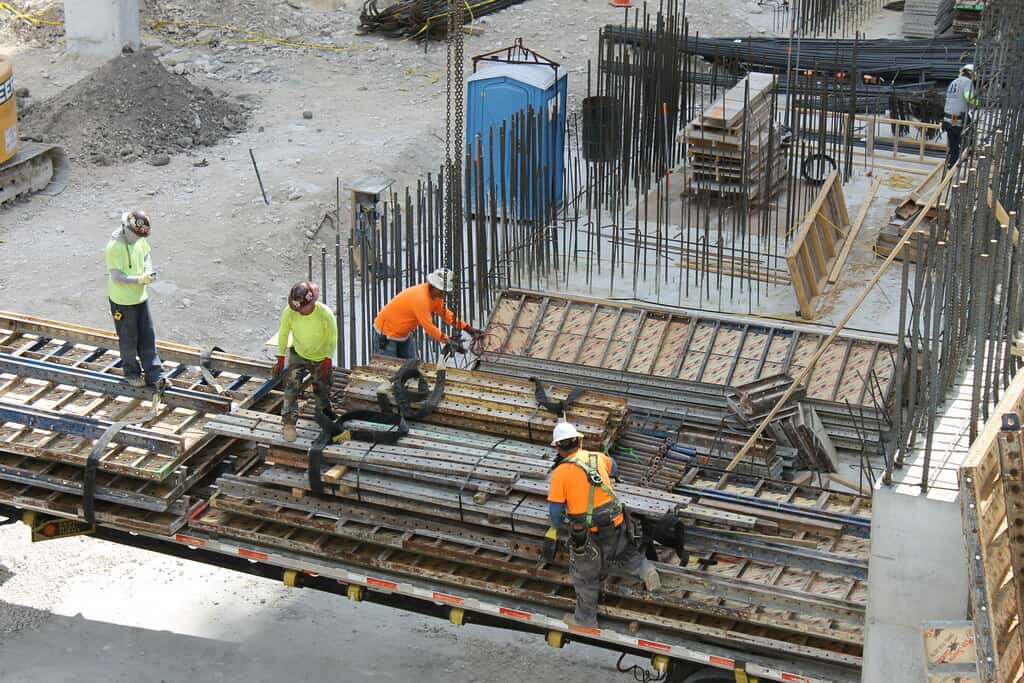
According to the attorney general's office, the alleged scheme used multiple shell construction corporations that obtained minimal workers' compensation insurance coverage by substantially underreporting payroll to insurers. The shell companies then allegedly rented their certificates of insurance to subcontractors for a fee, allowing those subcontractors to appear covered when they were not.
Certificates of insurance are the weak link precisely because they are informational documents rather than legal instruments. A certificate is issued by an agent to confirm that a policy exists as of the date shown. It does not itself create coverage, it does not guarantee the policy remains in force, and it does not reveal what payroll the policy was priced on. A general contractor holding a valid-looking certificate may have no actual protection, and often does not learn that until a claim is filed.
How the alleged scheme worked
Workers' compensation insurance in Florida is priced on payroll. An employer reports its payroll and its classification codes, and the insurer prices coverage based on the risk of the work and the number of dollars in wages exposed to that risk. Construction classifications carry among the highest rates because construction work carries among the highest injury rates.
The alleged mechanism here inverts that. A shell corporation obtains a policy by reporting a small payroll, generating a legitimate-looking certificate of insurance at a low premium. The certificate is then allegedly rented to subcontractors whose actual workers are not covered by it. General contractors, who are required to verify that subcontractors carry coverage, see a valid certificate and clear the crew to work.
The unlicensed money service element allegedly handles the cash. Payroll for uninsured workers has to be paid somehow, and doing it outside the reported payroll requires converting checks into cash. Operating a money transmission or check cashing business without a Florida license is itself a felony, separate from the insurance fraud.
The workers most exposed to these arrangements are frequently those least positioned to question them. Day laborers, recent immigrants, and workers paid in cash often have limited ability to verify their employer's coverage or to press a claim if injured, and language barriers compound the problem. Florida law protects injured workers' entitlement to compensation regardless of immigration status, but exercising that right requires knowing it exists and having the means to pursue it.
Who bears the cost
The most direct victims in schemes like this are the workers. A construction worker injured on a job covered by a rented certificate discovers, at the moment of injury, that there is no policy that actually covers them. Medical bills and lost wages that workers' compensation exists to cover fall on the worker, on their family, and on hospital charity care.
The second set of victims is the insurance market. Premiums are calculated on aggregate loss experience across a risk pool. When employers systematically underreport payroll, the pool collects less premium than the risk warrants, and the shortfall is spread across employers who report honestly. Legitimate contractors pay more so that fraudulent ones can pay less.
The third set is legitimate contractors competing for bids. A contractor carrying real coverage on a real payroll cannot bid against one paying a fraction of that cost. Fraud of this kind does not just steal from insurers; it distorts who wins work.
Post-hurricane rebuilding intensifies the pressure. After a major storm, demand for roofing, framing, and general contracting spikes far beyond the local workforce's capacity, drawing crews from out of state and creating conditions where verification is cursory and work proceeds quickly. Florida has cycled through that surge repeatedly over the past decade, and enforcement agencies have consistently identified post-disaster periods as elevated-risk windows for both fraud and unlicensed contracting.
Why Florida construction is a target
Florida's construction sector is large, fast-moving, and heavily reliant on subcontracting. The state has been among the national leaders in residential and commercial construction volume for years, driven by population growth and by post-hurricane rebuilding.
Layered subcontracting is standard practice. A general contractor hires subs, who hire their own subs, who bring crews. Each layer creates a verification point, and each verification point relies on a piece of paper: the certificate of insurance. That paper-based verification is the vulnerability the alleged scheme exploits.
The Division of Investigative and Forensic Services within the Department of Financial Services investigates workers' compensation fraud in Florida, and the Attorney General's office prosecutes cases of this scale. The state has brought a series of similar cases in recent years, generally centered on South Florida construction.
Florida's Office of Statewide Prosecution was created to handle exactly this category of case. Ordinary criminal prosecution in Florida runs through 20 elected State Attorneys, each with jurisdiction limited to their judicial circuit. A scheme operating across Palm Beach, St. Lucie, Martin, and other counties would otherwise require coordination among several offices, and the statewide prosecutor exists to bring a single case where the conduct crosses those boundaries.
The Attorney General's recent caseload
The workers' compensation case is one of several fraud actions Uthmeier's office has announced this month. The office also charged six people in what it described as a sophisticated organized retail theft and racketeering operation, and announced the resolution of a separate racketeering case involving a Georgia woman accused of a retail fraud scheme that defrauded a national retailer of more than $50,000 in Florida and up to $300,000 overall.
Uthmeier's office has also been prominent in non-fraud matters, including announcing the Aug. 18 arrest of the Palm Beach County clerk of court on child sexual abuse charges, an investigation conducted with substantial assistance from the Florida Department of Law Enforcement.
Florida's attorney general holds statewide prosecutorial authority through the Office of Statewide Prosecution for offenses that cross judicial circuit boundaries, which is why multi-county schemes of this kind land there rather than with a single State Attorney.
Restitution in white-collar cases is frequently the outcome that matters most and the one hardest to achieve. Defendants who have spent or moved proceeds may have little recoverable. Forfeiture provisions allow the state to pursue traceable assets, but tracing through shell corporations and cash-intensive operations is difficult and expensive. Victims in fraud cases commonly receive a fraction of documented losses even after a conviction.
What the charges are
Cases structured around shell corporations and multiple participants are typically charged under Florida's Racketeer Influenced and Corrupt Organization Act, the state analogue to federal RICO, along with the substantive underlying offenses: workers' compensation fraud, insurance fraud, grand theft, and money laundering or unlicensed money transmission.
RICO charges in Florida are first-degree felonies carrying a maximum of 30 years. They also carry forfeiture provisions that allow the state to pursue proceeds and property connected to the enterprise, which is often where the practical consequences fall in white-collar prosecutions.
Prosecutors describe the nearly $100 million figure as the amount processed through the operation, which is not the same as the loss to any single victim. The eventual restitution calculation in a case like this is typically litigated at length.
Homeowners hiring for post-storm repairs should be particularly careful. Florida law regulates contracting and requires licensure for most construction work, and unlicensed contracting is itself a criminal offense that escalates in severity during a declared state of emergency. Verifying a license through the Department of Business and Professional Regulation takes a few minutes online and is the single most effective protective step available to a property owner.
What Floridians should take from it
Homeowners hiring contractors have a practical stake in this. Florida law makes a property owner potentially liable in certain circumstances when an uninsured worker is injured on their property, which is why verifying coverage is not just a formality.
The state maintains public verification tools. The Division of Workers' Compensation operates a proof of coverage database where a homeowner or general contractor can look up whether a specific employer has an active policy, rather than relying on a certificate handed over by the contractor. Contractor licenses can be verified through the Department of Business and Professional Regulation.
Workers who suspect they are not actually covered can contact the Department of Financial Services, which handles both fraud reporting and worker assistance on compensation claims.
The Division of Workers' Compensation also conducts field enforcement, with investigators visiting job sites to verify coverage and issuing stop-work orders where employers are found operating without it. Those orders halt work until the employer comes into compliance and pays penalties, and the division publishes enforcement data showing the volume of orders issued across the state each year.
What's next
The defendants will proceed through arraignment and the ordinary course of a Florida felony prosecution. Cases involving corporate records, financial transactions, and multiple defendants generally involve extensive discovery and can take well over a year to reach resolution.
Separate civil and regulatory consequences may follow. Insurers can pursue civil recovery, and the Department of Financial Services can take administrative action against licenses.
Anyone with information about workers' compensation fraud can report it to the Florida Department of Financial Services fraud hotline. Reports can be made anonymously.
Florida requires workers' compensation coverage for construction businesses with one or more employees, a stricter threshold than the four-employee requirement that applies in most other industries, precisely because of the injury rate in the trade. Corporate officers in construction may exempt themselves from coverage under limited circumstances, and misuse of those exemptions has been a recurring pattern in enforcement cases. The exemption registry is public and searchable, which allows a contractor or homeowner to check whether the person on their job site is actually covered or has opted out.
Spotted an issue with this article?
Have something to say about this story?
Write a letter to the editorComments
No comments yet. Be the first to weigh in.
Related Coverage

Jacksonville officer charged with domestic battery, ninth JSO employee arrest of 2026
21h ago

Florida sets double execution for Oct. 13
23h ago
Brandon bank robbery: career offender charged after deputies say he confessed
1d ago

Two Former Pinellas Deputies Arrested, Accused of Using Flock and State Databases to Track a Teen Girl and a Woman
1d ago