Space Force Training Command Builds Out Its Headquarters on the Space Coast
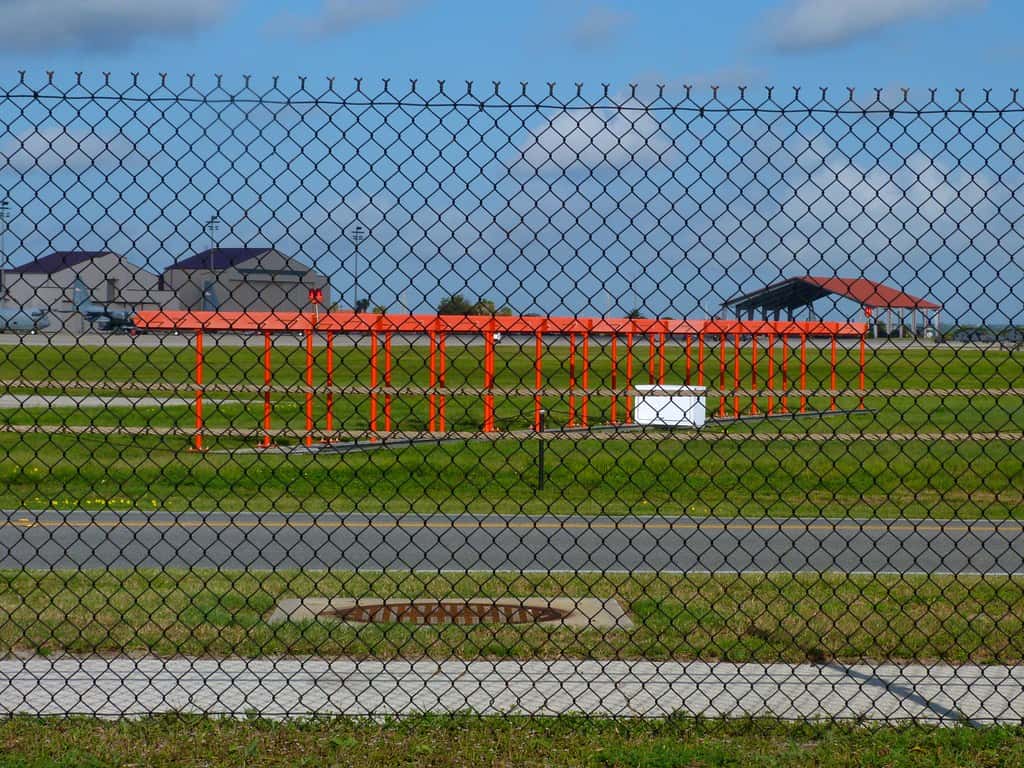
The U.S. Space Force's Space Training and Readiness Command is continuing a civilian hiring surge of more than 400 positions across the country while consolidating operations at its headquarters at Patrick Space Force Base in Brevard County. The command opened a $28 million headquarters annex at Patrick on March 10, 2026, providing workspace for more than 210 personnel and additional capacity to support continued hiring and the relocation of personnel from Colorado.
For Florida's Space Coast, the buildout represents the kind of federal employment base that stabilizes a regional economy historically tied to launch cadence. Launch activity is volatile and contract-dependent. Permanent military command headquarters staffing is not, and the difference matters for Brevard County, which has lived through the boom and bust cycles of the Apollo program, the Shuttle era and the gap that followed.
The command's selection of the Space Coast for its headquarters was the product of a sustained campaign by Florida's congressional delegation, and the current buildout is the delivery phase of a decision made several years ago.
What STARCOM does
Space Training and Readiness Command is the Space Force organization responsible for training guardians, developing doctrine, running test and evaluation, and conducting wargaming. In the structure of the service, it occupies roughly the role that Air Education and Training Command occupies in the Air Force.
That mission requires a workforce heavy in specialized civilian expertise rather than only uniformed personnel. The hiring surge reflects it. Available positions span cybersecurity, data science, intelligence analysis, modeling, simulation and wargaming, and acquisition and program management.
Those are portable, high-skill roles that compete with private sector employers. Building that workforce in Brevard County rather than in Colorado puts the Space Force in direct competition with the commercial space companies operating on the Space Coast, which is both a recruiting challenge and a sign of how deep the local talent pool has become.
The Colorado-to-Florida shift
Space Force organizations have historically been concentrated in Colorado, around Schriever, Peterson and Buckley installations. The decision to place STARCOM's headquarters at Patrick represented a meaningful redistribution, and the annex explicitly supports the relocation of personnel from Colorado.
Relocations of this kind are slower and more complicated than announcements suggest. Civilian federal employees are not required to move with a relocating organization, and a substantial fraction typically decline, which means the receiving location has to hire replacements rather than simply receive transfers.
That dynamic is part of why the hiring surge and the facility buildout are happening together. The command needs both the seats and the people, and it needs them on a timeline set by the Space Force's broader expansion.
What it means for Brevard County
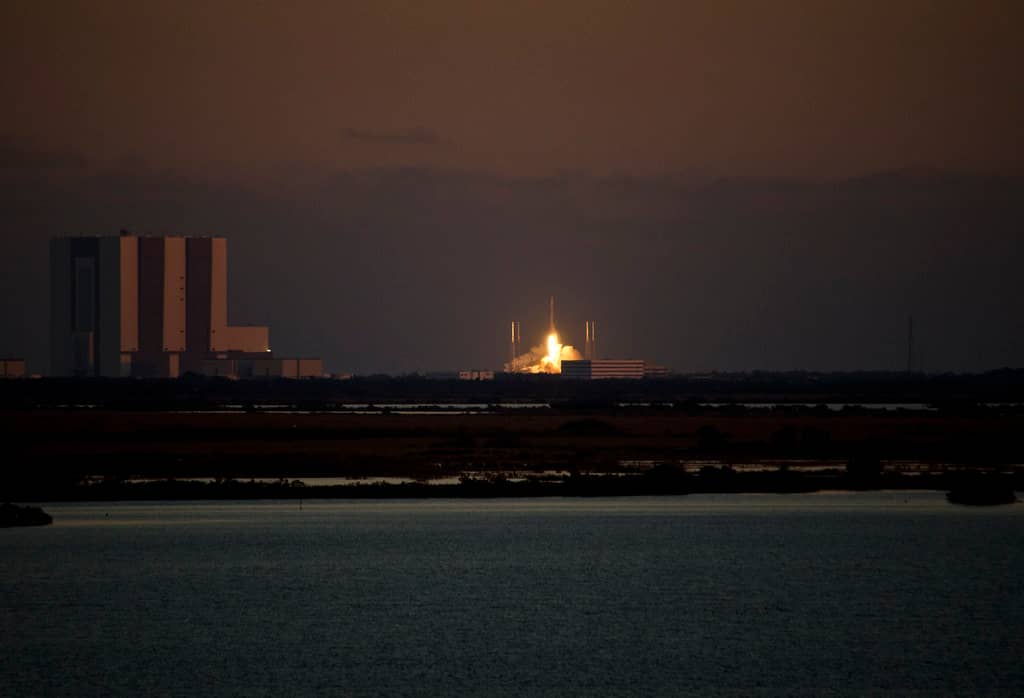
Brevard County's economy has been transformed over the past decade by commercial launch activity. SpaceX operates from both Kennedy Space Center's Launch Complex 39A and Cape Canaveral Space Force Station's Space Launch Complex 40, United Launch Alliance and Blue Origin maintain operations, and launch cadence from the Cape has reached levels without historical precedent.
That growth has pushed housing costs up sharply in a county that was affordable a decade ago, and it has strained infrastructure. Brevard County commissioners have been weighing a local gas tax increase to fund road work, though they recently delayed consideration, citing reluctance to raise fuel costs.
Adding several hundred federal civilian positions accelerates both the benefit and the strain. Federal salaries in the specialties STARCOM is hiring are competitive, which supports local spending and the tax base, while adding to housing demand in a market already tight.
Local governments are adjusting elsewhere too. Palm Bay's city council has been considering transferring its 911 dispatch operations to the Brevard County Sheriff's Office, with supporters projecting savings of $1 million to $2 million a year, the kind of consolidation municipalities pursue when growth outpaces revenue.
Florida's military footprint
Patrick Space Force Base is one node in an unusually large military presence. Florida hosts MacDill Air Force Base in Tampa, home to U.S. Central Command and U.S. Special Operations Command. It hosts Eglin and Tyndall Air Force Bases in the Panhandle, Naval Air Station Pensacola, Naval Station Mayport and NAS Jacksonville in the northeast, and Homestead Air Reserve Base in South Florida.
Defense spending is accordingly one of the larger inputs into Florida's economy, and the state's congressional delegation has been consistently effective at protecting and expanding it. The STARCOM headquarters decision, which Senator Rick Scott and members of the House delegation publicly pushed for, is a recent example.
Military installations also create a workforce pipeline. Service members who separate in Florida frequently stay, and the cleared, technically trained population around the Space Coast is one reason commercial space companies concentrated there.
The commercial and military overlap
The Space Coast is unusual in hosting military space operations and commercial launch activity in the same footprint. Cape Canaveral Space Force Station is a military installation from which commercial companies launch under agreements with the Space Force, and range operations serve both.
That overlap creates coordination demands. Launch cadence has increased to a point where range scheduling is a genuine constraint, and the Space Force has invested in range modernization to increase throughput.
It also creates competition for people. A cybersecurity or data science professional in Brevard County can work for the Space Force, for a defense contractor, or for a commercial launch company, and the salary and equity structures differ substantially. The hiring surge's success depends on how that competition resolves.
How to apply
STARCOM has directed applicants to its careers page, and positions are posted through the federal USAJOBS system. The command held a career fair at the Tides Club at Patrick Space Force Base in April as part of the surge, and openings span multiple locations including Patrick, Schriever Space Force Base in Colorado and Joint Base Andrews in Maryland.
Federal hiring timelines are long, frequently several months from application to start date, and most positions in these specialties require security clearances. Applicants without existing clearances face additional processing time.
For Florida residents, the Patrick positions are the relevant ones, and they represent the largest concentration of new federal technical hiring in the region.
Why the Space Force needed a training command
The Space Force was established in 2019 as the first new branch of the U.S. armed forces in more than seven decades, assembled largely from Air Force space organizations. Standing up a service requires building institutions the parent service already had, including a command responsible for training and doctrine.
STARCOM fills that role. Its deltas handle training, range and aggressor operations, doctrine and wargaming, and test and evaluation, functions that in a mature service accumulate over generations and that the Space Force has had to construct within a few years.
The service is small by military standards, with a total force numbering in the thousands rather than the hundreds of thousands, which makes each organization proportionally more significant and each hiring decision more consequential.
Its mission set has also expanded. Satellite communications, missile warning, position navigation and timing, and space domain awareness are all functions on which the rest of the military depends entirely, and the training pipeline supporting them is what STARCOM exists to build.
The Space Coast as a national asset
Florida's Space Coast now hosts military space operations, NASA's primary launch complex, and the highest concentration of commercial launch activity in the world within a stretch of coastline roughly 30 miles long.
That concentration is partly geographic. Launching eastward over the Atlantic from a latitude closer to the equator than most of the continental United States provides a velocity advantage and an uninhabited downrange corridor, which is why the site was selected in the first place.
It is also institutional. Decades of accumulated infrastructure, workforce and regulatory familiarity make the Space Coast difficult to replicate, and each new organization that locates there reinforces the advantage.
The corresponding risk is concentration itself. A region whose economy depends on a single sector, however healthy, is exposed to that sector's cycles, and Brevard County has experienced that exposure before during the gap between the Shuttle program's retirement and the commercial launch era.
What federal hiring means for a local economy
Federal civilian positions differ from private sector jobs in ways that matter to a regional economy. They are relatively stable through business cycles, they carry defined benefits and federal retirement, and they anchor households that are less likely to relocate when a single employer contracts.
They also pay on a published scale adjusted by locality, which means compensation is transparent and not subject to negotiation in the way private offers are. For the specialties STARCOM is recruiting, federal pay can lag private sector compensation, which is the central recruiting challenge.
The offsetting attractions are mission, stability and the ability to work on systems that have no commercial equivalent. Those arguments work best with candidates who already hold clearances or have military backgrounds, which describes a substantial share of the Brevard County labor pool.
For the county, several hundred stable federal households represent property tax base, school enrollment and retail demand that persists through downturns, which is exactly the kind of diversification a launch-dependent economy benefits from.
What's next
The hiring surge continues, and the headquarters annex provides capacity for the personnel it produces. Watch for whether the Space Force expands the Patrick footprint further, which would follow if the current buildout fills and the service continues growing.
Watch also Brevard County's infrastructure decisions. Growth driven by commercial space and federal expansion has outpaced the county's road, school and housing capacity, and the funding mechanisms under discussion, including the delayed gas tax, are how local government responds.
The broader question for Florida is whether the Space Coast's concentration of military space, civil space and commercial space activity becomes self-reinforcing. Each additional organization makes the region more attractive to the next, and the STARCOM headquarters is a substantial addition to that case.
Spotted an issue with this article?
Have something to say about this story?
Write a letter to the editor