SpaceX Booster Sets Reuse Record With 36th Flight From Cape Canaveral
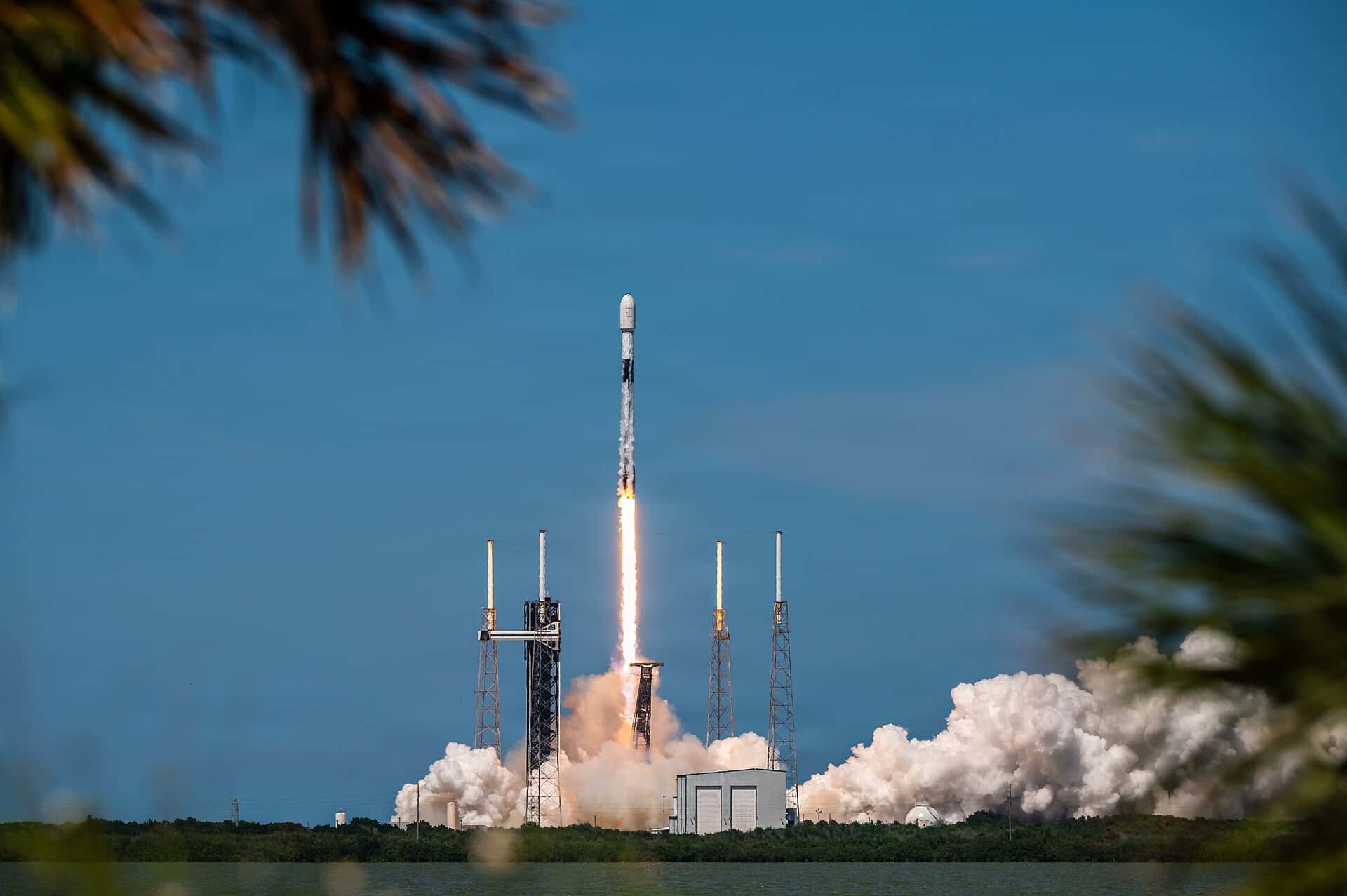
A SpaceX Falcon 9 rocket lifted off from Florida's Space Coast on a mission that set a new record for booster reuse, marking the 36th flight of a single first-stage booster. The predawn launch from Cape Canaveral carried a batch of Starlink internet satellites toward orbit and, after separating from the upper stage, the booster returned to land on a droneship stationed in the Atlantic Ocean. The milestone underscores the reusability that has transformed the economics of spaceflight and that keeps Florida's Space Coast among the busiest launch sites in the world.
A record-setting flight
The mission represented the most times a Falcon 9 first stage has flown, extending a record that SpaceX has repeatedly broken as it pushes the limits of how many times a booster can be reused. The particular booster involved had supported a wide range of prior missions over its career, including crewed flights to the International Space Station, cargo resupply missions, and numerous satellite launches. Its 36th flight demonstrated the durability engineered into the vehicle and the company's confidence in flying hardware far beyond what was once thought possible.
The launch carried a load of Starlink satellites, part of the company's ongoing effort to expand its constellation of internet-providing spacecraft in low Earth orbit. Such Starlink missions have become routine, forming the backbone of SpaceX's high launch cadence. After completing its job of boosting the payload toward orbit, the first stage executed the now-familiar maneuver of returning to Earth and landing on an ocean-based platform, preserving the hardware for potential future flights.
Reaching a 36th flight is the product of an incremental process rather than a single leap. Each time a booster returns, teams inspect it, replace components that show wear, and clear it for another mission only after it meets the standards required to fly again. That the same vehicle could carry crews on some missions and satellites on others reflects the versatility built into the design, and the fact that it kept returning safely made the extended reuse possible. The record represents the accumulation of many careful flights rather than a sudden change in approach.
The predawn timing of the launch was dictated by the requirements of placing the satellites into their intended orbit, a common consideration for missions that must reach a precise position in space. For observers on the ground, an early-morning launch produced the familiar spectacle of a bright plume climbing above the coast, followed by the booster's controlled descent to the waiting droneship far offshore. The routine nature of the recovery, once a novel and uncertain feat, now underscores how thoroughly the practice has been mastered.
Why reusability matters
The reuse of rocket boosters is the innovation that has reshaped the modern space industry. Traditionally, rockets were expendable, discarded after a single use at enormous cost. By recovering and reflying boosters, SpaceX has dramatically lowered the cost of reaching orbit, enabling a launch frequency that would have been unthinkable in the era of single-use rockets. Each additional flight of a booster spreads its manufacturing cost across more missions, improving the economics further.
Setting a new reuse record is more than a symbolic achievement. It validates the engineering approach that underpins the company's business model and its broader ambitions, and it demonstrates that the hardware can be refurbished and reflown reliably. The ability to fly a single booster dozens of times has practical consequences for the entire industry, influencing how competitors approach their own vehicles and how customers think about the cost and availability of access to space.
Lower launch costs also change what kinds of missions are feasible. When placing hardware in orbit was extraordinarily expensive, only governments and the largest companies could afford it, and satellites were built to be few in number and long-lasting. Cheaper and more frequent access allows for constellations made up of many smaller spacecraft, along with more experimentation, since the penalty for any single failure is reduced. That shift has opened space to a broader range of users and applications than the industry once served.
Reusability has consequences that reach beyond price alone. A booster that can be inspected, refurbished, and flown again provides engineers with a growing body of real-world data on how the hardware performs across many flights, information that expendable rockets could never yield. That accumulated knowledge feeds back into design and operations, allowing further refinements and building the confidence needed to extend reuse even further. In that sense, each record flight is both a result of past learning and a source of new insight.
The Space Coast connection
Florida's Space Coast, centered on Cape Canaveral and the Kennedy Space Center, is the beating heart of this launch activity. The region has a storied history in American spaceflight, from the early days of the space program through the shuttle era and into the current commercial boom. Today, it hosts a high volume of launches, driven largely by SpaceX's frequent missions but also including other companies and government efforts. The steady cadence of launches has revitalized the region.
The economic impact on Florida is substantial. The space industry supports thousands of jobs across engineering, manufacturing, operations, and the supporting businesses that serve the launch ecosystem. Launches also draw spectators and tourists, adding to the region's appeal and economy. The Space Coast's resurgence as a hub of activity has been one of the notable Florida economic stories of the era, and record-setting missions reinforce its central role.
Geography helps explain why so much of this activity concentrates in Florida. Launching from a site near the coast allows rockets to fly out over open water, reducing risk to populated areas, and the state's location offers advantages for reaching the orbits that many missions require. The existing infrastructure, built up over decades of government spaceflight, provided a foundation that commercial operators could expand upon rather than having to create from scratch. Those enduring advantages continue to draw launch activity to the region.
The benefits extend into communities well beyond the launch pads themselves. A workforce that designs, builds, and operates rockets requires housing, schools, and services, and the businesses that supply the industry create additional employment. As launches have grown more frequent, the region has increasingly tied its identity and its prospects to the sector, a dependence that brings both opportunity and the ordinary risks of relying heavily on a single industry.
A relentless launch pace
The record reuse flight is emblematic of the relentless pace of launches from Florida. The frequency with which rockets now leave the Space Coast has climbed to levels that make launches an almost routine occurrence, a remarkable shift from earlier eras when each mission was a rare and momentous event. That cadence reflects the maturation of commercial spaceflight and the dominant position that reusable rockets have established.
Maintaining such a pace requires extensive infrastructure, skilled personnel, and careful coordination among the companies, the Space Force, and federal aviation authorities that manage the airspace and ranges. The Space Coast has scaled up to accommodate the demand, and the region continues to invest in the facilities and workforce needed to sustain and grow its launch activity. Each record and each additional launch adds to the momentum.
The high tempo brings coordination challenges alongside its rewards. Each launch requires temporary restrictions on the surrounding airspace and nearby waters, and fitting many missions into the schedule demands careful sequencing so that operations do not interfere with one another. Recovering boosters at sea and returning them to port for refurbishment adds another layer of logistics that must be managed reliably to keep the cadence high. Sustaining the pace is therefore as much an operational accomplishment as an engineering one.
The broader space economy
The launch that set the reuse record is part of a much larger transformation in how humanity accesses and uses space. The proliferation of satellite constellations for internet, communications, and observation, along with growing interest in exploration and eventual missions beyond Earth orbit, has created sustained demand for launch services. Reusable rockets have made meeting that demand economically feasible, fueling a virtuous cycle of more launches and further cost reductions.
Florida sits at the center of this expanding economy, benefiting from its geography, infrastructure, and history. The state has actively courted the space industry, recognizing its potential for high-value jobs and long-term economic growth. As the industry continues to evolve, with new vehicles, new companies, and new missions on the horizon, Florida's Space Coast is positioned to remain a critical hub, and milestones like a 36th booster flight highlight its ongoing importance.
The expanding use of space also raises questions that come with rapid growth. As more spacecraft fill low Earth orbit, managing traffic and the debris left behind by past missions becomes a growing concern for operators and regulators alike. The same reduction in cost that has enabled the boom also intensifies the pressure to address these issues, since a busier orbital environment carries greater risk. How the industry and its overseers respond will shape whether the current pace of growth can be sustained.
What comes next
SpaceX shows no signs of slowing its cadence, and boosters are likely to continue flying even more times as the company probes the limits of reusability. Each new record raises the question of how many flights a single booster can ultimately achieve, a question the company answers empirically with each mission. The trajectory points toward ever-greater reuse and an ever-higher launch pace from Florida.
For residents of the Space Coast and for Floridians more broadly, the frequent launches have become part of the rhythm of life, a visible reminder of the state's central role in the new space age. The record 36th flight of a Falcon 9 booster is another marker in that ongoing story, illustrating how reusability has changed spaceflight and how Florida continues to benefit from its place at the forefront of the industry. The next launch, and the next record, are never far off.
Spotted an issue with this article?
Have something to say about this story?
Write us a letterComments
No comments yet. Be the first to weigh in.
Related Coverage

Isaias Shuts Pensacola and Okaloosa Airports as Airlines Waive Fees and Tolls Lift on Panhandle Bridges
4h ago

Ex-CIA official pleads guilty in $194 million fraud, will forfeit $102 million in Palm Beach and Hobe Sound real estate
5h ago

11th Circuit voids septic permit ban in Indian River Lagoon manatee case after federal 'harm' rule rollback
5h ago

Trump ties disaster aid to midterm campaign as Hurricane Isaias nears Florida Panhandle
1d ago