SpaceX Clears Another Starlink Launch From Cape Canaveral After a Scrub
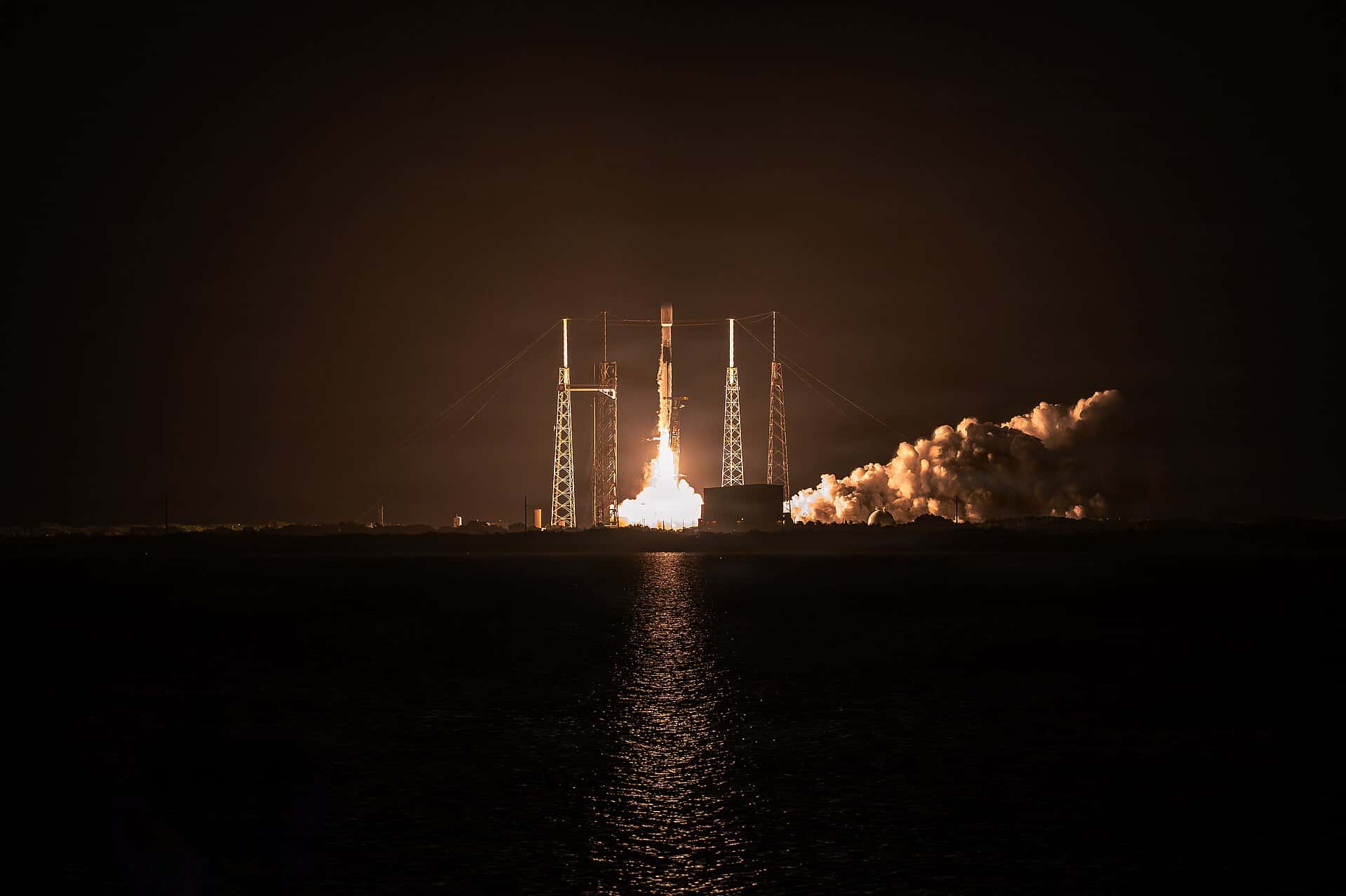
A SpaceX Falcon 9 rocket lifted off from Space Launch Complex 40 at Cape Canaveral Space Force Station on Friday, August 21, carrying 29 Starlink satellites to orbit after a last-minute scrub the previous day. The flight was designated Starlink 10-39 and continued a launch cadence from Florida's Space Coast that has no historical precedent.
The company had already logged its 75th Starlink mission of 2026 by the time of the flight, part of a year in which the Cape has functioned as the busiest orbital launch site in the world by a substantial margin.
The cadence and what makes it possible
The operational tempo on the Space Coast in 2026 has been extraordinary. On August 15, SpaceX launched back-to-back Falcon 9 missions for Globalstar and the U.S. Space Force, compressing the interval between launches to a record 38.5 minutes. The first of those flights left Cape Canaveral Space Force Station at 9:12 p.m. Eastern.
Achieving that requires infrastructure and process rather than any single technology. Booster reuse eliminates the manufacturing lead time that historically governed launch rate. Autonomous flight termination systems reduce the range assets required for each flight. Streamlined range scheduling between the Space Force, the FAA and the operators allows tighter sequencing.
The scrub and recovery pattern is itself part of the operational model. A last-minute hold on a Thursday attempt followed by a successful Friday launch reflects a system where launch opportunities are frequent enough that scrubbing carries low cost, which in turn allows conservative go and no-go decisions.
What Starlink is building
Starlink is a low Earth orbit satellite constellation providing broadband internet service. Its architecture differs fundamentally from the geostationary satellite internet that preceded it. Satellites orbiting a few hundred miles above the surface produce far lower signal latency than satellites at geostationary altitude roughly 22,000 miles up, which makes real-time applications workable.
The tradeoff is satellite count. Low orbit means each satellite covers a small area and passes overhead quickly, so continuous coverage requires thousands of them in a constantly replenished constellation. That is why the launch cadence is structurally high and why it will remain so.
The service has practical Florida applications that go beyond rural connectivity. Satellite internet has been deployed in hurricane recovery when terrestrial networks fail, and Florida emergency management operations have an obvious interest in communications infrastructure that does not depend on ground-based towers and fiber that storms destroy.
What it means for the Space Coast
Brevard County's economy has been transformed by the launch cadence. The aerospace workforce supporting launch operations, payload processing, range services and the supply chain around them has grown substantially, and those positions pay well above the Florida median wage.
The population and housing effects follow. Brevard County has absorbed in-migration tied to the industry, and the local housing market reflects it. The county's economy now combines aerospace, cruise operations at Port Canaveral, defense installations at Patrick Space Force Base and traditional beach tourism, a diversification few Florida coastal counties match.
Launch viewing has itself become a tourism product. Titusville, Cocoa Beach and the surrounding communities see visitation tied to launch schedules, and the frequency of launches has turned what was once an occasional event into a recurring draw.
Port Canaveral, adjacent to the launch complexes, is in the middle of a $93 million parking garage project at Cruise Terminal 6, topped off on August 19 and scheduled to open in fall 2026.
The federal and regulatory picture
Launch activity at the Cape operates under a layered federal framework. The Space Force operates the Eastern Range and manages range safety. The FAA licenses commercial launches and manages the airspace and, increasingly, the reentry corridors that returning boosters and capsules use.
The volume of activity has strained that framework in ways that generate real policy questions. Airspace closures for launches affect commercial aviation routing over Florida, and the frequency of closures at current cadence has become a coordination issue between launch operators and air traffic management.
Environmental review requirements also apply to launch site modifications and cadence increases, and those processes have become a gating factor for expansion at both Cape Canaveral Space Force Station and Kennedy Space Center.
Local impact across the state
The aerospace footprint extends beyond Brevard County. Embry-Riddle Aeronautical University in Daytona Beach trains a substantial share of the workforce. Central Florida's simulation and training cluster around Orlando supports the defense and aerospace sectors. Suppliers and manufacturers are distributed across the state.
Space Florida, the state's aerospace economic development authority, works to attract and retain launch and aerospace operations, and Florida's competitive position against launch sites in Texas, California and elsewhere depends substantially on infrastructure investment and regulatory environment.
The state's broader technology sector benefits from proximity to the launch industry, and the workforce pipeline runs through Florida's public universities and technical colleges.
What it means for Floridians
For residents of the Space Coast, the launch cadence is now a routine feature of daily life, with sonic booms from returning boosters and nighttime launch illumination visible across a wide portion of the peninsula.
For Florida households in areas with limited broadband options, satellite internet represents a genuine service alternative, particularly in rural counties where terrestrial buildout has lagged.
For the state economy, aerospace represents the diversification away from tourism and construction dependence that Florida officials across multiple administrations have pursued, and it is arguably the sector where that effort has produced the clearest results.
How booster recovery works
The reusability that enables the current cadence depends on recovering and reflying first stage boosters, and the operation has become routine enough that it draws little attention despite being the central technical achievement.
After stage separation, the first stage performs a series of engine burns to reorient, decelerate and guide itself to a landing target, either a ground pad at Cape Canaveral or an autonomous droneship positioned offshore in the Atlantic. Grid fins provide aerodynamic control during descent, and landing legs deploy in the final seconds.
Ground landings produce the sonic booms that residents across a wide portion of Central Florida hear, typically a double crack as the vehicle decelerates through the sound barrier on approach. Droneship landings occur far enough offshore that the booms do not reach land.
Recovered boosters return to port, undergo inspection and refurbishment, and fly again. Individual boosters have accumulated substantial flight counts, and the refurbishment interval has compressed as operational experience has accumulated.
Fairing recovery operates on a parallel track, with the payload fairing halves descending under parachute for retrieval from the ocean surface.
The other operators at the Cape
SpaceX dominates the launch manifest by count, but the Space Coast supports multiple operators, and the diversity matters for the regional economy and for national launch capability.
United Launch Alliance, a joint venture between Boeing and Lockheed Martin, operates from Cape Canaveral Space Force Station and has historically flown national security and NASA missions.
Blue Origin has developed launch capability at the Cape, adding another operator to the manifest and another set of facilities and workforce to the region.
NASA's own operations at Kennedy Space Center span launch, payload processing and the ground infrastructure supporting crewed missions. Launch Complex 39A and 39B, built for the Apollo program and adapted repeatedly since, remain in use.
The Space Force operates the Eastern Range, providing tracking, safety and scheduling services that all operators depend on. Range capacity is a shared resource, and the current launch rate has required modernization of range systems that were designed for a far lower tempo.
What the cadence means for the region's future
Sustained high launch rates create both opportunity and constraint for Brevard County and the surrounding region.
The opportunity is economic. Aerospace employment pays well above the regional median, and the workforce pipeline running through Florida's universities and technical colleges feeds into it. Suppliers, contractors and service providers have clustered around the launch complexes.
The constraints are physical and regulatory. Launch complexes require exclusion zones. Road closures during launch operations affect regional traffic. Airspace closures affect commercial aviation routing over one of the busiest air corridors in the country, and the frequency of those closures has become a coordination question between launch operators and air traffic management.
Environmental review governs facility modifications and cadence increases, covering noise, water quality, wildlife impacts and the effects on the protected habitats adjacent to the launch complexes, including Merritt Island National Wildlife Refuge and Canaveral National Seashore.
Housing and infrastructure capacity in Brevard County has had to grow with the workforce, and local government planning has had to account for population growth driven by an industry that did not exist at this scale a decade ago.
How to watch a Florida launch
Launch viewing has become a routine Florida activity, and a few practical points improve the experience.
Schedules shift constantly on weather and technical holds, so confirming the launch time within a few hours of the window is essential. Published schedules are frequently outdated by hours or days.
Viewing locations along the Brevard County coast, including Titusville, Cocoa Beach, Playalinda Beach and Jetty Park, offer varying vantage points. Kennedy Space Center Visitor Complex sells viewing packages for some launches.
Traffic on the State Road 528 and State Road 405 corridors becomes heavy before high-profile launches, and parking near popular viewing areas fills well in advance.
Night launches are visible from a substantial portion of the peninsula, well beyond Brevard County, and the plume illumination after sunset can be seen across Central Florida and into South Florida under clear conditions.
Booster landings at the ground pads produce sonic booms audible across a wide area several minutes after liftoff.
What's next
SpaceX maintains a launch schedule from both Cape Canaveral Space Force Station and Kennedy Space Center's Launch Complex 39A, with additional operators including United Launch Alliance and Blue Origin also flying from the Space Coast.
The published launch schedule is the practical reference for anyone planning to view a launch, and schedules shift frequently on weather and technical holds.
Hurricane season introduces the annual operational constraint. Launch operations pause during storm approaches, and vehicles and payloads are secured in processing facilities until the threat passes.
Spotted an issue with this article?
Have something to say about this story?
Write us a letterComments
No comments yet. Be the first to weigh in.
Related Coverage

Isaias Shuts Pensacola and Okaloosa Airports as Airlines Waive Fees and Tolls Lift on Panhandle Bridges
1h ago

Ex-CIA official pleads guilty in $194 million fraud, will forfeit $102 million in Palm Beach and Hobe Sound real estate
2h ago
11th Circuit voids septic permit ban in Indian River Lagoon manatee case after federal 'harm' rule rollback
2h ago

Trump ties disaster aid to midterm campaign as Hurricane Isaias nears Florida Panhandle
21h ago