Record Launch Cadence Reshapes Brevard County's Economy on the Space Coast
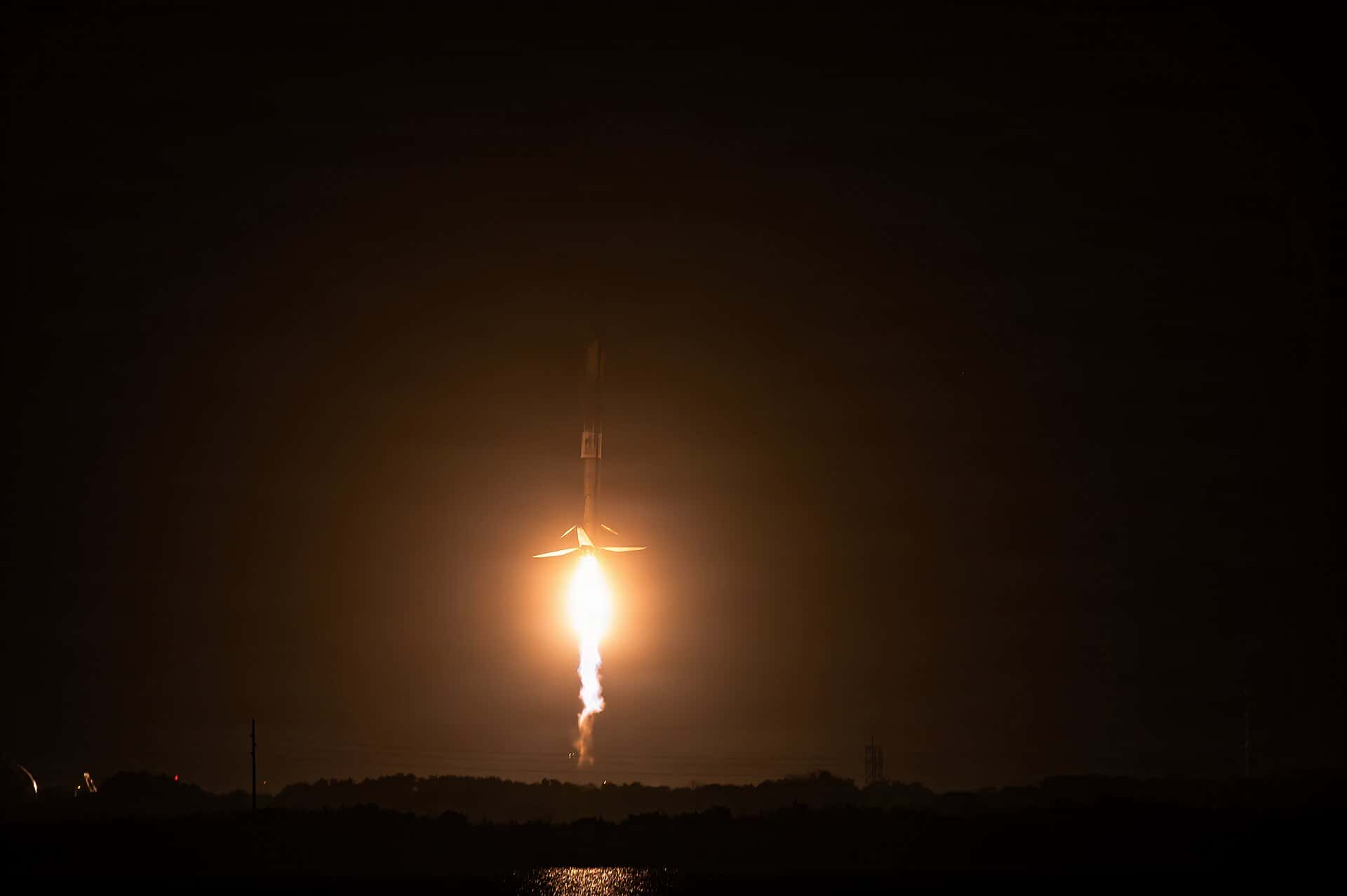
SpaceX launched two Falcon 9 rockets from Cape Canaveral Space Force Station within 38.5 minutes of each other this month, a record turnaround between missions that illustrates how far launch operations on Florida's Space Coast have moved from the era when a single flight was a national event. The first of the pair lifted off at 9:12 p.m. Eastern on August 15 carrying eight satellites for Globalstar as part of that company's low Earth orbit constellation replenishment, followed shortly by a mission for the U.S. Space Force.
The cadence has transformed Brevard County. Launches that once drew crowds now happen weekly or more often, and the county's economy has reorganized around a launch industry that operates on an industrial schedule rather than an exploratory one. Kennedy Space Center, Cape Canaveral Space Force Station and Patrick Space Force Base together anchor an employment base spanning federal civil service, military, contractor and commercial payrolls.
The year also carried a milestone of a different kind. NASA's Artemis II mission launched from Launch Complex 39B at Kennedy Space Center on April 1, sending Commander Reid Wiseman, Pilot Victor Glover and Mission Specialist Christina Koch of NASA, along with Mission Specialist Jeremy Hansen of the Canadian Space Agency, on an approximately ten-day flight around the Moon and back, the first crewed lunar mission in more than fifty years.
What the launch record represents
Turning two orbital launches in under 40 minutes from the same range requires an operational infrastructure that did not exist a decade ago. Range safety, tracking, airspace and maritime clearance, and weather evaluation all have to be executed twice in quick succession, and the Space Force's Eastern Range has invested substantially in automating processes that were previously manual.
Booster reuse is the underlying enabler. Recovering and reflying first stages changed the economics of launch and, just as importantly, changed the tempo, because a reflown booster does not require the manufacturing lead time a new one does. The refurbishment cycle rather than the production line now sets the pace.
Payload demand has grown to match. Satellite constellations in low Earth orbit require large numbers of spacecraft and periodic replacement, and Globalstar's replenishment mission is one example among many of an operator maintaining a constellation rather than launching a single satellite for a decade of service.
National security payloads constitute a growing share of the manifest. The Space Force has moved toward proliferated architectures with many smaller satellites rather than a few large ones, which multiplies launch requirements and has drawn military missions into the same high-cadence pattern as commercial flights.
The Artemis II flight and what follows
Artemis II was the program's first crewed flight, testing the Orion spacecraft's life support systems with people aboard for the first time and validating the systems needed for subsequent missions intended to return astronauts to the lunar surface.
The mission profile took the crew around the Moon and back without entering lunar orbit, a free-return trajectory that provides a test of deep space operations while preserving the ability to return to Earth using the Moon's gravity if systems fail. That profile mirrors the approach used on Apollo 8 and Apollo 13.
Launch Complex 39B, from which Artemis II flew, is the historic pad complex that supported Apollo and later the Space Shuttle program, refurbished for the Space Launch System. Its neighbor, Launch Complex 39A, is leased to SpaceX and supports Falcon and Dragon operations, an arrangement that puts government and commercial programs on adjacent pads.
Subsequent Artemis missions depend on appropriations, on the development of landing systems and on hardware production timelines. NASA program schedules have historically extended beyond initial projections, and the pace of the program is determined in Washington rather than at the Cape.
What it means for Brevard County
Brevard County's economy is more concentrated in a single industry than almost any other Florida county's. Aerospace employment supports engineering, technician, manufacturing, logistics and support roles, and the multiplier effects run through housing, retail, education and health care in Titusville, Cocoa, Merritt Island, Melbourne and Palm Bay.
The county has experienced this concentration as both benefit and vulnerability. The end of the Space Shuttle program in 2011 produced significant job losses and a housing market decline that took years to recover, a period local officials reference when discussing diversification.
The current expansion has been driven substantially by commercial rather than government activity, which changes the risk profile. Commercial demand depends on satellite market economics rather than on congressional appropriations, and those are different sources of volatility rather than an absence of it.
Population growth has followed the jobs. Brevard County has added residents steadily, and housing supply, school capacity and road infrastructure have all become subjects of local planning debate in communities that were considerably smaller a decade ago.
Tourism and the launch economy
Launches have become a tourism product. Kennedy Space Center Visitor Complex sells launch viewing packages, and hotels along the Space Coast market rooms around launch windows. A high-cadence manifest means launch viewing has become a reliable attraction rather than an occasional event.
The economics cut both ways. Frequent launches make viewing accessible, which broadens the audience, while reducing the novelty that once drew large crowds to individual flights. Crewed launches and unusual missions still draw substantially larger audiences than routine satellite deployments.
Cruise operations at Port Canaveral coexist with launch activity, and the port has grown into one of the busiest cruise ports in the world. Launch schedules and cruise schedules occasionally interact, since range safety closures can affect maritime traffic in the area.
Scrubs and delays are the persistent frustration for launch tourism. Weather, technical issues and range conflicts routinely postpone launches, sometimes repeatedly, and visitors who travel for a specific launch frequently do not see it.
The federal dimension
Florida's congressional delegation has direct stake in NASA appropriations and in Space Force basing and infrastructure decisions. Program funding determines employment levels on the Space Coast in a way that few other federal decisions affect a single Florida county.
Federal employment in Florida declined by roughly 12,300 positions over the past year across all agencies, and communities built around federal installations feel those reductions more acutely than statewide figures suggest. The relationship between federal budgets and Brevard County's economy is direct.
Space Florida, the state's aerospace economic development agency, works to attract aerospace investment and to develop infrastructure supporting commercial operations. State-level involvement in the sector reflects Florida's assessment that competing with other states for launch and manufacturing operations requires active recruitment.
Range capacity has become a genuine constraint. As launch cadence rises, scheduling conflicts between operators grow, and investment in range modernization has become a policy question involving both the Space Force and commercial users.
Why launches scrub
The most common frustration for anyone following launch activity is the scrub, and the reasons fall into a small number of recurring categories. Weather accounts for a large share, and the Space Force's 45th Weather Squadron evaluates specific launch commit criteria including cumulus clouds, anvil clouds from thunderstorms, surface electric fields and upper-level winds.
Florida's afternoon thunderstorm pattern makes summer launch windows particularly vulnerable, which is why many launches are scheduled for late night or predawn hours when convection has subsided. The same sea breeze dynamics that produce daily storms across the peninsula operate over the Cape.
Technical holds are the second category, arising from sensor readings, ground system issues or vehicle telemetry that falls outside acceptable parameters during the count. Launch teams hold rather than accept risk, and the abbreviated windows for missions targeting a specific orbit often mean a hold becomes a scrub.
Range conflicts and recovery conditions add further constraints. Booster recovery on a droneship requires acceptable sea states in the landing zone, which can be hundreds of miles offshore and experiencing entirely different weather than the launch site. A launch can be scrubbed for conditions no observer at the Cape would notice.
What's next
Launch schedules for Cape Canaveral and Kennedy Space Center are published by the range and by launch providers, and they change frequently. Anyone planning to view a launch should verify timing within 24 hours of the scheduled window.
The Artemis program's subsequent missions, including the first crewed lunar landing attempt of the modern era, depend on hardware readiness and appropriations. Program milestones will be announced by NASA as they are achieved.
Commercial launch demand appears likely to remain high given the constellation replenishment cycles now established, and additional operators developing vehicles for Florida launch sites would add further to range activity.
Brevard County residents and businesses tracking the sector should follow NASA, Space Force and Space Florida announcements, along with county economic development reporting, which provides the local employment data that translates launch activity into economic terms.
Beyond SpaceX, other operators maintain Florida launch capability. United Launch Alliance operates from Cape Canaveral Space Force Station, and Blue Origin has developed launch and manufacturing facilities in the area, including a rocket production facility near Kennedy Space Center that added manufacturing employment to a county previously dominated by operations roles.
Manufacturing presence changes the economic profile. Launch operations employ people around discrete events, while a production facility runs continuously, and the workforce composition and stability differ accordingly. Brevard County economic development efforts have emphasized attracting manufacturing for that reason.
Space Florida, the state aerospace development agency, holds authority to finance infrastructure and to negotiate arrangements with operators, and it has been the vehicle through which the state has competed with other launch-capable states for facility investment.
For residents, the most tangible effect of high cadence is sonic booms. Booster landings at Cape Canaveral produce booms audible across Brevard County and, depending on conditions, into neighboring counties, and they occur at all hours. The Space Force publishes advisories ahead of landings, and residents who find them alarming can track scheduled recovery attempts rather than being surprised.
Spotted an issue with this article?
Have something to say about this story?
Write us a letterComments
No comments yet. Be the first to weigh in.
Related Coverage

Isaias Shuts Pensacola and Okaloosa Airports as Airlines Waive Fees and Tolls Lift on Panhandle Bridges
4h ago

Ex-CIA official pleads guilty in $194 million fraud, will forfeit $102 million in Palm Beach and Hobe Sound real estate
5h ago
11th Circuit voids septic permit ban in Indian River Lagoon manatee case after federal 'harm' rule rollback
5h ago

Trump ties disaster aid to midterm campaign as Hurricane Isaias nears Florida Panhandle
1d ago