SpaceX Sets a Launch Record With a 38-Minute Doubleheader Starting at Cape Canaveral
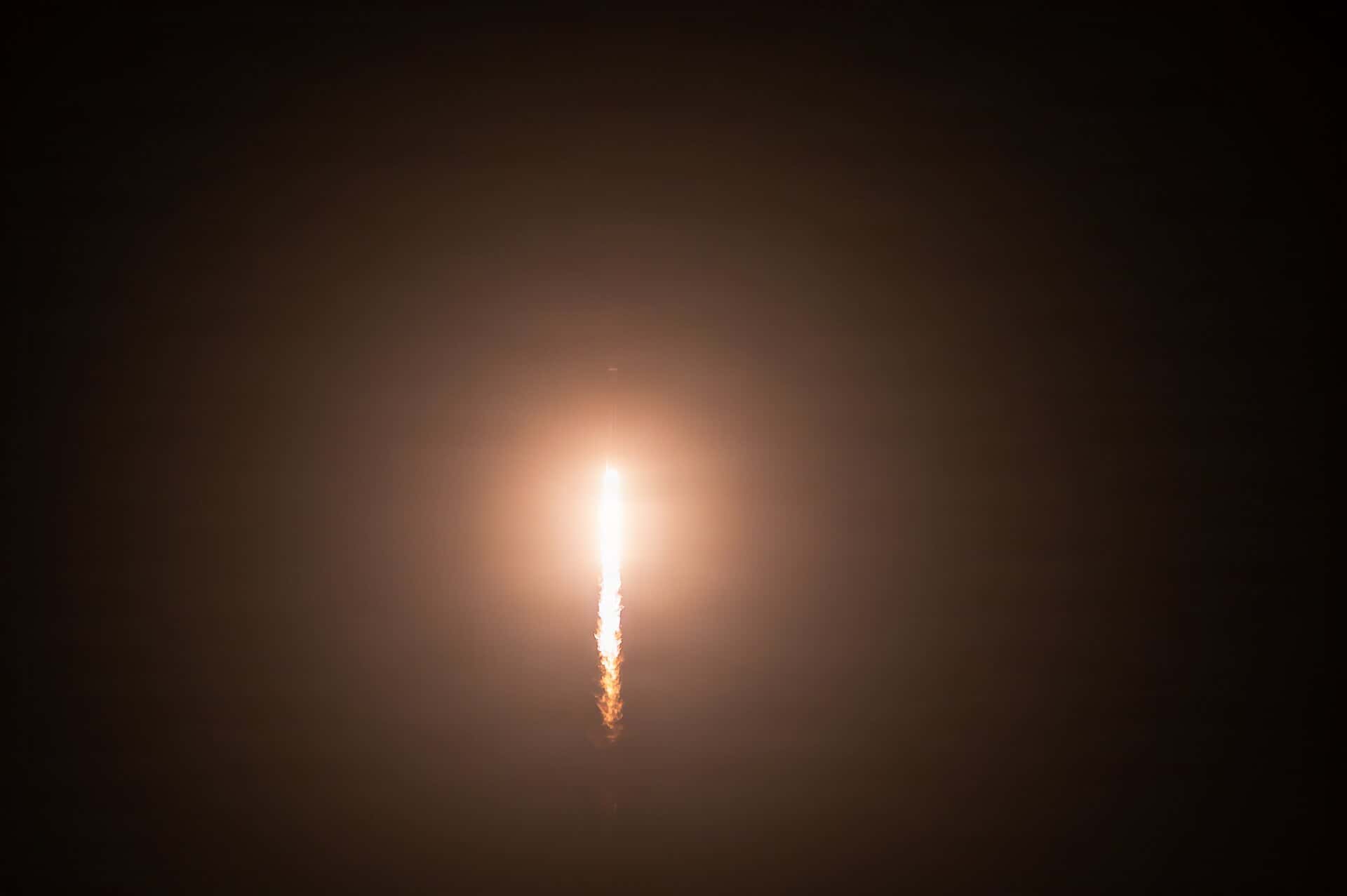
SpaceX launched two Falcon 9 rockets 38 minutes apart on Saturday evening, setting a new record for the shortest interval between two of the company's orbital launches. The sequence began at Cape Canaveral Space Force Station in Florida and concluded from Vandenberg Space Force Base in California.
The Globalstar 2R mission lifted off at 9:12 p.m. Eastern from Space Launch Complex 40 at Cape Canaveral, carrying eight satellites to low Earth orbit for the Louisiana based telecommunications company. All eight spacecraft deployed successfully over a six minute span beginning roughly 56 and a half minutes after liftoff.
The USSF-366 mission for the United States Space Force followed at 9:50 p.m. Eastern from California. The 38 minute interval beat the previous record of one hour and five minutes, which SpaceX set on August 31, 2024, when it launched two Falcon 9 rockets from different pads on the same day.
What the record represents
The interval between launches is a measure of operational capacity rather than of any single technical achievement. Conducting two orbital launches within 38 minutes requires two independent launch teams, two ranges, two sets of range safety approvals and two mission control operations running simultaneously.
Range coordination is the constraint that historically limited launch cadence. Both Cape Canaveral Space Force Station and Vandenberg Space Force Base operate under Space Force range control, which manages airspace and maritime clearance, tracking assets and public safety analysis for every launch.
Ranges have invested significantly in automation to increase throughput, including autonomous flight termination systems that allow a vehicle to self destruct on detecting a trajectory anomaly without requiring a range safety officer to send a destruct command. That change reduced the personnel and equipment required per launch and is the principal enabler of higher cadence.
Both boosters in Saturday's sequence were reused. The Globalstar first stage was on its fourteenth flight and returned for a landing at Cape Canaveral roughly eight minutes after liftoff. The USSF-366 first stage, on its eighteenth mission, landed on the droneship Of Course I Still Love You in the Pacific.
Why cadence matters
Reusability changed the economics of spaceflight, but cadence is what converts that change into capability. A rocket that can be flown fourteen or eighteen times only delivers value if the ground infrastructure can turn it around and fly it repeatedly.
High cadence enables business models that were previously impossible. Large satellite constellations require hundreds or thousands of spacecraft in orbit, and deploying them at a rate of a few launches per year would take decades. The constellation model exists because launch cadence made it feasible.
For government customers, cadence means responsive access to space. The Space Force has pursued the ability to launch on short notice, both to replace assets and to respond to changing operational requirements, and demonstrated turnaround capability is directly relevant to that objective.
Commercial customers benefit through schedule certainty. A launch provider with a high cadence can accommodate a delayed payload without pushing it a year down the manifest, which reduces the cost of schedule risk for satellite operators.
What the Globalstar mission does
Globalstar operates a low Earth orbit satellite constellation providing voice, data and Internet of Things connectivity, and the eight satellites launched Saturday are part of a replenishment program for that constellation.
Low Earth orbit satellites have finite operational lives, limited by fuel for station keeping, by radiation exposure degrading electronics, and by component wear. Constellations require continuous replenishment to maintain service, which is a recurring source of launch demand.
Satellite communications serve applications that matter directly in Florida. Maritime communications for vessels operating beyond cellular coverage, emergency communications when terrestrial networks fail during hurricanes, and asset tracking for logistics all depend on satellite connectivity.
The hurricane application is not hypothetical. When storms destroy cellular infrastructure, satellite terminals are frequently the only communications available to emergency responders and utility crews in the affected area, and Florida emergency management maintains satellite capability for that reason.
What it means for the Space Coast
Launch cadence is the economic engine of Florida's Space Coast. Brevard County's economy is built around Kennedy Space Center, Cape Canaveral Space Force Station and the supporting contractor base, and the employment there scales with launch activity.
The workforce spans engineering, technical trades, range operations, logistics and manufacturing. Launch processing, payload integration and vehicle recovery operations all employ people locally, and recovery in particular has added port based jobs at Port Canaveral where booster recovery vessels operate.
Launch tourism is a measurable contributor. Launches draw visitors to Brevard County beaches and to the Kennedy Space Center Visitor Complex, and a high cadence means more opportunities for visitors to see one.
The cadence also imposes local costs. Road closures, airspace restrictions and sonic booms from returning boosters affect residents, and the frequency of those effects rises with launch rate. Brevard County residents have generally accepted these as the price of the region's identity, though the volume of activity is substantially higher than it was a decade ago.
The broader launch picture
Cape Canaveral and Kennedy Space Center together host launches from multiple providers. United Launch Alliance operates from Cape Canaveral, Blue Origin has developed launch infrastructure there, and SpaceX operates from both Space Launch Complex 40 at the Cape and Launch Complex 39A at Kennedy Space Center.
NASA's Artemis program uses Launch Complex 39B at Kennedy Space Center, where the Artemis II mission carrying four astronauts on a lunar flyby launched in April, the first crewed mission beyond low Earth orbit since the Apollo program.
Space Florida, the state's aerospace development authority, works to attract aerospace business to the state, and the concentration of launch capability has drawn manufacturing and processing operations to Florida that were previously located elsewhere.
The combination of federal, military and commercial activity at a single coastal complex is not replicated anywhere else in the country, and it is the reason Florida's space sector has grown while other regions' have not.
How reuse changed the economics
Before reusable first stages, every orbital launch consumed its rocket. The vehicle represented the largest single cost in a launch, and discarding it after one flight set a floor on price that no amount of manufacturing efficiency could lower much further.
Recovering and reflying boosters changed that arithmetic. A booster on its fourteenth or eighteenth flight has amortized its manufacturing cost across many missions, and the marginal cost of a launch becomes dominated by propellant, refurbishment and operations rather than by vehicle production.
The engineering required to make that work involved surviving reentry heating, controlling a descending stage precisely enough to land it, and demonstrating that a recovered booster could fly again safely. Each of those problems took years to solve, and the flight counts on current boosters reflect how thoroughly they were solved.
Florida's competitive position
Cape Canaveral's advantages are partly geographic. Its latitude provides a modest velocity assist from Earth's rotation for eastward launches, and the Atlantic Ocean downrange provides a clear corridor for ascending vehicles and for booster recovery.
The concentration of launch infrastructure is the larger advantage. Multiple pads, established range operations, payload processing facilities, and a workforce with decades of accumulated expertise are not easily replicated, and companies choosing a launch site weigh that ecosystem heavily.
Other states have pursued spaceport development, and Vandenberg on the California coast serves polar and sun synchronous orbits that Florida cannot reach efficiently. But for the orbits that most commercial and national security payloads require, Florida remains the primary United States gateway to space.
What high cadence means for the range
Cape Canaveral Space Force Station and Kennedy Space Center now support a launch rate that would have been inconceivable a decade ago. Managing that volume requires scheduling airspace and maritime closures, tracking assets and public safety analysis for each mission without conflicts.
Range modernization has been a sustained investment, including automation of processes that previously required manual coordination. The Space Force has pursued that modernization specifically to accommodate commercial launch growth alongside national security missions.
The constraint that remains is physical infrastructure. Pads, integration facilities and payload processing capacity are finite, and multiple providers competing for access to a limited number of sites is the practical ceiling on how much further cadence can grow at the Cape.
What Floridians see from the ground
Launches from Cape Canaveral are visible across a wide swath of Central Florida, and evening launches like Saturday's are visible farther still because the exhaust plume catches sunlight at altitude after the ground is dark.
Booster return landings at Cape Canaveral produce sonic booms audible across Brevard County and beyond, arriving a minute or two after the landing itself. Residents have grown accustomed to them, though they still generate calls to local dispatch centers.
Launch schedules are published in advance and are widely available, though times move frequently. Weather, range conflicts and vehicle readiness all shift launch windows, sometimes within hours of the scheduled time.
What is next
SpaceX continues to operate a high launch cadence from both coasts, with Starlink deployment missions accounting for a large share of activity alongside commercial and government payloads.
Upcoming missions from Cape Canaveral appear on published launch schedules, though dates frequently move for weather, range availability and vehicle readiness. Launch schedules are best treated as provisional until the day of flight.
Whether the 38 minute record stands is largely a matter of manifest timing rather than of technical capability. The demonstrated ability to run two independent launch campaigns concurrently is the substantive result, and the interval is a byproduct of how the schedule happened to align.
For anyone planning to watch, the Kennedy Space Center Visitor Complex sells viewing packages for many missions, and public beaches and causeways in Brevard County remain the most common free vantage points for launches from the Cape.
Spotted an issue with this article?
Have something to say about this story?
Write a letter to the editorComments
No comments yet. Be the first to weigh in.
Related Coverage

U.S. Adds Just 29,000 Jobs in September as Unemployment Rises to 4.2%, a Warning Sign for Florida's Job Market
9h ago

SNAP Benefits Rise Slightly for Florida Families as State Takes On 75% of Program's Administrative Costs Under New Federal Law
9h ago
Navy Moving Mayport Destroyer USS John Basilone to Spain, Shrinking Jacksonville's Fleet
12h ago

Mortgage Rates Jump to 7.28%, Highest in Nearly Three Years, Adding Hundreds a Month for Florida Homebuyers
13h ago