SpaceX Sets a Turnaround Record on Florida's Space Coast
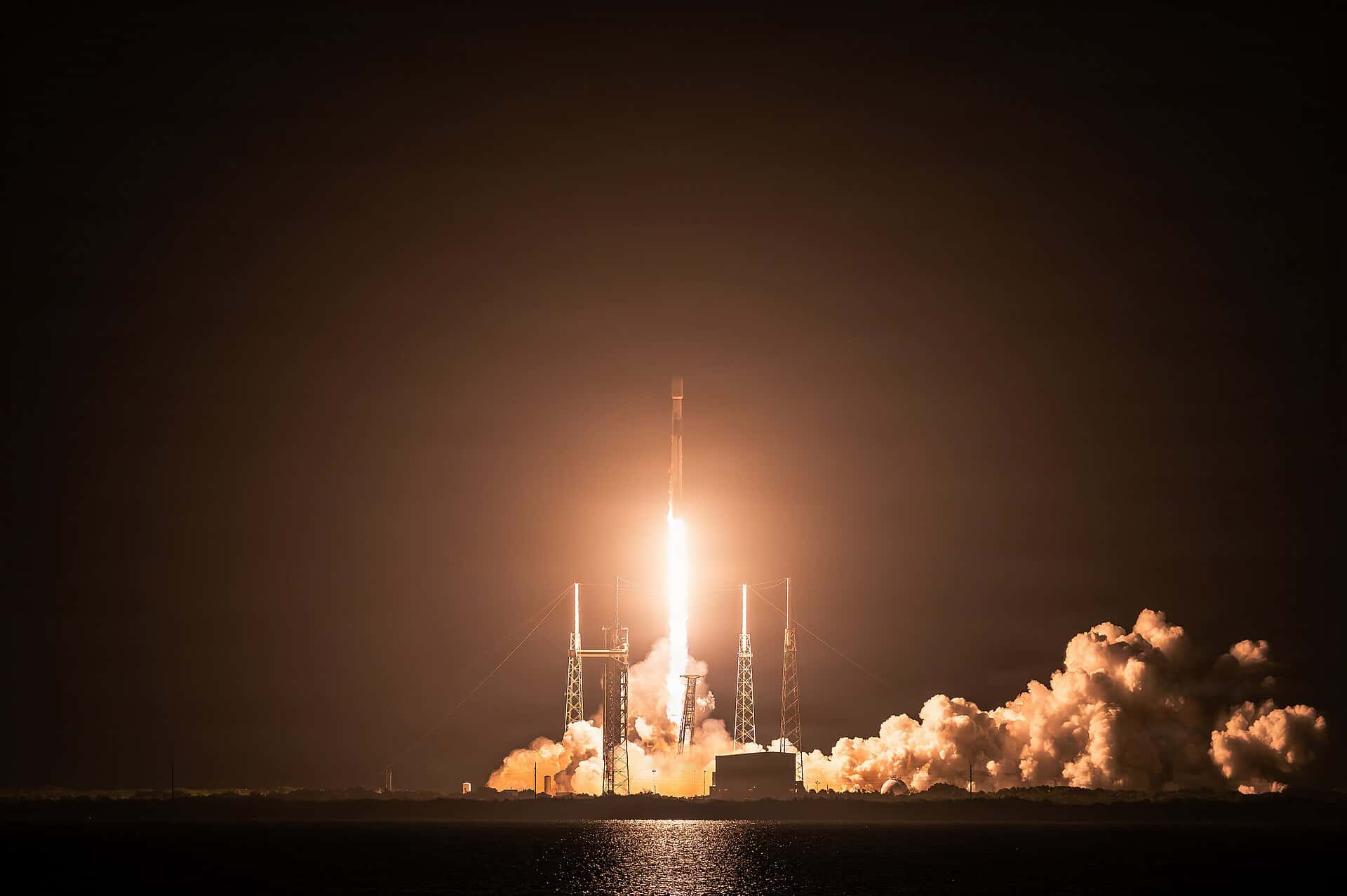
SpaceX launched two Falcon 9 rockets from Florida's Space Coast 38.5 minutes apart on the night of August 15, a record-short interval between missions that illustrates how sharply launch cadence at Cape Canaveral has accelerated.
The first of the two lifted off from Cape Canaveral Space Force Station at 9:12 p.m. Eastern, carrying eight satellites for Globalstar as part of that company's effort to replenish its low Earth orbit constellation. A second mission for the U.S. Space Force followed within the same hour.
The pair came days after a Starlink mission that launched from Space Launch Complex 40 at 11:58 a.m. on August 11, delivering another batch of Starlink V2 Mini Optimized satellites to low Earth orbit after a scrub the previous day.
The compressed schedule reflects a launch operation that now treats orbital missions as routine industrial activity rather than as individually notable events, a shift with substantial consequences for Brevard County and for Florida's economy.
What a 38-minute turnaround requires
Launching two orbital rockets within 40 minutes from the same range requires coordination across several organizations. The Space Force's Eastern Range provides tracking, telemetry and range safety services, and its capacity to support back-to-back operations is the constraint that historically limited cadence.
Range modernization over the past decade replaced legacy tracking infrastructure with autonomous flight safety systems carried aboard the vehicles themselves. That change removed the need for extensive ground-based range support between launches and is the primary technical enabler of high cadence.
Airspace and maritime clearance also factor in. Launch corridors require closure of airspace and shipping lanes, coordinated with the Federal Aviation Administration and the Coast Guard, and back-to-back launches require those closures to be managed efficiently.
The vehicles themselves must be independently prepared on separate pads. Cape Canaveral Space Force Station and Kennedy Space Center together host multiple active launch complexes, which is what makes simultaneous campaign preparation possible.
The economics of reuse
The Falcon 9's first stage returns to Earth and lands, either on a droneship at sea or on a landing zone near the launch site, and is refurbished for subsequent flights. Individual boosters have flown well into the double digits.
That reusability is the underlying reason cadence has risen so sharply. Building a new first stage for every mission imposes a manufacturing constraint that no amount of range efficiency can overcome; recovering and reflying stages removes it.
Fairing recovery operates similarly, with the payload shrouds retrieved from the ocean and reused. Second stages are expended, remaining the largest single manufactured component consumed per flight.
The economic effect extends beyond one company. Reduced launch cost has enabled satellite constellations, commercial imaging, communications ventures and research payloads that would not have closed a business case at prior prices.
What it means for Florida
Brevard County's economy has been tied to space activity since the 1950s, and the current cadence represents the highest sustained activity level the region has seen. Employment in aerospace manufacturing, launch operations and supporting services has grown correspondingly.
The workforce includes engineers, technicians, range operations personnel and manufacturing employees, along with the broader service economy that supports them. Space Florida, the state's aerospace economic development agency, works to attract additional operations to the region.
Housing demand along the Space Coast has risen with employment, contributing to price pressure in Brevard County communities including Titusville, Cocoa, Merritt Island and Melbourne. That pressure mirrors patterns seen in other regions with concentrated high-wage employment growth.
Launch viewing has also become a tourism draw. Visitors plan trips around launch schedules, and the Kennedy Space Center Visitor Complex serves as a major attraction in its own right, adding to Central Florida's tourism inventory.
The other operators at the Cape
SpaceX is the dominant operator by flight count, but it is not the only one. United Launch Alliance operates from Cape Canaveral with its Vulcan and legacy Atlas V vehicles, serving national security and commercial customers.
Blue Origin has developed launch infrastructure in Florida for its New Glenn vehicle, and the company also operates manufacturing facilities in Brevard County. Its presence represents substantial private investment in the region.
NASA continues to operate from Kennedy Space Center, including for Artemis program missions using the Space Launch System from Launch Complex 39B. Those missions are far less frequent than commercial launches but involve substantially larger vehicles and workforces.
The combination gives Florida the highest concentration of orbital launch capability in the country, and the state's competitive position relative to other launch sites rests on that infrastructure density.
Regulatory and environmental considerations
Launch licensing runs through the Federal Aviation Administration's Office of Commercial Space Transportation, which evaluates public safety, environmental compliance and financial responsibility before issuing licenses.
Rising cadence has brought increased attention to cumulative environmental effects, including sonic boom exposure from returning boosters, noise impacts on nearby communities and wildlife, and effects on the Merritt Island National Wildlife Refuge that surrounds much of the launch infrastructure.
The refuge coexists with launch operations under long-standing arrangements, and the restricted access that launch security requires has incidentally preserved habitat that development would otherwise have consumed.
Airspace management is the other growing consideration. Each launch closes airspace along its corridor, and at high cadence those closures accumulate into meaningful disruption for commercial aviation in a region with heavy air traffic.
What comes next in the program
Starlink missions account for a large share of SpaceX's Florida launches, deploying satellites for the company's broadband constellation. Those launches will continue as the constellation is built out and as first-generation satellites are replaced.
Commercial customer missions, including the Globalstar replenishment flights, national security launches for the Space Force, and NASA science and crew missions round out the manifest.
Crew missions to the International Space Station launch from Kennedy Space Center's Launch Complex 39A, and cargo resupply missions follow similar profiles. Those flights carry higher public profile than routine satellite deployments.
The Artemis program's lunar missions represent the largest scale activity planned at the Cape, with associated infrastructure and workforce implications for the region.
Why the Cape became the launch capital
Cape Canaveral's selection as America's primary launch site in the 1950s reflected geography rather than politics. Launching eastward from Florida takes advantage of Earth's rotation, providing a velocity boost that reduces the propellant required to reach orbit.
The latitude matters as well. Sites closer to the equator provide a larger rotational boost and easier access to the equatorial orbits that many satellites use. Florida is the southernmost location on the continental United States mainland suitable for the purpose.
The Atlantic Ocean to the east provides a downrange area over water, which means launch failures and discarded stages fall into the ocean rather than over populated land. That safety consideration is fundamental to site selection.
Vandenberg Space Force Base in California serves as the alternative site for polar and sun-synchronous orbits, which require launching south rather than east. The two facilities together cover the range of orbital inclinations U.S. missions require.
What Globalstar and the Space Force missions carry
The Globalstar mission delivered eight satellites for a low Earth orbit constellation that provides satellite communications services including messaging, tracking and connectivity for devices in areas without terrestrial coverage.
Constellation replenishment is an ongoing requirement for satellite operators. Spacecraft in low Earth orbit have finite operational lives, limited by propellant, component degradation and orbital decay, which means operators must launch replacements continuously to maintain service.
Space Force missions cover a range of national security functions including communications, navigation, missile warning and space domain awareness. Details of specific payloads are frequently classified, and public information about those launches is correspondingly limited.
The mix of commercial, civil and national security payloads flying from the Cape reflects how thoroughly space access has become infrastructure rather than exploration, supporting functions that terrestrial systems depend on daily.
What high cadence means for the workforce
Sustaining a launch rate measured in dozens of missions per year from a single range requires a workforce structured around continuous operations rather than campaign-based work. That represents a substantial change from the Space Shuttle era.
Launch operations personnel, range technicians, recovery crews and vehicle processing teams all work on schedules that assume the next mission is days rather than months away. Recovery operations alone involve droneship crews and port handling teams operating continuously.
Manufacturing occurs largely outside Florida, but refurbishment and integration work happens at the Cape, and that activity has grown with cadence. Facilities on and near the launch complexes support that work.
Workforce development has become a regional priority, with Eastern Florida State College, the Florida Institute of Technology and Embry-Riddle Aeronautical University all operating programs aligned with aerospace employment.
Weather and the Florida launch environment
Florida's climate presents specific challenges for launch operations. Summer afternoon thunderstorms develop almost daily during the wet season, and lightning within a defined distance of a pad halts operations.
Launch weather criteria are detailed and specific, addressing not only lightning but also cumulus cloud thickness, anvil clouds from distant storms, precipitation and upper-level winds. Violation of any criterion can scrub a launch.
Recovery weather matters independently. Droneship landings require acceptable sea states in the recovery zone, which can be hundreds of miles downrange, and unacceptable conditions there can delay a launch even when conditions at the pad are fine.
Hurricane season adds a seasonal constraint. Approaching storms require securing vehicles and infrastructure, which suspends operations for days around a threatening system regardless of whether it makes landfall nearby.
What's next
Launch schedules are published by the operators and by the Space Force's 45th Space Wing, though dates shift frequently based on weather, range availability and vehicle readiness. Scrubs and delays are routine.
Space Florida publishes information on aerospace economic development activity in the state, including facility investments and workforce programs.
NASA's Kennedy Space Center publishes mission information for agency launches, and the Kennedy Space Center Visitor Complex offers viewing opportunities for many missions.
Brevard County government and municipalities along the Space Coast publish information on launch-related road closures and viewing locations ahead of major missions.
Spotted an issue with this article?
Have something to say about this story?
Write a letter to the editorComments
No comments yet. Be the first to weigh in.
Related Coverage
Rick Scott and Ashley Moody file bill to shield Eglin Gulf test range from offshore drilling
3h ago
Miami Federal Judge Rules Federal Ban on Noncitizen Voting Unconstitutional in Broward Case
6h ago
Former Miami Congressman David Rivera Sentenced to 10 Years in Secret Venezuela Lobbying Case
8h ago

Federal judge strikes down ICE immigration courthouse arrest policy: what it means for Florida
11h ago