State Sends $8.8 Million to a Dozen Rural Northwest Florida Communities
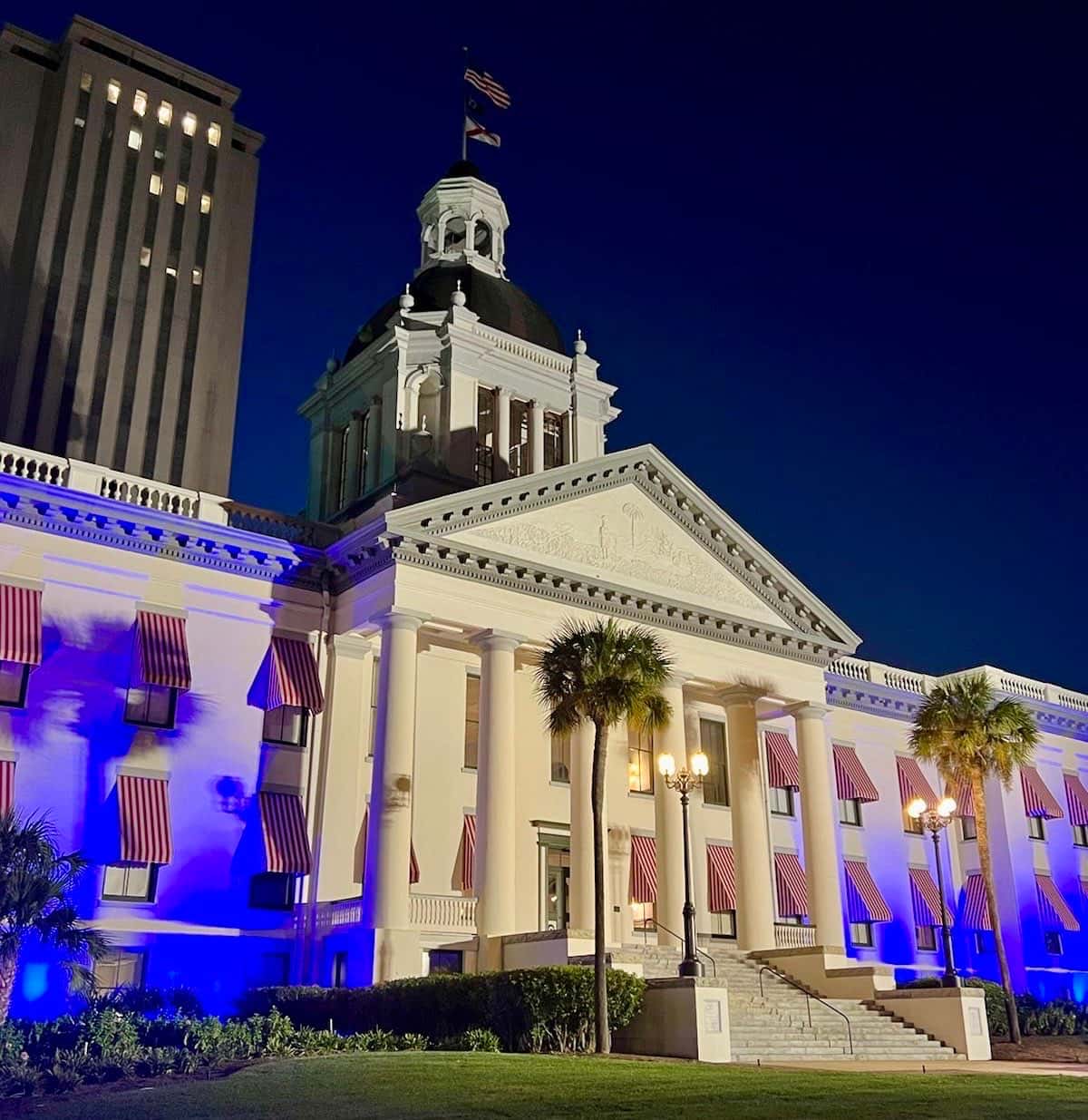
Gov. Ron DeSantis announced nearly $8.8 million in awards to 12 small and rural communities across Northwest Florida this week, money directed toward infrastructure investments and community development projects in a region that has historically received a smaller share of state economic development spending than Florida's metropolitan corridors.
The awards are modest in absolute terms compared with the state's multi-billion dollar infrastructure programs, but the scale of a rural municipal budget makes them significant locally. For a town of a few thousand residents, a several-hundred-thousand-dollar grant can fund a project the municipality could not otherwise finance without borrowing.
The announcement lands in a part of Florida still working through the long tail of hurricane recovery. Michael in 2018 devastated Bay County and inland Panhandle communities, and Sally, Ida and subsequent storms have added to the accumulated damage across the region's infrastructure.
What the money funds
State rural infrastructure programs in Florida typically support water and wastewater systems, road and drainage improvements, broadband deployment, and site preparation intended to make a community capable of hosting employers.
Water and sewer capacity is the constraint that most often blocks rural economic development in Florida. A community without adequate treatment capacity cannot approve new residential or commercial construction regardless of demand, and rebuilding or expanding a treatment plant is an expense far beyond what most small municipal budgets can absorb.
Drainage is the second recurring category, and it has become more prominent as rainfall intensity has increased. Rural stormwater systems built decades ago were sized for different conditions, and communities that flood repeatedly face both immediate damage and long-term difficulty attracting residents and businesses.
Broadband remains a gap across rural Florida despite years of state and federal programs aimed at closing it. The economics of last-mile deployment in low-density areas do not work without subsidy, which is why public money continues to be the mechanism.
The Northwest Florida context
Northwest Florida contains the state's largest concentration of rural counties. Several Panhandle counties have populations under 20,000, and a handful have fewer than 10,000 residents, which places them in a different fiscal category than the rest of the state.
The region's economy rests on a different base than peninsular Florida's. Military installations, including Eglin Air Force Base, Tyndall Air Force Base and Naval Air Station Pensacola, anchor employment in the western Panhandle. Forestry and agriculture dominate in the interior counties. Tourism concentrates along the coast.
The inland counties have not shared in the coastal growth. Walton and Okaloosa counties along the coast have grown substantially, while counties like Liberty, Calhoun, Gadsden, Jackson and Holmes have grown slowly or lost population.
Hurricane Michael's 2018 landfall as a Category 5 storm at Mexico Beach caused catastrophic damage well inland, flattening timber across hundreds of thousands of acres and destroying infrastructure in communities with almost no tax base to fund rebuilding. Recovery in those counties remains incomplete eight years later.
Why small grants matter in small places
Municipal finance in rural Florida operates on a scale that is difficult to appreciate from a metropolitan perspective. A town with 2,000 residents may have an annual general fund budget in the low single-digit millions, with most of that committed to public safety and basic operations.
Capital projects in that context require either grant funding or debt, and small municipalities often lack the credit profile or the staff capacity to issue debt efficiently. Grant programs substitute for a capital market that does not function well at that scale.
Staff capacity is itself a constraint. Applying for state and federal grants requires administrative expertise that a town with three full-time employees does not have. Regional planning councils and county governments often assist, but the gap between communities that can navigate grant processes and those that cannot produces uneven outcomes.
That dynamic is one reason targeted rural programs exist. General competitive programs tend to be won by larger jurisdictions with dedicated grant staff, which is exactly the outcome a rural set-aside is designed to prevent.
What it means for residents
The most immediate effects are utility related. Water system improvements can mean the end of boil water notices, better pressure, and the capacity to connect new customers. Wastewater improvements can lift building moratoria that have blocked development.
Drainage projects reduce flooding in specific neighborhoods, which affects both property damage and flood insurance costs for the households in those areas. Under the National Flood Insurance Program's community rating system, municipal mitigation investments can translate into premium discounts for residents.
Road improvements matter for access to services. In rural Florida, distances to hospitals, schools and grocery stores are substantial, and road condition affects emergency response times as well as daily life.
The economic development argument is longer term and less certain. Infrastructure is necessary for employers to locate in a community but is not sufficient, and rural Florida has examples of communities that built capacity and did not attract the employment that was projected.
The broader funding picture
State rural grants operate alongside federal programs, including USDA Rural Development water and waste disposal funding, Economic Development Administration grants, and Community Development Block Grant allocations administered through the state.
Federal disaster recovery money has been the larger stream in the Panhandle since 2018, flowing through FEMA public assistance, hazard mitigation grants and HUD community development block grant disaster recovery allocations.
That federal stream faces uncertainty. FEMA policy changes under consideration would shift a larger share of recovery costs to states and local governments, a change that would fall hardest on jurisdictions with the least capacity to absorb it. The FEMA Review Council's recommendations released earlier this year pointed in that direction.
Florida has historically received 90% to 100% federal reimbursement for major hurricanes, including Michael, Ian, Helene and Milton. A reduction in that share would leave rural counties responsible for costs they cannot pay.
The population and revenue picture
Florida's growth story is a peninsular story. The state added millions of residents over the past two decades, and the overwhelming majority of that growth landed in metropolitan areas along both coasts and in Central Florida.
Several interior Panhandle counties have grown slowly or lost population over the same period. That divergence compounds fiscally: a county losing residents loses tax base while its infrastructure obligations remain fixed, and per-capita costs rise as the population that shares them shrinks.
School districts feel this first. Florida education funding follows enrollment, so a district losing students loses revenue on a per-student basis while still operating the same number of buildings and bus routes.
Health care access follows a similar pattern. Rural hospitals in Florida operate on thin margins, and several have closed or reduced services over the past decade, which lengthens emergency transport times across large geographic areas.
Military bases as economic anchors
The western Panhandle's economy rests substantially on military installations. Eglin Air Force Base, Naval Air Station Pensacola, Hurlburt Field and Tyndall Air Force Base together represent one of the largest concentrations of military activity in the country.
Tyndall's reconstruction after Hurricane Michael has been a major driver of Bay County's recovery. The base was severely damaged in 2018 and the Air Force committed to rebuilding it as a modernized installation, a multi-year construction program that has supported regional employment.
Military installations bring stability that most rural economies lack. Payrolls do not fluctuate with commodity prices or tourism seasons, and contractor activity supports a supplier base that clusters around each installation.
The dependence also creates vulnerability. Base realignment decisions are made in Washington, and communities built around a single installation have limited ability to influence them. Florida's congressional delegation has consistently treated base retention as a priority for that reason.
What the region needs beyond grants
Local officials in rural Florida have consistently identified the same set of constraints, and money is only one of them.
Workforce is a recurring problem. Employers considering rural locations need a labor pool with relevant skills, and rural counties with declining populations and limited postsecondary options struggle to provide one. Florida's state college system operates campuses across the Panhandle, and their program alignment with local employer needs is a persistent policy question.
Health care access affects employer decisions as much as it affects residents. A company weighing a rural site considers whether employees can obtain routine medical care without driving an hour.
Broadband remains incomplete despite years of programs. Remote work has made connectivity a determinant of where households can live, which for rural counties turns broadband from an amenity into a population retention tool.
Where the Panhandle stands eight years after Michael
Hurricane Michael's 2018 landfall remains the reference point for the region's recovery discussions, and progress has been uneven across the counties it struck.
Bay County, with the largest tax base in the affected area and with Tyndall Air Force Base reconstruction driving investment, has recovered more fully than the inland counties. Population has returned and construction activity has been substantial.
Inland counties present a different picture. Timber losses across hundreds of thousands of acres removed the economic base in several communities, and replanted stands require decades before they generate income again.
Housing remains a constraint. Damaged housing stock that was never rebuilt reduced available units, and construction costs since 2018 have risen enough that rebuilding at pre-storm price points is not feasible in many cases.
What's next
Award recipients will move into project design and procurement, which for infrastructure work typically means construction begins the following year rather than immediately.
The next round of state rural funding will be determined through the legislative appropriations process during the coming session. Rural infrastructure has generally enjoyed bipartisan support, though the size of the appropriation varies with budget conditions.
Watch the federal disaster policy discussion, which matters more to Panhandle fiscal health than any single grant round. A shift in FEMA reimbursement ratios would fundamentally change the finances of hurricane recovery for small Florida counties.
Watch also for whether the state pairs infrastructure money with technical assistance. Grant capacity, not just grant money, is the binding constraint for many of the communities these programs are meant to serve.
Spotted an issue with this article?
Have something to say about this story?
Write us a letterComments
No comments yet. Be the first to weigh in.
Related Coverage

Miami Voters to Decide $450 Million Police and Fire Bond as City Carries Heavy Debts and Pension Bills
6h ago

Martin County's MARTY Buses Stop Cold After Operator Walks Away From Contract, Stranding Riders on the Treasure Coast
7h ago
Florida now requires REAL ID or a passport with I-94 to register a vehicle, leaving some immigrants unable to qualify
8h ago
Broward Mayor Launches Probe of Sheriff Gregory Tony's Spending as County Budget Feud Escalates
10h ago