Suspended Palm Beach Clerk Mike Caruso Held Without Bond on Child Abuse Charges
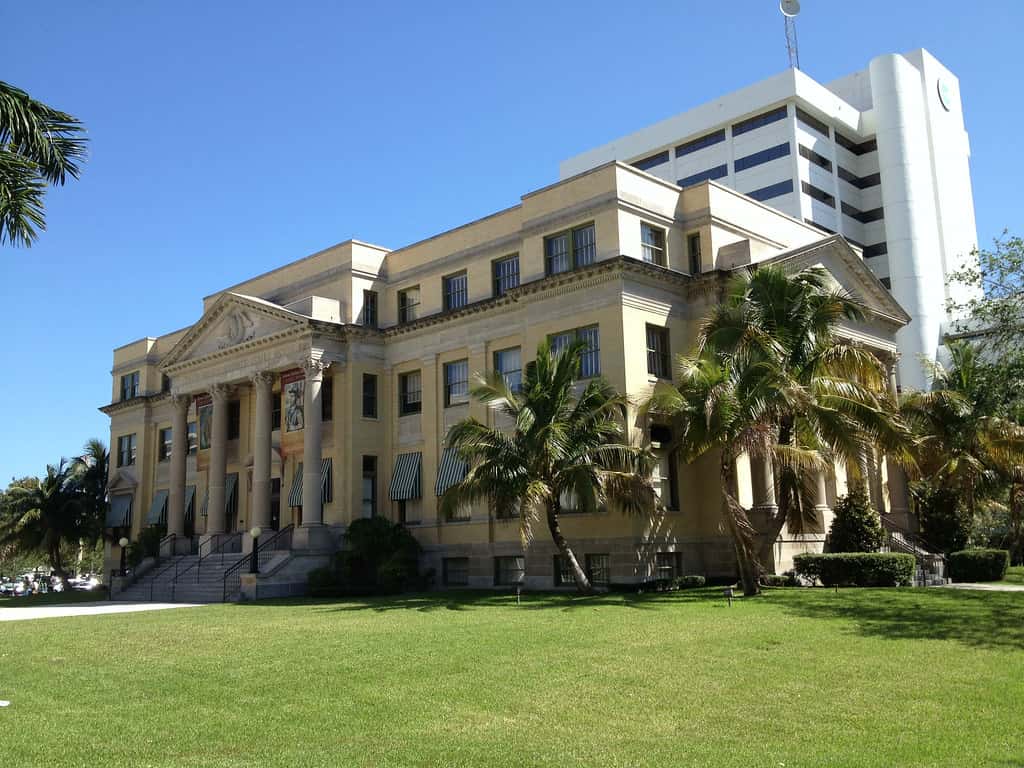
Michael Caruso, the suspended Palm Beach County clerk of the circuit court and comptroller, has been denied bond and booked into the Orange County Jail after his arrest on five felony charges connected to allegations of child sexual abuse. Caruso, 67, of Riviera Beach, was arrested August 18 following an investigation announced by the Florida Attorney General's Office and the Florida Department of Law Enforcement.
Gov. Ron DeSantis suspended Caruso from office by executive order hours after the arrest. Under the terms of the suspension, Caruso is prohibited from performing any official duties, from receiving pay, and from exercising any privilege of the office.
Caruso faces charges including kidnapping, lewd or lascivious molestation, lewd or lascivious exhibition, luring or enticing a child, and child abuse causing mental injury. He is presumed innocent, and the allegations must be proven in court.
What authorities have alleged
According to the arrest affidavit, the alleged victim is a family member, described as a boy living in Orange County. Authorities allege the conduct began in the fall of 2024 and continued through an incident aboard a cruise ship in August 2025.
The Orange County location of the alleged victim explains why Caruso is being held in the Orange County Jail and why the case is proceeding in that jurisdiction rather than in Palm Beach County, where he held office. Venue in Florida criminal cases follows where the alleged offenses occurred.
The alleged shipboard incident introduces a jurisdictional element that appears in a subset of Florida cases given the state's cruise industry. Offenses aboard vessels can implicate federal maritime jurisdiction depending on the ship's flag, its location at the time and the citizenship of those involved. State charges and federal jurisdiction are not mutually exclusive.
The Florida Department of Law Enforcement conducted the investigation, and the arrest was announced jointly with the attorney general's office. The Florida Press does not identify alleged victims of sexual offenses, and does not report details that could identify a minor.
Bond was denied at Caruso's first appearance. Under Florida law, defendants charged with offenses punishable by life imprisonment may be held without bond when the proof of guilt is evident or the presumption great, a determination the court makes at a pretrial detention hearing.
Who Caruso is
Caruso served as a Republican member of the Florida House of Representatives before DeSantis appointed him Palm Beach County clerk of the circuit court and comptroller in 2025. He is an attorney by background.
The clerk of the circuit court and comptroller is a constitutional county officer in Florida with an unusually broad portfolio. The office maintains court records, collects and disburses court related funds, records deeds and other official records, serves as clerk to the county commission, and in most counties functions as county auditor and custodian of county funds.
That combination gives the office significant fiduciary responsibility. The clerk handles child support payments, court registry funds, traffic and criminal fines, jury management and the official recording of every real estate transaction in the county.
Palm Beach County is Florida's third most populous county, with roughly 1.5 million residents, which makes the clerk's office there one of the larger such operations in the state. The office employs hundreds of people across multiple locations.
What happens to the office
Under the Florida Constitution, the governor may suspend county officers for reasons including commission of a felony, and the Florida Senate has the power to remove or reinstate the suspended officer. A suspension is not a removal; it is a temporary measure pending resolution.
The governor may appoint a replacement to serve during the suspension. That appointee exercises the full authority of the office until the suspension is resolved, either through Senate action, the officer's resignation, or the conclusion of the criminal case.
If Caruso is convicted of a felony, Florida law provides for removal from office. If he is acquitted, the Senate would consider reinstatement, though the officer may also resign at any point, which ends the suspension proceeding.
The next regularly scheduled election for the office would occur under the county's normal election calendar. Because Caruso was appointed rather than elected, the position's electoral timeline runs on the schedule established for the office rather than on the appointment date.
Presumption of innocence and the record
Caruso has been charged, not convicted. Every element of the state's case must be proven beyond a reasonable doubt to a jury, and the arrest affidavit represents law enforcement's allegations rather than established fact.
That distinction is worth stating plainly in a case involving a public official and allegations of this severity, because the public attention such cases draw can compress the stages of a criminal proceeding in public perception. Arrest, charge, indictment, trial and conviction are sequential and distinct, and this case is at the earliest of them.
The denial of bond is a pretrial detention decision based on the nature of the charges and the court's assessment under Florida's detention standards. It is not a finding of guilt.
Defense counsel has the opportunity to challenge the evidence, seek reconsideration of detention, file pretrial motions and ultimately contest the charges at trial. Cases involving allegations of this type frequently take a year or more to reach trial.
Florida's public corruption and misconduct caseload
The Caruso case is one of several involving Florida public officials currently moving through the courts. Suspended Osceola County Sheriff Marcos Lopez faces racketeering and conspiracy charges connected to an alleged illegal gambling operation, and has pleaded not guilty.
Those cases are legally unrelated but they share a procedural pattern: arrest, immediate gubernatorial suspension by executive order, and a criminal case that proceeds on its own timeline while the office is filled by appointment. Florida's constitutional structure produces that sequence consistently.
The Florida Department of Law Enforcement has statewide jurisdiction and frequently handles investigations involving local officials, in part because local agencies face conflicts when investigating officeholders in their own jurisdictions. The attorney general's office prosecutes some of these cases through its Office of Statewide Prosecution.
Public trust considerations extend beyond the individual case. When the officer responsible for a county's court records and public funds is charged with a felony, the office's operational continuity and the integrity of its records become matters of public concern independent of the criminal allegations.
How Florida suspends and removes officials
Article IV of the Florida Constitution gives the governor the power to suspend any state or county officer, other than a member of the Legislature or the courts, for malfeasance, misfeasance, neglect of duty, drunkenness, incompetence, permanent inability to perform official duties, or commission of a felony.
The suspension takes effect immediately upon the executive order and requires no prior hearing. That immediacy is intentional: the constitutional design prioritizes protecting the integrity of public office over the suspended officer's procedural interests, on the theory that the suspension is temporary and reviewable.
The Florida Senate holds the power to remove or reinstate. Under Senate rules, a suspension is referred to a special master, typically an administrative law judge, who conducts proceedings and makes findings. The Senate then votes, with removal requiring a two thirds vote of the members present.
In practice, the Senate rarely reaches a vote. Most suspensions resolve when the officer resigns, when the criminal case concludes in a conviction that triggers automatic removal, or when the officer's term expires. The Senate has generally deferred action while criminal charges are pending to avoid interfering with the prosecution.
Governors of both parties have used the suspension power regularly. It has been applied to sheriffs, school board members, county commissioners, clerks and municipal officials across Florida, and the underlying grounds have ranged from criminal charges to disputes over the performance of official duties.
When an officer is suspended, the governor may appoint a replacement to serve during the suspension. That appointee holds the full authority of the office, which keeps county functions operating without interruption while the underlying matters are resolved.
Pretrial detention in Florida
The denial of bond in this case reflects a specific legal standard that applies to a narrow category of charges, and it is worth setting out how Florida handles it.
The Florida Constitution guarantees a right to pretrial release on reasonable conditions, with an exception for defendants charged with a capital offense or an offense punishable by life imprisonment where the proof of guilt is evident or the presumption great. That exception is the basis for holding a defendant without bond.
Establishing that standard requires more than the charging document. The state must present evidence at a pretrial detention hearing sufficient to persuade the court that the proof is evident or the presumption great, a threshold courts have described as higher than probable cause but lower than the beyond a reasonable doubt standard applied at trial.
Defendants may seek review of a detention decision, and detention can be revisited if circumstances change or if the charges are amended. A defendant held without bond who is later charged with lesser offenses may become eligible for release.
Florida also revised its pretrial release framework in recent years, including changes to how bond schedules operate and to the handling of defendants charged with certain offenses. Those changes affect the routine cases more than they affect life felony charges, where the constitutional exception has always governed.
Pretrial detention does not shorten or lengthen a sentence. Time served in custody before trial is credited against any eventual sentence, but a defendant who is acquitted receives no compensation for the period held.
What's next
The case proceeds through the Orange County criminal court. Next steps typically include arraignment, discovery, pretrial motions and, if the case is not resolved by plea, trial. Defendants held without bond generally receive priority in scheduling, though complex cases still take substantial time.
The Florida Senate's role in the suspension proceeding may not activate until the criminal case resolves. Senate practice has generally been to defer action on suspensions while related criminal charges are pending, to avoid interfering with the criminal proceeding.
Palm Beach County residents conducting business with the clerk's office should see no interruption in services. The office's operations continue under its professional staff and any appointed replacement, and court records, recording and county finance functions are statutorily mandated regardless of who holds the office.
The Florida Press will report developments as they occur in the court record, and will continue to describe the allegations as allegations until a verdict is reached.
Spotted an issue with this article?
Have something to say about this story?
Write us a letterComments
No comments yet. Be the first to weigh in.
Related Coverage

Judge Weighs Whether Jurors Can Hear About Jeff Knight's 2019 Boat Crash in Clearwater Ferry Case
5h ago
DNA From ICE Arrest Leads to Charges in 2012 LaBelle Rape and Kidnapping of 14-Year-Old Girl
7h ago

Two Spring Hill men indicted in 2018 home invasion killing of young father in Hernando County
1d ago

Operation Cooked: Undercover Osceola Sting Nets At Least 20 Arrests of Men Accused of Seeking Sex With Children
1d ago