Tampa Bay Wave Ranked Third-Best Startup Accelerator in the Country by TIME
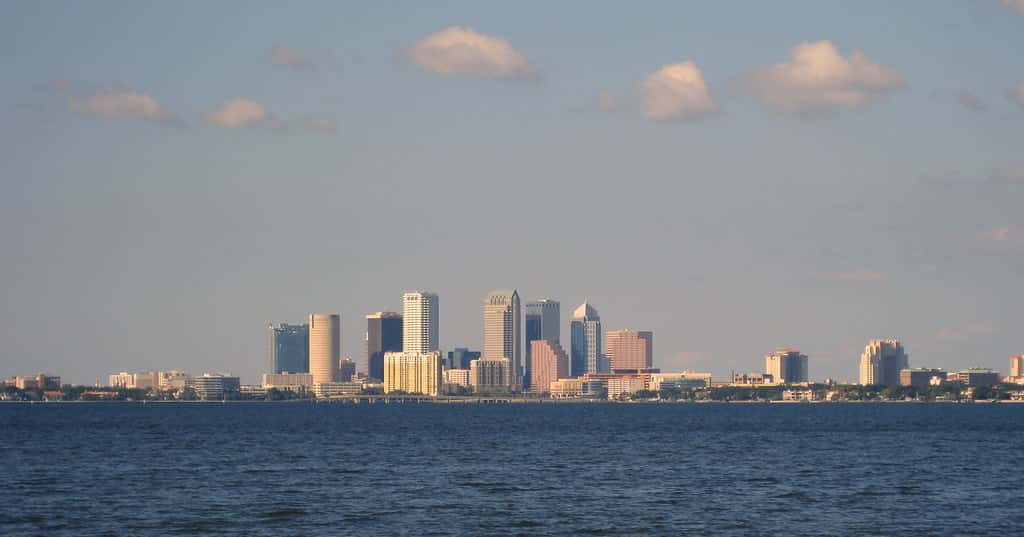
Tampa Bay Wave, the nonprofit startup accelerator based in Tampa, has been ranked the third-best startup accelerator in the United States by TIME, placing behind only Techstars and MassChallenge and ahead of every other Florida program. For a state whose technology sector has spent two decades trying to establish itself against gravitational pull from Silicon Valley, Boston, Austin and New York, a top-three national placement is a meaningful data point.
Accelerators occupy a specific niche in the startup ecosystem. They take early-stage companies through structured programs, typically three to six months, providing mentorship, curriculum, connections to investors and often a small amount of capital in exchange for equity or on a nonprofit basis.
Their value is less about the money than about the network. A founder who completes a well-regarded accelerator emerges with warm introductions to investors, a cohort of peer companies and a credential that shortens the due diligence process. That is why the ranking of an accelerator affects the companies that go through it.
What Tampa Bay Wave does
The organization operates as a nonprofit, which distinguishes it from the equity-taking model used by many accelerators. It runs cohort-based programs focused on specific verticals, including cybersecurity, healthcare technology and financial technology, sectors that align with the Tampa Bay region's existing employer base.
Programming typically includes structured curriculum on customer development, fundraising and go-to-market strategy, paired with mentorship from operators and investors. Demo days at the end of each cohort connect founders with capital sources.
The nonprofit structure matters for the region because it allows the organization to support companies that would not fit a purely returns-driven accelerator model, and it makes participation more attractive to founders reluctant to give up equity at the earliest stage.
Why Tampa Bay and not Miami
Miami received enormous attention as a technology destination during the 2020 to 2022 period, when a wave of venture capitalists and founders relocated from California and New York. That attention was real, and it produced lasting institutional presence, but it was also concentrated in specific sectors, particularly cryptocurrency and financial technology, which subsequently went through a severe correction.
Tampa Bay's development has been slower and less publicized. The region's technology employment grew out of existing industries: financial services back-office operations, healthcare systems, defense contracting connected to MacDill Air Force Base and the military commands headquartered there, and logistics.
That foundation produces a different kind of startup ecosystem, one weighted toward business-to-business software, cybersecurity and healthcare technology rather than consumer applications. It is less glamorous and generally more durable.
The MacDill effect
MacDill Air Force Base in Tampa hosts U.S. Central Command and U.S. Special Operations Command, two of the Defense Department's most significant combatant commands. Their presence has shaped the regional economy in ways that extend well beyond direct military employment.
Defense contractors maintain substantial offices in the Tampa area to support those commands, and the concentration of personnel with security clearances and technical backgrounds creates a talent pool that startups can draw from.
Cybersecurity in particular benefits. Veterans transitioning out of military intelligence and cyber operations roles represent a recruiting pool that few regions can match, and it is one reason the Tampa Bay region has developed density in that sector specifically.
The university pipeline
The University of South Florida is the largest research institution in the region and has expanded its research profile considerably over the past decade. Its engineering, computer science and medical programs feed both the talent pool and the flow of research that can be commercialized.
USF has also built out technology transfer operations, the function that converts university research into licensed intellectual property and spinout companies. Universities that do this well generate a steady stream of deep technology startups.
The University of Tampa, Saint Leo University and other regional institutions contribute as well, particularly in business education and in producing graduates who stay in the area rather than leaving for larger markets.
Capital remains the constraint
Florida's persistent weakness in startup ecosystems has been access to venture capital at the growth stage. Seed funding is available. Series A rounds are harder. Series B and beyond frequently require investors from outside the state, and those investors often prefer companies relocate closer to them.
That dynamic has improved but not disappeared. Several Florida-based venture firms have raised meaningful funds in recent years, and out-of-state investors have become more comfortable backing companies in Miami and Tampa without requiring relocation.
An accelerator's value in that environment is partly as a translation layer, giving out-of-state investors a filtered pipeline and a trusted signal. A top-three national ranking strengthens that function considerably.
What the ranking measures
Rankings of accelerators typically incorporate outcomes for portfolio companies, including follow-on funding raised, survival rates, exits and the scale of the alumni network, along with program quality measures.
Those metrics take years to accumulate, which means a high ranking generally reflects a track record built over a decade rather than recent activity. Tampa Bay Wave has operated since 2008.
Techstars and MassChallenge, the two programs ranked ahead, operate at substantially larger scale across multiple cities and countries. Placing third against organizations of that size is the part of the result that is genuinely notable for a single-region program.
The state policy context
Florida has pursued technology sector growth through several mechanisms, including tax structure, workforce programs and targeted incentives. The absence of a state personal income tax is the most frequently cited advantage in recruiting founders and executives.
Space Florida, the state's aerospace development agency, plays an analogous role for the space sector on the Space Coast, and the state's economic development apparatus has treated technology and aerospace as priority sectors.
What state policy has been less effective at is creating growth-stage capital, which depends on institutional investors and fund managers rather than on tax policy. That gap remains the principal structural difference between Florida and the largest U.S. technology regions.
Cost of living cuts both ways
Florida's affordability advantage over California and New York has narrowed considerably. Tampa Bay housing costs rose sharply during the pandemic migration wave, and the statewide single-family median sale price reached $425,000 in July.
Property insurance adds a cost that founders relocating from other states frequently underestimate, and it applies to commercial property as well as residential.
The comparison still favors Tampa over San Francisco by a wide margin, but the gap that made relocation obvious in 2021 is smaller now, which means the region has to compete on other dimensions, including talent, community and access to customers.
What it means for the region
Technology employment diversifies an economy that has historically depended on tourism, construction, health care and defense. Those sectors are cyclical in different ways, and adding a fifth reduces the region's exposure to any one downturn.
Technology jobs also pay above the regional median, which affects the tax base and the local services economy. Florida's overall job growth in July was weak, at roughly 4,500 net new positions statewide, which makes higher-wage sector growth more consequential.
The risk is concentration of benefits. Technology sector growth in other cities has driven housing costs up faster than it has raised incomes broadly, and Tampa Bay's housing market is already tight.
How this compares nationally
The United States has several dozen accelerators of national significance, and the top tier is dominated by programs affiliated with major venture ecosystems. A regional program placing third indicates outcomes rather than proximity.
For comparison, most cities of Tampa's size do not have an accelerator ranked in the national top twenty, let alone the top three. The nearest analogues are programs in Atlanta, Nashville and Denver, cities at similar stages of ecosystem development.
Whether the ranking translates into increased deal flow, more out-of-state investor attention and higher-quality applicant cohorts is the measurable question over the next several cycles.
What accelerators actually change
The research on accelerator effectiveness is mixed, and honest assessment requires acknowledging that. Studies have generally found that top-tier programs produce measurably better outcomes for participants while mid-tier programs produce little effect beyond selection: they admit companies that were going to succeed anyway and take credit for the result.
What distinguishes the effective programs is network access rather than curriculum. Founders can learn customer development and pricing strategy from freely available material. What they cannot manufacture is a warm introduction to an investor who takes the meeting because a trusted program sent it, or a peer group of founders solving the same problems at the same time.
That is why ranking matters commercially rather than symbolically. An accelerator's placement affects which founders apply, which mentors participate and which investors attend demo days, and each of those feeds the next cohort's outcomes.
Florida's broader ecosystem picture
Florida now has several distinct technology clusters rather than a single one. Miami's is oriented toward finance, international business and consumer products, with strong Latin American connections. Tampa Bay's leans toward enterprise software, cybersecurity and health technology. Orlando's is built around simulation, modeling and training, driven by the military and theme park industries. The Space Coast is aerospace.
That distribution is a strength in some respects and a weakness in others. Multiple mid-sized clusters are more resilient than a single concentrated one, but none reaches the density that produces the self-sustaining talent recycling of the largest technology regions, where failed startups continuously supply experienced people to new ones.
Whether Florida reaches that threshold in any single metropolitan area is the open question of the next decade, and the measures that would indicate progress are unglamorous: repeat founders, senior operators staying in state after exits, and growth-stage funds headquartered in Florida rather than visiting it.
What's next
The accelerator's next cohorts will be the test of whether national recognition changes the applicant pool. Programs that rise in rankings typically see application volume and quality increase within a year.
For the broader region, the indicators worth tracking are venture funding totals for Tampa Bay companies, the number of Series A and later rounds closed with in-state participation, and whether companies that scale choose to keep headquarters in Florida.
Those are slow-moving measures. Ecosystems are built over decades, and a single ranking is a signal rather than an outcome. It is, however, a signal that Tampa Bay's technology sector has reached a scale that observers outside Florida have begun to notice.
Spotted an issue with this article?
Have something to say about this story?
Write us a letterComments
No comments yet. Be the first to weigh in.
Related Coverage

Uthmeier Asks Pasco Judge to Force Meta to Remove Florida Users Under 14 and Cap Teens at Two Hours a Day
18h ago

Florida Attorney General James Uthmeier Sues TP-Link, Saying Its Routers Left Florida Home Networks Exposed
2d ago
FIU to install Florida's first on-campus trapped-ion quantum computer
3d ago
Florida's data center law: what SB 484 does as DeSantis touts it
5d ago