FIU to install Florida's first on-campus trapped-ion quantum computer
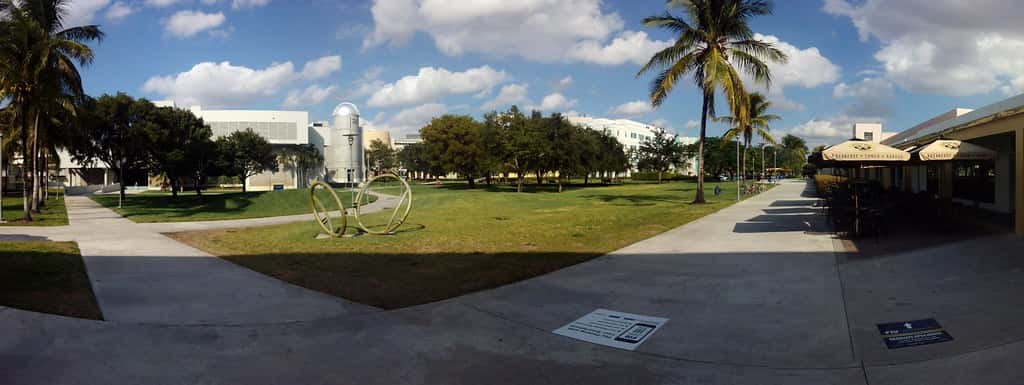
Florida International University has signed an agreement with quantum computing company IonQ to install a 256-qubit Superion 256 trapped-ion quantum computer on its Miami campus, a machine the university says will make it the first in Florida to own a full-stack, trapped-ion quantum computer. The system is expected to arrive in late 2027, once FIU finishes building a new on-campus data center to house it.
The deal, announced by FIU on Sept. 23, names FIU as IonQ's flagship academic partner in Florida and marks the first sale and deployment of a Superion 256 system in the state. FIU billed it as Miami's first quantum computer. Neither side has disclosed what the university is paying for the machine or how the purchase is being funded.
What FIU is getting
The Superion 256 is built on IonQ's sixth-generation Superion architecture and uses 256 physical qubits made from individual trapped ions, according to IonQ. The company says the design is engineered for high-density, reconfigurable all-to-all connectivity, meaning any qubit in the system can interact directly with any other.
That connectivity is one of the defining features of trapped-ion machines. In these systems, electrically charged atoms are held in place by electromagnetic fields, and their quantum states serve as qubits. Lasers manipulate individual ions and link them through their shared motion. Trapped-ion systems have demonstrated some of the highest accuracy rates for basic quantum operations of any approach, and their qubits stay stable far longer than the time it takes to run a calculation. Competing designs from companies such as IBM and Google use superconducting circuits that must be cooled to near absolute zero and generally connect each qubit only to its neighbors.
The machine will be housed in a dedicated secure facility within FIU's planned data center. The university said it will make the system available to students, faculty, visiting scholars and research centers.
Owning a machine on site is still unusual. Most universities that do quantum research rent time on systems run by companies over the cloud. FIU noted that comparable on-campus technology is available at only a small number of universities, including the University of Chicago and the University of Cambridge in the United Kingdom.
Research priorities
FIU said its researchers plan to focus on three broad areas:
- Environment and energy sustainability: developing new materials, more efficient batteries, environmental systems and better ways to manage the power grid.
- National security and cybersecurity: preparing for security threats posed by quantum computers, advancing encryption methods and protecting critical infrastructure.
- Health and drug development: modeling molecular and biological interactions to identify promising medicines and speed drug development.
IonQ's announcement also listed materials science, artificial intelligence and logistics among the expected applications.
Some of those areas line up with challenges specific to South Florida. FIU is home to the International Hurricane Research Center and the Wall of Wind, a facility that can simulate Category 5 hurricane winds, and grid resilience is a recurring concern in a state where major hurricanes can leave millions of customers without power. Quantum computers are widely expected to be useful for optimization problems such as routing power across a network, though researchers are still working to show where the machines outperform conventional supercomputers.
Andres G. Gil, FIU's senior vice president for research and economic development, said that “having this system on campus will allow our researchers to determine where quantum computing can make a meaningful difference.”
What leaders said
FIU President Jeanette M. Nuñez, the former Florida lieutenant governor who took over the university in 2025, framed the purchase as a bet on the region's future. “Bringing this extraordinary research tool to Miami is an investment in discovery, in our students, and in our country's ability to compete in a rapidly developing field,” she said in the university's announcement.
Nuñez said the partnership gives FIU's more than 1,800 faculty members and 55,000 students, along with industry partners, direct access to one of the most advanced computing architectures in the world.
IonQ Chairman and CEO Niccolo de Masi said that “by housing our Superion 256 system directly on campus, FIU will lead the region in quantum research and training.”
Who IonQ is
IonQ was founded in 2015 by University of Maryland professor Christopher Monroe and Duke University professor Jungsang Kim and is headquartered in College Park, Maryland. It went public on the New York Stock Exchange in 2021 and has grown quickly through acquisitions, including British trapped-ion company Oxford Ionics in 2025 and semiconductor manufacturer SkyWater Technology, a deal completed in July 2026. De Masi became CEO in February 2025.
The company has pursued on-site deployments with institutional partners, including a quantum computing and networking hub with EPB, the municipal utility in Chattanooga, Tennessee. The FIU agreement extends that strategy into Florida's university system.
Building a quantum pipeline in Miami
FIU, a Carnegie R1 research university and one of Florida's state-designated preeminent research universities, plans to build academic programs around the machine. The university said it will develop new curricula, degree programs and professional certificates in quantum computing, and expand collaborations with industry, government and other research institutions.
The university said the goal is to help establish South Florida as a center for applied quantum discovery while preparing students for jobs and fields that are only beginning to emerge. FIU's research showcase and briefing center in Washington, D.C., will be used to court federal agencies and partners interested in quantum applications in scientific discovery, energy and national security, according to the university. Work is expected to involve the Knight Foundation School of Computing and Information Sciences and the College of Engineering and Computing.
The deal arrives as states compete to attract quantum research and the jobs that may follow it, with federal agencies and private companies pouring money into the field. For Miami, which has spent recent years marketing itself as a technology hub, an on-campus quantum computer gives local researchers and startups hands-on access to hardware that most would otherwise reach only through cloud services.
What's next
The biggest open questions are cost and timing. FIU and IonQ have not released the contract value, and the university has not said whether state appropriations, federal grants or private money will cover the purchase and the new data center. The machine's arrival depends on completion of that data center, with installation currently targeted for late 2027.
In the meantime, FIU says it will begin building the courses, certificates and research partnerships meant to put the system to work as soon as it is switched on.
Spotted an issue with this article?
Have something to say about this story?
Write us a letterComments
No comments yet. Be the first to weigh in.
Related Coverage
Florida's data center law: what SB 484 does as DeSantis touts it
2d ago

FPL, Tampa Electric and Duke File Data Center Plans as Florida's New Ratepayer Protection Law Hits First Deadline
3d ago

USF and Tampa Electric Build Digital Twin of Power Grid With $3.8 Million Grant
6d ago

Orange County Moves Toward a One-Year Pause on AI Data Centers Over Water and Power Concerns
Sep 23