Cape Canaveral's Launch Cadence Keeps Climbing With Another Starlink Mission Set for Tuesday
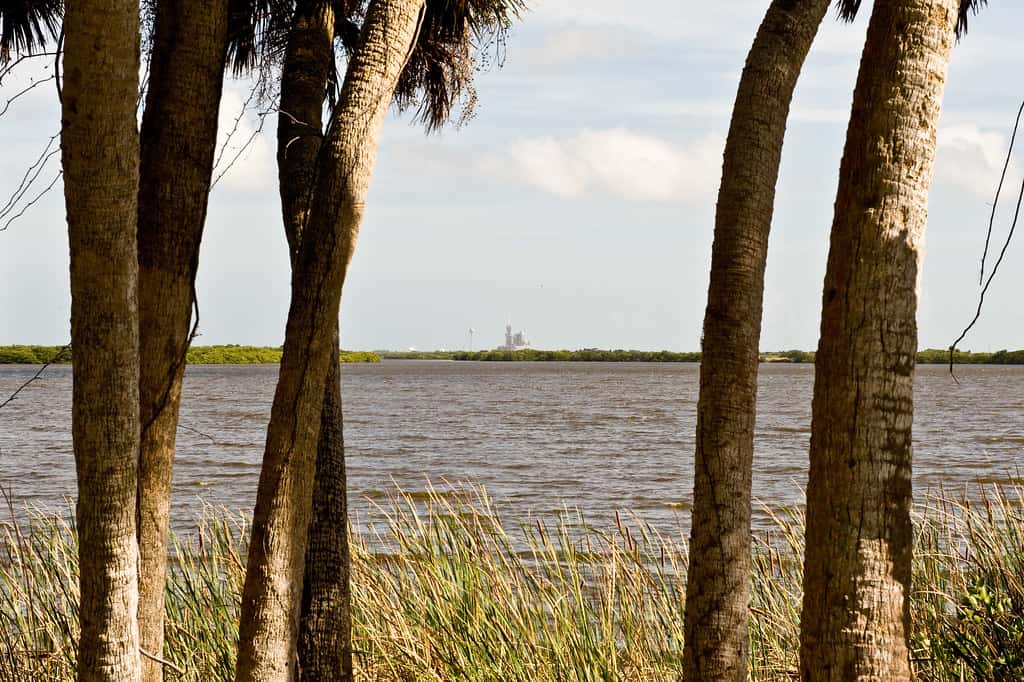
SpaceX is targeting Tuesday for a Falcon 9 launch carrying 29 Starlink satellites from Space Launch Complex 40 at Cape Canaveral Space Force Station. It would be one more entry in a launch year that has pushed Florida's Space Coast to a tempo that would have been considered implausible a decade ago.
The company launched 29 Starlink satellites from Cape Canaveral on Friday, August 21, following a last-minute scrub. Earlier in the month, on August 15, SpaceX launched back-to-back Falcon 9 missions for Globalstar and the U.S. Space Force, reducing the time between launches from the same range to a record 38 and a half minutes.
That figure is the one worth pausing on. Thirty-eight minutes between orbital launches from the same coastline is an operational achievement in range management, air and sea clearance, and pad turnaround that has no precedent in the history of American spaceflight.
What the tempo looks like in numbers
SpaceX passed its seventy-fifth Starlink mission of 2026 on August 20, a figure that counts only one of the company's mission categories and only part of its total launch activity. Additional launches carry commercial satellites, national security payloads, cargo to the International Space Station and crewed missions.
Not all of those originate in Florida. SpaceX also launches from Vandenberg Space Force Base in California, primarily for polar and sun-synchronous orbits. But the majority of Falcon 9 activity flies from Cape Canaveral Space Force Station and Kennedy Space Center.
Other operators contribute as well. United Launch Alliance flies Atlas V and Vulcan from Cape Canaveral, and Blue Origin has been developing New Glenn operations from Launch Complex 36. The result is a range managing a launch schedule that in some weeks approaches airport-like frequency.
Why Florida and not somewhere else
The Space Coast's advantage is geographic and it has not changed since the 1950s. Launching eastward from Florida takes advantage of Earth's rotation, adding roughly 900 miles per hour of velocity for free compared with a launch from a higher latitude.
The Atlantic provides an unpopulated corridor downrange, which means failures and jettisoned stages fall into ocean rather than onto communities. That safety geometry is what makes high-cadence operation possible at all.
Cape Canaveral's latitude also suits the inclinations most commercial and national security payloads require, including the orbits used by geostationary communications satellites and by the International Space Station.
What it means for Brevard County
The economic effect on Brevard County is substantial and measurable. The county's aerospace employment base has grown through the commercial launch expansion, encompassing SpaceX, Blue Origin, United Launch Alliance, Lockheed Martin, Northrop Grumman, L3Harris and a supply chain of smaller firms.
Space Florida, the state's aerospace economic development agency, has worked to attract manufacturing and processing operations rather than only launch activity, on the theory that building hardware in the state produces more durable employment than launching it.
Tourism benefits as well. Kennedy Space Center Visitor Complex draws visitors year-round, and launch viewing has become a scheduled attraction with hotels, restaurants and charter operators in Titusville, Cocoa Beach and Port Canaveral built around it.
The Artemis backdrop
The Space Coast's most significant event of 2026 was not a Starlink mission. On April 1, NASA launched Artemis II from Launch Complex 39B at Kennedy Space Center, sending astronauts Reid Wiseman, Victor Glover and Christina Koch, along with Canadian Space Agency astronaut Jeremy Hansen, on an approximately ten-day mission around the Moon.
It was the first crewed lunar mission since the end of the Apollo program more than five decades earlier, and it launched from Florida. The mission was designed as a test flight to validate systems ahead of a landing mission targeted for 2028.
That program brings a different kind of activity to the Cape than commercial launch cadence does. Space Launch System processing involves the Vehicle Assembly Building and a workforce that supports a small number of very large launches rather than a high frequency of smaller ones.
What Starlink actually does
Starlink is a satellite internet constellation operating in low Earth orbit, providing broadband to customers in areas where terrestrial service is unavailable or inadequate. The constellation numbers in the thousands of satellites, which is why launches of 29 at a time recur so frequently.
In Florida, the service has practical applications in rural areas of the Panhandle, North Florida and the interior agricultural counties where broadband deployment has lagged. It also has emergency management applications, since satellite connectivity survives terrestrial infrastructure damage.
Hurricane response is the obvious case. After storms that destroy cell towers and fiber, satellite terminals can restore connectivity for emergency operations centers, shelters and utility crews faster than infrastructure can be rebuilt.
The reusability engineering
The tempo depends on booster reuse. Falcon 9 first stages return to landing zones at Cape Canaveral or to droneships stationed offshore, are inspected and refurbished, and fly again. Individual boosters have flown well over a dozen missions.
Fairing recovery contributes as well, with the payload shrouds retrieved from the ocean and reflown. The combination reduces both cost per launch and the manufacturing throughput required to sustain a high flight rate.
The 38-minute turnaround between the Globalstar and Space Force launches on August 15 involved different pads, but it required range assets, tracking, safety clearance and airspace management to reset within that window.
Range modernization
The Eastern Range, operated by Space Force's Space Launch Delta 45, has undergone substantial modernization to support the current cadence. Older range safety systems required extensive manual involvement and long reset intervals between launches.
Autonomous flight termination systems, which allow a vehicle to self-destruct based on onboard logic rather than a ground command, removed one of the largest constraints on turnaround time and on simultaneous operations.
Airspace and maritime coordination remains an operational challenge. Each launch requires clearing corridors, which affects commercial aviation routing along the Florida coast and shipping traffic near Port Canaveral.
Growing pains on the coast
High cadence brings friction. Sonic booms from returning boosters are audible across Brevard County and beyond, and residents have raised concerns about frequency and timing, particularly for nighttime landings.
Environmental review of expanded launch operations has generated public comment, focused on effects to the Merritt Island National Wildlife Refuge and Canaveral National Seashore, which share the Cape's geography with the launch complexes.
Traffic and infrastructure on launch days affect local roads, particularly for high-profile missions that draw large viewing crowds to Titusville and the Cocoa Beach area.
Port Canaveral's dual role
Port Canaveral is one of the busiest cruise ports in the world and simultaneously the base for booster recovery operations. Droneships return with landed first stages to the same waterway that handles cruise ship traffic.
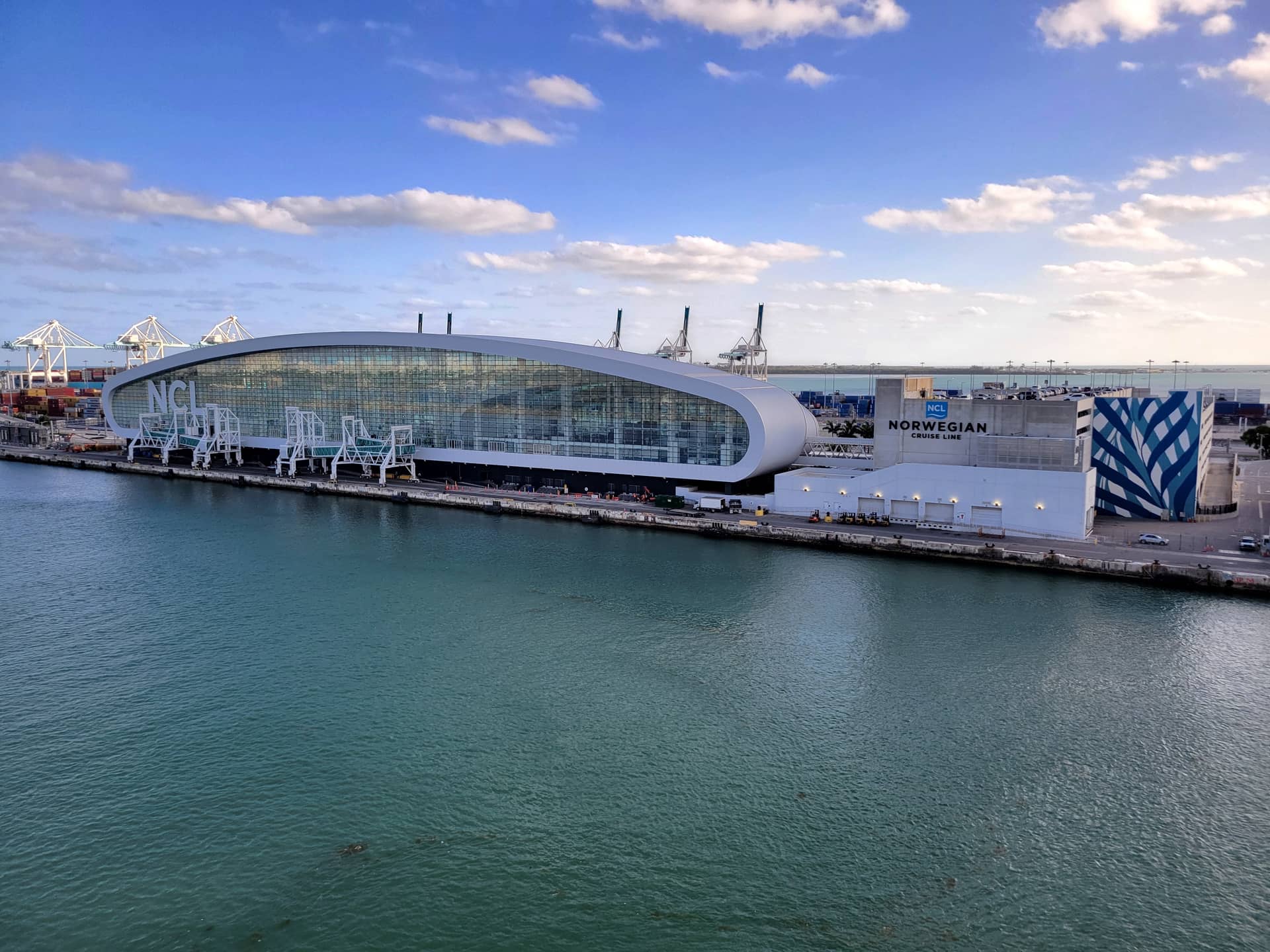
The port has been investing in cruise capacity, including a terminal project completed in 2026, while accommodating aerospace operations that require dedicated berth space and heavy lift capability.
Coordinating those two industries in a single port is an unusual logistical problem, and it has generally been managed through scheduling rather than through physical separation.
The national security dimension
A significant share of Cape Canaveral launch activity supports national security payloads, flown for the Space Force and intelligence agencies under contracts awarded through the National Security Space Launch program.
Those missions are why the Cape remains a Space Force installation rather than a purely commercial facility, and why range operations are conducted by military personnel.
Assured access to space, meaning the ability to launch national security payloads on multiple independent vehicle families, is the policy principle driving procurement, which is why the government maintains contracts with more than one provider.
What Florida gets out of it
The launch industry has become one of the more durable pieces of Florida's economy, less exposed to interest rates and consumer spending than tourism, construction and real estate. In a state where July employment growth was roughly 4,500 jobs statewide, sectors with sustained hiring matter.
Aerospace also draws in adjacent capability: engineering talent, advanced manufacturing, materials suppliers and the university programs that feed them, including Embry-Riddle Aeronautical University in Daytona Beach and the Florida Institute of Technology in Melbourne.
Federal decisions on NASA's budget and Space Force procurement land in Brevard County with unusual directness, which is why Florida's congressional delegation follows those line items closely.
What a scrub actually involves
The August 21 Starlink launch flew after a last-minute scrub, which is routine enough that it barely registers as news. Launch attempts are called off for weather violations, for technical readings outside acceptable ranges, for boats or aircraft straying into cleared corridors, and for upper-level wind conditions that would put excessive load on the vehicle during ascent. Each of those triggers a recycle to a backup window, often the next day.
Scrubbing is not a failure. Launch criteria exist because the consequences of proceeding through a marginal condition are catastrophic and expensive, and the discipline of calling off an attempt over a single out-of-family sensor reading is what allows the tempo to be sustained safely. Operators that push through marginal conditions eventually lose vehicles.
For the Space Coast economy, scrubs create their own logistics. Visitors who traveled to watch a launch reschedule hotel nights, charter operators adjust bookings, and the viewing sites in Titusville and along the Indian River fill again on the backup date.
The workforce behind the cadence
A launch rate of this magnitude requires people, not only hardware. Pad crews, propellant handlers, recovery ship personnel, range operators, air traffic controllers, quality engineers and mission managers all scale with flight rate, and Brevard County's labor market has absorbed that growth over the past several years.
Technical workforce development has become a regional priority as a result. Eastern Florida State College, the Florida Institute of Technology in Melbourne and Embry-Riddle Aeronautical University in Daytona Beach all feed the pipeline, along with apprenticeship and certificate programs aimed at technician roles rather than engineering degrees.
Housing has been the constraint on that growth, as it has across Florida. Brevard County's home prices rose sharply during the state's migration wave, and employers recruiting technicians from out of state now compete against a cost of living that no longer reads as inexpensive.
What's next
Tuesday's Starlink mission is one of several launches scheduled from the Cape over the coming weeks, across multiple operators. Launch schedules shift constantly for weather, range conflicts and vehicle issues, and scrubs are routine rather than notable.
Late summer in Florida presents its own constraint. The daily afternoon thunderstorm pattern along the Space Coast produces lightning and anvil cloud conditions that violate launch weather criteria, which is why so many Florida launches target early morning or late evening windows.
For residents and visitors, the practical guidance is that launch viewing has become a routine possibility rather than a rare event. Schedules are published in advance, and the Space Coast now offers opportunities on most weeks of the year.
Spotted an issue with this article?
Have something to say about this story?
Write a letter to the editor