Trump Pledges to Work With Democrats on a 10% Credit Card Rate Cap. Here's What It Could Mean for Florida Households
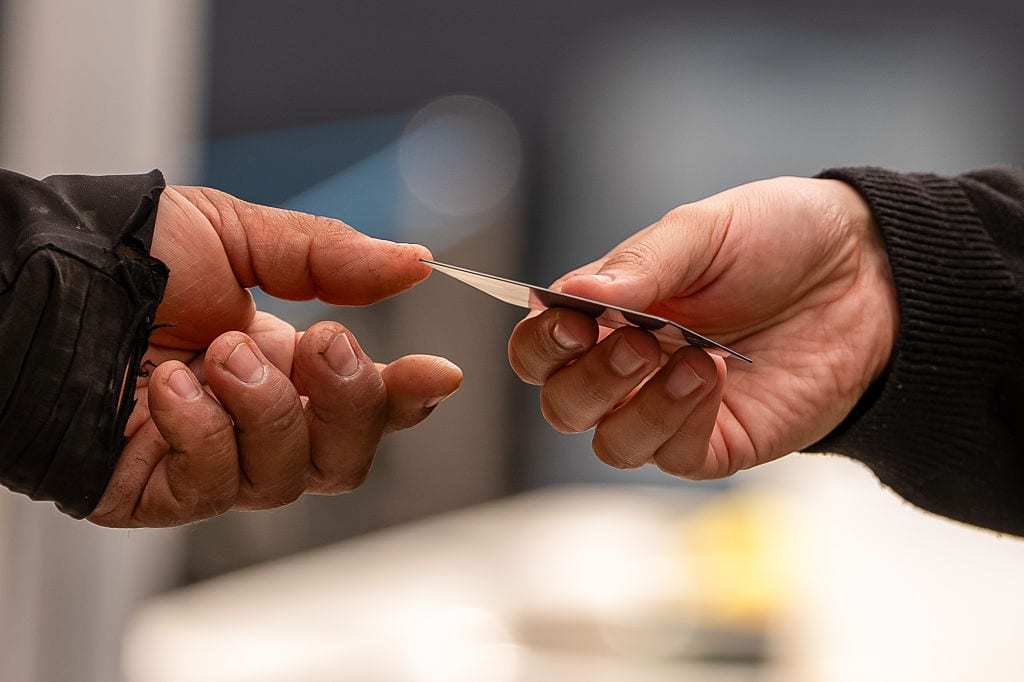
President Donald Trump says he is ready to work with the incoming Democratic Congress to cap credit card interest rates, reviving a 2024 campaign promise that stalled under Republican control. "I would do it. These credit card companies have made a lot," Trump said in a Fox News Channel interview aired Saturday, Nov. 21, according to the Associated Press. The idea on the table is a 10% cap. For Florida, where residents carry some of the highest credit card balances in the country, the stakes are larger than in most states.
What Trump said
Trump made the comments on Fox News Channel's "Saturday in America." The standard proposal, backed by both Trump and leading Democrats, would cap card interest rates at 10%, the AP reported. Trump has framed it as a one-year cap.
The pledge comes as Democrats prepare to take control of both chambers in January after winning at least 258 House seats and a 56-seat Senate majority. Sen. Elizabeth Warren of Massachusetts, expected to chair the Senate Banking Committee, has repeatedly called for a cap. "Let's cap credit card interest rates and save Americans money," Warren said, according to the AP. Rep. Maxine Waters of California, who sits on the House Financial Services Committee, has also endorsed the idea.
Sen. Josh Hawley, a Missouri Republican, said Congress should pass his bipartisan bill to cap rates, the AP reported.
A promise that stalled once already
This is the second time this year Trump has pushed the idea. In January 2026, as part of a White House affordability campaign, he called for a one-year, 10% cap on credit card rates, writing on Truth Social that the cap should take effect Jan. 20, 2026. He did not say at the time how he would make card companies comply, and he later called on Congress to pass the cap. Banks and card issuers strongly opposed it, warning they would cancel cards for lower-income or less creditworthy customers or cut rewards programs. The Republican-led Congress made little effort to pass it, according to the AP.
Bills already exist. Sens. Bernie Sanders, the Vermont independent, and Hawley introduced a bipartisan Senate bill for a temporary 10% cap. In the House, the leading measure is H.R. 1944, the 10 Percent Credit Card Interest Rate Cap Act, which would amend the Truth in Lending Act so card rates could not exceed 10%. Its language would expire on Jan. 1, 2031. The bill was introduced on March 6, 2025, and referred to the House Financial Services Committee, where it has not advanced. Under the incoming Democratic majority, that committee will be run by Democrats.
A Florida Republican helped write the House bill
That House bill has a Tampa Bay connection. Rep. Anna Paulina Luna, a Tampa Bay Republican and member of the House Freedom Caucus, introduced it in March 2025 with Rep. Alexandria Ocasio-Cortez, a New York Democrat. The pairing drew national attention because the two sit at opposite ends of the political spectrum.
Luna told FOX 13 at the time that "you should not have to spend your entire lifetime paying back debt," and she described 10% as a compromise with the banking industry. Luna narrowly won reelection this month in Florida's 13th Congressional District, so she will return to a House where her party is in the minority but where Democratic leaders have signaled interest in the same policy.
Other members of Florida's 28-member delegation had not publicly staked out positions on Trump's latest comments in the coverage reviewed for this story. How they vote, if a cap reaches the floor, could help decide whether it passes with broad bipartisan support.
What Florida households owe
Floridians carry more card debt than most Americans. Florida residents held an average credit card balance of $5,050 per person with a credit report at the end of 2025, sixth-highest in the nation and about 16% above the national average of $4,350, according to an analysis by the personal finance company Achieve of Federal Reserve Bank of New York data, as reported by WFTV. The Florida figure was up $210 from a year earlier, while the national average rose from $4,180.
Florida also has a higher share of seriously overdue household debt than the country as a whole, with about 4% of balances at least 90 days past due, according to New York Fed data reported by WLRN.
The national numbers frame the debate. The median credit card rate is about 22.2%, according to a New York Fed survey from August. About 195 million Americans had credit cards in 2024 and paid $160 billion in interest, according to the Consumer Financial Protection Bureau, and total card debt stood at about $1.23 trillion, the AP reported.
Here is what a 10% cap would mean in monthly interest on two typical balances, using the AP's figures for a $5,000 balance and the same rates applied to Florida's average:
| Balance | Interest at about 22% | Interest at 10% |
|---|---|---|
| $5,000 | About $100 a month | About $42 a month |
| $5,050 (Florida average) | About $93 a month | About $42 a month |
The Florida row is a simple calculation using the 22.2% median rate and does not account for minimum payments, fees or changes in balance over time.
The case against a cap
Researchers have estimated that Americans would save roughly $100 billion a year in interest at a 10% cap, and that card issuers would take a major hit but remain profitable, the AP reported. Rewards and perks could shrink.
The banking industry argues the costs would land on the very borrowers a cap is meant to help. Lenders have warned that a 10% ceiling would restrict credit for many consumers and push them toward less regulated, more expensive alternatives. A Bankrate analyst, Ted Rossman, told FOX 13 in 2025 that banks could cut rewards programs and tighten eligibility, making cards harder to get.
What's next
Nothing changes for cardholders yet. The new Congress convenes Jan. 3, 2027, and a cap would need to pass both chambers and be signed by Trump. With Democrats in charge of the committees that write financial legislation and the president now publicly on board, supporters see their best opening in years. The banking industry is expected to lobby hard against it. Floridians carrying balances should not count on lower rates soon, but the issue is likely to be among the first tests of whether Trump and the new Democratic majority can find common ground on affordability.
Spotted an issue with this article?
Have something to say about this story?
Write us a letterComments
No comments yet. Be the first to weigh in.
Related Coverage

Former Melbourne Man Jonathan Rinderknecht Found Guilty of Starting Deadly Palisades Fire at Retrial
2h ago

FBI Investigating Apparent Hack of National Crime Database Florida Police Rely On Every Day
3h ago
Democrats Clinch Biggest House Majority Since 1992 as Florida's Delegation Holds at 20-8 and Gilbert, Dandiya Head to Washington
4h ago

Delta System Outage Delays Flights Nationwide, Snarling Miami and Fort Lauderdale Travel as Thanksgiving Rush Begins
4h ago